Plot Summary
Blood and Beginnings
Vlad's earliest memories are painted in violence and alienation. Born into a Russian crime family, he is marked as different—emotionless, brilliant, and obsessed with the mechanics of life and death. His father, both fearful and fascinated, uses Vlad's monstrous tendencies for the family's benefit, while his twin sister Vanya is his only solace. Their bond is forged in shared darkness, dissecting corpses and exploring the boundaries of pain and curiosity. But even in this macabre world, Vlad is an outsider, feared by all but Vanya, who alone sees the humanity flickering beneath his monstrous exterior.
The Monster's Education
As Vlad grows, his education is a brutal curriculum of torture, murder, and scientific experimentation. Under the tutelage of his father and the enigmatic Miles, he is shaped into the perfect weapon—fearless, remorseless, and nearly immune to pain. The experiments escalate, pushing the limits of his body and mind, while Vanya's presence keeps him tethered to some semblance of self. Yet, the more he excels, the more he loses touch with ordinary emotion, becoming a living experiment in the creation of a super-soldier. The seeds of guilt and trauma are sown, even as he cannot yet name them.
Sibling Shadows and Loss
Vanya is Vlad's anchor, the only one who can reach through his haze of violence. Their relationship is both innocent and chilling, a partnership in crime and survival. But tragedy strikes when they are abducted and subjected to Miles' experiments. Vanya's health deteriorates, and in a final, devastating test of loyalty and detachment, Vlad is manipulated into killing her. The memory is so traumatic that his mind fractures, erasing the truth and replacing it with a ghost—Vanya's presence haunts him for years, a phantom twin who is both comfort and curse.
Becoming the Devil's Weapon
Emerging from captivity, Vlad is a changed creature—his pain receptors dulled, his empathy nearly erased, his intellect sharpened to a lethal edge. He becomes the Bratva's most feared enforcer, known as the Berserker, a man whose rages are legendary and whose loyalty is only to his own code. Yet, beneath the surface, the trauma festers. Vanya's ghost is ever-present, and his episodes of uncontrollable violence threaten to consume him. He is both weapon and wound, seeking meaning in blood and control in chaos.
The Nun's Survival
Assisi "Sisi" Lastra's childhood is a mirror of Vlad's, though her hell is the convent of Sacre Coeur. Abandoned, branded as cursed, and subjected to relentless abuse by nuns and peers, Sisi learns to survive through wit, resilience, and a refusal to let her tormentors define her. Her only solace is found in forbidden books, fleeting friendships, and a stubborn hope for love. When she finally escapes, she is both scarred and unbroken, determined to never be a victim again.
Reunion of Broken Souls
Fate orchestrates the meeting of Vlad and Sisi—two survivors shaped by violence, each carrying invisible wounds. Their connection is immediate and electric, a recognition of kindred darkness. Vlad is drawn to Sisi's strength and vulnerability, while she is both terrified and fascinated by his savagery. Their relationship is a dance of attraction and repulsion, trust and betrayal, as they test the limits of each other's brokenness. Together, they begin to unravel the mysteries of their pasts, discovering that their stories are intertwined by more than chance.
Love in the Abyss
Against all odds, Vlad and Sisi fall in love—not in spite of their darkness, but because of it. Their passion is primal, their intimacy both healing and harrowing. Sisi becomes Vlad's anchor, the only one who can calm his berserker rages, while Vlad gives Sisi the unconditional acceptance she has always craved. Yet, their love is tested by secrets, guilt, and the ever-present threat of violence. They must learn to forgive themselves and each other, forging a bond that is as much about survival as it is about desire.
Ghosts, Guilt, and Memory
Haunted by Vanya's ghost and plagued by blackouts, Vlad embarks on a journey of self-discovery and healing. With Sisi's support, he seeks out shamans, psychiatrists, and the truth buried in his fractured memory. The revelation that he killed his own sister nearly destroys him, but Sisi's unwavering love becomes his salvation. Together, they confront the architects of their suffering—Miles, Mother Superior, and the criminal syndicates that profit from human misery—determined to end the cycle of abuse and exploitation.
The Price of Redemption
Vlad and Sisi's quest for justice leads them into the heart of darkness—a clandestine organ trafficking ring operating out of Sacre Coeur and Ellis Island, orchestrated by Miles and abetted by powerful families. They gather allies, infiltrate the enemy's lair, and unleash a storm of violence and retribution. The cost is high: betrayals, near-death experiences, and the risk of losing themselves to the very brutality they seek to destroy. Redemption is not given, but earned in blood and pain.
Blood-Stained Forgiveness
After the final confrontation, Vlad and Sisi are left to pick up the pieces of their shattered lives. Vlad, wounded in body and soul, must learn to forgive himself for Vanya's death and accept the love Sisi offers him. Sisi, in turn, must reconcile her own capacity for violence with her desire for peace. Together, they create a new family—one built on honesty, mutual respect, and the shared understanding that monsters can love, and martyrs can fight.
Unmasking the Convent's Sins
With the truth about Sacre Coeur's involvement in organ trafficking revealed, Vlad and Sisi work to dismantle the network of corruption that enabled such horrors. They confront Mother Superior and her accomplices, delivering poetic justice for the countless children who suffered in silence. Their actions inspire others to speak out, and the once-untouchable institution is brought to its knees. Yet, the scars remain, a reminder that evil often hides behind the mask of virtue.
The Final Experiment
Miles' final gambit is a gladiatorial showdown, pitting Vlad against his deadliest creation in a battle for the truth about Vanya's fate. The arena is both literal and symbolic—a crucible where Vlad must confront his own monstrosity and choose between vengeance and mercy. With Sisi's life hanging in the balance, Vlad's victory is not just over his enemies, but over the darkness within himself. The experiment ends, not with the creation of a perfect killer, but with the affirmation of imperfect love.
The Arena of Truth
The climactic battle leaves Vlad and Sisi gravely wounded, their survival uncertain. In the aftermath, they are forced to confront the consequences of their actions—the lives they've taken, the innocence they've lost, and the future they hope to build. Their resurrection is both literal and metaphorical, a testament to the power of love to heal even the deepest wounds. Together, they vow to use their strength to protect others, transforming their pain into purpose.
Death and Resurrection
Freed from the ghosts of their pasts, Vlad and Sisi begin to build a new life together. They reconcile with family, forgive old enemies, and create a sanctuary for other survivors of violence. Their love, once forged in blood and suffering, becomes a beacon of hope—a reminder that even monsters can find redemption, and that the cycle of abuse can be broken. In each other, they find not just solace, but the promise of a future worth fighting for.
Building a New Hell
Vlad and Sisi channel their experiences into founding an academy for lost children—orphans, survivors, and those deemed too broken for the world. Here, they teach not just survival, but the value of loyalty, honor, and self-acceptance. Their unconventional family grows, united by shared pain and the determination to never be victims again. Together, they transform their personal hells into a haven for others, proving that even the damned can build something beautiful.
The Wedding of Monsters
Their wedding is both a celebration and a reclamation—a defiant affirmation that love can bloom even in the most desolate soil. Surrounded by friends, family, and former enemies, Vlad and Sisi exchange vows that are as much about survival as they are about devotion. Their union is not the end of their story, but the beginning of a new chapter—one where they face the world together, unafraid and unashamed of the monsters they have become.
Family, Forgiveness, and Future
In the years that follow, Vlad and Sisi build a life that is both ordinary and extraordinary. They welcome a child, Xanthiya, into their world—a symbol of hope and healing. Their family expands to include those they have saved and those who have saved them. Through forgiveness, hard-won trust, and the daily work of love, they prove that even the most damaged souls can create a legacy of strength, compassion, and resilience. Their story is not one of happily ever after, but of choosing each other—again and again—in the face of darkness.
Analysis
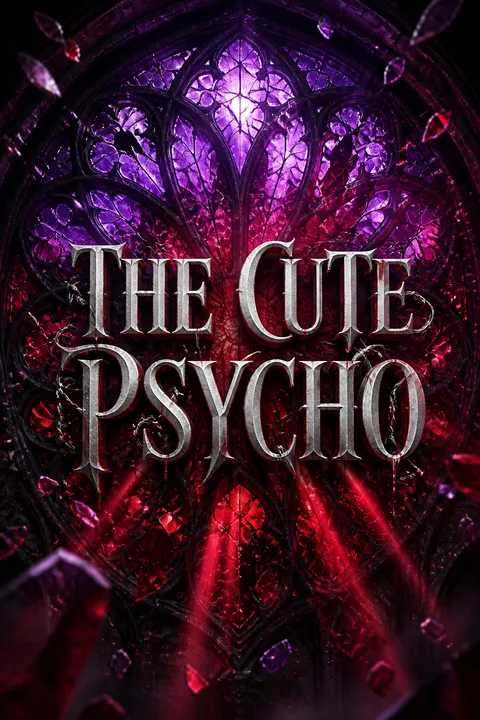
A modern gothic romance of trauma, monstrosity, and radical loveThe Cute Psycho is a brutal, unflinching exploration of the ways in which trauma shapes identity and relationships. Veronica Lancet crafts a narrative that is both horrifying and deeply romantic, refusing to shy away from the grotesque realities of abuse, violence, and institutional corruption. Yet, at its core, the novel is a love story—one that insists that even the most damaged souls are capable of redemption, and that love is not the absence of darkness, but the willingness to face it together. The book interrogates the boundaries between victim and perpetrator, holy and profane, sanity and madness, ultimately suggesting that healing is not about erasing the past, but about transforming it. Through its vivid characters, intricate plot, and relentless emotional intensity, The Cute Psycho offers a radical vision of hope: that monsters can love, that martyrs can fight, and that together, even the damned can build a new kind of heaven from the ruins of hell.
Review Summary
Characters
Vlad Kuznetsov
Vlad is the product of violence, trauma, and scientific ambition—a child molded into a killer by his father and the sadistic Miles. His intellect is matched only by his capacity for brutality, and his emotional detachment is both a shield and a wound. The loss of his twin sister Vanya, whom he was manipulated into killing, fractures his psyche, leaving him haunted by her ghost and prone to berserker rages. Sisi becomes his anchor, the only one who can reach through his darkness and teach him to love. Vlad's journey is one of self-forgiveness, as he learns to reconcile his monstrous nature with his longing for connection and redemption. His love for Sisi is obsessive, possessive, and ultimately transformative, allowing him to build a new legacy from the ashes of his past.
Assisi "Sisi" Lastra Kuznetsova
Sisi's life is a crucible of suffering—abandoned as a child, abused in the convent, and marked as cursed. Her resilience is forged in fire, her wit and defiance her only weapons. Despite her trauma, she retains a fierce hope for love and belonging. Meeting Vlad is both a salvation and a test, as she must confront her own capacity for violence and her attraction to darkness. Sisi is both Vlad's savior and his equal, unafraid to challenge him or embrace the parts of herself that others have tried to destroy. Her journey is one of self-acceptance, as she learns that survival is not enough—she deserves to be loved, and to love fiercely in return.
Vanya Kuznetsova
Vanya is Vlad's twin and his only source of warmth in a cold world. Her death at his hands, orchestrated by Miles, is the original sin that haunts Vlad's life. As a ghostly presence, she represents both his guilt and his longing for connection. Vanya's memory is both a comfort and a curse, driving Vlad's quest for redemption and shaping his relationships. Her forgiveness, real or imagined, is the key to Vlad's healing.
Miles Holloway
Miles is the mastermind behind Project Humanitas, a program designed to create the perfect soldier by erasing fear, pain, and empathy. His experiments are a blend of scientific curiosity and sadistic pleasure, and he manipulates children into becoming killers. Miles is both mentor and tormentor to Vlad, shaping him into a weapon and then unleashing him on the world. His ultimate defeat is not just a victory for Vlad and Sisi, but a symbolic end to the cycle of abuse and exploitation.
Marcello Lastra
Marcello is Sisi's half-brother, a man torn between duty, guilt, and love. His initial distrust of Vlad is rooted in his own experiences with violence and his desire to protect Sisi from further harm. Over time, Marcello learns to accept Vlad as family, recognizing the depth of his love for Sisi and the ways in which they heal each other. Marcello's journey is one of forgiveness—of himself, of Sisi, and of the monsters they both have become.
Katya Kuznetsova
Katya is Vlad's younger sister, lost for years in the labyrinth of Miles' experiments. Her survival is both a miracle and a testament to the resilience of the human spirit. Pregnant and traumatized, Katya's reunion with Vlad is bittersweet, a reminder of what has been lost and what can still be saved. Her healing is intertwined with Vlad's, and her presence offers a glimpse of a future beyond pain.
Bianca
Bianca is Vlad's former partner in crime, a woman as deadly and emotionally detached as he once was. Diagnosed with Antisocial Personality Disorder, she is both foil and friend, challenging Vlad's assumptions and providing a model of what he might have become without Sisi. Bianca's journey is one of reluctant growth, as she learns to care for others and find meaning beyond violence.
Tiberius
Tiberius is Katya's partner and fellow survivor of Miles' experiments. His devotion to Katya is unwavering, and his strength is both physical and emotional. Tiberius represents the possibility of healing through love, even for those most damaged by the past. His relationship with Katya is a parallel to Vlad and Sisi's, a testament to the power of connection in the face of trauma.
Mother Superior
Mother Superior is the head of Sacre Coeur, the convent where Sisi endures years of abuse. Her complicity in the organ trafficking ring and her cruelty toward the children in her care make her a symbol of the corruption that hides behind piety. Her eventual downfall is both justice and catharsis, a reckoning for the sins of the institution she represents.
Salome Meester
Salome is the daughter of one of Vlad's enemies, a woman who has survived her own share of violence and manipulation. Her alliance with Vlad and Sisi is pragmatic, born of necessity rather than trust. Salome's presence in the story highlights the ways in which trauma can breed both resilience and ruthlessness, and her fate is a reminder that survival is not always synonymous with healing.
Plot Devices
Trauma as Transformation
The narrative is structured around the idea that trauma is not just something to be survived, but something that shapes identity, relationships, and destiny. Both Vlad and Sisi are forged in the fires of abuse, and their journey is one of transforming pain into power. The story uses flashbacks, hallucinations, and ghostly visitations to explore the lingering effects of trauma, while also showing how love and connection can catalyze healing. The line between victim and perpetrator is blurred, forcing characters and readers alike to question the nature of monstrosity and redemption.
Duality and Doubling
The motif of twins—Vlad and Vanya, Sisi and her shadow self—serves as a metaphor for the duality within each character. Vlad is both killer and protector, monster and lover; Sisi is both martyr and avenger, victim and survivor. Their relationship is a constant negotiation of these opposites, and the story uses doubling (ghosts, doppelgängers, parallel traumas) to highlight the ways in which identity is fractured and reconstructed. The presence of Vanya's ghost, the mirroring of Vlad and Sisi's childhoods, and the parallel relationships among secondary characters all reinforce this theme.
The Cycle of Abuse and Revenge
The plot is driven by cycles—of abuse, revenge, and redemption. Vlad's quest to avenge Vanya and save Katya is mirrored by Sisi's desire to confront her abusers and reclaim her agency. The story uses foreshadowing (visions, dreams, and repeated motifs) to suggest that the past is always present, and that breaking the cycle requires both confrontation and forgiveness. The final battles are not just physical, but moral and psychological, forcing characters to choose between perpetuating violence and creating something new.
Gothic and Grotesque Imagery
The narrative is saturated with gothic and grotesque imagery—blood rituals, dismemberment, organ trafficking, and the desecration of sacred spaces. The convent, the laboratory, and the arena are all sites where the boundaries between the holy and the horrific are blurred. The story uses these images to explore themes of corruption, sacrifice, and the body as both prison and temple. The recurring motif of blood is both literal and symbolic, representing life, death, and the possibility of rebirth.
Found Family and Chosen Legacy
Despite its darkness, the story is ultimately about the creation of a new kind of family—one built not on blood or tradition, but on choice, loyalty, and mutual healing. Vlad and Sisi's academy for lost children is both a literal and metaphorical home for those who have been discarded by society. The narrative structure moves from isolation to community, from individual survival to collective purpose. The ending is not a fairy tale, but a hard-won affirmation that even the most broken can build something beautiful.








































