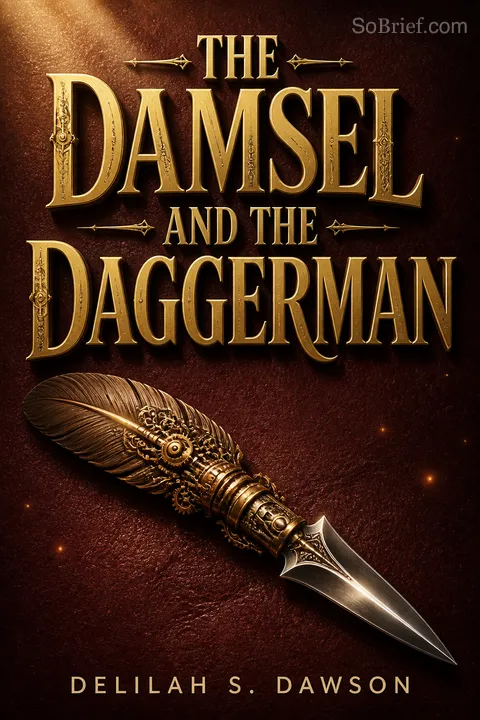
Plot Summary
Bonfire Whispers and Knives
The story opens with the arrival of Marco Taresque, a brooding knife thrower whose presence electrifies the carnival's nightly bonfire. Demi, a young contortionist, is instantly drawn to him, as are many others, but Marco remains aloof, shrouded in rumors of violence and tragedy. The carnival, led by the enigmatic Criminy Stain, is a haven for outcasts and performers, each with their own secrets. The atmosphere is thick with longing, curiosity, and the unspoken rules that keep everyone safe. Demi's fascination with Marco is both romantic and tinged with danger, setting the stage for the collision of desire and mystery that will drive the narrative forward.
The Journalist's Arrival
Jacinda, a widowed adventuress and journalist, arrives at the caravan determined to write an exposé on its hidden world. Her reputation for uncovering secrets precedes her, and she quickly negotiates access with Criminy, who is wary but intrigued by her persistence. Jacinda's sharp wit and unyielding curiosity make her both a threat and a potential ally to the carnival's denizens. She is granted entry under strict conditions, including the approval of Criminy's fortune-telling wife, Letitia. Jacinda's arrival disrupts the fragile equilibrium, promising revelations and stirring up old wounds as she begins her investigation into the lives—and scandals—of the carnival folk.
Glancer's Blessing, Carnival's Secrets
To gain full access, Jacinda must be "glanced" by Letitia, who senses both Jacinda's grief for her late husband and her hunger for adventure. Letitia's cryptic blessing reassures Jacinda, granting her permission to interview the carnivalleros. As Jacinda explores, she encounters the tight-knit, wary community, each member guarding their own story. She learns of Marco's dark reputation and the rumors of murder that follow him. The carnival's vibrant exterior masks a web of secrets, alliances, and unspoken pain. Jacinda's outsider status and relentless pursuit of truth begin to unsettle the performers, especially as she zeroes in on Marco, whose silence only deepens the intrigue.
The Daggerman's Reputation
Jacinda's interviews with the carnival's women reveal a mix of fascination and fear regarding Marco. He is rumored to have fled a bloody crime, his assistant vanished, and his name blackened in the press. Yet, none of the women claim to have been close to him, and his aloofness only fuels speculation. Jacinda's attempts to confront Marco are met with deflection and challenge. The carnival's artificer and butterfly mistress provide her with a wanted poster, but the details are vague and sensationalized. Jacinda senses that the truth is more complicated than the rumors suggest, and her determination to uncover it grows, even as Marco keeps her at arm's length.
Dangerous Dares and Cards
Marco, both wary and intrigued by Jacinda, proposes a dangerous dare: she must let him throw a knife at a playing card she holds while strapped to his spinning target. If he succeeds, she must leave him alone; if he fails, he will answer one question honestly. Jacinda accepts, drawn by both the thrill and the promise of truth. The tension between them is electric, blending fear, attraction, and mutual challenge. Marco's skill is flawless, but Jacinda's cleverness turns the game in her favor, forcing a draw and earning a stolen kiss. The encounter leaves both shaken and more entangled, their boundaries blurred by adrenaline and desire.
Spinning Targets, Spinning Hearts
The aftermath of the dare leaves Jacinda physically and emotionally off-balance. Marco's refusal to unbind her, forcing her to rely on Demi's help, highlights the carnival's complex web of relationships and rivalries. Demi's jealousy and Jacinda's empathy create a moment of connection between the two women, both outsiders in their own ways. Jacinda's conversation with Demi reveals the younger woman's longing for adventure and escape, mirroring Jacinda's own restless spirit. The carnival is a place of both safety and confinement, and the spinning target becomes a metaphor for the risks and rewards of seeking truth and intimacy in a world built on illusion.
Night of Temptation
As night falls, Jacinda attends Marco's knife-throwing act, marveling at his precision and the spectacle he creates for the crowd. The public performance contrasts with their private tension, as Jacinda lingers after the show to confront Marco. Their banter is laced with innuendo and challenge, each testing the other's limits. The boundaries between professional curiosity and personal desire blur further, culminating in a charged encounter that is interrupted before it can reach fulfillment. Both are left frustrated, their mutual attraction complicated by secrets and pride. The night underscores the carnival's dual nature: dazzling on the surface, dangerous beneath.
Games of Power and Desire
The push and pull between Jacinda and Marco intensifies as they each try to gain the upper hand. Jacinda's attempts to seduce Marco are met with resistance, his refusal rooted in a deeper wound. Their encounters become a dance of dominance and surrender, with each revealing vulnerabilities they would rather keep hidden. Jacinda's frustration grows, but so does her understanding that Marco's barriers are not just about pride—they are about pain and fear. The games they play are as much about trust as they are about pleasure, and both are forced to confront what they truly want from each other.
Chasing Stories, Chasing Truth
Determined to regain her composure and focus, Jacinda throws herself into her journalistic work, interviewing other carnivalleros and uncovering their stories. Her empathy and skill win over even the most reticent performers, and she begins to see the carnival as a tapestry of survival and longing. Yet, Marco remains the central mystery, his past and his heart locked away. Jacinda's pursuit of the truth becomes personal, driven by both professional ambition and genuine care. The more she learns, the more she suspects that Marco's reputation is a mask for deeper trauma—and that the real danger may come from the past he cannot escape.
The Daggerman's Confession
Marco challenges Jacinda to another round of knife-throwing, this time raising the stakes: more knives, more risk, and the promise of a real answer. As she submits to the spinning target, Jacinda realizes that the game is a test of trust as much as skill. Marco's knives outline her body with terrifying precision, but when one finally draws blood, the physical wound becomes a catalyst for emotional honesty. In the aftermath, Marco tends to her injury, and their defenses crumble. They finally give in to their desire, sharing a night of passion that is both healing and transformative. Yet, the truth about Marco's past still hangs between them, unresolved.
The Past Unveiled
In the intimacy that follows, Marco and Jacinda share their histories—her grief for her late husband, his shame and fear rooted in a violent incident with his former assistant, Petra. Marco reveals that he has been haunted by a prophecy: that the woman who takes his virginity will be bound to him forever. His refusal to be with anyone was an act of self-protection, not arrogance. Jacinda's compassion and courage break through his defenses, and together they begin to unravel the tangled web of guilt, pride, and longing that has kept Marco isolated. Their connection deepens, but the threat of Petra's return looms.
The Knife in the Dark
Jacinda receives a mysterious note from Marco, asking her to meet him at a seaside cottage. Driven by hope and apprehension, she prepares for the rendezvous, arming herself for the unknown. The journey through the stormy night is fraught with tension, and when she arrives, she is confronted not by Marco, but by Petra—alive, armed, and vengeful. The revelation that Petra has been stalking them, driven mad by obsession and betrayal, turns Jacinda's quest for truth into a fight for survival. The past Marco tried to escape has caught up with them both, and the final confrontation is inevitable.
Petra's Revenge
Inside the cottage, Jacinda finds Marco bound and wounded, Petra wielding his knives with deadly intent. Petra's monologue reveals the depth of her fixation and the events that led to Marco's disgrace: it was her blood, not his assistant's, that stained the wagon, and her rage at his rejection that fueled the rumors of murder. Petra's jealousy and pain are palpable, her actions both pitiable and terrifying. Jacinda's own courage and resourcefulness are tested as she faces down a woman who has nothing left to lose. The truth, at last, is laid bare, but at a terrible cost.
Poison and Salvation
As Petra prepares to kill Jacinda, the journalist uses a hidden weapon—a poisoned dart disguised as a bracelet—to incapacitate her attacker. The knife Petra throws strikes Jacinda's corset but fails to wound her. With Petra paralyzed, Jacinda frees Marco, and together they tend to each other's wounds, both physical and emotional. The ordeal cements their bond, and Marco's gratitude and relief are palpable. Petra's fate is left to the justice of the carnival, but her story serves as a cautionary tale about the dangers of obsession and the destructive power of unrequited love.
New Beginnings, Old Wounds
In the aftermath, Jacinda and Marco retreat to her conveyance, where they tend their wounds and share the full truth of their pasts. Marco confesses the prophecy that shaped his life, and Jacinda reveals the pain of losing her husband. Their mutual vulnerability becomes the foundation for a new beginning, one built on trust, respect, and shared adventure. With Petra's threat ended, Marco is finally free to imagine a future beyond shame and fear. Jacinda, too, finds healing in love and the promise of new stories to tell. Together, they look forward to a life of passion, partnership, and the endless possibilities of the open road.
Analysis
A steampunk romance about trust, trauma, and transformation"The Damsel and the Daggerman" is more than a carnival romance; it's a meditation on the risks and rewards of vulnerability. Through the lens of Jacinda's investigation and Marco's guarded heart, the novel explores how trauma, shame, and superstition can isolate individuals, even in a community of outsiders. The carnival setting, with its blend of spectacle and secrecy, becomes a metaphor for the masks we wear and the courage required to remove them. The story's steampunk elements—clockwork guardians, mechanical marvels—underscore the tension between control and chaos, artifice and authenticity. Ultimately, the novel champions the power of empathy, communication, and mutual respect to heal old wounds and forge new beginnings. In a modern context, it speaks to the importance of confronting the past, embracing vulnerability, and daring to seek joy, even when the world seems determined to keep us spinning in place.
Review Summary
The Damsel and the Daggerman is a novella in Delilah S. Dawson's Blud series, set in Criminy's Clockwork Caravan. Readers praise the steamy romance between journalist Jacinda and mysterious knife-thrower Marco, as well as the intriguing world-building and plot twists. Many reviewers find it a satisfying addition to the series, enjoying the return to the carnival setting and the glimpses of familiar characters. While some felt the ending was rushed, most recommend it for fans of paranormal romance and steampunk, noting Dawson's skill in creating vivid characters and atmospheric storytelling.
Characters
Jacinda Harville
Jacinda is a widowed journalist whose adventurous spirit masks deep grief for her late husband. Her drive to uncover the truth is both professional and personal, as she seeks meaning and connection in a world that often feels alien. Jacinda's intelligence, wit, and courage make her a formidable investigator, but her empathy and vulnerability allow her to form genuine bonds with the carnival's outcasts. Her relationship with Marco is a journey from suspicion and challenge to trust and intimacy, as she learns to balance her need for answers with the risks of love. Jacinda's arc is one of healing, self-discovery, and the reclamation of joy.
Marco Taresque
Marco is the carnival's enigmatic knife thrower, burdened by a reputation for murder and a prophecy that has shaped his every choice. His aloofness is a shield against pain, both inflicted and received, and his skill with knives is matched only by his fear of intimacy. Marco's past with Petra is a source of shame and trauma, and his reluctance to be with Jacinda is rooted in a belief that love will only bring ruin. Through Jacinda's persistence and compassion, Marco learns to confront his fears, accept his desires, and embrace the possibility of happiness. His journey is one of redemption, vulnerability, and the courage to love.
Petra Incanta
Petra is Marco's former assistant, whose unrequited love and subsequent rejection drive her to madness and violence. Her actions are fueled by a desperate need for validation and a refusal to accept the boundaries Marco sets. Petra's story is a tragic exploration of obsession, jealousy, and the destructive power of unmet longing. Her confrontation with Jacinda and Marco is both a reckoning and a release, forcing all involved to face the consequences of their choices. Petra's fate is a cautionary tale, underscoring the dangers of love turned toxic.
Criminy Stain
The ringmaster of the carnival, Criminy is both a leader and a guardian, fiercely protective of his found family. His wariness of outsiders is balanced by a shrewd understanding of people's motives, and his partnership with Letitia grounds him. Criminy's rules and boundaries create a space where misfits can thrive, but his own secrets and past hint at the costs of such a life. He is both a mentor and a gatekeeper, shaping the carnival's culture and ensuring its survival.
Letitia "Tish" Stain
Letitia is Criminy's wife and the carnival's fortune-teller, whose "glancing" ability allows her to sense people's intentions and fates. She serves as a moral compass and confidante, offering guidance and comfort to those in need. Letitia's blessing is essential for Jacinda's acceptance, and her insights often steer events in subtle ways. Her own mysterious past and deep empathy make her a stabilizing force within the carnival.
Demi Ward
Demi is a young contortionist who longs for adventure beyond the carnival's confines. Her fascination with Marco is both romantic and aspirational, reflecting her desire for something more than the life she knows. Demi's journey is one of self-discovery, as she learns to balance longing with reality and finds her own path to fulfillment. Her friendship with Jacinda and Cherie provides moments of warmth and solidarity.
Cherie
Cherie is Demi's best friend and contortionist partner, offering support and stability in a world of uncertainty. Her background is marked by hardship, but her resilience and kindness shine through. Cherie's role is often that of the voice of reason, grounding Demi and providing a counterpoint to the more impulsive characters. Her presence underscores the importance of chosen family and the strength found in companionship.
Imogen
Imogen runs the butterfly circus and is partnered with the artificer, Mr. Murdoch. Her gentle nature and love of beauty contrast with the carnival's harsher realities. Imogen's interactions with Jacinda reveal the quieter stories within the caravan, and her hidden real butterfly hints at the persistence of hope and wonder in a world of loss.
Mr. Murdoch
The carnival's artificer, Mr. Murdoch is responsible for the clockwork guardians and the mechanical wonders that keep the caravan safe. His shyness masks a deep loyalty to Imogen and the community. Murdoch's inventions are both practical and symbolic, representing the blend of magic and machinery that defines the carnival's world.
Torno
The carnival's strongman, Torno is a figure of physical power and emotional vulnerability. His tragic past and unrequited love add depth to his character, and his interactions with Jacinda reveal the hidden tenderness beneath his imposing exterior. Torno embodies the theme of strength as both a blessing and a burden.
Plot Devices
The Spinning Target and Knife-Throwing
The spinning target and Marco's knife-throwing serve as central symbols throughout the narrative. These acts of precision and peril mirror the emotional stakes between Jacinda and Marco, where trust, vulnerability, and the possibility of harm are ever-present. The dares and games they play are not just spectacles but tests of character, intimacy, and courage. The target becomes a stage for both seduction and confession, blurring the line between performance and reality.
The Journalist's Investigation
Jacinda's role as a journalist drives the plot, her questions and observations peeling back the layers of secrecy that protect—and imprison—the carnival's inhabitants. Her investigation is both literal and metaphorical, as she seeks not only facts but understanding, empathy, and connection. The narrative structure follows her journey from outsider to insider, mirroring the reader's own immersion in the world of Sang.
Prophecy and Fate
Marco's life is governed by a prophecy that the woman who takes his virginity will be bound to him forever. This belief shapes his actions, relationships, and sense of self, creating both tension and tragedy. The prophecy functions as both a plot device and a psychological barrier, raising questions about destiny, agency, and the power of belief. Its eventual fulfillment marks a turning point, freeing Marco from fear and allowing true intimacy.
Foreshadowing and Misdirection
The narrative employs foreshadowing through rumors, newspaper clippings, and the ominous presence of Petra. Misdirection keeps both Jacinda and the reader guessing about Marco's guilt, Petra's fate, and the true nature of the crime. The gradual unveiling of the past heightens tension and emotional investment, culminating in a climactic confrontation that redefines the characters' futures.
Blud Series
Download PDF
Download EPUB
.epub digital book format is ideal for reading ebooks on phones, tablets, and e-readers.








































