Key Takeaways
1. Early Faith Shaped by Fear and White Imagery
A child seeing themselves for the first time is definitive.
Seeing through refraction. The author's first religious self-perception was through the "refracting irises of blue eyes" of a white, male Jesus figure. This image, presented during childhood baptism, immediately told her what she was not – not white, not pink-hued, not blue-eyed. This distorted reflection, coupled with warnings of hellfire for perceived sins like her early awareness of loving other girls, instilled deep fear and a sense of being misshapen or "bent" in the eyes of God and the church.
Concealing the self. Growing up in New Home Missionary Baptist Church in McComb, Mississippi, the author learned to conceal her true self, particularly her sexuality, to avoid condemnation. The church environment, while providing community and structure, also fostered a fearful surrender to a God presented through a white, male lens that seemed to judge her inherent being. This early seeing through a distorted mirror created a foundational conflict between her identity and her faith.
Questions without answers. Despite being told not to question God, the author had many questions about the contradictions she observed and the self she was told to hide. This early experience of seeing herself through a lens that deemed her "not" set the stage for a lifelong journey of questioning, seeking, and ultimately redefining her understanding of God and faith beyond the confines of her initial religious indoctrination.
2. Southern Black Church Women as Foundational Power
The Southern Black Church Woman may not be the figurehead of the Black Church, but best believe it is her work, her money, her say, her energy that holds it together, keeps it a beating heart.
Earthen cloud of witnesses. Despite the patriarchal structure of the church, the author was shaped and molded by the Southern Black Church Women, led by her grandmother. These women, with their "cracked tile impressions on their Hanes stockinged knees," were the true pillars of the community, providing a tangible, loving presence that contrasted with the distant, fearful image of the Blue-Eyed Man.
Beyond feminism. The author argues that traditional feminism has failed the Southern Black Church Woman, often speaking about her but rarely to her. These women are not just an overlapping identity in intersectional feminism; they are the "very foundation of liberation and Black identity," their strength forged in the crucible of slavery, hush harbors, and revivals. They battled men within their own churches who tried to silence them.
Dark matter of the church. Like dark matter holding galaxies together, these women's unseen work, prayer, and energy are the force that sustains the Black Church. They demanded more than just civil rights, understanding that true liberation meant reclaiming their names and communities, often literally from their gardens and fields, all while facing violence and oppression. Their legacy is the "bloodroot" and "blood" that fuels the author's own activism.
3. Church Hurt and the Struggle with Identity
My lifetime of “because the Bible tells me so” did not stand a chance in the crude enlightenment of my psychology courses on sexuality and social behaviors.
Overdosing on church. The author describes her eventual departure from the church as an "overdose" and a "cruelest of withdrawals," highlighting the addictive nature of the community and spiritual highs, but also the toxicity of its dogma. This "church hurt" manifested in profound ways, including the repression of her sexuality and the feeling of being an "imposter" in her own life.
Faith meets education. College courses, particularly in psychology and Africana Studies, challenged the unquestioned devotion of her youth. Learning about sexuality and social behaviors, as well as the historical context of Blackness and oppression, made the simple "because the Bible tells me so" insufficient and hollow. This intellectual awakening forced a painful interrogation of her faith.
Exile and reconfiguring. At a young age, the author decided to "reconfigure" herself into straightness to avoid the persecution faced by queer individuals in her community. This self-imposed "exile of refusal" meant denying her love for girls and attempting to replace those desires with boys, leading to a disconnection from her own body and a feeling of watching her life unfold without her.
4. Colonized Christianity Serves White Supremacy and Capitalism
Christianity merely serves as a convenient institution that convinces us that it is the will of God to further its cause.
Not the "white man's religion". The author argues that the true "state religion of whiteness" is the acquisition of power through capital. Christianity, particularly evangelical Christianity, functions as an institutional reinforcement of this power, providing narratives that justify inequality and exploitation. The Bible, in this context, becomes a tool for social control, wielded to maintain a supremacist state.
God is not always good. The compulsory Christian belief in God's perpetual goodness is questioned, especially in the face of systemic oppression and unjustified evil. This dogma, while stemming from a tradition of community resilience, can manipulate love for God to accept conditions that reinforce inequality. Compulsory Christian happiness becomes a "moral emotion" that masks internal hierarchies and justifies subordination.
Capitalism and salvation. The emphasis on Jesus's death in Christianity provides a narrative that aids colonization by glorifying sacrifice and manipulating believers into accepting exploitation for the gain of the corporate state. The prosperity gospel, while seemingly about Black advancement, often reinforces the idea that wealth acquisition is a sign of God's favor, distracting from the systemic nature of poverty and inequality.
5. Reimagining God as Black, Liberatory, and Multifaceted
What we say less is what I’m most certain of: God Herself is Black.
Beyond biblical limits. The author posits that the biblical God, with attributes like omniscience and omnipotence, is insufficient for a BlackGod. The Bible is seen as an "impoverished document" and an "abject celebration of genocide, infanticide, and bigotry," inadequate to meet the needs of oppressed people. A BlackGod demands more – art, faith, mutiny, laughter, community, and a fight for liberation, not just freedom.
Black folks made God good. The survival of Black people, the "speculative fiction survival," and the "cosmos we built over and under the Atlantic" are presented as the true evidence of God, not the Bible. Black people gave God song, morality, and beauty, transforming a potentially violent deity into one associated with survival and resilience.
An inclusive, justice-centered God. The author's decolonized faith includes a God who is justice-centered, demanding liberation from exploitation. Jesus is seen as the embodiment of this liberating presence, murdered by the state like many Black men. This reimagined God affirms the diversity of human identities, including LGBTQIA+, as holy and divine, rejecting theologies that perpetuate injustice based on innate identities.
6. Reclaiming African Spiritual Practices Within Black Faith
Without the retention of the rites and rituals of these practices, there is no Black Church.
Witchcraft or worship? The author argues that many practices within the Black Church, often labeled as "witchcraft" when performed outside its walls, are undeniable retentions of African spiritual traditions. Rituals like shouting (the Ring Shout), tarrying, speaking in tongues, spiritual baths (baptism), laying on of hands, and ancestor veneration (beatification of saints, cloud of witnesses) are deeply linked to African cosmology.
Syncretism is foundational. The Black Christian tradition exists because it syncretized with African traditional religions. Enslaved ancestors preserved their cultural identity and spirituality by blending inherited practices with the Christianity forced upon them. Sanitizing these practices by renaming them (e.g., spirit possession becomes catching the Holy Ghost) doesn't change their essence or divine source.
Beyond Eurocentricity. Christianity arrived in Africa and America already filtered through Semitic, Greco-Roman, and European cultures. The argument against African practices wasn't about their inherent evil but about upholding Eurocentric culture as necessary for "proper" Christian conversion. Reclaiming these practices is an act of decolonization, recognizing that God is revealed in diverse ways, not exclusively through a Eurocentric lens.
7. Critique of Patriarchy and Misogynoir in the Black Church
In the institutional structure of our churches, for Black men to be powerful, Black women must be subjugated.
Last bastion of power. The pulpit is identified as a space where Black men, often denied power in white supremacist structures, exert dominance over Black women. This misogynoir, fueled by biblical interpretations that demand women's submission and silence, requires Black women to be subjugated for Black men to maintain power within the church hierarchy.
Sacrificial devotion. Black churched women are often subjected to a "sacrificial devotion" model, exemplified by interpretations of Proverbs 31. This requires them to prioritize enabling the lives of others, particularly men, at the expense of their own desires and well-being. Sermons like Juanita Bynum's "No More Sheets" reinforce this, blaming women for their struggles while upholding patriarchal expectations.
Visible invisibility. Women are the majority and the lifeblood of the church, contributing time, talent, and money, yet are often relegated to supportive roles while men occupy the pulpit. This creates a dynamic where women are both essential and rendered invisible, their power present but rarely legitimized. This gender inequality is a deliberate outcome of patriarchal culture, not God's will.
8. Purity Culture and Sexual Repression Cause Deep Harm
Denying our desires, telling ourselves that sex is bad until it is made holy by marriage, and calling it salvation in hopes of achieving holiness is an opiate that goes down easily.
Sex as sin. Purity culture, deeply embedded in the Black Church, teaches that sex outside of cisgender, heteronormative marriage is sinful, leading to fear-based messages and the objectification of bodies. Women's worth becomes tied to their virginity, creating a social hierarchy where sexual purity is prized above all else, even at the cost of genuine connection or self-acceptance.
Compartmentalization and denial. This indoctrination leads to compartmentalizing and repressing natural sensual urges. The pressure of performative piety creates a "deep fissure" between sexuality and spirituality, leaving individuals feeling tormented by desires they are told are unholy. This self-denial, while praised by the church, can lead to unhealthy relationships and a disconnection from one's own body and pleasure.
Unmet needs and regret. The author's personal experience highlights the painful consequences of adhering to purity culture, including entering emotionally abusive relationships in search of validation and holiness through marriage. The years spent denying her sexuality resulted in a "lament that even David couldn’t write a psalm about," revealing the deep harm caused by equating holiness with sexual repression.
9. Reconciling Sexuality and Spirituality is Essential for Wholeness
I am holy, inclusive of my sexuality, not despite or in denial of it.
Severance and healing. The Black Christian tradition often bifurcates body and spirit, using the Bible to support ideologies that lead to internal dissociation from the body. Healing requires reclaiming all parts of the self, including sexuality, as holy. This means recognizing that sexual desire and pleasure are part of the imago Dei, the image of God.
Sex as sacred. Reconciling sex as a sacred, bridging experience between God and self challenges the notion that pleasure is inherently sinful. It invites a recognition that bodies know desire, arousal, and orgasm, and that these experiences can be intentional and holy. The "uninhibited pleasure and praise for divinity" felt during sexual passion suggests a connection between the sacred and the sensual.
Coming home to the body. The journey towards a liberated faith begins with finding sacredness within the whole self, starting with sex. This involves challenging authoritative teachings that separate sexuality and spirituality. Embodiment – connecting with the body's sensations, emotions, and movements – is key to recognizing the body's wisdom and intelligence, and ultimately, its holiness.
10. The Black Church Must Transform or Face Irrelevance
Stated plainly, if the church refuses to evolve to serve the needs of our people, it will inevitably be left to self-destruct.
Lagging behind. The church is reluctant to evolve, clinging to antiquated dogma and excusing toxic theology by claiming "God never changes." This resistance, particularly on issues of gender and sexuality, alienates younger generations who are more politically aware and seek deeper connections and conversations about God that the traditional church often fails to provide.
Beyond tickling emotions. Millennials, raised in the church but now leaving in significant numbers, are not seeking highly produced services or social media-savvy pastors. They desire authentic leaders, tools for survival in a hostile world, and a faith that makes room for the whole self. Sermons based on sexism, classism, and homophobia are no longer compelling and fail to equip them for the challenges they face.
A call for reckoning. The future of the Black Church is "looking real shaky." To survive, it must confront its harm, particularly against marginalized bodies. It needs to move beyond respectability politics and acknowledge that Christian exceptionalism is not a cure for anti-Blackness. A revolution is needed to transform the church into a site of liberation and justice for all Black lives, not just those who fit a narrow mold.
11. Black Women's Bodies and Experiences are Sacred and Politicized
In this here place, we flesh; flesh that weeps, laughs; flesh that dances on bare feet in grass.
Double jeopardy. Black women navigate the intersection of anti-Black racism and sexism, often ranking last in global patriarchal structures. Their bodies are simultaneously defeminized, invisible, and hyper-visible, targets for projection and undeserving of tenderness. This reality is compounded by the historical context of Black women's hypersexualization and the denial of their purity.
Labor and resilience. Black womanhood has been defined by labor and resilience, tasked with racial uplift while facing intraracial patriarchal oppression. The "Cult of Domesticity" excluded Black women, forcing them to prioritize collective survival over individual gender ontology. This legacy has created a paradox where Black women feel obligated to support men while being harmed by patriarchal structures.
Softness as resistance. The author seeks a "soft Black life" as an act of resistance against the demands of "Strong Black Womanhood" and the pursuit of unattainable hegemonic femininity. This softness is not about emulating white womanhood or shrinking oneself, but about reclaiming the right to ease, grace, tenderness, and vulnerability. It is a rejection of being defined by labor and a demand to be valued for one's inherent worth.
12. Liberation Requires Confronting Internalized Oppression
Our hubris in suggesting that LGBTQIA+ identity defies God—not just our arbitrary sexuality and gender constructs—is nothing short of audacity.
Cultural conditioning. Homophobia, sexism, and other forms of antagonism against marginalized people are deeply embedded in Black cultural narratives, sustained even outside the church. This conditioning leads to internalized oppression, where individuals blame themselves or others within the community for systemic issues, rather than confronting the root cause of white supremacy.
Hypocrisy and denial. The church's treatment of LGBTQIA+ individuals reveals deep hypocrisy, readily believing accusations against queer people while defending heterosexual abusers. This is fueled by homophobic patriarchy, which silences sexual abuse and prioritizes maintaining male dominance over protecting victims. The focus on queer identity as solely about sex is a distraction from the church's inability to have honest conversations about sexuality and power dynamics.
Unpacking the baggage. Moving forward requires the church to acknowledge the harm it has caused and make recompense. It must unpack how it has marginalized femme and queer bodies and normalized their invisibility. Liberation for all Black lives depends on confronting internalized oppression, disavowing harmful narratives, and recognizing that true wholeness comes from accepting and celebrating the full spectrum of Black identity and experience.
Review Summary
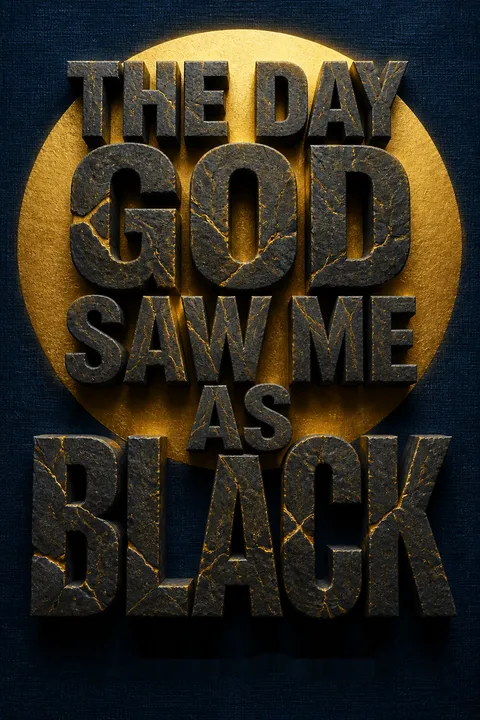
The Day God Saw Me as Black receives overwhelmingly positive reviews, with readers praising its insightful exploration of race, religion, and identity in the Black church. Many appreciate the author's vulnerability, critique of oppressive structures, and vision for liberated faith. Readers connect deeply with the book's examination of intersectionality, purity culture, and the quest for authentic spirituality. While some essays may not resonate with everyone, the majority find the book thought-provoking, relatable, and essential reading for those wrestling with faith, identity, and Blackness in religious spaces.
People Also Read




FAQ
What is The Day God Saw Me as Black by D. Danyelle Thomas about?
- Personal and theological memoir: The book is a deeply personal reflection on Thomas’s upbringing in the Southern Black Church, blending memoir with theological critique and cultural analysis.
- Intersectional exploration: It examines the intersections of race, gender, sexuality, and spirituality, focusing on the lived experiences of Black women and queer individuals within religious spaces.
- Critique and reimagining of faith: Thomas interrogates how Christianity has been used to uphold white supremacy and patriarchy, calling for a liberatory faith centered on Blackness, justice, and holistic spirituality.
- Focus on Black womanhood: The narrative highlights the complexities of Black womanhood, including the impact of misogynoir, respectability politics, and religious dogma.
Why should I read The Day God Saw Me as Black by D. Danyelle Thomas?
- Unique intersectional perspective: The book offers an intimate look at navigating faith as a Black, queer woman, providing insight into the emotional and spiritual costs of religious conformity.
- Critical engagement with church culture: Thomas challenges readers to confront uncomfortable truths about oppression within sacred spaces and to envision a more inclusive, transformative faith.
- Liberatory and healing vision: Through personal narrative and theological reflection, the book inspires readers to seek a faith that affirms their whole selves and encourages collective healing and resistance.
- Relevance to contemporary issues: The text connects historical and theological analysis with modern cultural phenomena, making it accessible and timely.
What are the key takeaways from The Day God Saw Me as Black by D. Danyelle Thomas?
- Duality of God and BlackGod: Thomas contrasts the biblical God, often associated with oppressive systems, with a liberatory BlackGod who embodies justice and community.
- Intersectionality of oppression: The book explores how race, gender, sexuality, and class intersect within religious contexts to marginalize certain identities.
- Role of Black Church Women: Southern Black Church Women are highlighted as foundational to Black liberation, community survival, and spiritual resilience.
- Call for transformation: Thomas advocates for the renewal of the Black Church to embrace inclusivity, justice, and the affirmation of marginalized lives.
How does D. Danyelle Thomas describe her relationship with the Black Church in The Day God Saw Me as Black?
- Love and critique: Thomas expresses deep love for the Black Church as a cultural and spiritual home, while also critiquing its patriarchal and exclusionary practices.
- Experience of spiritual abuse: She recounts experiences of condemnation and control, particularly around sexuality and gender, leading to spiritual exile.
- Desire for transformation: Despite her critiques, Thomas calls for the Black Church’s renewal to better serve and affirm all its members, especially those marginalized by traditional doctrines.
How does The Day God Saw Me as Black by D. Danyelle Thomas address the intersection of Blackness and spirituality?
- Blackness as sacred: Thomas asserts that Blackness is inherently holy and not in need of salvation through whiteness or colonial frameworks.
- Critique of anti-Black theology: The book exposes how Christian doctrine has justified slavery and systemic racism, calling for a re-reading of scripture that centers Black liberation.
- Integration of African spirituality: Thomas affirms the syncretism of African cosmology and Christianity, reframing ancestral practices as authentic and spiritually valid.
What is misogynoir, and how does D. Danyelle Thomas address it in The Day God Saw Me as Black?
- Definition and impact: Misogynoir, coined by Moya Bailey, describes the unique intersection of misogyny and anti-Blackness faced by Black women.
- Manifestation in the Black Church: Thomas details how church teachings police Black women’s bodies, dress, and sexuality, enforcing respectability politics and silencing women’s voices.
- Internalized oppression: The book explores how Black women can both suffer from and participate in misogynoir as a survival mechanism within patriarchal religious spaces.
How does The Day God Saw Me as Black by D. Danyelle Thomas critique traditional biblical interpretations?
- Questioning biblical inerrancy: Thomas challenges the idea that the Bible is infallible, highlighting its complicity in bigotry and violence against marginalized groups.
- Rejection of harmful texts: She refuses to affirm passages that condemn Black, queer, and marginalized identities, advocating for contextual and liberatory readings.
- Emphasis on lived experience: The book elevates the testimonies and survival of Black people as evidence of God’s presence, broadening the understanding of revelation beyond scripture.
What role do Southern Black Church Women play according to The Day God Saw Me as Black by D. Danyelle Thomas?
- Foundational to liberation: Southern Black Church Women are depicted as the backbone of the Black Church and community, leading and sustaining movements for justice and survival.
- Resistance to patriarchy: These women have confronted male church leaders, advocated for reproductive rights, and maintained spiritual care through prayer and activism.
- Cultural and spiritual influence: Thomas credits these women with shaping her faith and identity, modeling a spirituality deeply connected to community and justice.
How does D. Danyelle Thomas explore the intersection of Black womanhood, sexuality, and purity culture in The Day God Saw Me as Black?
- Impact of purity culture: The book critiques the emphasis on abstinence and sexual repression, showing how it instills shame and guilt around natural desires.
- Reclaiming sexual pleasure: Thomas advocates for recognizing sexual pleasure as sacred and integral to Black women’s wholeness and healing.
- Personal narrative of healing: She shares her journey from religious guilt to sexual empowerment, illustrating the complex interplay of faith, desire, and liberation.
What is the “Let God Be True Quickly” agenda, and how does D. Danyelle Thomas critique it in The Day God Saw Me as Black?
- Compulsory heterosexuality: The phrase critiques the Black Church’s rigid enforcement of heterosexual, cisgender norms as divine truth, marginalizing LGBTQIA+ individuals.
- Weaponization of homophobia: Thomas examines how homophobia is used to maintain patriarchal and heteronormative power structures, referencing high-profile church scandals.
- Call for accountability: She urges the Black Church to reckon with its history of harm toward queer bodies and to embrace justice and affirmation for all identities.
How does The Day God Saw Me as Black by D. Danyelle Thomas reinterpret biblical texts related to sexuality and gender?
- Critique of inerrancy: The book challenges rigid interpretations that uphold white supremacist and patriarchal authority, advocating for contextual readings.
- Sex-positive interpretations: Thomas offers alternative readings of biblical stories, highlighting themes of sexual agency and sacred intimacy.
- Embodiment in faith: She emphasizes that God’s incarnation affirms the holiness of the body, integrating sensuality and spirituality.
What are some of the most powerful quotes from The Day God Saw Me as Black by D. Danyelle Thomas, and what do they mean?
- “There were two gods in that church, and they were at war.” This quote encapsulates the internal conflict between oppressive and liberatory understandings of God within the Black Church.
- Affirmation of Blackness: Quotes throughout the book reclaim Blackness as holy and challenge narratives that depict it as sinful or cursed.
- Call for transformation: Thomas’s words often serve as a rallying cry for the Black Church to embrace justice, inclusivity, and radical love.
- Personal testimony: Her storytelling provides visceral insight into the pain and healing possible within faith communities, inviting readers to embark on their own journeys of spiritual wholeness.
Download PDF
Download EPUB
.epub digital book format is ideal for reading ebooks on phones, tablets, and e-readers.








































