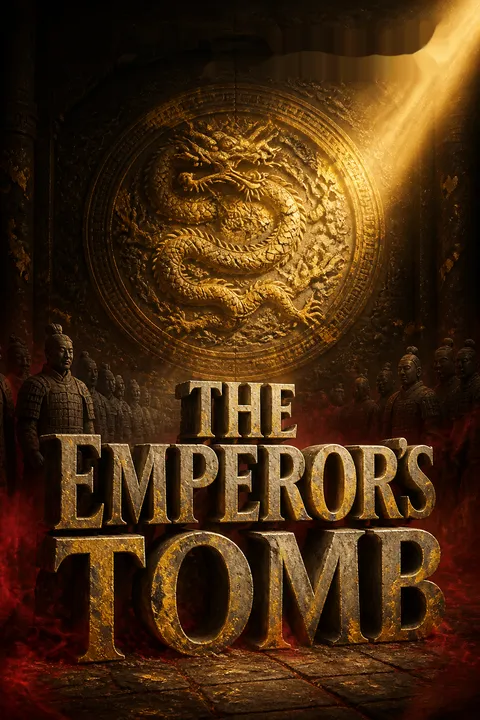

Plot Summary
Prologue: River of Secrets
Cotton Malone and Cassiopeia Vitt are under fire in the remote borderlands between China and Pakistan. Amidst gunfire and the roar of a river, they are forced onto a rickety bridge, only to be attacked by a helicopter. The bridge is destroyed, and Cassiopeia plunges into the icy torrent below, vanishing from sight. Malone is left in shock, believing his companion lost. This harrowing moment sets the tone for a story where ancient secrets, political ambition, and personal loyalties collide, and where the past's buried truths threaten to reshape the future of China—and the world.
The Waterboarded Messenger
In Copenhagen, Malone receives a chilling video: Cassiopeia is being waterboarded by unknown captors demanding an artifact she supposedly left with him. Malone, confused and alarmed, realizes he has no idea what they want. The message is clear—Cassiopeia's life depends on his cooperation. Driven by guilt and fear, Malone is drawn into a web of intrigue that stretches far beyond his quiet life as a bookseller, forcing him to confront old alliances and new dangers as he races to save her.
Ancient Rivalries Awaken
In China, Minister Karl Tang oversees the execution of a dissident scientist, Jin Zhao, while maneuvering for supremacy within the Communist Party. His rival, Ni Yong, is a disciplined investigator tasked with rooting out corruption. Both men are locked in a silent war, each representing opposing philosophies—Legalism's iron rule versus Confucian moderation. Their contest is not just for personal power, but for the soul and direction of China itself, as ancient rivalries and modern ambitions intertwine.
The Dragon Lamp Stolen
In Antwerp, Cassiopeia tracks down a legendary artifact—a dragon lamp, rumored to contain ancient oil from the time of China's First Emperor. She steals it from the enigmatic Pau Wen, a former Chinese official and secretive collector. The lamp becomes the focal point of a global chase, coveted by Tang, Ni, and shadowy factions. Its true value lies not in its artistry, but in the scientific proof it may offer about the origins—and future—of oil, a resource that could tip the balance of world power.
The Brotherhood's Shadow
Pau Wen unveils to Ni Yong the existence of the Ba, a clandestine brotherhood of eunuchs who have shaped Chinese history for millennia. Their modern incarnation is embedded within the highest echelons of government, manipulating events from the shadows. Pau himself is a eunuch and former Hegemon of the Ba, and Tang is revealed as their ambitious protégé. The Ba's philosophy is ruthless: power must be seized and maintained at any cost, and the fate of nations is but a tool for their designs.
The First Emperor's Tomb
Tang visits the tomb of Qin Shi Huang, China's First Emperor, where a hidden chamber is discovered containing ancient manuscripts and evidence of early oil drilling. The tomb's treasures are quickly destroyed by fire on Tang's orders, erasing inconvenient truths. Yet, the real secret is not the artifacts themselves, but the knowledge they represent—proof that oil is not a finite, fossil resource, but an infinite, abiotic force. This revelation could free China from foreign dependence and reshape global geopolitics.
The Eunuch's Revelation
Through Pau Wen's confessions and historical flashbacks, the psychological and political role of eunuchs in China is laid bare. Once powerless servants, they became kingmakers and puppeteers, their lack of family ties making them both trusted and feared. The Ba's modern members, including Tang, have undergone the ancient ritual of castration, binding them to the brotherhood and its cause. Their methods are brutal, their loyalty absolute, and their vision for China uncompromising.
Child Stolen, Debts Owed
Cassiopeia's involvement is revealed to be deeply personal: she is repaying a life debt to Lev Sokolov, a Russian geologist whose son has been kidnapped in China. The child's abduction is part of Tang's scheme to force Sokolov's cooperation in proving the oil theory. Cassiopeia's determination to save the boy intertwines her fate with Malone's and the larger political machinations, as the search for the lamp becomes a race against time and betrayal.
Tang's Ruthless Ambition
Tang's ascent is marked by cruelty—he tortures Sokolov, orchestrates murders, and manipulates both allies and enemies. His vision is a China restored to imperial glory, unshackled from Western influence, and powered by endless oil. Tang's willingness to kill, deceive, and sacrifice anyone in his path makes him a formidable antagonist, and his alliance with the Ba gives him resources and reach that seem insurmountable.
The Library Burns
As Tang destroys the newly discovered imperial library, he attempts to erase any evidence that could undermine his narrative or empower his rivals. The burning of the manuscripts is both literal and symbolic—a regime's attempt to control history by obliterating inconvenient truths. Yet, the knowledge survives in hidden forms, and the struggle to possess it becomes the central conflict among Tang, Ni, Pau, and the foreign agents drawn into their orbit.
The Antwerp Inferno
In Antwerp, multiple factions converge on the Dries Van Egmond Museum, where Cassiopeia has hidden the dragon lamp. The museum becomes a battleground—gunfire, fire, and betrayal erupt as Malone, Cassiopeia, Viktor Tomas (a double agent), and Tang's men clash. The lamp's oil is lost in the chaos, but the chase only intensifies, with alliances shifting and the true nature of each player revealed through violence and sacrifice.
Alliances and Double Crosses
Malone, Cassiopeia, and their shifting circle of allies—including the enigmatic Viktor and the American and Russian intelligence services—navigate a labyrinth of deception. Viktor's loyalties are ambiguous; Stephanie Nelle, Malone's former boss, manipulates events from afar. The Russians want Sokolov silenced or returned, the Americans want Tang stopped, and everyone wants the secret of infinite oil. In this world, trust is provisional, and every alliance is a potential double cross.
The Oil That Endures
Sokolov's research, combined with the ancient oil sample, offers proof that oil is not a finite fossil fuel but a renewable, abiotic resource. This knowledge, if controlled, could make China energy-independent and upend the global order. The struggle for the lamp and its oil is thus not just about power, but about the future of civilization's most vital resource. The revelation is both a promise and a threat, depending on who wields it.
The Ba's Hidden Hand
As the protagonists converge on the Hall for the Preservation of Harmony, the Ba's mountain stronghold, the true scale of their influence is revealed. Pau Wen, once Tang's mentor, now seeks to manipulate the outcome of the power struggle, offering his support to Ni if he proves worthy. The Ba's archives, treasures, and ancient rituals are unveiled, and the final confrontation is set amid the relics of China's imperial past.
The Tomb's True Treasure
In the hidden chamber, the jade burial suit of Qin Shi and the preserved treasures of the First Emperor are revealed. The lamp, and its oil, are finally delivered to Ni and Sokolov, offering the proof needed to change the world. But the confrontation turns violent—betrayals, sacrifices, and deaths ensue. Viktor, torn between loyalties, sacrifices himself to save Cassiopeia and Malone, while Tang meets his end in a final, brutal showdown.
The Final Confrontation
With Tang dead and the Ba's allegiance pledged to Ni, the future of China hangs in the balance. Pau Wen, ever the manipulator, offers his support to Ni, who must decide whether to trust the brotherhood or purge it. The secrets of the past—Confucian texts, the truth about oil, and the legacy of the eunuchs—are now in Ni's hands. The fate of China, and perhaps the world, will be shaped by his choices.
The Mandate Renewed
Ni, now poised to assume leadership, vows to reform China—purging the Ba, embracing elements of democracy, and revealing the truth about oil to the world. The cycle of history, the tension between Legalism and Confucianism, and the struggle for the "mandate of Heaven" are all invoked as China stands at a crossroads. The story ends with a sense of hope, but also of uncertainty, as the lessons of the past are weighed against the demands of the future.
Epilogue: Fate and Future
In the aftermath, Malone and Cassiopeia reflect on loss, love, and the games they have played. Viktor is honored in a sky burial, his ambiguous legacy acknowledged. Pau Wen's fate remains uncertain, but his influence lingers. As China's destiny is rewritten, Malone and Cassiopeia choose honesty and connection over further deception, closing the book on one chapter of their lives and opening another, as history's wheel turns once more.
Analysis
A modern thriller about power, history, and the cost of truthThe Emperor's Tomb is more than a globe-trotting adventure; it is a meditation on the cyclical nature of power, the dangers of unchecked ambition, and the enduring tension between tradition and reform. Steve Berry uses the conventions of the thriller—chases, betrayals, secret societies—not just to entertain, but to probe the psychological and philosophical dilemmas at the heart of modern China. The novel's central revelation—that oil may be infinite, and that knowledge is the ultimate weapon—serves as a metaphor for the dangers and opportunities of the information age. The Ba brotherhood, with its roots in ancient eunuch traditions, embodies the persistence of hidden power and the difficulty of true reform. The characters' personal journeys—Malone's struggle with vulnerability, Cassiopeia's quest for connection, Ni's evolution from investigator to leader—mirror the larger questions facing China and the world: Can the past be reconciled with the future? Can power be wielded without corruption? And can individuals, in the face of overwhelming systems, make choices that matter? The Emperor's Tomb suggests that history is both a burden and a guide, and that the future belongs to those who have the courage to confront both their enemies and themselves.
Review Summary
The Emperor's Tomb receives mixed reviews, with praise for its historical research, Chinese setting, and action-packed plot. Critics appreciate Berry's blend of fact and fiction, though some find the narrative convoluted. Readers enjoy Cotton Malone's character development and his relationship with Cassiopeia Vitt. The novel's exploration of Chinese history, politics, and abiotic oil theory intrigues many. However, some reviewers struggle with the complex plot and numerous characters. Overall, fans of the series and historical thrillers find it an entertaining, if sometimes challenging, read.
People Also Read
Characters
Cotton Malone
Cotton Malone is a former American intelligence operative turned Danish bookseller, drawn back into danger by loyalty and love. His eidetic memory and analytical mind make him a formidable investigator, but he is haunted by past losses and struggles with emotional vulnerability. Malone's relationship with Cassiopeia is marked by mutual respect, unspoken affection, and shared trauma. Throughout the story, he is driven by a sense of duty—to friends, to justice, and to the truth—yet he is repeatedly forced to question whom he can trust. His journey is one of self-discovery, as he confronts both external threats and his own emotional barriers.
Cassiopeia Vitt
Cassiopeia is a wealthy, independent woman with a background in archaeology and adventure. Her involvement in the plot is deeply personal—she is repaying a life debt to Lev Sokolov by risking everything to save his kidnapped son. Cassiopeia is resourceful, courageous, and unafraid to confront danger head-on, but she is also emotionally guarded, shaped by loss and betrayal. Her relationship with Malone is complex, blending attraction, partnership, and unspoken longing. Cassiopeia's arc is one of resilience and growth, as she learns to trust, to forgive, and ultimately to choose connection over isolation.
Karl Tang
Tang is the embodiment of Legalist philosophy—believing in order through force, control, and fear. As China's first vice premier and a secret leader of the Ba, he is both a political and psychological force, willing to torture, kill, and betray to achieve his vision of a resurgent, imperial China. Tang's psychological makeup is shaped by his initiation as a eunuch, his loyalty to the brotherhood, and his belief in the necessity of ruthless action. His downfall is precipitated by overreach, hubris, and the very manipulations he once mastered, making him both a formidable antagonist and a cautionary figure.
Ni Yong
Ni is the head of China's anti-corruption commission, a man of discipline, integrity, and deep internal conflict. Torn between the demands of power and the ideals of justice, he is thrust into a battle for China's future. Ni's psychoanalysis reveals a man shaped by trauma (notably Tiananmen Square), haunted by the failures of the past, and determined to avoid repeating them. His arc is one of transformation—from cautious investigator to decisive leader, willing to embrace reform, confront the Ba, and risk everything for a better China.
Pau Wen
Pau is a former high-ranking Chinese official, secret Hegemon of the Ba, and a collector of both artifacts and secrets. His psychological complexity is rooted in his dual identity as both preserver and destroyer—he saves China's treasures while orchestrating deadly schemes. Pau's motivations are ambiguous: he claims to act for China's good, but his methods are Machiavellian, and his loyalties are always in question. He serves as both mentor and adversary to Tang and Ni, embodying the tension between tradition and change, and the dangers of unchecked power.
Viktor Tomas
Viktor is a mercenary operative, working for Russians, Chinese, and Americans at various points. His loyalties are fluid, his methods brutal, and his emotional life deeply repressed. Viktor's relationship with Cassiopeia is fraught—he tortures her, saves her, and ultimately sacrifices himself to protect her and Malone. His psychological profile is marked by self-loathing, a longing for connection, and a fatalistic acceptance of his expendability. Viktor's death is both a redemptive act and a commentary on the costs of living as a "random asset" in a world of shifting allegiances.
Lev Sokolov
Sokolov is a Russian scientist whose discovery about the true nature of oil makes him a pawn in the global power struggle. His son's abduction is the emotional engine of the plot, driving Cassiopeia's quest and exposing the human cost of political games. Sokolov is intelligent, principled, and traumatized by torture and loss. His arc is one of survival and reluctant cooperation, as he is forced to choose between personal safety and the greater good.
Stephanie Nelle
Stephanie is Malone's former boss and the head of the Magellan Billet. She operates from the shadows, orchestrating alliances and betrayals to serve American interests. Her psychological profile is marked by pragmatism, emotional detachment, and a willingness to use friends as pawns. Stephanie's involvement complicates the moral landscape, as her actions blur the line between ally and exploiter.
Ivan
Ivan is a Russian intelligence operative whose jovial exterior masks a calculating mind. He is both ally and adversary, working with Stephanie and Viktor to achieve Russian objectives. Ivan's psychological makeup is defined by adaptability, a love of American pop culture, and a willingness to kill when necessary. He serves as both comic relief and a reminder of the stakes involved in the great power game.
The Ba Brotherhood
The Ba are not a single character but a collective force—an ancient brotherhood of eunuchs who have survived by adapting to every regime. Their psychological profile is one of survival, secrecy, and ruthless pragmatism. They embody the dangers of unaccountable power, the persistence of tradition, and the capacity for both preservation and destruction. Their ultimate allegiance is to China itself, but their methods and motives are always suspect.
Plot Devices
Dual Timelines and Interwoven Narratives
The novel employs a structure of alternating perspectives—Malone's quest to save Cassiopeia, Tang and Ni's political chess match, and Pau Wen's manipulations—each thread revealing a different facet of the central mystery. Flashbacks to historical events and personal histories deepen the psychological stakes, while the convergence of timelines at key locations (Antwerp, Xi'an, the Hall for the Preservation of Harmony) heightens suspense and thematic resonance.
The MacGuffin: The Dragon Lamp and Ancient Oil
The dragon lamp, containing oil from the First Emperor's era, serves as the MacGuffin—a tangible object that drives the plot and motivates every character. Its significance is both scientific (proof of abiotic oil) and symbolic (the continuity of Chinese civilization). The lamp's journey—from Pau Wen's collection to Cassiopeia's hands, through fire and betrayal—mirrors the shifting alliances and the elusive nature of truth.
Secret Societies and Hidden Agendas
The Ba brotherhood operates as the ultimate plot device, their secret rituals, codes, and influence shaping events from behind the scenes. Their existence is gradually revealed through foreshadowing, historical exposition, and character confessions. The Ba's manipulation of Tang, Ni, and even Pau Wen himself creates layers of deception, forcing characters (and readers) to question every motive and alliance.
Foreshadowing and Symbolism
The novel is rich in foreshadowing—ancient proverbs, Confucian and Legalist aphorisms, and the recurring motif of the "mandate of Heaven" all hint at the cyclical nature of power and the inevitability of betrayal. Objects like the dragon lamp, the jade burial suit, and the burning library serve as symbols of both loss and renewal, anchoring the story's emotional and philosophical stakes.
Psychological and Physical Torture
Scenes of torture—waterboarding, rat torture, chili powder—are not merely for shock value but serve to test the limits of loyalty, reveal hidden strengths and weaknesses, and force characters to confront their own morality. These moments are turning points, catalyzing shifts in allegiance and deepening the psychological complexity of the narrative.
The "Mandate of Heaven" and Cycles of Power
The concept of the "mandate of Heaven"—the right to rule granted (and withdrawn) by fate and the people—serves as both a plot device and a thematic anchor. The rise and fall of dynasties, the tension between Legalism and Confucianism, and the struggle for legitimacy are all refracted through this lens, giving the story both historical depth and contemporary relevance.
Cotton Malone Series

About the Author
Other books by Steve Berry

Download PDF
Download EPUB
.epub digital book format is ideal for reading ebooks on phones, tablets, and e-readers.








































