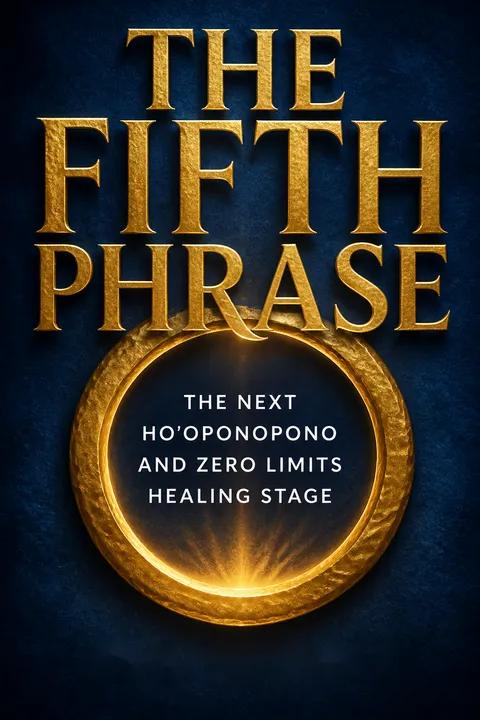

Key Takeaways
1. Ho'oponopono: The Path to Inner Peace and Wholeness
To put it bluntly, ho’oponopono is the road out of hell.
Correcting perceptions. Ho'oponopono, meaning "to make right" in Hawaiian, is a system for correcting perceptions about life, politics, and people. These perceptions often create the very problems we complain about, leading to division and emotional distress. It helps individuals move past ego and illusions to tap into Divinity.
Healing divisions. The core division in humanity stems from feeling separate from the Divine, leading to vulnerability and fear. Ho'oponopono helps bridge this gap, fostering integration, wholeness, and peace within the individual. By making right our internal state, we influence our external reality.
Beyond traditional methods. Unlike conventional self-help focused on intention or empowerment, ho'oponopono works by taking responsibility for our part in creating reality. It cleanses unconscious beliefs and programs, freeing us from self-imposed limitations and allowing us to receive divine inspiration.
2. The Whiteboard of Your Life: Erasing Data to Reach Zero Limits
At zero, there are zero distractions, zero beliefs, zero—he would use the word data.
Purity of zero. The "whiteboard of your life" metaphor illustrates the at-zero state, a place where memories and limiting beliefs ("data") are erased. This allows for pure reception of inspiration from Divinity, akin to a blank canvas ready for new creation. It's a state of no limits, as limits are merely mental constructs.
Beyond labels. Most of what we perceive as our "self" – our classifications, personalities, and ingrained programs – are just markings on this whiteboard, often downloaded from others by age six or seven. Ho'oponopono helps us wipe these clean, revealing the pure whiteboard beneath, which is our true, unconditioned self.
Unlocking potential. Modern science, particularly epigenetics, supports the idea that we are not confined by genes or predestined paths; our state of consciousness can turn genes on or off. Ho'oponopono acts as an "Etch A Sketch" for the mind, allowing us to erase old programming and tap into limitless possibilities, becoming cocreators with the Divine.
3. The Four Phrases: A Mantra for Unconscious Cleaning
These four sentences make up the background voice in my head.
Internal dialogue. The four core phrases – "I love you," "I'm sorry," "Please forgive me," "Thank you" – are primarily spoken internally, directed towards one's connection to the Divine. This internal cleaning process addresses one's own perceptions and programming, not an attempt to change others directly.
Deeper meanings. "Please forgive me" acknowledges unconsciousness of one's own programming, not wrongdoing or guilt. "I'm sorry" expresses regret for unawareness, similar to bumping into someone. "Thank you" cultivates profound gratitude for life and divine intervention. "I love you" fosters a merging with the Divine, moving closer to the essence of love itself.
Consistent practice. While the order can vary, consistent repetition of these phrases, even without immediate emotional feeling, initiates a powerful internal shift. Dr. Hew Len emphasized that if one could see the behind-the-scenes changes, they would never stop cleaning. This practice becomes an automatic, default setting for the mind.
4. The Fifth Phrase: Embracing Divine Forgiveness for Your "Self"
I forgives myself.
Profound release. The fifth phrase, "I forgives myself," is a sweeping and powerful cleaning statement that transcends the original four. The "I" refers to the "I of God" or Divinity, while "myself" refers to the subconscious, programmed, limited part of you. It signifies that the Divine forgives your limitations, not that you are judging yourself.
Freedom from judgment. This phrase liberates the "little self" from guilt, blame, remorse, and self-punishment. It's a declaration that the Divine holds no grudges or scorecards, only love and acceptance. This understanding allows one to let go of heavy emotions and self-imposed suffering.
Erasing data. "I forgives myself" can be interpreted as the Great Something forgiving your "data" – all the limiting beliefs, stories, and mental paradigms that weigh you down. It's about releasing the self-constructed barriers that prevent abundance, healing, and joy, allowing you to return to your natural state of perfection.
5. Total Responsibility: Owning Everything in Your Experience
Have you ever noticed that when you have a problem, you are there?
Beyond personal actions. Total responsibility in Ho'oponopono extends beyond one's own thoughts and actions to include everything and everyone in one's life experience. If something shows up in your reality, you are 100% responsible for it, meaning you helped create it in some way. This radical concept challenges conventional notions of blame.
Responsibility, not fault. This doesn't imply blame or guilt; it's "not your fault, but it is your responsibility." You are not to be punished for others' actions, but since you are aware of them, you are responsible for cleaning and clearing the corresponding programs within yourself. This empowers you to act, rather than remain a victim.
Internal transformation. When Dr. Hew Len healed the ward of mentally ill criminals, he took total responsibility for their actions, cleaning on what was triggered within him by their files. As he cleaned himself, they improved. This illustrates that changing your internal state can profoundly impact your external reality, including others.
6. Four Stages of Awakening: Evolving Beyond Victimhood
Most people lead lives of quiet desperation.
Victimhood (Stage 1). The journey begins with victimhood, where individuals blame external factors for their problems, feeling powerless and separate from the Divine. This is a state of unconsciousness, often inherited through generations of limiting programming. Most people are born into and remain in this stage.
Empowerment (Stage 2). Moving past victimhood, empowerment is a thrilling stage where individuals take charge, set goals, and believe in their ability to manifest. They engage in positive habits and psychology, feeling capable of commanding things to happen. While powerful, it's still "you against the universe."
Surrender (Stage 3). Often triggered by crises beyond personal control, surrender involves giving in to a higher power, joining forces with the Divine. It's an "enlightened empowerment" where one prays, meditates, and practices ho'oponopono, trusting the universe's guidance. P.T. Barnum's motto, "Not my will, but thine be done," embodies this stage.
Awakening (Stage 4). This final stage, enlightenment, comes only by grace, not by effort or control. It's a state where the Divine lives and breathes through you, and the feeling of separation vanishes. The ego steps aside, allowing pure inspiration to flow, leading to a transformed, joyful way of living in unity with all.
7. Inspiration Over Intention: Letting Divinity Guide Your Life
My ego should serve the Divine and not the other way around.
Ego vs. Divine. Traditional goal setting and intentions, while useful in the empowerment stage, are often ego-driven and based on existing beliefs and perceived possibilities. Ho'oponopono encourages moving beyond these limitations to receive "inspirations" directly from the Divine, the "whiteboard" of pure potential.
Beyond limitations. Intentions are confined by what the ego believes is possible, rooted in past experiences and learned paradigms. Inspirations, however, can "blow your mind" because they originate from a source far wider and deeper than your own limited consciousness. They are "marching orders" from the Divine, leading to unexpected and miraculous outcomes.
Trust the flow. Dr. Hew Len emphasized that you don't need to tell the Divine what to do; it knows. The practice of ho'oponopono deletes the data that creates limitations, and once those are removed, abundance is the natural state. The goal is to live from at-zero, receiving and acting upon divine inspiration rather than personal will.
8. Everything is Alive: The World as a Mirror and Cleaning Tool
Everything, the rocks, the water, the sand—everything that you can think of, everything you can name—is part of the whole.
Interconnectedness of all. A foundational Hawaiian principle, embraced by Dr. Hew Len, is that everything is alive – not just living beings, but also inanimate objects like walls, floors, and even business cards. This perspective fosters a profound respect for the planet and all its components, recognizing their inherent aliveness and purpose.
The mirror principle. Morrnah Simeona's modernized ho'oponopono teaches that everything in your external world is a mirror reflection of what's happening inside you. If you're upset by others, it's because they reflect an unaccepted part of yourself. Working on your internal peace, forgiveness, and neutrality causes the "mirror" to change, transforming your perception of others.
Cleaning tools everywhere. Because everything is alive and interconnected, anything can serve as a "cleaning tool." From specific phrases and meditations to blue solar water, strawberries, or even a guitar, if it resonates as a clearing tool through inspiration, it can help dispel mental "clouds" and bring you closer to Divinity. Discernment is key to ensure it serves your highest good.
9. Developing Your Own "X Phrases": Personalized Divine Whispers
As we keep doing ho’oponopono, we’re erasing more and more of that memory so we can receive inspiration.
Beyond the core phrases. While the four and fifth phrases are foundational, consistent cleaning opens channels for personalized inspiration. This can manifest as unique words, phrases, or symbols—"X phrases"—that resonate deeply and serve as powerful clearing tools for individual situations.
Intuition over intellect. When developing an X phrase, the key is to trust intuition, which is often felt in the body or gut, rather than the logical, head-oriented intellect. The inspiration for a new phrase, like "benestrophe" (opposite of catastrophe) or "Be brave enough," comes by grace, not by conscious construction or grammatical rules.
Parting the clouds. The process of ho'oponopono is akin to "Ao Akua" – parting the clouds to see God. As memories, doubts, and fears (the clouds) are cleared, the "sky" (Divinity) becomes visible, whispering unique guidance. This unique relationship with the Divine guides the discovery and use of personalized cleaning tools.
10. Advanced Cleaning Methods: Practical Tools for Deeper Clearing
As you’re doing ho’oponopono, maybe you received an inspiration, for example, to look into hypnotherapists in your area to handle that particular addiction.
Inspired action. Ho'oponopono isn't passive; it often inspires action. When dealing with issues like addiction, cleaning with the phrases can lead to insights about external resources like therapists or specific remedies. The practice clears the path for the next right step, which must then be pursued.
Interrupting patterns. The "Cut" technique, inspired by The Twilight Zone, encourages interrupting undesirable thoughts or behaviors by mentally yelling "Cut." This acts as a neurolinguistic programming (NLP) interrupt, reminding you that you're merely playing a role and can change the script. It fosters detachment and conscious redirection.
Tapping (HFT). Ho'oponopono Freedom Technique (HFT) blends tapping (psychological acupuncture) with ho'oponopono phrases. By tapping on energy meridians while stating an issue ("Even though I feel [issue], I deeply love, accept, and forgive myself"), one can release stuck energy and beliefs. This method helps clear psychological blocks, from public speaking fear to financial limitations.
Questioning beliefs. The "option method" involves non-judgmentally questioning your beliefs: "Do you believe that? Why do you believe that? What do you prefer to believe instead?" This process, inspired by Barry Neil Kaufman's work with autism, helps dismantle limiting paradigms by tracing their origins and choosing more empowering alternatives, like believing "the more money I spend, the more money I receive."
11. Clarity is Key: When You're Clear, There's No Choice
When you are clear, there’s no choice.
Effortless decision-making. Dr. Hew Len taught that true clarity eliminates the need for deliberation. When one is clear, the path forward is self-evident, guided by inner knowing rather than mental struggle. This state is achieved by diligently cleaning and clearing memories and limitations through ho'oponopono.
Diluting memories. The continuous practice of ho'oponopono washes away the "data" – the past experiences, stories, and beliefs that cloud judgment. As these memories are diluted, consciousness becomes pure, allowing for an intuitive understanding of what needs to be done, without hesitation or doubt.
Beyond the program. Dr. Hew Len's maxim, "It's not the person; it's the program," highlights that negative or hurtful behaviors stem from unconscious programming, not inherent evil. By cleaning on these programs within oneself (as everything is a mirror), one helps delete them from the collective consciousness, leading to greater clarity and peace for all.
12. You Are Already Perfect: Unveiling Your Divine Essence
Your inner essence is that purity from the whiteboard.
Inherent divinity. Ho'oponopono teaches that beneath all the "data" – the persona, beliefs, programs, and illusions – lies an absolutely perfect, divine essence. This core self is pure, like a drop of water that is, in essence, the ocean. It's the "original face" that Buddhists speak of, untainted by perceived imperfections.
Beyond self-description. Our conscious and unconscious self-descriptions, self-images, and belief systems are merely layers over this inherent perfection. The goal of cleaning is to peel back these layers, revealing the Source within, the pure zero consciousness from which everything originates and is alive.
Saving the planet. The ultimate purpose of ho'oponopono is self-liberation. As you clean and clear limitations from your own consciousness, you simultaneously remove them from the collective consciousness of the world. Working on yourself is therefore a noble cause that expands and enriches every single person, leading to a global awakening.
Review Summary
Reviews for The Fifth Phrase are mixed, averaging 4.27 out of 5. Readers new to Joe Vitale's work find it insightful and inspiring, while longtime followers consider it repetitive. A common criticism is that the "fifth phrase" itself feels personal to Vitale rather than aligned with traditional Ho'oponopono practice. Some feel the book adds unnecessary complexity to what should be a simple spiritual practice. Critics also note its brevity and thin substance, while appreciating Vitale's role in popularizing Ho'oponopono.
People Also Read

About the Author
Other books by Joe Vitale
Download PDF
Download EPUB
.epub digital book format is ideal for reading ebooks on phones, tablets, and e-readers.








































