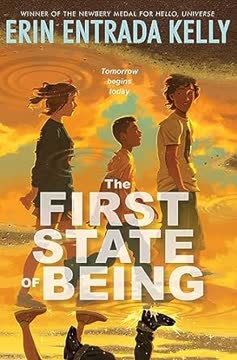
Plot Summary
Canned Peaches and Y2K Fears
On the brink of his twelfth birthday, Michael Rosario is obsessed with preparing for the looming Y2K bug, convinced computers will crash and the world will falter. He shoplifts canned peaches for his hardworking mother—a loving woman juggling multiple jobs since Michael's illness led to her firing. Their Delaware apartment is small, yet Michael's world is filled by worries, careful routines, and the weight of poverty. He craves reassurance through lists, secret stockpiles, and the kindness of a tight-knit, if unconventional, support system. His small, anxious acts—like stealing to provide—are outgrowths of insecurity, yearning for control and safety, especially for his mother, who always tells him, "I took every breath," emphasizing survival and gratitude.
Strangers at Fox Run
Early one morning, Michael's attempt to stay invisible at the Super Saver is foiled by Beejee, the brash store worker, and Jamar, a neighbor. Later at Fox Run Apartments, a new strangeness enters Michael's orbit—a nervous, oddly dressed teenager named Ridge, whose questions about the date and apparent unfamiliarity with basic things ("Is this the year 1999?") immediately mark him as an outsider. The brief exchange, laced with unease, is the first tendril of mystery curling into Michael's careful, schedule-bound days. Michael's anxiety is heightened by adults' wary suspicion and his own guilt over petty theft, while his curiosity and compassion draw him closer to the stranger, even as caution tugs him away.
Gifts, Guilt, and Strawberry Shampoo
Michael returns home to find his babysitter Gibby—sixteen, radiant, and smelling of strawberries—waiting for him in their humble apartment. Despite feeling childish for needing supervision, Michael treasures these days. Gibby, not just a babysitter but an aspiration, gifts him a Red Hot Chili Peppers CD, validating his tastes and making him feel seen. The small celebration is bittersweet: Michael's desire to seem mature wars with his need for comfort and approval. The moment is tender and charged, electric with adolescent hope, longing, and awkward gratitude. Yet, Michael's joy is shadowed by the lies he tells to preserve it and mask his actions.
Feeding the Strays
Michael and Gibby defy apartment rules to quietly feed the complex's stray cats—a clandestine ritual that soothes Michael's empathy and guilt. Their conversation dances around Michael's insecurities—his absent, athletic father, his wish to fit in, and the ways in which he feels unseen. The pair encounters Ridge again, his behavior even stranger. Michael is both wary and pitying, increasingly aware that kindness and caution can coexist. Feeding the cats is more than rebellion; it's Michael's stand against powerlessness, a small good in a confusing world rife with unpredictability and hidden pain.
The World Might End
With the countdown to January 1, 2000, ticking in his mind, Michael catalogs his emergency supplies—canned beans, crackers, peaches—fiercely devoted to protecting his mother from imagined disaster. Survival planning is both an outlet for anxiety and an act of love, a way to contribute when he feels helpless. His mother, weary but determined, returns home with a birthday surprise: expensive new sneakers she cannot really afford. The juxtaposition of her sacrificial gift and Michael's secret stockpile underscores their mutual devotion and the ways each carries the other's unspoken burdens—fears, hopes, and love.
Meeting Ridge, the Odd Boy
The apartment courtyard brings Michael, Gibby, and Ridge together. Ridge's bizarre behavior—lack of knowledge about everyday things, odd clothes, slips when discussing his mother's job—piques suspicion. When pressed, Ridge evades direct answers, claiming a complicated living situation and hinting at secrets that could "destroy the universe." The three circle one another in a tentative dance: Michael's reticence, Gibby's inquisitiveness, and Ridge's evasiveness creating a charged but fragile connection. Their reluctant alliance is forged by shared curiosity and the promise of answers to mysteries that seem both cosmic and deeply personal.
The Big Reveal: Time Traveler
The trio's silent standoff is interrupted by Ridge's bold declaration: he is from the future. Disbelief reigns. Ridge's evidence—tidbits about a coming earthquake in Turkey, "sumbooks," and time-travel technology—further strains credulity. Yet his emotional desperation is genuine. Michael and Gibby challenge, test, and ultimately bear witness to Ridge's extraordinary claim, riding the line between skepticism and wonder. The foundation of friendship, built on truth-telling and acceptance, is shakily laid amid this impossible revelation—prompting Michael and Gibby to grapple with trust, the limits of what can be understood, and the possibility that the world is far stranger than they ever imagined.
Proof and Precarious Earthquakes
Ridge's knowledge is put to the test: he predicts, with uncanny specificity, a major earthquake in Turkey. As world news confirms the disaster, Michael's anxiety blooms into full-blown existential dread. With knowledge comes guilt and the heavy sense of responsibility—should he have tried to warn someone, or could he ever have done anything? The character's inner lives ripple outward: Gibby's pragmatic comfort, Michael's sense of helplessness, and Ridge's silent sorrow at what knowledge of the future means for a boy stuck in the past. The personal and global intertwine—grief, wonder, and the inability to turn away from suffering.
Worries That Cross Time
Ridge cautions his new friends about the dangers of knowing—or intervening in—future events, explaining the theories of time and the rules of "STS" (spatial teleportation science). The sumbook, his encoded guide, is both a tantalizing key and a potent danger. The trio debates whether to pry, to learn the future, or to respect the border between knowledge and wisdom. Ridge's presence in 1999 threatens the timeline, and the tension rises as his home era's scientists debate intervention. For Michael, the lesson is both cosmic and intimate: sometimes all one can do is observe, absorb, and make careful choices.
The Tremor Heard 'Round the World
The predicted earthquake strikes; Michael is wracked with guilt and helplessness, haunted by the idea that he could not change fate. He grapples with the irreducible sadness of history: that ordinary lives—both distant and nearby—are swept up in unstoppable tragedies. The news is a brutal teacher, maturation forced by knowledge. In the wake of crisis, Michael and Gibby resolve to keep Ridge's secret, realizing that history is made of countless unnoticed acts and decisions; even when you know more, you often cannot change the outcome.
The Future's Mysteries and Modern Malls
Ridge, longing for ordinary experiences before attempting to return to his own time, begs to visit the mall—a shrine to 1990s culture. The visit is comedy and anthropology; Ridge marvels at everything from cars to food courts to Waldenbooks, while Michael worries that every interaction is a potential butterfly effect. The trio meet new friends and take souvenirs: notes, phone numbers, and a sense that being "normal"—sharing a milkshake or exchanging smiles—can be wondrous, important, even ironic. The mundane present, Ridge asserts, is the "first state of being"—the most meaningful time of all.
In the Shadow of Grief
Sudden tragedy strikes: Mr. Mosley, the warm-hearted maintenance man who was Michael's main adult confidant, dies of a heart attack. Grief, unfamiliar until now, caves Michael's world in. He feels guilt for not being present, for things left unsaid, for the disorder and randomness of loss. The apartment seems emptier, his stash of survival supplies pathetic in the face of death. The weight of what cannot be controlled is crushing, and Michael mourns not only Mr. Mosley but every hope he thought preparation might safeguard. In this crisis, Michael distills what matters—love, memory, human connection.
The Sumbook's Secret
Beejee, enraged, discovers Michael's theft of his tools and throws out Ridge's sumbook, which Michael rescues and obsesses over. Michael hopes the mysterious, coded sumbook might hold answers—about the future, about how to save himself and loved ones. But its content is unintelligible: safety lies in untranslatability. His single-minded attempts to break its code consume him, isolating him further. When he finally gives up and destroys the book, he recognizes both the folly and compulsion of trying to control life by knowing too much. The act is both liberation and bittersweet mourning for impossible certainty.
A Weighted Mind
Michael's emotional load—guilt over small thefts, secrets kept, and "sins" real or imagined—threatens to bury him. Confession brings relief; small acts of honesty and vulnerability (admitting his thefts, reaching out to his crush, making new friends) allow forgiveness and growth. Ridge, too, struggles—sick from an unaccustomed common cold, desperate to return, scared he's ruined everything. In Michael, Ridge finds gentleness; in Ridge, Michael finds perspective. They learn about friendship, the power and limits of regret, and the courage to try again.
True Friends and Small Braveries
Ridge's illness worsens, his time-travel device (EGG) finally reactivates as friends rally to aid his departure. Goodbyes are exchanged, tokens and notes swapped: a memento from Gibby, an investment tip from Ridge. Their time together has changed them—Michael finds the strength to reach out to the Prince brothers and Paige, braving the loneliness that haunted him. Gibby and Michael realize that ordinary kindness can ripple for generations, that the universe is changed most lastingly by unnoticed acts of care.
The First State of Being
In Ridge's absence, Michael tentatively navigates friendships, new experiences, and the continuing uncertainty of life before Y2K. He draws comfort from his mother's reminders—"I took every breath"—and learns, with fitful awkwardness, to embrace the here and now. The "first state" is simply living: preparing for disaster yet refusing to surrender joy, taking risks despite uncertainty, and understanding that the best a person can do is to try to be better tomorrow.
Letting Go
Having failed to decipher the sumbook, Michael performs an act of relinquishment—he submerges it in a puddle, watching it dissolve instantly. The allure of future certainty, of protection by foresight, becomes a recognized illusion. Instead, Michael chooses to live in the present, to remember the dead and cherish those around him, and to "do better tomorrow." Letting go of the sumbook is a profound acceptance of what cannot be controlled or known.
Ordinary Lives, Enduring Ripples
The narrative closes years later: Michael's ordinary life, his kindnesses and memories, reveal enduring significance. He reaches out to friends—old and new—and the story reframes his and Gibby's roles in history. "Founders" and landmark organizations emerge from these ordinary origins. The generational echo of friendship, love, and care outlives any one person. The mundane—tiger and otter, money in a jar, a borrowed DVD—gains mythic resonance. Ordinary lives, and small, imperfect acts, ripple across time and become history.
Analysis
Erin Entrada Kelly's The First State of Being offers a tender, nuanced meditation on anxiety, belonging, and the courage to live with uncertainty. By juxtaposing a sensitive boy's Y2K fears in 1999 with the literal arrival of a time traveler from the future, the novel asks: What is it to know the unknowable? How do we cope with ordinary and extraordinary losses? The story's emotional core is the acceptance that control—whether over the future, over knowledge of history, or over loved ones' fates—is ultimately illusion. What endures are the small, persistent acts of care: a can of peaches, a hand extended in friendship, a jar of money earned with love. The narrative's quiet wisdom encourages readers to forsake third-state (future-obsessed) thinking for the "first state of being"—to ground themselves in the present, to do better tomorrow, and to recognize their own worth amid imperfect actions and uncertain outcomes. The book posits that it is the ordinary—often overlooked—lives and actions that truly shape history. By focusing on marginalized characters and giving weight to their hopes, worries, and dreams, Kelly quietly invites us all to regard our own moment—to breathe, to forgive, to connect, and, above all, to trust in the ripples our kindness may leave across time.
Review Summary
The First State of Being is the 2025 Newbery Medal winner, earning an overall rating of 4.04/5. Most readers praise its nostalgic 1999 setting, likeable characters, and meaningful message about living in the present moment. Comparisons to A Wrinkle in Time and When You Reach Me are frequent among enthusiastic reviewers. Critics find the execution slow, the characters underdeveloped, or take issue with its thematic content. Mr. Mosley and Michael are particular reader favorites, while Ridge's character motivation draws some criticism.
People Also Read

Characters
Michael Rosario
Michael, aged twelve, is defined by his deep empathy, gnawing anxieties, and fierce love for his mother. He lives with the guilt of being the reason for her job loss, heightening his urge to prepare for disaster and control his world. He is deeply affected by loneliness, social awkwardness, and a sense of invisibility, and finds solace in routines, secret stockpiles, and kind rituals like feeding stray cats. Michael measures himself against fictional heroes and those around him, feeling perpetually less-than. Ridge's arrival, Mr. Mosley's sudden death, friendship with Gibby, and the tentative beginnings with Paige gradually open him to brave, honest relationships. His arc is one of accepting uncertainty, forgiving himself for weakness and error, and finding the courage to live in the "first state of being"—the imperfect, beautiful present.
Ridge Sabio
A sixteen-year-old from the twenty-second century, Ridge is both endearingly awkward and intellectually advanced—a "genius" from a family of scientists. Shaped by high expectations and feelings of inadequacy, Ridge's brash decision to use his mother's time machine is rooted in both curiosity and the need to prove himself. His perceptions of the past—fascination with malls, music, mundane technologies—are occasionally naive, but his emotional vulnerabilities (feeling unwanted, anxious, and later, gravely ill) create instant kinship with Michael. Stranded, guilt-ridden, and feverish, Ridge comes to rely on Michael and Gibby, showing humility and gratitude. He learns that even with omniscience, one can feel lost, and that real connection comes from honesty and mutual care, not merely knowledge.
Elizabeth "Gibby" Gibson
Gibby, Michael's babysitter and Beejee's sister, is a stabilizing presence—older, independent, and affectionate. With a love for mystery novels and a distinctive strawberry scent, she provides Michael with both adult-like care and peer-like companionship. Gibby is empathetic, practical, and not immune to her own family hurts (her troubled home life echoes Michael's sense of abandonment). She rolls her eyes at Michael's obsessions, but always affirms and validates him. Gibby is instrumental in Ridge's integration and eventual return—and, as revealed later, she is destined for greatness as a visionary founder. Her ordinary decency, support, and humor lay the groundwork for Michael's and Ridge's growth.
Ms. Rosario (Michael's Mother)
Ms. Rosario is a single mother working multiple jobs, portrayed with immense dignity and warmth. She copes with adversity through small gestures—a song, a treat, a birthday surprise—grounded in the simple assurance that as long as she breathes, there is hope. Her sacrifices and encouragement are twin pillars of Michael's growth, providing not just for his physical needs, but his sense of belonging and worth. She both shields Michael from adult burdens and expects him to step up emotionally, finding the right balance between protection and allowing him to "do better tomorrow." Her arc is quiet but vital—a model for transformation through love.
Mr. Mosley
The apartment maintenance man, Mosley, is Michael's only adult confidant and a symbol of quiet goodness. His life is marked by hard work, loss, and resilience. He models self-acceptance, humor, and the ethic of "doing better tomorrow," imparting this wisdom to Michael. His unexpected death delivers a shattering lesson about grief, legacy, and the ephemeral nature of everyday kindness. Mosley's bequest—a jar of money, dog-eared novels—serves as both practical help and a metaphor for unseen care. His impact, though locally felt, ripples long after he's gone.
Beejee Gibson
Beejee is Gibby's antagonistic brother, brash and often cruel. He functions as an externalization of Michael's internal insecurities—a reminder of the world's casual callousness and the masks people wear. His presence forces Michael to confront fear, anger, and eventually, the courage to admit fault and stand up for what is right. Though mostly an obstacle, Beejee inadvertently aids Michael's growth and Ridge's story, becoming a grudging participant in their intertwined dramas.
Prince Brothers (Jamar, Elijah, Darius)
The Prince brothers are secondary but significant catalysts for Michael's social development. Where Michael fears rejection, they offer genuine, unforced camaraderie—inviting him to play basketball and showing the simple joy of acceptance. They counterbalance Michael's fears with laughter, reliability, and the possibility of belonging. Their presence in the story is a gentle reminder that new relationships are possible, and change often emerges from openness.
Paige Kaminski
Paige, the beaming, friendly girl Michael meets at the mall, represents both nervous possibility and the soft hope of the future. Her kindness, confidence, and interest subtly shift Michael's self-perception and self-esteem. The small gesture of exchanging numbers is, for Michael, a monumental act of bravery, breaking through loneliness and the belief he is fundamentally unlikable or doomed to isolation.
Ridge's Family (Dr. Maria Sabio et al.)
Ridge's mother and siblings, while mostly voices from the future, personify the weight of familial expectation, worry, and the complicated love that propels scientific progress—and sometimes, reckless decision. Dr. Sabio's genius and protective instincts cast Ridge's journey in another light: the ripple effects of one individual's risk echo across centuries. Though physically absent, their concern and interventions shape Ridge's experience, motivating both his decision and his return.
Ridge's Sumbook
Though not a character in the traditional sense, the sumbook acts as a psychological and narrative force: the temptation to know the future, the peril of forbidden knowledge. It lures, confuses, and, ultimately, must be relinquished—its code unreadable, its worth only in the willingness to let the unknowable remain so.
Plot Devices
Time Travel and the Sumbook
The novel's central device is time travel, intricately woven into both the structure and the message. Ridge's sudden appearance from the future complicates 1999's ordinary world. The sumbook, full of encoded future knowledge, is a symbol of the peril and seduction of certainty: wanting to predict or prepare for every loss, disaster, or joy. Nonlinear chapters—often interspersed with parallel passages from Ridge's native timeline—build suspense, expand the scope beyond Michael's limited world, and offer satirical and poignant commentaries on science, ethics, and fate. The specter of Y2K parallels Michael's personal anxieties; both are crises of anticipated disaster that may or may not ever come, teaching the lesson that the present—the "first state of being"—is where life must be lived, loved, and confronted.
Dual Timeline and Foreshadowing
The narrative toggles between 1999 and 2199, using snippets of interviews, transcripts, and encyclopedic entries to reveal the consequences and philosophies underpinning spatial teleportation. Foreshadowing is deftly employed: the trembling uncertainty of Y2K portends not only Michael's obsessive anxiety but Ridge's predicament and the human urge to prepare for an uncontrollable future. The future's scientific debates mirror the novel's moral concerns—what are the dangers of interference, the burdens of knowledge, and the ethics of remembering versus forgetting? These devices reinforce the sense of interconnectedness across generations.
Symbolism (Gifts, Mementos, and the Ordinary)
Objects like canned peaches, new sneakers, a Red Hot Chili Peppers CD, Mosley's jar of money, and a scribbled phone number are laden with symbolic resonance. They anchor the characters in the reality of care, loss, and hope, imbuing the mundane with transformative significance. The recurring motif of "breathing," of being present, and the title's focus on "the first state" evoke mindfulness and acceptance—the necessity of living in the now, not the hypothetical.








































