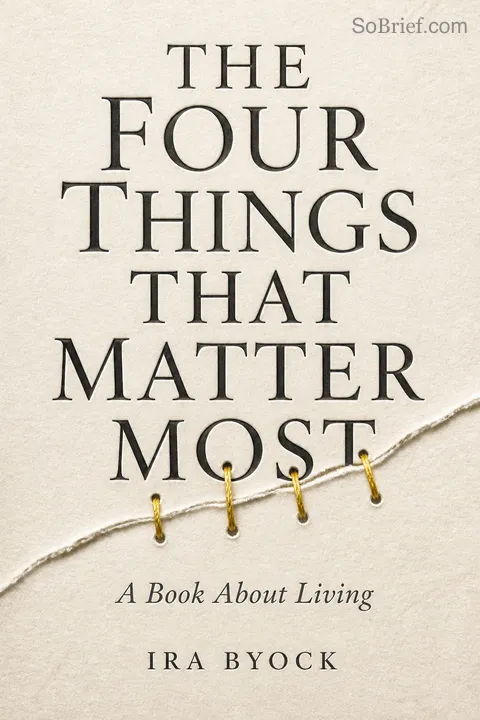
Key Takeaways
1. The Four Things: A Foundation for Meaningful Relationships
Comprising just eleven words, these four short sentences carry the core wisdom of what people who are dying have taught me about what matters most in life.
Core wisdom. The four things that matter most—"Please forgive me. I forgive you. Thank you. I love you"—are powerful tools for enriching all relationships. They are simple, yet profound, offering a pathway to emotional wholeness and peace. This wisdom is often revealed when facing life's end.
Stating the obvious. We often assume loved ones know our feelings, but explicit expression is crucial. When death looms, unspoken affections or unresolved tensions can lead to deep regret. Saying these things proactively transforms relationships into celebrations, affirming our deepest human drive to connect.
Universal application. These principles aren't just for the dying; they are for living fully. By integrating forgiveness, gratitude, and love into daily interactions, we can mend, tend, and celebrate our most precious connections. It expands our imagination of what's possible in our relationships.
2. Forgiveness: A Profound Gift You Give Yourself
Forgiveness means giving up all hope for a better past.
Release the past. Forgiveness is not about condoning wrongdoing or forgetting the hurt; it's about accepting the past as unchangeable and freeing yourself from its grip. It's a sophisticated strategy for improving your own emotional well-being, allowing you to move forward unburdened.
Emotional economics. Refusing to forgive is like carrying a compounded emotional debt, constantly paying for past injuries. Forgiveness is a one-time cost that clears years of pain, releasing you from the bondage of hatred. It's an act of volition, a decision to prioritize your own peace.
Break the cycle. Painful legacies, like anger and criticism, can perpetuate across generations. Forgiveness is a courageous "Enough is enough!" It confronts imperfections with compassion, paving a future of health and wholeness. This act of self-liberation can transform not only your life but also the lives of those around you.
3. Gratitude: The Heart's Memory That Transforms Life
Gratitude is a way of seeing, of being.
Mindful appreciation. Expressing "Thank you" explicitly reminds us of the abundance in our lives, shifting focus from lack to plenty. It's not enough to assume others know; consistent, specific expressions of gratitude deepen connections and foster mindfulness of daily kindnesses.
Biographies of joy. Cultivating gratitude can help create a "biography of joy," a practice of recalling moments of delight throughout life. This exercise, even in the face of illness, can evoke smiles and laughter, infusing life with a vital "Vitamin J" that is essential for well-being.
Profound connection. Gratitude is intimately fused with joy, expanding our capacity to experience and express love. It allows us to celebrate who we are to one another, even in the face of ultimate loss. This deep sense of contentment can make even the final moments of life radiant.
4. Love: An Unconditional Force Beyond Words
For one human being to love another human being: that is perhaps the most difficult task that has been entrusted to us, the ultimate test and proof, the work for which all other work is merely preparation.
Primal and transcendent. Love is the most powerful human emotion, requiring no justification. It's a supremely life-affirming act, especially when death approaches, reminding us that our connections are what matter most. This love is often an impulse that knows no bounds.
Beyond verbal. While "I love you" is crucial, love can be expressed in countless creative ways, especially when words are difficult or culturally uncommon. Actions, touch, and shared rituals can communicate affection more powerfully than words. Gunter shaving his father became a profound act of love.
Loving the body. True love extends to accepting and caring for the physical body, even in its most vulnerable states. This includes tasks that may seem unpleasant, like bathing or feeding. This "tender, loving care" is deeply meaningful for both the recipient and the caregiver, fulfilling an intrinsic human need.
5. Conscious Goodbyes: Essential for Wholeness and Peace
To love truly is inevitably to experience loss.
Acknowledge separation. Goodbyes are dreaded, but consciously embracing them acknowledges life's impermanence and deepens our appreciation for each moment. When the Four Things are conveyed, even painful farewells contribute to the wholeness of love between two people.
Blessing the future. Intentional goodbyes offer a blessing, projecting love and affirmation into the future. This can take many forms, from heartfelt conversations before a loved one departs for war, to pre-written letters and gifts for children to open at future milestones.
Transformative parting. Accepting the unacceptable—that a loved one is dying—can open a realm of profound communication and connection. These "perfect moments" of shared love and honesty, even amidst sorrow, can transform grief into gratitude and leave a lasting sense of peace.
6. Relationships Endure: Healing Beyond Physical Presence
Death ends a life, not a relationship.
Lasting impact. Our relationships with loved ones do not vanish with death; they continue to influence our thoughts, feelings, and dreams. People who are most important to us become part of our psyche and soul, living on within us in tangible ways.
Post-mortem completion. Even after someone has died, relationships can change in healthy ways. Techniques like the "empty chair" or writing letters can help survivors express unsaid feelings, offering and asking for forgiveness. This process aids in resolving lingering resentment and finding peace.
Mysterious connections. Sometimes, the dying seem to delay their departure to achieve a final goal or say goodbye. These mysterious lingerings, like Sandy Cummings's coma, suggest a profound, unspoken connection, allowing families to reach closure and ease into grief before the final letting go.
7. Act Now: The Urgency of Unsaid Words
It’s always too soon, until it’s too late.
Life's precariousness. We live each day just a heartbeat away from eternity, constantly at risk of sudden loss. This stark reality underscores the urgency of expressing important feelings to loved ones without delay. Regrets over unsaid words are a common lament among the bereaved.
Seize the moment. Don't wait for a grave diagnosis or a crisis to "come current" in your relationships. The opportunity to mend, tend, and celebrate connections is always present. Proactive communication prevents the burden of "what-ifs" and "should-haves" that can haunt survivors.
No perfect timing. While there's no perfect time, there's always a right time to say the Four Things. Even if the recipient has dementia or is unresponsive, the act of expressing these feelings is valuable for the speaker and other family members, fostering a sense of completion and peace.
8. Embrace Imperfection: The Path to Self-Acceptance
Imperfection is an inescapable part of being human.
Release self-judgment. Many people struggle with feelings of unworthiness or guilt, especially when facing illness. This self-imposed torment prevents them from experiencing the love and acceptance of others. It's crucial to forgive yourself for being human and imperfect.
Inherent worthiness. You are worthy of self-acceptance and love, right here, right now, flaws and all. This isn't about denying mistakes but acknowledging that everyone is flawed. Until you feel worthy, you cannot truly believe or feel the love others have for you.
Mercy for self. Just as we extend mercy to others, we must extend it to ourselves, especially during illness or vulnerability. Physical frailty is not a sign of personal weakness or moral insufficiency; it's a natural part of being human. Accepting help from others is a healthy, dignified act.
9. Transformation Through Adversity: Growth in Life's Final Chapters
In dying we are newly born.
Vulnerability's power. Serious illness and the approach of death often strip away pretense, forcing profound introspection and honesty. This vulnerability creates opportunities for quantum leaps in personal development, allowing individuals to achieve intimacy and peace previously unimaginable.
Redefining life's end. Dying doesn't have to be a defeat; it can be a period of intense growth and transformation. Patients like Steve Morris, who found tenderness and cohesiveness with his family, or Gabrielle, who experienced a "perfect moment" of joy, demonstrate this potential.
A new perspective. Adversity can force a fresh view of the world, making each moment precious and perfect. This renewed appreciation for life, often accompanied by intense gratitude, allows individuals to live fully through to the very end, finding "heaven on earth" in their final days.
Review Summary
The Four Things That Matter Most received mostly positive reviews, with readers finding it touching, insightful, and practical. Many appreciated the emphasis on expressing forgiveness, gratitude, and love before it's too late. The book's simple yet profound message resonated with readers, who found the real-life stories impactful. Some felt it was repetitive or overly simplistic, but most agreed it offered valuable guidance for improving relationships and facing end-of-life situations. Readers recommended it for both personal growth and professional use in palliative care settings.
People Also Read


FAQ
1. What is "The Four Things That Matter Most" by Ira Byock about?
- Core Message: The book centers on four simple yet profound statements—“Please forgive me. I forgive you. Thank you. I love you.”—that can transform relationships and bring emotional healing.
- Focus on Living and Dying: Drawing from his experience as a palliative care physician, Byock illustrates how these four things are essential not just at the end of life, but for living fully and maintaining healthy relationships at any stage.
- Real-Life Stories: The book is filled with true stories from patients and families, showing how these statements help people find peace, closure, and deeper connection.
- Practical Guidance: Byock offers practical advice on how to use these four things to mend, tend, and celebrate relationships, even in the most challenging circumstances.
2. Why should I read "The Four Things That Matter Most" by Ira Byock?
- Universal Relevance: The book addresses universal human experiences—love, forgiveness, gratitude, and saying good-bye—that everyone encounters, making it relevant to all readers.
- Emotional Healing: It provides tools for healing fractured relationships and letting go of regrets, which can lead to greater emotional well-being.
- Preparation for Loss: Byock’s insights help readers prepare for the inevitability of loss, whether through death or other forms of separation, and encourage leaving nothing important unsaid.
- Inspiration and Hope: The stories and lessons offer hope that even the most difficult relationships can be transformed, and that it’s never too late—or too early—to express what matters most.
3. What are the "Four Things" in Ira Byock's method, and why are they important?
- The Four Statements: The four things are: “Please forgive me. I forgive you. Thank you. I love you.”
- Relationship Completion: These statements are tools for completing relationships, resolving unfinished business, and expressing essential feelings before it’s too late.
- Emotional Health: Byock argues that saying these things can relieve burdens of guilt, anger, and regret, leading to emotional healing for both the speaker and the recipient.
- Applicability: While rooted in end-of-life care, the Four Things are valuable for anyone seeking to nurture or repair important relationships at any time.
4. How does Ira Byock suggest using the Four Things in daily life and relationships?
- Not Just for the Dying: Byock emphasizes that the Four Things should be said throughout life, not just at the end, to maintain healthy, vibrant relationships.
- Timing and Sincerity: He advises saying them sincerely and at appropriate moments, rather than waiting for a crisis or final good-bye.
- Creative Expression: The Four Things can be communicated in various ways—spoken, written, or even through actions—tailored to the relationship and cultural context.
- Practice and Repetition: Regularly expressing forgiveness, gratitude, and love helps prevent regrets and strengthens bonds over time.
5. What are the key takeaways from "The Four Things That Matter Most" by Ira Byock?
- Leave Nothing Unsaid: Expressing forgiveness, gratitude, and love prevents future regrets and brings peace to both parties.
- Healing is Possible: Even deeply fractured relationships can be mended through honest communication and the Four Things.
- Forgiveness is Self-Care: Forgiving others (and oneself) is not about excusing bad behavior, but about freeing oneself from emotional pain.
- Everyday Relevance: The Four Things are not just for the dying; they are essential tools for living well and nurturing all important relationships.
6. How does "The Four Things That Matter Most" by Ira Byock address forgiveness, and what misconceptions does it clarify?
- Forgiveness vs. Absolution: Byock clarifies that forgiveness is not about excusing or forgetting harm, but about accepting the past and freeing oneself from its hold.
- Self-Interest in Forgiveness: He frames forgiveness as an act of self-care, allowing individuals to let go of anger and resentment for their own well-being.
- Difficult Situations: The book provides strategies for forgiving even in cases of deep hurt or abuse, emphasizing that forgiveness is a choice, not a feeling.
- Forgiving Yourself: Byock stresses the importance of self-forgiveness as a foundation for emotional health and the ability to receive love from others.
7. What does Ira Byock say about gratitude in "The Four Things That Matter Most," and how can it transform relationships?
- Power of Thank You: Byock highlights the importance of explicitly expressing gratitude, even when it seems obvious, as it affirms and strengthens relationships.
- Practicing Gratitude: He encourages readers to be specific and mindful in their thanks, which fosters joy and a sense of abundance.
- Receiving Appreciation: The book also discusses the value of accepting gratitude from others, completing the emotional transaction and deepening connection.
- Family Dynamics: Byock explores how gratitude can heal family rifts and create new bonds, even in blended or estranged families.
8. How does "The Four Things That Matter Most" by Ira Byock approach the topic of saying "I love you," especially in families or cultures where it's difficult?
- Cultural and Gender Differences: Byock acknowledges that some families or cultures are less verbally expressive, but emphasizes that love can be shown in many ways.
- Nonverbal Communication: The book shares stories of people expressing love through actions, touch, or shared experiences when words are hard to say.
- Creative Approaches: Byock suggests finding culturally appropriate or personally meaningful ways to convey love, such as letters, rituals, or physical care.
- Importance of Expression: Regardless of method, making love explicit—verbally or otherwise—brings comfort, closure, and celebration to relationships.
9. What guidance does Ira Byock offer in "The Four Things That Matter Most" for dealing with loss, saying good-bye, and preparing for death?
- Conscious Good-byes: Byock encourages saying good-bye as a blessing, not just a formality, and using the Four Things to complete relationships before parting.
- Leaving a Legacy: He discusses ways to leave messages or gifts for loved ones to be received after death, ensuring ongoing connection and support.
- Handling Sudden Loss: The book offers advice for those who didn’t get to say good-bye, such as writing letters or using rituals to find closure.
- Living Fully: Byock urges readers not to wait for illness or crisis, but to live each day as if it could be the last, expressing what matters most now.
10. How does "The Four Things That Matter Most" by Ira Byock address extreme or challenging situations, such as abuse, estrangement, or dementia?
- Abuse and Deep Wounds: Byock shares stories of people who found healing and peace by forgiving abusers—not to excuse the harm, but to free themselves from its grip.
- Estranged Relationships: The book provides examples and strategies for reaching out, even after years of silence or conflict, and the transformative power of the Four Things.
- Dementia and Communication Barriers: Byock explains that even when someone cannot understand or respond, expressing the Four Things can still bring healing to the speaker and the relationship.
- Professional Support: He recommends seeking counseling or support when dealing with especially painful or complex situations.
11. What are some of the most powerful quotes from "The Four Things That Matter Most" by Ira Byock, and what do they mean?
- “Please forgive me. I forgive you. Thank you. I love you.” – The core message, encapsulating the essential words for relationship completion and healing.
- “Forgiveness means giving up all hope for a better past.” (Lily Tomlin, quoted by Byock) – Accepting that the past cannot be changed, but the future can be freed from its burden.
- “It’s always too soon, until it’s too late.” – A reminder not to delay important conversations, as life is unpredictable.
- “We are worthy of self-acceptance and of love right now.” – Emphasizing the importance of self-forgiveness and self-love as prerequisites for healthy relationships.
12. What practical steps or exercises does Ira Byock recommend in "The Four Things That Matter Most" for applying his method in real life?
- Initiate Conversations: Make a conscious effort to say the Four Things to important people in your life, either in person, by letter, or through other meaningful means.
- Be Specific and Sincere: When expressing gratitude or love, be as specific as possible about what you appreciate or cherish.
- Practice Self-Forgiveness: Engage in self-reflection, meditation, or therapeutic exercises to forgive yourself for past mistakes and accept your inherent worth.
- Create Rituals or Legacies: Consider leaving letters, recordings, or gifts for loved ones to be received in the future, ensuring nothing is left unsaid and your love endures.
Download PDF
Download EPUB
.epub digital book format is ideal for reading ebooks on phones, tablets, and e-readers.








































