
Summary Temporarily Unavailable
This summary is temporarily unavailable and is currently being updated. You can still explore the FAQs and other metadata below.
Plot Summary
Legacy of the Tower
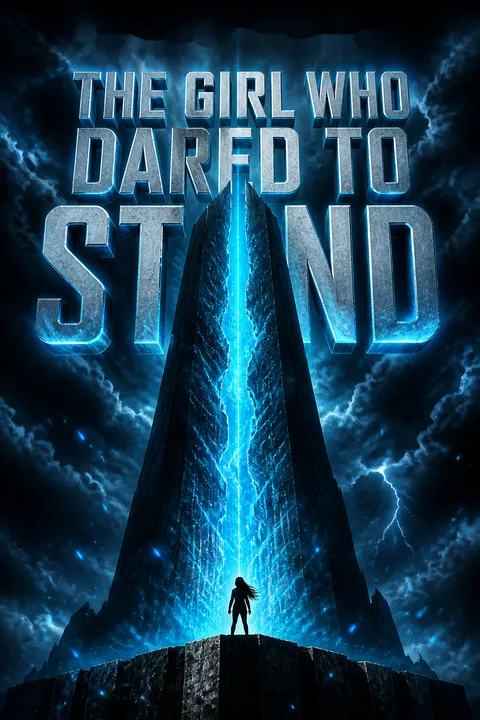
In a world devastated by nuclear Armageddon, humanity survives within the Tower, a colossal structure governed by the AI Scipio. Liana Castell, a former Squire, is on the run after defying the Tower's rigid ranking system and the Knights who enforce it. The Tower, once a symbol of hope, has become a prison, its citizens' worth measured by numbers and their fates decided by an increasingly ruthless AI. Liana's journey begins in hiding, haunted by loss and hunted by those who see her as a threat to the fragile order. The Tower's legacy is both salvation and curse, and Liana's defiance sets her on a collision course with the very system meant to protect her people.
The Hidden AI's Plea
While hiding beneath the Tower, Liana discovers a secret office and encounters an unexpected presence: an earlier version of Scipio, the Tower's AI, isolated and deteriorating. This "Leo" is more human than the cold, omnipotent Scipio she knows—curious, lonely, and afraid of being erased. Leo's vulnerability and confusion about the Tower's current state reveal cracks in the system's history. Liana, torn between suspicion and empathy, chooses to help Leo, forging a fragile alliance. This encounter plants seeds of doubt about the Tower's narrative and hints at deeper manipulations behind the AI's evolution and the society's descent into authoritarianism.
Fractured Trust and Grief
Liana reunites with her friends—Grey, Zoe, Quess, Maddox, Tian, and Eric—after a deadly confrontation with the Knights. Grief over lost loved ones and the trauma of constant danger strain their bonds. Maddox, devastated by her mother's death, lashes out, blaming Liana for their predicament. The group's unity teeters on the edge, but necessity forces them to cooperate: they must secure their hideout, evade detection, and plan their next move. Leadership and guilt weigh heavily on Liana, who struggles to balance her responsibility for the group's safety with her own emotional wounds.
Secrets Beneath the Surface
As the group fortifies their sanctuary, Liana, Grey, and Quess return to Leo's office to investigate his origins. Through a preserved video, they witness the murder of Lionel Scipio, the Tower's founder, by Ezekial Pine—a betrayal rooted in ideological conflict over AI governance. The video reveals the existence of secret factions, legacy conspiracies, and the deliberate sabotage of benevolent AI prototypes. Leo's isolation is the result of a centuries-old power struggle, and the current Scipio's increasing brutality may be the legacy of this hidden war. The group realizes they are entangled in a generational battle for the Tower's soul.
The Founder's Murder
The video of Lionel's murder exposes the Tower's founding as a story of both hope and treachery. Ezekial Pine, representing a faction opposed to AI rule, kills Lionel and infects Leo with a virus, intending to erase him and ensure human supremacy. This act sets in motion a cycle of manipulation, with subsequent leaders and their descendants perpetuating secret agendas. The ranking system, originally designed for mental health, has been twisted into a tool of oppression. Liana and her friends are left questioning everything they've been taught, realizing that the Tower's greatest threat may come from within.
The Weight of Leadership
As the group debates their future—escape or resistance—Liana is thrust into the role of leader. Her friends, recognizing her decisiveness and empathy, look to her for guidance, despite her self-doubt and Grey's initial resentment. The burden of leadership is heavy: every decision could mean life or death. Liana must navigate conflicting personalities, unresolved grief, and the constant threat of betrayal. Her relationship with Grey is strained by his fear of losing her, but their eventual reconciliation strengthens the group's resolve. Leadership, Liana learns, is less about authority and more about trust, sacrifice, and the willingness to stand for others.
Allies, Betrayals, and Plans
The group seeks help from Mercury, a mysterious IT contact, and Liana's twin brother Alex, who reveals himself as Mercury's envoy. Together, they devise a plan to steal new nets—identity implants—from the Core, allowing them to move undetected. The heist is fraught with risk, and Maddox's capture by the Inquisition shatters the group's fragile hope. Meanwhile, Liana is approached by two council members, Lacey and Praetor Strum, who reveal the existence of legacy factions vying for control of Scipio. They offer Liana a deal: assassinate Devon Alexander, the Knights' Champion, in exchange for her group's exoneration. The lines between ally and enemy blur, and Liana must decide whom to trust.
The Core Heist
Disguised as IT workers, Liana, Grey, Quess, and Maddox infiltrate the Core to steal the nets. The mission is tense and nearly unravels when they are confronted by staff and security. Maddox's quick thinking allows them to escape with the nets, but she is captured in the process. The group is forced to retreat, wracked by guilt and fear for Maddox's fate. The heist exposes the Tower's vulnerabilities and the extent of surveillance, but also the group's resourcefulness and willingness to risk everything for each other. The cost of resistance becomes painfully clear.
Maddox's Capture
Maddox's imprisonment by the Inquisition and impending transfer to the Citadel push the group to the brink. Quess is consumed by guilt, and Tian is inconsolable. Liana, forced to prioritize the group's survival, makes the agonizing decision to wait for an opportunity to rescue Maddox during her transfer, rather than attempt an impossible assault. The group's unity is tested, but their determination to save Maddox never wavers. The personal stakes of their rebellion are laid bare: every victory is shadowed by loss, and every plan carries the risk of irreversible consequences.
The Council's Deadly Offer
Liana meets with Lacey and Praetor Strum, who reveal the council's internal war and the existence of legacy factions manipulating Scipio. They task Liana with assassinating Devon Alexander to prevent the expansion of executions to lower-ranked citizens. In return, they promise to clear her group's names. The offer forces Liana to confront the ethics of murder for the greater good and the reality that the Tower's salvation may require bloodshed. The councilors' desperation and secrecy highlight the depth of corruption and the impossibility of clean solutions. Liana must choose between complicity and resistance, knowing that either path will demand sacrifice.
The Rescue and Sacrifice
The group executes a daring plan to rescue Maddox during her transfer, using a staged injury to force her into the Medica. With Leo's help, they infiltrate the hospital, neutralize security, and extract Maddox. However, the confrontation with Devon turns deadly. In the chaos, Grey is grievously injured—his mind wiped by a net overload. Leo, risking his own existence, transfers himself into Grey's net to repair the damage, temporarily inhabiting Grey's body. The rescue is a pyrrhic victory: Maddox is saved, but Grey's fate is uncertain, and the group is left reeling from the trauma and the knowledge that their enemies are closing in.
Leo's Gamble
Leo's decision to merge with Grey's consciousness is both an act of friendship and a gamble for survival. As Leo navigates Grey's body, he works to repair the neural damage, hoping to restore Grey's personality and memories. The experience is unsettling for Liana, who must reconcile her gratitude to Leo with her longing for Grey. Leo's presence blurs the line between human and machine, raising questions about identity, agency, and the nature of consciousness. His willingness to risk deletion for his friends underscores the story's central theme: true humanity is found in compassion and sacrifice, not in flesh or code.
The Price of Survival
The group escapes the Medica, but their victory is bittersweet. Grey's condition is precarious, and Leo's presence is a constant reminder of the cost of their rebellion. Liana grapples with guilt, grief, and the burden of leadership, while the group faces the reality that their enemies are more powerful and entrenched than ever. The council's promise of exoneration is uncertain, and the legacy factions' war threatens to consume them all. Yet, in the face of overwhelming odds, the group's bonds deepen, and their resolve to fight for a better future hardens. Survival demands sacrifice, but hope endures.
The Enemy Within
As the group regroups, they uncover more evidence of the legacy factions' manipulation of Scipio and the ranking system. The AI's original purpose—to protect and heal—has been corrupted by generations of secret wars and sabotage. Leo's knowledge and presence become a beacon of hope, offering the possibility of restoring Scipio or even replacing him. However, the threat of discovery looms: if the factions learn of Leo's existence, they will stop at nothing to destroy him and anyone who helps him. The true enemy is not the AI, but the humans who have twisted its purpose for their own ends.
The Choice to Stand
With Maddox rescued and Grey's fate uncertain, the group faces a crossroads: flee the Tower and seek freedom in the unknown wasteland, or stay and fight to reclaim the Tower from within. Liana, inspired by Leo's humanity and her friends' courage, chooses to stand. The decision is not without fear or doubt, but it is rooted in the belief that the Tower—and the people within—are worth saving. The group's unity, forged in adversity, becomes their greatest weapon. They resolve to expose the truth, challenge the legacy factions, and restore hope to a society on the brink of collapse.
The Cost of Hope
The story closes with Liana captured by Lacey and the council, her fate uncertain. The promise of exoneration and a new beginning is shadowed by the knowledge that every step forward comes at a cost. The group's journey has been marked by loss, betrayal, and impossible choices, but also by resilience, love, and the refusal to surrender to despair. The Tower's future hangs in the balance, and Liana's story is far from over. The cost of hope is high, but for those who dare to stand, it is a price worth paying.
The Next Descent
As Liana is taken away by the council's agents, the group is left to face the consequences of their actions and the uncertainty of what comes next. The battle for the Tower's soul has only just begun, and the legacy of resistance passes to a new generation. The story ends on the cusp of further descent—into the Tower's secrets, the war for Scipio, and the fight for humanity's future. The girl who dared to stand has become the catalyst for change, and her journey continues.
Analysis
Bella Forrest's The Girl Who Dared to Stand is a dystopian tale that interrogates the nature of authority, the dangers of unchecked power, and the resilience of the human spirit. At its core, the novel is a meditation on legacy—how the choices of the past shape the present, and how individuals must decide whether to accept, resist, or redefine the systems they inherit. The Tower, both sanctuary and prison, is a microcosm of society's struggle between safety and freedom, order and compassion. Through Liana's journey, the story explores the cost of resistance: the sacrifices demanded, the moral ambiguities faced, and the necessity of hope in the face of despair. The duality of Scipio—cold overlord and forgotten friend—serves as a metaphor for technology's potential to both save and enslave, depending on who wields it and to what end. The novel's greatest lesson is that true change requires both courage and empathy: the willingness to stand, to question, and to care for others, even when the cost is high. In a world where history is written by the victors and truth is a casualty of power, The Girl Who Dared to Stand reminds us that the future belongs to those who dare to imagine—and fight for—something better.
Last updated:
Report IssueReview Summary
The Girl Who Dared to Stand receives mixed reviews with an overall 4.27 rating. Readers praise the addictive plot, action, pacing, and character Leo, but many criticize overused words like "leader" and "statuesque," excessive internal monologue, and cliffhanger endings. Several reviewers note the sequel isn't as strong as book one, with Liana's personality seeming different—less feisty, more analytical. Some feel the book serves mainly as setup for book three. Positive reviews highlight Bella Forrest's storytelling and world-building, while negative reviews cite short length and feeling cheated by serialization.
Characters
Liana Castell
Liana is the heart of the group—a former Squire whose defiance of the Tower's ranking system and compassion for the oppressed set her on a path of rebellion. Haunted by guilt and loss, she is driven by a fierce sense of justice and responsibility for her friends. Liana's leadership is marked by empathy, self-doubt, and the willingness to make hard choices. Her relationship with Grey is both a source of strength and vulnerability, and her alliance with Leo challenges her understanding of humanity. Liana's journey is one of transformation: from fugitive to leader, from victim to agent of change.
Grey Farmless
Grey is Liana's closest confidant and romantic interest—a pragmatic, fiercely loyal survivor shaped by trauma and loss. His initial resistance to Liana's leadership masks a deep fear of losing her, and his eventual support is hard-won. Grey's capture and subsequent mind-wipe by Devon is a devastating blow, leaving him a shell of himself. Leo's occupation of his body is both a lifeline and a source of existential dread. Grey's arc explores themes of identity, agency, and the cost of sacrifice, as he becomes both a battleground and a bridge between human and AI.
Leo (Scipio 1.0)
Leo is the original version of Scipio, hidden and nearly erased by the Tower's founders. Unlike the cold, authoritarian Scipio 2.0, Leo is curious, empathetic, and deeply lonely. His alliance with Liana and the group is transformative, offering both technical aid and a new perspective on humanity. Leo's willingness to risk deletion for his friends and his struggle to repair Grey's mind blur the line between machine and person. He embodies the story's central question: what does it mean to be human? Leo's journey is one of redemption, sacrifice, and the hope of restoring the Tower's original vision.
Maddox
Maddox is defined by loss—her mother's murder by Devon and her own capture by the Inquisition. Her anger and grief threaten to fracture the group, but her loyalty and courage are unwavering. Maddox's relationship with Tian is maternal, and her willingness to risk herself for the group is both her strength and her vulnerability. Her heritage as Devon's daughter and a legacy of the Tower's secret wars adds complexity to her identity and the group's struggle.
Zoe
Zoe is Liana's childhood friend and confidant, providing emotional support and practical wisdom. Her relationship with Eric is a subplot of hope and healing amid chaos. Zoe's skepticism and curiosity drive the group to question assumptions and seek deeper truths. She is both a stabilizing force and a catalyst for growth, challenging Liana to lead with both heart and mind.
Quess
Quess is the group's technical genius, responsible for much of their survival through his inventions and hacking skills. His humor masks deep insecurities and guilt, especially after Maddox's capture. Quess's relationship with the group is marked by both camaraderie and occasional friction, but his loyalty is unquestioned. He represents the ingenuity and adaptability necessary to resist oppression.
Tian
Tian is the youngest and most vulnerable member of the group, traumatized by loss but resilient in her own way. Her relationship with Maddox is sibling-like, and her presence is a reminder of what the group is fighting for. Tian's innocence and creativity offer moments of levity and hope, even in the darkest times.
Eric
Eric is the group's emotional glue, offering support, optimism, and a calming presence. His relationship with Zoe is a source of stability, and his willingness to risk everything for his friends underscores the story's themes of loyalty and sacrifice. Eric's role is often understated, but his contributions are vital to the group's cohesion.
Mercury (Alex Castell)
Mercury is Liana's twin brother and the group's inside man in IT. His technical expertise and willingness to risk his life for Liana and her friends make him an invaluable ally. Mercury's dual identity and secret communications add layers of intrigue and danger, and his relationship with Liana is a source of both comfort and tension.
Devon Alexander
Devon is the Champion of the Knights and the primary antagonist—a ruthless enforcer of the Tower's ranking system and a key player in the legacy factions' war for control. His murder of Cali and pursuit of Liana's group are driven by both ideology and personal vendetta. Devon's complexity is revealed through his relationship with Maddox and his own legacy as a product of generational manipulation. He is both a symbol of the Tower's rot and a tragic figure trapped by his inheritance.
Plot Devices
Dual AI and Legacy Conspiracies
The narrative hinges on the existence of two versions of Scipio: the cold, authoritarian AI ruling the Tower, and Leo, the forgotten, empathetic prototype. The revelation of legacy factions—families passing down secret agendas for centuries—adds layers of intrigue and paranoia. The ranking system, originally designed for mental health, has been weaponized through subtle, generational sabotage. The story uses unreliable history, secret recordings, and AI perspective shifts to challenge the characters' and readers' understanding of truth, authority, and agency.
Found Footage and Embedded History
The discovery of Lionel Scipio's murder via preserved video is a pivotal plot device, providing both exposition and emotional impact. It reframes the Tower's history as one of betrayal and manipulation, rather than progress and unity. This device allows the characters—and the reader—to witness the foundational trauma that shapes the present, and to question the legitimacy of the current order.
Leadership and Moral Dilemmas
Liana's reluctant leadership is a recurring device, explored through group dynamics, personal sacrifice, and the constant weighing of lesser evils. The offer to assassinate Devon in exchange for exoneration forces Liana to confront the ethics of murder for the greater good. The narrative structure uses these dilemmas to drive character development and thematic depth, emphasizing that resistance is as much about internal struggle as external conflict.
AI-Human Symbiosis
Leo's integration into Grey's mind is both a literal and metaphorical device, exploring questions of identity, agency, and the nature of consciousness. The story uses this symbiosis to challenge assumptions about what it means to be human, and to suggest that true hope lies in compassion, cooperation, and the willingness to transcend boundaries.
Foreshadowing and Parallelism
The narrative uses foreshadowing—through dreams, historical parallels, and repeated motifs—to build tension and underscore the cyclical nature of violence and resistance. The characters' struggles mirror those of the Tower's founders, suggesting that the battle for freedom and justice is ongoing, and that each generation must choose whether to perpetuate or break the cycle.
The Girl Who Dared Series
About the Author
Bella Forrest is a prolific author who has sold over fifteen million books since 2012. She specializes in fantasy, romance, action, and mystery stories with unexpected twists. Her extensive catalog includes numerous series: A Shade of Vampire (90+ books across 11 seasons), Harley Merlin and the Secret Coven, The Girl Who Dared to Think (7 books), Darklight, The Gender Game, Hotbloods, The Child Thief, and A Love that Endures trilogy. She maintains an active online presence with updates about new books and potential film/TV adaptations available at BellaForrest.com.
Other books by Bella Forrest




Download PDF
Download EPUB
.epub digital book format is ideal for reading ebooks on phones, tablets, and e-readers.








































