Key Takeaways
1. The Author's Personal Quest for Her Birth Mother
I had always worried that her family had disowned her and she had lived in miserable conditions.
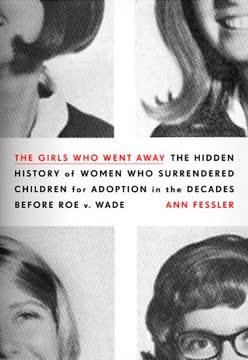
A personal beginning. Ann Fessler, an adoptee herself, frames this profound exploration of adoption with her own deeply personal journey to find her birth mother. Her adoptive mother, Hazel, would light a special candle for Ann's birth mother for three years, a silent acknowledgment of a complex truth. Ann's own adoption story, including her adoptive mother's discovery of her own adoption, highlights the intergenerational impact of these hidden histories.
An unexpected catalyst. A chance encounter at an art exhibition in 1989, where a woman mistook Ann for her "long-lost daughter," profoundly shifted Ann's perspective. This woman's heartfelt belief that Ann's birth mother "probably worries every day about what happened to you and whether you’ve had a good life" shattered Ann's naive assumption that birth mothers simply "moved on and forgot." This realization ignited her quest.
The slow reveal. Ann's search began with accessing her original birth certificate, a surprisingly simple process in Ohio for those born before 1964. Her journey led her to her birth mother's rural community, where she met an unsuspecting uncle who revealed details about her mother, Eleanor. Despite having the information, Ann waited fourteen years, creating art and collecting other women's stories, before finally contacting Eleanor, demonstrating the profound emotional weight of such a reunion.
2. A Hidden History of Shame and Forced Surrender (1945-1973)
Just about everyone who lived through this era has a memory of a girl from their high school, college, or neighborhood who disappeared.
An era of silence. Between the end of World War II in 1945 and the passage of Roe v. Wade in 1973, approximately 1.5 million babies were relinquished for non-family adoptions in the U.S. This period saw a dramatic increase in premarital pregnancies, yet society maintained a rigid social stigma against "unwed mothers." Girls who became pregnant often "disappeared," sent away to maternity homes, only to return with fabricated stories of illness or distant relatives.
The "unwanted" myth. A pervasive and damaging myth was that these babies were "unwanted" by their mothers. However, the interviews reveal that most mothers desperately wanted to keep their children but were coerced by overwhelming social, family, and economic pressures. The act of relinquishment was rarely a free choice, but rather a forced compliance with societal demands.
A collective trauma. The silence surrounding these events allowed old myths to persist, causing immense pain to both mothers and adoptees. Mothers were told to "move on and forget," a task that proved impossible, leaving them with a lifelong sense of loss and a secret that dominated their lives. This collective experience, shared by thousands, remained largely unacknowledged by society.
3. Societal Double Standards and Lack of Sex Education
You were shunned if you were pregnant. That’s the way they reacted to girls who were pregnant in high school.
The "bad girl" myth. Despite a rising tide of premarital sexual activity in the postwar years, society rigidly categorized girls as either "Madonna or whore." If a girl got pregnant, she was condemned as "promiscuous" and "bad," while the male partner often escaped any social condemnation. This double standard forced young women into extreme secrecy and fear of reputational ruin.
Ignorance was bliss (for parents). Parents and schools largely avoided comprehensive sex education, fearing it would encourage sexual activity. Information about contraception was scarce, often illegal for unmarried individuals, and shrouded in mystery. Many young women were profoundly uninformed about their own bodies and the mechanics of pregnancy, relying on unreliable information from boyfriends or vague notions.
Contraception barriers. Effective birth control methods like the pill and IUD were either unavailable or inaccessible to single women until the early 1970s, often due to state laws or moralistic doctors. Condoms were difficult to obtain discreetly, and ineffective methods like the rhythm method or withdrawal were common, leading to high rates of unplanned pregnancies among sexually active youth.
4. Family Pressure and the Trauma of Sequestration
My parents said that if I agreed never to see him again and do exactly as they told me to do, everything would be taken care of.
Fear of social ruin. For many middle-class families, a daughter's unwed pregnancy threatened their carefully constructed social status and reputation in the conformist post-WWII era. Parents, fearing ostracization from their community or church, often reacted with intense anger, disgust, or emotional abandonment, prioritizing their social standing over their daughter's well-being.
Forced exile and secrecy. Daughters were frequently forced to leave home, either to live with distant relatives or in maternity homes, to hide their pregnancies. Some were confined to their homes, made to hide from neighbors, or even forced to lie about their whereabouts. This banishment, coupled with the expectation of absolute secrecy, inflicted deep shame and a sense of being a "disgrace" upon the young women.
The double standard's reach. While daughters faced severe consequences, the young men responsible for the pregnancies largely escaped public censure. Their role was often ignored, and they were allowed to continue their lives unimpeded. This stark contrast further deepened the mothers' feelings of injustice and isolation, contributing to lifelong struggles with self-worth.
5. Maternity Homes: From Refuge to Relinquishment Factories
The philosophy and mission of maternity homes had changed considerably since the early 1900s, when the maternity-home movement began.
A shift in purpose. Initially, maternity homes offered refuge and support for unwed mothers, encouraging them to keep and raise their children. However, by the post-WWII era, their mission transformed. They became places to sequester pregnant girls, primarily to facilitate the surrender of their babies for adoption, often with little to no discussion of alternative options.
Coercion and control. Life in these homes was often institutional, demeaning, and emotionally cold. Girls were given assumed names, their mail was censored, and communication with the outside world was restricted. Staff, often social workers, actively persuaded or coerced mothers into relinquishing their children, emphasizing the "better life" a married, infertile couple could provide, and often fabricating details about the adoptive families.
Psychological manipulation. The prevailing theory among social workers was that unwed mothers were "neurotic" and therefore unfit to parent. This diagnosis justified the separation of mother and child, promising the mother a "second chance" at a normal life free from her "mistake." This psychological manipulation, coupled with financial pressures and lack of legal counsel, left many women feeling powerless and stripped of their dignity.
6. The Profound Trauma of Childbirth and Forced Separation
When the nurse puts the baby in your arms, everything changes.
Alone in labor. Many young women endured childbirth alone, without family support, and with little to no preparation for the physical or emotional intensity of the experience. They were often subjected to dehumanizing medical procedures and denied the opportunity to bond with their newborns, as hospitals and agencies actively sought to prevent attachment to facilitate relinquishment.
The moment of truth. Despite efforts to detach, the moment of birth often brought an overwhelming, unexpected surge of maternal love. For many, seeing or holding their baby for the first time shattered any prior detachment or denial, making the impending separation excruciatingly painful. This profound bond, often dismissed by professionals, was a source of lifelong grief.
Forced relinquishment. Mothers were often presented with adoption papers while still recovering from childbirth, sometimes within hours of delivery. They were pressured to sign, often without understanding the legal implications or their right to revoke consent. The act of signing, for many, felt like an "amputation" or a "violation," leaving them with a deep sense of powerlessness and betrayal.
7. Lifelong Scars: The Enduring Aftermath of Surrender
Giving up my son was a seminal moment in my life.
A defining event. For most women, surrendering a child became the defining event of their lives, shaping their identity and influencing every major decision thereafter. This trauma often led to a range of lifelong psychological and physical symptoms, including:
- Chronic depression, sadness, and loneliness
- Damaged self-esteem, guilt, and self-loathing
- Difficulty with intimacy, attachment, and trust
- Overprotectiveness of subsequent children
- Unexplained physical ailments (migraines, chronic illness)
- Post-traumatic stress disorder (flashbacks, nightmares)
The burden of secrecy. The inability to openly grieve or even acknowledge their loss, often due to societal expectations and family demands for silence, exacerbated their pain. Many women lived a "lie," pretending their child never existed, which further isolated them and hindered their healing process. This secrecy often extended to subsequent spouses and children.
Coping mechanisms. Women often coped by overachieving in careers, seeking immediate gratification through alcohol, drugs, or food, or by marrying quickly to "normalize" their lives and have other children. Some consciously chose not to have more children, feeling unworthy or unwilling to "dishonor" the child they relinquished. These coping strategies, while offering temporary relief, rarely addressed the root trauma.
8. The Complex Journey of Search, Reunion, and Healing
When I found my daughter and we started our relationship, I finally forgave that seventeen-year-old girl.
The path to reunion. Over half of the interviewed mothers eventually had contact with their surrendered children, often initiated by the adoptee. Access to original birth certificates, though still restricted in many states, and the rise of mutual-consent registries and "search angels" have made reunions more possible. Mothers often feared rejection or disrupting their child's life, while adoptees sought answers about their identity and medical history.
Emotional roller-coaster. Reunions are intensely emotional, often described as a "honeymoon phase" of euphoria, followed by complex challenges. Mothers experience overwhelming love, a desire to make up for lost time, and sometimes a re-triggering of past trauma. Adoptees often feel a powerful connection to someone who looks or acts like them, but may also grapple with conflicting loyalties to adoptive parents or anger over their relinquishment.
Healing and forgiveness. For many mothers, reunion marked the beginning of a profound healing process, allowing them to finally grieve, forgive themselves, and mend relationships with family members who had pushed for surrender. The ability to share their story and be acknowledged by their child brought immense relief and a sense of wholeness, even if the lost years could never be regained.
9. Breaking the Silence: The Power of Shared Stories and Advocacy
Birth mothers do not forget. I know a lot of birth mothers have drilled it down, but they don’t ever forget.
The need for validation. The most consistent message from these women is that society largely misunderstands their loss. Sharing their stories, whether in support groups or through public platforms, provides crucial validation and helps them realize they are not alone or "crazy" for their enduring grief. This collective voice challenges the simplistic narrative of "unwanted babies."
Intergenerational impact. The secrecy and shame surrounding these adoptions have affected not only mothers and adoptees but also subsequent children, siblings, and partners, creating "phantom" family members and unresolved questions. Letters from family members confirm the widespread, often hidden, pain and longing that ripple through generations.
Advocacy for change. Many mothers have become fierce advocates for:
- Open adoption records for adult adoptees
- Comprehensive sex education and birth control access for young women
- Societal acknowledgment of the trauma of forced relinquishment
- Therapeutic models that recognize and treat adoption-related grief
Their experiences underscore the importance of open communication, informed choice, and compassion, urging society to learn from the past and prevent similar injustices for future generations.
People Also Read


 Immersive