Plot Summary
Violet Dawn, Mortal Seed
In a humble Galilean village, Joseph and Mary's daily rituals are interrupted by a violet dawn, a sign of change. Their marriage is marked by routine, piety, and the subtle tensions of gender and expectation. One evening, a beggar appears, and Mary's act of charity is met with a cryptic blessing and a handful of luminous earth. The beggar's words—earth to earth, ashes to ashes—hint at the cycle of beginnings and endings, and Mary soon discovers she is with child. Joseph's doubts and the scrutiny of the elders reveal the fragility of trust and the weight of tradition. The mysterious conception, neither wholly divine nor entirely mundane, sets the stage for a life destined to be both extraordinary and painfully human.
The Beggar's Luminous Earth
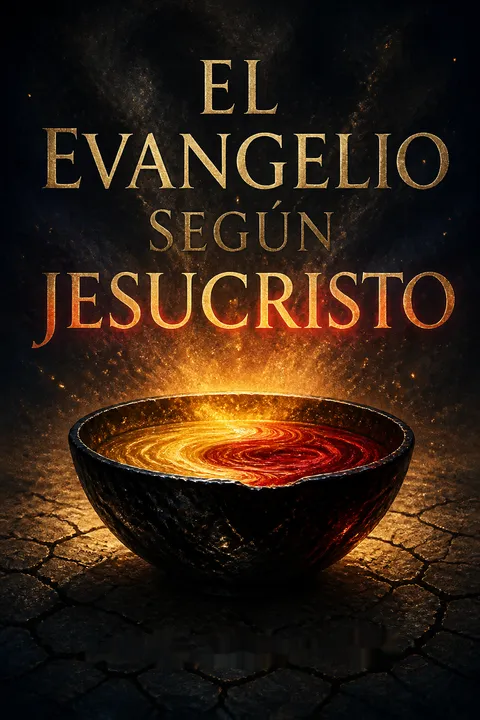
The luminous earth becomes a symbol of the inexplicable, stirring suspicion in Joseph and the elders. Mary's pregnancy is investigated, her story doubted, and the bowl of glowing soil is buried to hide its unsettling power. The couple's isolation grows, as does Mary's sense of emptiness and anticipation. Joseph's dreams are haunted by falling into a bowl of stars, while Mary waits, feeling the world recede as her child grows within. The luminous earth, hidden beneath their home, becomes a silent witness to the secrets and anxieties that will shape their family's fate.
Journey to Bethlehem's Cave
The Roman census forces Joseph and Mary to leave Nazareth for Bethlehem. Their journey is arduous, shared with other families, marked by the rhythms of ancient law and the burdens of expectation. Along the way, Joseph debates fate and humility with elders, while Mary endures the physical and existential weight of impending birth. The landscape is both real and symbolic—a world shaped by imperial power, divine rumor, and the quiet suffering of the poor. As they near Bethlehem, omens and memories converge, and the couple finds themselves on the threshold of a birth that will echo through history.
Birth Amidst Shadows
Denied shelter, Mary gives birth in a cave, aided by a slave named Salome. The nativity is stripped of glory: Jesus is born amid blood, straw, and the indifference of the world. Shepherds bring humble gifts, and Mary recognizes the beggar among them. The birth is both miracle and ordeal, a moment of joy shadowed by vulnerability. The family's poverty and the world's violence are ever-present, and the cave becomes a crucible where hope and sorrow are fused. The luminous earth, the beggar's blessing, and the prophecy of suffering all linger in the air.
Herod's Wrath, Joseph's Guilt
As Herod's paranoia turns murderous, Joseph overhears soldiers plotting the massacre of Bethlehem's children. He flees with his family, saving Jesus but leaving others to their fate. The angel—now revealed as neither wholly divine nor forgiving—condemns Joseph's inaction, declaring his guilt unforgivable. Mary is left to grapple with the horror and the ambiguous salvation of her son. The massacre marks the family forever, and Joseph's nightmares become a legacy of inherited guilt. The luminous earth's promise is now a curse, and the shadow of the slain innocents will haunt Jesus' life.
The Flight and Return
The family's escape to Egypt and eventual return to Nazareth are marked by hardship and the slow erosion of innocence. Herod's death brings no peace; Joseph is tormented by dreams of betrayal and murder. Mary bears more children, but the family's happiness is fragile, overshadowed by the memory of the massacre and the unresolved mystery of Jesus' birth. The luminous earth sprouts a strange plant, a silent reminder of the past. Jesus grows, learns, and begins to sense the weight of his father's remorse and his own difference.
The Weight of Remorse
Joseph's nightmares intensify, and his relationship with Jesus is marked by unspoken pain. The massacre of Bethlehem becomes a family secret, a wound that festers in silence. Jesus, now a boy, senses the burden he carries but cannot name. The family's daily life is shaped by poverty, labor, and the quiet endurance of suffering. The luminous earth's plant grows stubbornly, defying attempts to uproot it. The past cannot be buried, and the legacy of guilt is passed from father to son, shaping the destiny of both.
The Dream Inherited
As Jesus comes of age, he inherits Joseph's nightmare—a vision of being hunted by his own father. Mary finally reveals the truth: Joseph knew of the impending massacre but did nothing to warn the other families. Jesus is devastated, accusing both parents of complicity. The dream becomes a symbol of inherited guilt, and Jesus leaves home, seeking understanding and absolution. The luminous earth is unearthed and carried away by the beggar-angel, marking the end of childhood and the beginning of a journey into the unknown.
Jesus Leaves Home
Jesus wanders, seeking answers in Jerusalem, Bethlehem, and the wilderness. He meets Salome, the midwife who delivered him, and confronts the tomb of the innocents. He becomes a shepherd, apprenticed to a mysterious figure—Pastor—who is both mentor and tempter, angel and devil. Their debates on God, evil, and the nature of suffering shape Jesus' understanding of the world. The luminous earth's bowl is broken, and Jesus is left with only his father's sandals and a growing sense of destiny. The wilderness becomes a crucible where innocence is lost and purpose is forged.
Shepherd, Devil, and God
Jesus' years as a shepherd are marked by hardship, temptation, and philosophical struggle. Pastor's ambiguous teachings blur the line between good and evil, and Jesus is tested by loneliness, desire, and the demands of survival. A thunderstorm and a lost sheep lead to a fateful encounter with God, who appears as a pillar of smoke and demands a sacrifice. Jesus is forced to kill the sheep he once saved, sealing a covenant of blood. Pastor banishes him, declaring he has learned nothing. Jesus' feet are wounded, and he limps onward, marked by pain and the knowledge that his life is no longer his own.
Mary Magdalene's Embrace
Wounded and weary, Jesus finds shelter with Mary Magdalene, a prostitute in Magdala. Their union is both physical and spiritual, a brief respite from suffering. Mary heals his wounds and teaches him the pleasures of the body, offering love without judgment. Their relationship is tender, passionate, and doomed by the demands of destiny. Jesus returns home, but is rejected by his family, who cannot accept his revelations. He returns to Mary, and together they seek a new life by the sea. Their love is a sanctuary, but the world's demands—and God's—cannot be denied.
Miracles and Doubt
Jesus' reputation grows as he performs miracles—filling nets with fish, calming storms, healing the sick. Disciples gather, drawn by his power and charisma, but doubt and rivalry simmer beneath the surface. The miracles are both blessing and curse, signs of divine favor and sources of suspicion. Jesus is haunted by the knowledge that his power comes at a cost, and that every act of healing is also an act of complicity in God's plan. The crowd's adulation is fickle, and the authorities begin to take notice. The path to glory is paved with suffering, and the shadow of the cross looms ever closer.
The Gathering of Disciples
Jesus gathers a circle of followers—fishermen, tax collectors, zealots, and women—each drawn by hope, need, or ambition. The group is united by faith but divided by fear and misunderstanding. Jesus' teachings grow more urgent, his miracles more public, and the threat from the authorities more dire. The death of Lazarus, the arrest of John the Baptist, and the betrayal by Judas Iscariot mark the beginning of the end. Jesus' attempts to subvert God's plan by offering himself as a political rebel fail, and the machinery of fate grinds inexorably toward the cross.
The Lake of Mist
In a boat on a mist-shrouded lake, Jesus confronts God and the devil. God reveals the true purpose of Jesus' life: to die as a martyr, inaugurating an era of suffering, war, and bloodshed in God's name. The devil offers repentance and peace, but God refuses, insisting that good and evil are inseparable. Jesus is forced to accept his role as sacrificial lamb, knowing the horrors that will follow. The mist lifts, and Jesus returns to shore, transformed by knowledge and resigned to his fate. The disciples proclaim him the son of God, and the final act begins.
The Bargain with God
Jesus learns the full extent of God's plan: his death will bring not peace, but centuries of violence, persecution, and division. The church will be built on suffering, and the world will be drenched in blood. Jesus pleads for another way, but God is implacable. The devil proposes reconciliation, but is rejected. Jesus accepts his destiny, knowing it is both necessary and monstrous. The bowl of luminous earth is returned to the devil, and the stage is set for the Passion. The knowledge of what is to come is both a burden and a liberation, and Jesus steps forward to meet his end.
The Path to Jerusalem
Jesus enters Jerusalem, overturns the tables in the Temple, and is arrested as a political rebel. The disciples are scattered, and Judas hangs himself in despair. Jesus is tried, condemned, and led to Golgotha. The crowd is indifferent, the authorities are ruthless, and the disciples are powerless. Mary Magdalene and the women watch in anguish as Jesus is nailed to the cross. The inscription above his head proclaims him king of the Jews, but the true meaning of his death is known only to him—and to God.
The Cross and the Bowl
As Jesus dies, God appears, proclaiming his pleasure in his son's sacrifice. Jesus realizes he has been used, his life planned for death from the beginning. He forgives God, asking men to forgive the divine ignorance that has unleashed so much suffering. His blood drips into the black bowl, now in the hands of the devil, sealing the covenant of pain and redemption. The story ends not with triumph, but with the recognition that every beginning comes from an ending, and that the cycle of guilt, suffering, and hope will continue as long as men seek meaning in the face of the divine.
Analysis
Saramago's The Gospel According to Jesus Christ is a radical reimagining of the Christian narrative, stripping away sanctity to reveal the human, psychological, and political dimensions of the story. The novel interrogates the nature of divinity, the origins of suffering, and the legacy of inherited guilt. By portraying Jesus as a questioning, haunted, and tragically human figure, Saramago challenges the reader to confront the ambiguity of good and evil, the limitations of faith, and the cost of redemption. The luminous earth and the black bowl serve as potent symbols of mystery, guilt, and the cycle of fate, while the recurring figures of the angel-beggar and Pastor-the-devil blur the boundaries between divine and demonic. The narrative's structure—marked by circularity, foreshadowing, and philosophical reflection—reinforces the sense of inevitability and tragic irony. Ultimately, the novel is a meditation on the impossibility of innocence, the burden of responsibility, and the search for meaning in a world where God's will is both irresistible and deeply flawed. Saramago's gospel is not one of triumph, but of endurance, compassion, and the recognition that every beginning comes from an ending, and that the cycle of suffering and hope will continue as long as men seek answers in the face of the divine.
Review Summary
The Gospel According to Jesus Christ is a controversial retelling of Jesus's life by José Saramago. Readers praise Saramago's masterful writing and unique perspective, presenting Jesus as more human and fallible. The novel challenges traditional religious narratives, sparking both admiration and criticism. Many find it thought-provoking, exploring themes of faith, power, and human nature. While some consider it blasphemous, others appreciate its philosophical depth and Saramago's ability to reimagine a well-known story. The book's unconventional style and dense prose can be challenging but rewarding for many readers.
People Also Read
Characters
Jesus
Jesus is the central figure, born of both mortal and ambiguous divine origins. Raised in poverty and shadowed by the trauma of the Bethlehem massacre, he inherits his father's guilt and his mother's silence. His journey is one of relentless questioning—of God, evil, and his own purpose. He is shaped by suffering, love, and the burden of expectation, oscillating between moments of compassion and despair. His miracles are both acts of mercy and complicity in a divine plan he cannot escape. Jesus' psychological arc is defined by the struggle to reconcile inherited guilt, personal desire, and the demands of a God who is both creator and destroyer. His ultimate acceptance of martyrdom is an act of tragic lucidity, marked by forgiveness and resignation rather than triumph.
Mary (Mother of Jesus)
Mary is a figure of endurance and ambiguity. Her initial passivity masks a deep well of doubt, longing, and sorrow. She is both the vessel of divine will and a mother marked by loss and regret. Her relationship with Joseph is strained by suspicion and the burden of secrets. As Jesus grows, Mary becomes both his protector and his judge, unable to fully accept or reject his destiny. Her psychological complexity is revealed in her dreams, her interactions with the angel-beggar, and her eventual recognition of her son's suffering. She embodies the pain of motherhood in a world governed by male power—divine and human alike.
Joseph
Joseph is a man crushed by the weight of guilt and the impossibility of redemption. His failure to warn the families of Bethlehem haunts him, manifesting in nightmares and a strained relationship with Jesus. He is both victim and perpetrator, a symbol of ordinary goodness undone by fear and circumstance. Joseph's psychological journey is one of increasing isolation, culminating in his crucifixion—a fate that mirrors and foreshadows his son's. His legacy is the inheritance of guilt, passed down to Jesus as both a curse and a challenge.
Mary Magdalene
Mary Magdalene is both lover and healer, offering Jesus a brief sanctuary from suffering. Her past as a prostitute is neither condemned nor romanticized; instead, she is portrayed as a woman of agency, wisdom, and deep compassion. Her relationship with Jesus is marked by mutual discovery, tenderness, and the recognition of shared wounds. Mary Magdalene's psychological strength lies in her ability to love without illusion, to accept both pleasure and pain, and to stand by Jesus in his darkest hour. She is the embodiment of the possibility of redemption through love.
Pastor (The Shepherd/Devil)
Pastor is a figure of profound ambiguity—at once mentor, tempter, and adversary. He challenges Jesus' assumptions about good and evil, God and man, offering both comfort and provocation. His teachings blur the boundaries between divine and demonic, forcing Jesus to confront the complexity of existence. Pastor's psychological role is that of the necessary antagonist, the shadow that defines the light. His final bargain with God reveals the tragic necessity of evil in a world governed by absolute power.
God
God is depicted not as an omnibenevolent creator, but as a being driven by dissatisfaction, ambition, and the desire for power. His relationship with Jesus is transactional, marked by demands for sacrifice and the promise of posthumous glory. God's psychological complexity is revealed in his conversations with Jesus and the devil, where he admits to limitations, regrets, and the need for evil as a counterpart to good. He is both the architect of suffering and the victim of his own design—a tragic figure whose will is both irresistible and deeply flawed.
Judas Iscariot
Judas is portrayed not as a simple traitor, but as a disciple who carries out Jesus' final wish—to denounce him as a political rebel and thus attempt to subvert God's plan. His suicide is an act of despair and fidelity, a recognition of the impossibility of escaping fate. Judas' psychological arc is one of loyalty, guilt, and the tragic consequences of obedience.
Peter (Simon)
Peter is the archetypal disciple—devoted, passionate, and prone to fear. His denial of Jesus is both a personal failure and a reflection of the limits of human courage. Peter's psychological journey is marked by the tension between faith and doubt, loyalty and self-preservation. He is both the rock on which the church will be built and a man undone by the demands of destiny.
John the Baptist
John is the forerunner, the voice in the wilderness who prepares the way for Jesus. His asceticism and fiery rhetoric mark him as both visionary and outcast. John's psychological role is that of the necessary precursor, the one who announces the coming of the Messiah and is then silenced by power. His death is both a warning and a catalyst for Jesus' final journey.
The Angel/Beggar
The angel who appears as a beggar is a figure of ambiguous origin—neither wholly divine nor demonic. He delivers prophecies, pronounces judgment, and refuses forgiveness. His presence is a constant reminder of the limits of human understanding and the implacability of fate. The angel's psychological function is to unsettle, to provoke doubt, and to enforce the cycle of guilt and retribution.
Plot Devices
Luminous Earth and the Black Bowl
The luminous earth, given by the beggar-angel and buried beneath the family home, serves as a recurring symbol of the inexplicable, the divine, and the cursed. Its glow is both promise and warning, a reminder of the world's hidden forces. The black bowl, which collects Jesus' blood at the crucifixion, is the vessel of suffering and the seal of the covenant between God, man, and the devil. These objects anchor the narrative's exploration of guilt, destiny, and the inescapable consequences of human and divine action.
Inherited Guilt and the Nightmare
The nightmare of being hunted by one's father is passed from Joseph to Jesus, embodying the psychological inheritance of guilt and the impossibility of redemption. This device structures the narrative's exploration of generational trauma, the burden of silence, and the search for meaning in suffering. The dream becomes both prophecy and curse, shaping Jesus' destiny and his relationship with God, his family, and himself.
The Angel/Beggar and Pastor/Devil
The recurring figures of the angel-beggar and Pastor-the-shepherd-devil serve as plot devices that challenge the binary of good and evil. Their teachings, judgments, and interventions force Jesus—and the reader—to question the nature of divinity, morality, and free will. These characters embody the narrative's commitment to ambiguity, complexity, and the refusal of easy answers.
Narrative Structure and Foreshadowing
The novel's structure is marked by circularity—beginnings and endings mirror each other, and the past is never truly past. Prophecies, dreams, and omens foreshadow events, creating a sense of inevitability and tragic irony. The narrative voice is both omniscient and intimate, blending philosophical reflection with vivid storytelling. This structure reinforces the themes of destiny, suffering, and the search for meaning in a world governed by inscrutable powers.

Download PDF
Download EPUB
.epub digital book format is ideal for reading ebooks on phones, tablets, and e-readers.








































