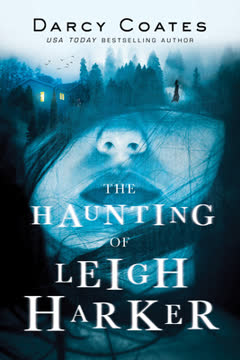
Plot Summary
Shadows at the Threshold
Leigh Harker, a solitary archivist, is paralyzed in her bed by the certainty that something unnatural lingers just outside her bedroom door. The house, once her sanctuary, is now a place of dread. She is gripped by terror as a shadowy figure with round, unblinking eyes and long hair fills her doorway, watching her with predatory patience. Leigh's fear is visceral, her senses heightened as she tries not to move or breathe, convinced that any sound will draw the entity closer. The oppressive atmosphere, the moonlight fractured by the oak outside, and the suffocating silence all conspire to make her home feel alien and hostile. When the figure finally retreats, Leigh is left shaken, her sense of safety shattered, and the first cracks of a haunting begin to form.
The Unseen Intruder
The next day, Leigh tries to rationalize the terror of the night before, but subtle disturbances in her home—moved objects, strange noises, and a persistent sense of being watched—undermine her confidence. She finds a locked door under the stairs she's never opened, and the memory of the intruder's eyes haunts her. Leigh's attempts to reclaim normality are futile; the house feels changed, as if it's hiding secrets from her. She tries to reach out for help, but her isolation is deepened by the absence of meaningful connections. The sense of intrusion grows, and Leigh's anxiety mounts as she realizes the haunting is not a fleeting nightmare but a persistent, intelligent presence that knows her routines and vulnerabilities.
Locked Doors, Hidden Fears
Leigh's fear escalates as the intruder becomes bolder, mimicking voices and rattling the locked under-stairs door. Desperate, she calls the police, but their visit is perfunctory and dismissive. They search the house but find nothing, treating Leigh with patronizing skepticism. Their lack of concern leaves her feeling exposed and abandoned, her credibility undermined by her solitary lifestyle and visible anxiety. The officers' subtle avoidance of eye contact and their curiosity about the house's history hint at secrets Leigh doesn't understand. Alone again, she is left to confront the reality that no one will save her, and the locked door under the stairs becomes a symbol of both her fear and her inability to escape the haunting.
Alone in the Dark
Leigh's nights become a battle for survival as the entity grows more aggressive, invading her bedroom and stalking the halls. She is forced to sleep downstairs, her routines disrupted and her sense of self eroding. The house, once a place of comfort, is now a labyrinth of dread. Leigh's attempts to maintain normalcy—cleaning, organizing, and clinging to rituals—are futile against the relentless presence. The locked door rattles nightly, and the entity's influence spreads, touching every corner of her life. Leigh's isolation is compounded by failed attempts to reach her estranged sister, Meg, and the realization that the haunting is personal, targeting her specifically. The boundaries between reality and nightmare blur as Leigh's exhaustion and fear mount.
The House Watches
The entity's attacks escalate, leaving Leigh physically wounded and psychologically battered. She is trapped in her own home, unable to find refuge even in the daylight. The house itself seems complicit, its quirks and flaws now menacing rather than endearing. Leigh's attempts to defend herself—using salt, searching for rational explanations, and fortifying her space—are met with supernatural resistance. The locked door under the stairs becomes a focal point of terror, radiating a sense of imminent death. Leigh's sense of reality fractures as she experiences hallucinations, time slips, and the sensation of being watched from within the walls. The house is no longer just haunted; it is alive, and it is hungry.
Salt and Sanctuary
Driven to the edge, Leigh turns to folklore, spreading salt throughout the house in hopes of warding off the entity. The act is both ritual and rebellion, a last stand against the encroaching darkness. The salt seems to offer temporary respite, quieting the rattling door and giving Leigh a fragile sense of control. Yet the haunting adapts, manifesting in new ways—phantom phone calls, shifting shadows, and the reappearance of objects from her past. The house's history begins to bleed through, and Leigh glimpses visions of other lives, other hauntings, layered atop her own. The salt lines are both barrier and prison, marking the boundaries of her dwindling sanctuary.
Portraits of the Past
Leigh is drawn into a surreal vision of the house's past, wandering a hallway filled with dust, candles, and portraits of a long-gone family. The faces in the photographs are eerily blank, their eyes white and sightless. The entity reveals itself as a woman, ancient and monstrous, her features distorted by grief and rage. The haunting is not random; it is rooted in the house's history, in tragedies that have repeated across generations. Leigh's own identity begins to blur as she confronts the possibility that she is not just a victim but part of the house's patchwork of sorrow. The locked door is both literal and symbolic, a barrier to the truth that Leigh is not ready to face.
The Visitor's Warning
Meg, Leigh's estranged sister, arrives at the house, searching for answers about Leigh's disappearance. The encounter is surreal—Meg cannot see or hear Leigh, and instead interacts with the entity, mistaking it for the new owner. The truth is laid bare: Leigh has been missing for over a year, presumed dead, her absence a wound that Meg cannot heal. The entity taunts Leigh with the photograph Meg brings, forcing her to confront the reality of her own death. The haunting is no longer just a supernatural torment; it is a reckoning with loss, regret, and the ties that bind the living and the dead. Leigh's scream is both protest and acceptance, a cry for release that echoes through the house.
The Truth Beneath
Leigh's sense of self fractures as she realizes she is a ghost, trapped in the house by unfinished business and unresolved trauma. The entity, revealed as Sarah, the new owner and a medium, becomes both adversary and guide. Together, they piece together the events leading to Leigh's death, uncovering a pattern of violence and neglect that stretches back decades. The house is a palimpsest of suffering, its walls absorbing the pain of those who lived and died within. Leigh's memories return in fragments—her murder, the disposal of her body, and the indifference of those around her. The locked door under the stairs is the gateway to the truth, and opening it unleashes the rot that has festered for generations.
Death in the Walls
The rot spreads, manifesting as mold, insects, and physical decay. Leigh and Sarah discover a hidden basement, the true heart of the haunting. There, they find the remains of Leigh's body, preserved in a freezer by her killer—a vagrant named Peter, who had lived in the house's foundations, preying on its occupants. The revelation is both horrifying and liberating; the house's curse is not supernatural but human, born of violence, secrecy, and neglect. Leigh's spirit is freed by the discovery, but the cost is high—Sarah suffers a stroke, and the house's legacy of pain threatens to continue. The haunting is revealed as a cycle, perpetuated by the refusal to confront the truth.
The Rot Spreads
With Sarah incapacitated and a new caregiver, Allie, moving in, the house's corruption accelerates. Mold and darkness invade every room, and Leigh's influence grows as she learns to manipulate the physical world. Allie, sensitive to the haunting, becomes increasingly fearful and erratic, her presence destabilizing the fragile peace Leigh and Sarah had achieved. The house becomes a battleground between the living and the dead, the past and the present. Leigh's anger and grief manifest as poltergeist activity, driving Allie away and forcing Sarah's family to intervene. The house's secret is on the verge of exposure, but the danger to those within has never been greater.
The Ghost's Awakening
As Leigh's understanding of her condition deepens, she becomes more than a passive victim—she is an active force within the house. Her ability to affect the physical world increases, allowing her to protect Sarah and drive away those who threaten the fragile sanctuary they have built. The haunting shifts from terror to agency, as Leigh embraces her role as both guardian and avenger. The house, once a prison, becomes a stage for her final acts of love and retribution. The boundaries between life and death blur, and Leigh's unfinished business comes into focus: to protect those she loves, to confront her killer, and to find peace for herself and the house.
Sister's Return
Meg returns to the house, seeking closure for Leigh's disappearance. Through Sarah's mediation, Leigh is able to communicate her love and regret, offering Meg the comfort she needs to move on. The encounter is bittersweet, a moment of grace in the midst of horror. Leigh's spirit is unburdened by the knowledge that she is remembered and loved, and the house is cleansed, if only temporarily, by the act of reconciliation. The haunting is revealed as a tapestry of memory, woven from the threads of love, loss, and forgiveness. Leigh's journey is not just about solving the mystery of her death, but about healing the wounds that bind the living and the dead.
The Basement Secret
The final secret of the house is uncovered: a hidden basement where Peter, the vagrant and murderer, lived undetected for years. Leigh's body is found in the freezer, her death the culmination of the house's long history of violence. The confrontation with Peter is both physical and spiritual, as Leigh uses her newfound power to prevent him from harming Sarah. The cycle of violence is broken, and the house is freed from its curse. The discovery brings closure to the families of the missing, and the house is finally able to breathe again. The haunting ends not with vengeance, but with understanding and release.
The Final Confrontation
Leigh and Sarah face the entity that has haunted the house for generations, confronting the legacy of pain and secrecy that has festered within its walls. The battle is both literal and metaphorical, a struggle for control over the narrative of the house and the lives it has consumed. Leigh's acceptance of her death and her willingness to let go are the keys to victory. The house, once a place of horror, becomes a place of healing, its wounds acknowledged and its ghosts laid to rest. The final confrontation is not just with the supernatural, but with the self—with the need to forgive, to remember, and to move on.
Closure and Release
With the truth revealed and the cycle of violence broken, Leigh's spirit is finally able to move on. Sarah, though physically diminished, finds comfort in the company of her family and the knowledge that she has helped bring peace to the house. The haunting is over, but the memories remain—a patchwork of sorrow and joy, loss and love. The house is no longer a prison, but a home once more. Leigh's journey ends not with oblivion, but with the quiet satisfaction of a life, and a death, made meaningful by connection and understanding.
Patchwork of Memory
In the aftermath, the house is filled with life—Sarah's family visits, children play, and the scars of the past begin to heal. The patchwork quilt Leigh made for her sister becomes a symbol of the ties that bind, each square a memory, each stitch an act of love. The house, once a site of tragedy, is transformed by the resilience of those who inhabit it. Leigh's presence lingers, not as a vengeful ghost, but as a guardian spirit, watching over the home she loved. The story ends with the promise of renewal, the assurance that even in the darkest places, light can return.
Home, At Last
Leigh's journey concludes as she finally lets go, her unfinished business resolved. The house, cleansed of its rot and sorrow, stands as a testament to the power of memory, forgiveness, and love. Leigh's spirit is at rest, her story woven into the fabric of the home she cherished. The haunting is over, but the lessons remain: that the past must be faced, that wounds must be acknowledged, and that even the most haunted places can become sanctuaries. The house is home, at last.
Analysis
A meditation on trauma, memory, and the need for closureThe Haunting of Leigh Harker is more than a ghost story; it is a profound exploration of the ways in which the past shapes the present, and how unresolved trauma can haunt individuals and spaces alike. The house serves as a living archive, absorbing the pain, secrets, and histories of its inhabitants, demanding acknowledgment and reconciliation. Leigh's journey from denial to acceptance mirrors the psychological process of grief, while Sarah's role as medium and guide underscores the importance of connection and empathy. The novel interrogates the limits of rationality, the dangers of isolation, and the redemptive power of love and forgiveness. Its central lesson is that healing requires facing the truth, no matter how painful, and that even the most haunted places can become sanctuaries when wounds are acknowledged and shared. The story's patchwork structure—layering past and present, life and death, horror and hope—reflects the complexity of human experience, offering a vision of peace that is hard-won but enduring.
Review Summary
The Haunting of Leigh Harker receives mixed reviews averaging 3.91/5 stars. Readers praise the atmospheric, creepy writing and genuine scares, particularly the terrifying opening. Many appreciate a major twist that transforms the story from standard haunting to something unique. The protagonist Leigh and her friendship with Sarah resonated emotionally with readers. Common criticisms include slow pacing initially, predictable twists reminiscent of popular movies, and some plot holes. Several reviewers found it boring or confusing, while fans loved the darker tone and emotional depth, often finishing it quickly despite the slow start.
Characters
Leigh Harker
Leigh is a solitary, meticulous woman whose life is defined by routine and order. As an archivist, she is drawn to the past, cataloging and preserving fragments of history—a trait mirrored in her obsessive attention to her home. Leigh's psychological landscape is shaped by isolation, anxiety, and a deep yearning for connection, particularly with her estranged sister, Meg. The haunting forces her to confront her vulnerabilities, her regrets, and ultimately, her mortality. Leigh's journey is one of self-discovery and acceptance; she evolves from a passive victim to an active agent, using her growing supernatural abilities to protect others and seek justice. Her arc is a meditation on grief, memory, and the need for closure, both for herself and those she leaves behind.
Sarah
Sarah is an elderly woman with a complex past, marked by loss, resilience, and a deep connection to the house. As a medium, she is sensitive to the presence of spirits, and her arrival in Leigh's home catalyzes the unraveling of the haunting. Sarah's relationship with Leigh is initially adversarial, but evolves into one of mutual support and understanding. She is haunted by her own family's tragedies, particularly the disappearance of her sister Ruth, and her return to the house is both a search for answers and an act of reclamation. Sarah's psychological strength is tempered by physical frailty, and her arc is one of redemption—helping Leigh find peace, confronting her own ghosts, and transforming the house from a place of sorrow to one of healing.
Meg
Meg is Leigh's younger sister, vibrant and emotional, yet burdened by unresolved guilt and distance. Their relationship is strained by years of miscommunication and pride, each believing the other to be the source of their estrangement. Meg's search for Leigh after her disappearance is driven by love and remorse, and her eventual reconciliation—facilitated by Sarah—provides the emotional closure both sisters need. Meg represents the living's struggle to make sense of loss, to forgive, and to move forward. Her arc is a testament to the enduring power of familial bonds, even in the face of death.
Peter
Peter is a vagrant and murderer, living undetected in the house's hidden basement. His presence is the source of the haunting's physical horror—the rot, the mold, the violence that festers within the walls. Peter's psychology is shaped by trauma, addiction, and a lifetime of hiding from the world. He is both victim and perpetrator, his actions a continuation of the house's legacy of pain. Peter's confrontation with Leigh and Sarah is the climax of the narrative, forcing all involved to confront the consequences of secrecy, neglect, and the refusal to face the past.
The House
The house is more than a setting; it is a character in its own right, absorbing the pain, secrets, and histories of its inhabitants. Its locked doors, hidden rooms, and shifting architecture reflect the psychological states of those within. The house is both sanctuary and prison, a place of comfort and terror. Its haunting is a manifestation of unresolved trauma, demanding acknowledgment and reconciliation. The house's transformation—from a site of horror to a home—mirrors the journeys of Leigh and Sarah, and its ultimate peace is a testament to the power of facing the truth.
Allie
Allie is Sarah's first caregiver after her stroke, a practical and skeptical woman whose presence disrupts the fragile balance of the house. Sensitive to the haunting, Allie becomes increasingly fearful and erratic, her actions provoking Leigh's latent supernatural abilities. Allie's departure marks a turning point, forcing Sarah's family to intervene and bringing new life into the house. She represents the intrusion of the outside world, the limits of rationality, and the necessity of respect for the unseen.
Troy
Troy replaces Allie as Sarah's caregiver, bringing warmth, openness, and a willingness to engage with the house's mysteries. His presence facilitates Sarah's recovery and the return of her family, helping to restore the house as a place of life and connection. Troy's acceptance of the house's history and his gentle care for Sarah mark the beginning of a new chapter, one defined by healing rather than fear.
Ruth
Ruth is Sarah's younger sister, whose disappearance and death decades earlier set the stage for the house's legacy of sorrow. Her presence lingers in the house as a symbol of innocence lost, the consequences of secrecy, and the enduring pain of unresolved tragedy. Ruth's story is a cautionary tale, a reminder that the past cannot be buried without consequence.
Cliff
Cliff is a neighbor whose suspicious behavior and intrusive curiosity make him a suspect in Leigh's disappearance. Ultimately, he is revealed as a red herring, his role more symbolic than substantive. Cliff represents the dangers of voyeurism, the failure of community, and the ease with which the truth can be obscured by rumor and assumption.
The Entity
The entity haunting the house is a composite of the pain, fear, and violence that have accumulated over generations. It is both personal and impersonal, targeting Leigh specifically but also reflecting the broader history of the house. The entity's shifting forms—woman, monster, shadow—mirror the psychological states of those it haunts. Its defeat requires not just exorcism, but understanding, forgiveness, and the willingness to confront the darkest parts of the self and the past.
Plot Devices
Haunted House as Psychological Mirror
The narrative uses the haunted house as a metaphor for the characters' psychological states. The physical decay, locked doors, and shifting architecture mirror Leigh's anxiety, isolation, and eventual acceptance of her death. The house's history is layered, with each generation's trauma leaving its mark, creating a palimpsest of sorrow that must be acknowledged and healed. The haunting is both literal and symbolic, a manifestation of unresolved grief, regret, and the need for closure.
Unreliable Narration and Time Slips
Leigh's perspective is fragmented by exhaustion, fear, and her status as a ghost. Time slips, hallucinations, and shifting realities create an atmosphere of uncertainty, forcing the reader to question what is real and what is imagined. The use of unreliable narration heightens the suspense and mirrors the psychological disintegration of the protagonist. The eventual revelation of Leigh's death is foreshadowed by these narrative distortions, making the truth both shocking and inevitable.
Locked Door as Central Mystery
The locked door under the stairs serves as both a literal and symbolic barrier, representing the secrets Leigh is unwilling or unable to face. Its eventual opening unleashes the rot that has festered within the house, forcing a confrontation with the past. The door is a classic gothic device, a threshold between the known and the unknown, the living and the dead. Its presence drives the plot, focusing the characters' fears and desires on the need to uncover the truth.
Portraits and Objects as Memory Anchors
The use of portraits, quilts, and personal objects serves to anchor the haunting in the tangible world. These items are imbued with emotional significance, connecting the characters to their pasts and to each other. The patchwork quilt, in particular, becomes a symbol of memory, love, and the possibility of healing. Objects lost and found, moved and returned, mark the passage of time and the evolution of the haunting.
Dual Protagonists and Shifting Perspectives
The narrative structure alternates between Leigh and Sarah, allowing for a multifaceted exploration of the haunting. Their relationship evolves from suspicion to partnership, each bringing unique strengths and vulnerabilities to the quest for truth. The dual perspective enriches the psychological depth of the story, highlighting the ways in which trauma, memory, and love intersect across generations.
Foreshadowing and Symbolic Motifs
The story is rich with foreshadowing—visions of rot, recurring dreams, and the persistent presence of the locked door all hint at the underlying mystery. Symbolic motifs such as salt, mold, and patchwork quilts reinforce the themes of protection, decay, and the interweaving of lives. The use of these devices creates a sense of inevitability, drawing the reader toward the final revelation.








































