
Plot Summary
Plague and Survival
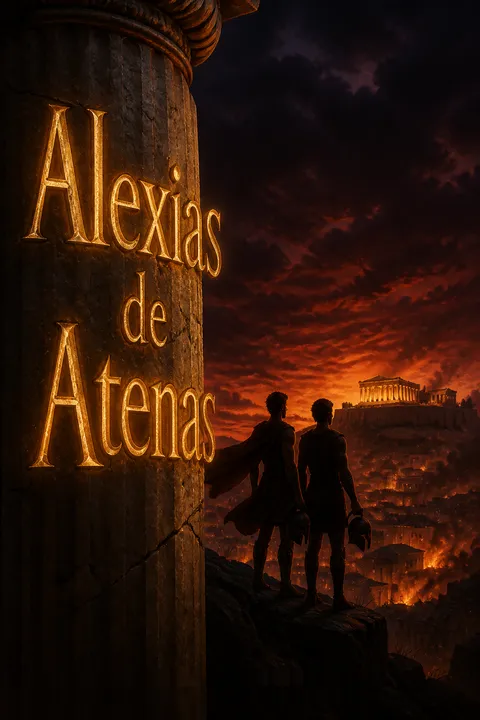
Alexias is born into a world ravaged by the Peloponnesian War and a devastating plague that sweeps through Athens. His family is decimated: his mother dies soon after his birth, and his father, Myron, nearly abandons him as a sickly infant. Yet, through a combination of chance and his mother's last wishes, Alexias survives. The city is crowded with refugees, disease, and fear, and the story of his uncle's tragic love and death during the plague becomes a formative legend in the household. Alexias grows up with the knowledge that his existence is precarious, shaped by loss and the shadow of war, and that survival itself is a kind of accidental grace.
Childhood Shadows
Alexias' early years are marked by loneliness and the harshness of his father's household, especially under the care of a resentful Rhodian nurse. He finds solace in the stories of his family and in the glimpses of the city's beauty from the rooftops. The constant threat of Spartan invasions and the destruction of the family's country estate reinforce his sense of vulnerability. A brief, luminous friendship with Sokrates, who appears as a music student in his school, offers Alexias his first experience of being truly seen and valued. This encounter plants the seeds of philosophical curiosity and a longing for connection that will shape his life.
Coming of Age
As Alexias enters adolescence, he becomes an ephebe and begins to test the boundaries of his world. He witnesses the city's excitement over the Sicilian Expedition and the political tensions that swirl around the charismatic Alkibiades. The desecration of the Herms shocks Athens, and suspicion and fear spread. Alexias' friendships deepen, especially with Xenophon, and he becomes aware of the complexities of loyalty, justice, and the city's fragile democracy. The world of the palaestra, the gymnasium, and the symposium introduces him to the codes of honor, beauty, and desire that define Athenian manhood.
The Herms Desecrated
The mutilation of the Herms, sacred boundary markers, throws Athens into turmoil on the eve of the Sicilian Expedition. The city is gripped by paranoia, and accusations fly, with Alkibiades at the center of the storm. Alexias observes the political maneuvering and the way fear can turn citizens against each other. The event becomes a catalyst for the unraveling of trust in the city, and for Alexias, it is a lesson in the dangers of mob justice and the vulnerability of even the most revered institutions. The episode foreshadows the deeper betrayals and losses to come.
Sicilian Expedition
The Athenian armada sets sail for Sicily amid public spectacle and private doubts. Alexias watches as the city pours its hopes into the campaign, led by Alkibiades, Nikias, and Lamachos. The expedition, however, is doomed by divided leadership, superstition, and the recall and eventual exile of Alkibiades. News of disaster filters back: the army is trapped, the fleet destroyed, and thousands die or are enslaved. The city reels from the loss, and Alexias' father is among those who do not return. The Sicilian Expedition becomes a symbol of Athens' overreaching ambition and the tragic cost of hubris.
Betrayal and Exile
In the aftermath of Sicily, Athens turns on its own. Alkibiades, once the city's darling, is condemned and flees to Sparta, then Persia, always seeking a way back to power. The city is wracked by political purges, informers, and the rise of oligarchic factions. Alexias witnesses the dangers of public opinion and the ease with which yesterday's hero becomes today's traitor. Personal relationships are strained as friends and families are divided by suspicion and necessity. The city's moral fabric frays, and Alexias learns that survival often requires compromise, silence, or exile.
The Price of Glory
Alexias comes of age in a world where beauty, athletic prowess, and love are intertwined with ambition and risk. He wins athletic crowns and attracts suitors, but his heart is drawn to Lysis, a noble and virtuous young man. Their friendship deepens into love, offering both solace and challenge. The city's expectations, the dangers of public scrutiny, and the demands of honor test their bond. The pursuit of glory—whether in the gymnasium, on the battlefield, or in love—proves to be both exalting and perilous, and Alexias learns that every triumph carries a hidden cost.
Sokrates and the Young
Sokrates becomes a central figure in Alexias' life, gathering around him a circle of young men—Xenophon, Plato, Phaedo, and others—each seeking wisdom, guidance, or simply the experience of being truly known. Through conversations, debates, and shared experiences, Sokrates challenges his companions to question received truths, examine their souls, and pursue the good. The relationships among the young men are complex, marked by rivalry, affection, and the search for meaning. Sokrates' method, both playful and relentless, shapes their understanding of love, virtue, and the responsibilities of citizenship.
Love and Friendship
The love between Alexias and Lysis matures, tested by jealousy, misunderstanding, and the pressures of war and politics. Their bond is both physical and spiritual, rooted in mutual respect and the shared pursuit of excellence. The circle of friends expands to include Phaedo, a former slave from Melos, whose story of survival and resilience adds depth to their understanding of suffering and freedom. The friendships among the young men are a source of strength and joy, but also of pain, as they confront the limits of loyalty, the inevitability of change, and the demands of the city.
War's Bitter Lessons
As the war grinds on, Athens is beset by famine, plague, and the relentless pressure of Spartan invasion. Alexias and Lysis serve in the cavalry, defending the countryside and witnessing the destruction of their estates. The city's resources dwindle, and starvation becomes commonplace. The experience of battle, the loss of comrades, and the daily struggle for survival strip away illusions and force a reckoning with mortality and the meaning of courage. The war's toll is not only physical but moral, as the city's ideals are tested and often found wanting.
The Tyranny Descends
With the defeat at Aegospotami and the surrender of Athens, the Spartans impose an oligarchic regime—the Thirty Tyrants—led by Kritias and supported by a Spartan garrison. The new rulers embark on a reign of terror, executing enemies, confiscating property, and silencing dissent. Friends and neighbors become informers or victims. Alexias' father is drawn into the new government, straining their relationship. Sokrates is targeted by the regime, and the circle of friends is scattered by fear and exile. The city's soul seems lost, and hope flickers only in private acts of courage and loyalty.
Starvation and Surrender
Athens is besieged, its people starving as the Spartans and their allies close in. The city's population swells with refugees, and the government rations food, but the supplies run out. Alexias and his family endure hunger, loss, and the death of loved ones. The city is forced to surrender, agreeing to tear down its walls and accept Spartan rule. The sense of collective failure and humiliation is overwhelming, and the ideals that once animated Athens seem irretrievably lost. Yet, even in defeat, small acts of kindness and solidarity persist.
The Thirty's Reign
The Thirty consolidate their power through executions, confiscations, and the exclusion of most citizens from political life. Alexias' father is murdered, and Lysis is stripped of his arms and citizenship. The city is divided between the privileged few and the oppressed many. Sokrates is silenced by law, and the intellectual life of Athens is stifled. Yet, in the shadows, resistance begins to stir. Exiles gather in Thebes, and the hope of liberation is kept alive by those who refuse to accept tyranny as fate.
Exile and Resistance
Alexias and Lysis join Thrasybulos and a band of exiles at Phyle, a mountain fortress. Despite hunger and hardship, the spirit of camaraderie and the dream of a free Athens sustain them. The gods seem to favor their cause: a snowstorm scatters the besieging army, and their numbers grow as more join the resistance. The exiles raid the estates of the tyrants, reclaiming what was stolen. The sense of purpose and shared struggle rekindles hope, and the men of Phyle prepare to reclaim their city.
The Battle for Athens
The exiles march on Piraeus and take the fortress of Munychia. In a pitched battle against overwhelming odds, they defeat the forces of the Thirty, and Kritias is killed. Lysis falls in the fighting, dying with honor and love. The victory is bittersweet, marked by the loss of friends and the memory of suffering. The city is liberated, and democracy is restored, but the scars of war and tyranny remain. Alexias mourns Lysis and reflects on the cost of freedom and the meaning of justice.
Loss and Remembrance
In the aftermath of victory, Alexias buries his father and Lysis, and takes responsibility for those left in his care. The city struggles to rebuild, and the survivors seek to make sense of their losses. The memory of love, friendship, and shared ideals endures, offering consolation and a measure of hope. Alexias finds meaning in the act of remembrance, honoring the dead and striving to live up to the example of those he loved. The story becomes a testament to endurance, resilience, and the possibility of renewal.
Restoration and Reflection
Athens restores its democracy, and the city celebrates its liberators. Alexias receives an olive crown, but the triumph is tempered by the memory of those who are gone. The circle of friends is scattered: Xenophon prepares to leave for Persia, Plato turns to philosophy, and Sokrates continues to teach, though the seeds of his fate are sown. The city's future is uncertain, but the lessons of suffering, love, and the pursuit of the good remain. Alexias reflects on the meaning of justice, the dangers of extremism, and the enduring value of friendship and truth.
Analysis
A modern meditation on love, loss, and the soul of democracyThe Last of the Wine is both a vivid historical novel and a profound meditation on the nature of love, virtue, and the responsibilities of citizenship. Through the eyes of Alexias, the reader experiences the glory and tragedy of Athens at its zenith and decline, the exhilaration of youth and the pain of loss, the allure of beauty and the demands of justice. The novel explores the tension between individual desire and collective duty, the dangers of extremism, and the fragility of freedom. Sokrates' presence embodies the ideal of the examined life, challenging both characters and readers to question, reflect, and seek the good. The story is a lament for a lost world, but also a celebration of resilience, friendship, and the enduring power of truth. In an age of political turmoil and moral uncertainty, Renault's Athens offers both a warning and a hope: that even in the darkest times, the pursuit of wisdom, love, and justice remains the highest calling.
Review Summary
The Last of the Wine receives high praise for its vivid portrayal of ancient Athens during the Peloponnesian War. Readers appreciate Renault's meticulous historical research, beautiful prose, and nuanced characters. The book explores themes of love, philosophy, and politics through the eyes of Alexias, a young Athenian. Many consider it a masterpiece of historical fiction, though some find the pacing slow and the language challenging. The central relationship between Alexias and Lysis is lauded for its sensitivity and depth, while the depiction of Socrates and his circle is particularly praised.
People Also Read


Characters
Alexias
Alexias is the narrator and emotional core of the novel, a young Athenian whose life is shaped by war, loss, and the search for love and wisdom. Orphaned early and often feeling unwanted, he grows up in a world of uncertainty and violence. His sensitivity and intelligence draw him to philosophy and to the companionship of Sokrates, whose influence shapes his understanding of virtue, justice, and the examined life. Alexias' journey is one of self-discovery, as he navigates the demands of family, friendship, love, and citizenship. His relationship with Lysis is central to his development, offering both joy and pain. Over time, Alexias matures from a vulnerable boy into a man capable of endurance, sacrifice, and reflection, bearing witness to the collapse and restoration of his city.
Lysis
Lysis is Alexias' closest friend and beloved, a young man of noble birth, athletic prowess, and deep integrity. He is admired for his beauty, courage, and sense of honor, both in the gymnasium and on the battlefield. Lysis' relationship with Alexias is marked by mutual respect, affection, and the shared pursuit of excellence. He is a stabilizing force, offering guidance and support, but also challenging Alexias to grow. Lysis' commitment to justice and the common good leads him to resist tyranny and fight for the restoration of democracy. His death in battle is a profound loss for Alexias and a symbol of the sacrifices demanded by love and principle.
Sokrates
Sokrates is the spiritual center of the novel, gathering around him a circle of young men whom he challenges to question, reason, and seek the good. His method is both playful and rigorous, exposing the contradictions and assumptions of his companions. Sokrates is portrayed as ugly in appearance but magnetic in presence, capable of inspiring love, loyalty, and sometimes exasperation. He refuses to compromise his principles, even in the face of danger, and his integrity becomes a standard by which others measure themselves. Sokrates' influence endures beyond the immediate circle, shaping the intellectual and moral life of Athens.
Myron (Alexias' Father)
Myron is a complex figure, embodying both the strengths and limitations of the Athenian aristocracy. He is proud, honorable, and deeply attached to tradition, but also capable of harshness and rigidity. His relationship with Alexias is fraught with misunderstanding and unspoken affection. Myron's involvement in politics and the shifting allegiances of the city test his values and ultimately lead to his downfall. His death is both a personal and symbolic loss, marking the end of an era and the passing of the old order.
Xenophon
Xenophon is Alexias' childhood friend, known for his athleticism, good sense, and straightforward nature. He is less drawn to philosophy than Alexias, preferring action and the tangible rewards of skill and discipline. Xenophon's loyalty is steadfast, but he is also pragmatic, adapting to changing circumstances and seeking opportunities beyond Athens. His eventual departure for Persia reflects both the limitations of the city and the enduring bonds of friendship.
Phaedo
Phaedo is a former noble from Melos, enslaved after the destruction of his city and later freed through the intervention of Sokrates' circle. His experiences of suffering, loss, and degradation give him a unique perspective on freedom, justice, and the nature of the soul. Phaedo is intellectually gifted, skeptical, and often severe, challenging his friends to confront uncomfortable truths. His friendship with Alexias and Plato is marked by mutual respect and the shared pursuit of understanding.
Plato (Aristokles)
Plato, known as Aristokles in his youth, is depicted as a gifted and ambitious young man, drawn to philosophy and the search for the ideal. His friendship with Sokrates and the other young men is both inspiring and challenging, as he grapples with grief, loss, and the demands of public life. Plato's intellectual rigor and emotional intensity set him apart, and his eventual turn to writing and teaching marks the beginning of a new era in Athenian thought.
Alkibiades
Alkibiades is the embodiment of Athenian brilliance and excess: beautiful, daring, and fatally flawed. His rise and fall mirror the fortunes of the city, as he moves from hero to exile to would-be savior. Alkibiades' charm and audacity win him both admirers and enemies, and his shifting allegiances reflect the instability of the times. His death in exile is both a personal tragedy and a symbol of the city's lost greatness.
Kritias
Kritias is a brilliant but dangerous figure, a former pupil of Sokrates who becomes one of the Thirty Tyrants. His intelligence and eloquence are matched by a capacity for cruelty and self-justification. Kritias' descent into tyranny and violence is a cautionary tale about the corruption of intellect divorced from virtue. His conflict with Sokrates and eventual death at Munychia mark the end of the oligarchic experiment and the restoration of democracy.
Thalia
Thalia is the young wife of Lysis, a symbol of innocence and the possibility of renewal amid destruction. Her journey from sheltered girl to survivor of war and famine reflects the experiences of countless women in times of crisis. Thalia's relationship with Alexias and Lysis is marked by kindness, loyalty, and the quiet strength that sustains families and communities through hardship.
Plot Devices
Framing Narrative and Retrospective Voice
The novel is structured as a memoir, with Alexias narrating his life from the vantage point of maturity. This retrospective voice allows for reflection, irony, and the layering of personal and historical memory. The framing device creates a sense of intimacy and immediacy, while also inviting the reader to consider the reliability and selectivity of memory. The narrative moves fluidly between past and present, individual and collective experience, weaving together personal growth and the fate of the city.
Historical Backdrop and Real Events
The story is set against the backdrop of the Peloponnesian War, the Sicilian Expedition, the fall of Athens, and the tyranny of the Thirty. Real historical figures—Sokrates, Alkibiades, Xenophon, Plato—interact with fictional characters, blurring the line between history and invention. The use of actual events grounds the narrative in a specific time and place, while the focus on individual experience humanizes the grand sweep of history. The interplay of public and private, political and personal, is a central device.
Philosophical Dialogue and Socratic Method
The influence of Sokrates is felt not only in the content but in the form of the novel. Conversations, debates, and the relentless questioning of assumptions drive character development and thematic exploration. The Socratic method—irony, elenchus, the pursuit of definitions—serves as both a plot device and a means of psychological and moral growth. The novel uses dialogue to reveal character, test ideas, and dramatize the search for truth.
Foreshadowing and Irony
The narrative is rich in foreshadowing, from the opening scenes of plague and war to the recurring omens, dreams, and prophecies. The reader is made aware of the city's impending doom, the fate of characters like Alkibiades and Sokrates, and the cyclical nature of history. Irony pervades the story, as hopes are dashed, heroes become scapegoats, and the pursuit of glory leads to ruin. The tension between aspiration and reality, ideal and compromise, is sustained throughout.
Symbolism and Motifs
Symbols such as the Herms, the olive crown, the city walls, and the torch-race recur throughout the novel, accumulating meaning as the story unfolds. Motifs of light and darkness, music and silence, love and loss, serve to unify the narrative and deepen its emotional resonance. The interplay of body and soul, youth and age, war and peace, is explored through imagery and metaphor, inviting the reader to reflect on the larger questions of existence.
Download PDF
Download EPUB
.epub digital book format is ideal for reading ebooks on phones, tablets, and e-readers.








































