
Plot Summary
A Talent Overshadowed
In 1928, Clara Darden, an ambitious illustrator, fights for respect at the Grand Central School of Art, where her talent is consistently minimized by a male-centric faculty and director. despite her skill and growing recognition, her work is banished to the gallery's shadows, forcing Clara to muster resilience amidst professional sabotage. Simultaneously, in 1974, Virginia Clay, a recently divorced woman in the throes of financial insecurity, enters Grand Central as a temp, feeling eclipsed in her new, diminished circumstances. Both women, separated by decades, stand at the precipice of pivotal change, their stories echoing with longing for validation and purpose. Their vulnerabilities—Clara's gender; Virginia's perceived failure—set the emotional stakes for their intertwined narratives, exploring ambition, exclusion, and dignity.
Lost and Found Connections
Virginia's accidental journey into the derelict art school atop Grand Central leads her to forgotten easels, dust-clad sketches, and the enigmatic signature "Clara Darden." This powerful moment of discovery reignites her identity and courage as she transitions from a failed secretary to an information booth clerk, while a physical artifact becomes a lifeline to a lost era. In parallel, we glimpse Clara's efforts, years prior, to carve her space and heart in New York, navigating fraught relationships with students and her own art. The chapter resonates with the thrill of what's lost and found—not just objects, but parts of oneself, as both women find kindred spirits and new trajectories in the echoes left behind.
Battles in the Art World
Clara's artistic journey is turbulent, marked by a daring contest with Levon Zakarian, a brilliant, tempestuous fellow teacher. Their wager—proving the value and difficulty of illustration against fine art—forces each to confront their prejudices and strengths. Clara's victory secures her position, but also forges mutual respect with Levon, intertwining antagonism and attraction. At the same time, her relationship with student Oliver—beautiful, privileged, and searching—complicates her existence. The chapter explores the competitiveness, camaraderie, and heartache intrinsic to creative ambition, while foreshadowing the personal betrayals and alliances that will shape both careers and souls.
Hidden Betrayals, Hidden Gifts
As Clara's professional success grows, so do complex relationships—her muse-turned-lover Oliver, the ever-present Levon, and a cast of students and patrons. Her drive invites attention and resentment, culminating in betrayals: friends who become rivals or switch allegiances, personal secrets weaponized by those closest to her. In 1974, Virginia's own foray into independence is met by betrayal by Dennis, a charming railroad lawyer whose duplicity rocks her burgeoning confidence. Both heroines face the hard truth: artistic and personal ambition often extract payment in isolation, heartbreak, and the need to keep parts of oneself hidden or denied.
Painting in Darkness
The shadows of the Great Depression gather over Clara, upending her hard-won stability. Commissions evaporate, and she is forced to exchange her artist's loft for a hotel room and teaching for menial work. Yet, in the midst of poverty, her partnership with Levon—now suffering physical and emotional setbacks—deepens, evolving into a life of mutual support and makeshift family. For Virginia, the 1970s bring economic instability and personal crises, as she and daughter Ruby flee a fire and cling to the support of eccentric relatives and new friends. The chapter explores how creativity and identity endure (and sometimes transform) when the world grows cold.
Ghosts in the Terminal
The Grand Central art school is both literal ruin and spectral presence—its abandoned rooms and shifting artwork become a stage for obsession, investigation, and revelation. Virginia's visits reveal not only the secrets of past students but also foreshadow her confrontation with the force lurking within: the "ghost" who moves paintings, sends threats, and guards Clara's legacy. This plot device unites the novel's timelines, with historical trauma and ambition bleeding into the present. The motif of haunting transforms from fear into possibility: that stories, like art, outlive their makers and reach across years to demand justice.
Revelation and Ruin
Virginia, piecing history from catalogs and interviews, uncovers the buried link between "Clyde" and Clara Darden, threatening to upend accepted art history. Simultaneously, her own life—single parenthood, unexpected love, and legal peril—teeters on collapse. Clara, in her own time, faces betrayals from both lovers and patrons, culminating in the destruction (or disappearance) of her seminal work, "The Siren." The cost of ambition and love is revealed in professional obscurity, personal ruin, and the gnawing sense that the world rewards only the loudest, not the most deserving. Yet both women find clarity: sometimes what's lost can be found anew through radical risk.
Resilience Reborn
Time and adversity sculpt both Clara and Virginia into new versions of themselves. Clara, surviving the Depression, forges a partnership with Levon in art and life, only to be exiled again by fate. Her creative approach evolves—her expressionist works channel inner anguish and a new kind of beauty, shaped by struggle. Virginia, chafing under the weight of social shame and failed relationships, transforms herself—from timorous temp to activist, art sleuth, and mother. Each overcomes self-doubt by accepting change, privileging truth and self-actualization over hollow security. The emotional arc pivots from loss toward the hope of making one's name known, regardless of who remembers.
The Siren's Song
The painting "The Siren"—crucial to both the plot and symbolism—becomes a contested artifact, inspiring ache, envy, and hope in all who encounter it. Its proven authorship could rewrite history and upend fortunes, making its theft, recovery, and reattribution the novel's lynchpin. The painting's journey—hidden behind cabinets, betrayed between lovers, sold and stolen, rescued by a modern crusader—mirrors the fight for women's creative agency. Its call, alluring and mournful, is the call of overlooked genius everywhere: not merely to be remembered, but to break through.
Protest and Preservation
The battle over Grand Central Terminal's development in the 1970s—mirrored by the fight to reclaim Clara's legacy—unfolds as a larger metaphor for the erasure and reclamation of both history and voice. Through activism, alliances with Jackie Kennedy Onassis, and strategic exposure of corruption and theft, Virginia and her allies reveal that survival is a communal, rather than solitary, project. The public protest crescendos alongside the secret campaign to return "The Siren" to its true creator, unleashing change in both institutional and personal spheres.
Brushed by Change
Old identities and myths fall away as the auction of "The Siren" draws near. In a bold, public intervention, Virginia and Clara—now allies—force a reckoning with the past, stopping the sale and revealing decades of theft by the Lorettes. The act is both personal catharsis and public restoration: Clara's true story, and those of other erased artists, are finally refastened to their rightful works. Emotional catharsis mirrors historical correction; the book's intertwined plots converge as art, protest, and love remake the world.
Masks Unveiled
The revelation that Totto, the "ghost" of the information booth, is in fact Clara Darden in disguise, brings themes of gender, safety, and the weight of history to the fore. Her masquerade highlights the lengths marginalized people go to survive, and questions the price of anonymity—for both genius and survival. Virginia's reciprocal unveiling—admitting her deepest vulnerabilities by sitting as Clara's nude model—cements their bond, illustrating the profound risks (and rewards) required to be truly seen.
Debts and Departures
As the battle for "The Siren" concludes and Clara names her legacy, both women grapple with what it means to depart—from jobs, from past selves, from the city itself. Clara prepares to leave New York for good; Virginia, to face a future she never planned. The emotional arc is bittersweet: justice is never perfect, memory's repairs are incomplete, but the act of naming, claiming, or letting go can itself be redemptive. Both find new families, careers, and loves, testifying to the enduring power of hope.
Timetables and Turning Points
Grand Central itself, with its timepieces and tides of travelers, functions as an elaborate metaphor for crossing points—the moments where past and future, art and obscurity, courage and silence, all converge. Women's lives once considered "off track" prove to be on the brink of creative reinvention, as characters—literal and figurative—learn to board the next train.
The Artist Reclaimed
In the wake of the auction disruption, Clara—her identity and talent revealed—is finally celebrated in the art world. Her works appear in major exhibits, her name (not Clyde, not Totto) newly inscribed into history. Virginia, too, claims a more authentic self, pursuing further education and activism. The narrative's emotional resolution delivers both closure and new beginnings, suggesting that neither art nor life is ever completely finished, though its authors may vanish from view.
Nude Truths and New Purpose
The climactic scene of Virginia's nude modeling—a public exposure of her physical and psychological scars—echoes the novel's deepest message: we are most powerful when most ourselves, most free when untethered from shame. Clara's portrait of Virginia becomes both redress and affirmation, a symbol of self-love and acceptance that resonates beyond any one canvas or artist.
A Room of One's Own
The book's conclusion lingers on physical and metaphorical rooms: studios, information booths, galleries, homes. For Clara, it's finally her own gallery at MoMA; for Virginia, her renewed apartment, filled with art, love, and learning. Both have survived by claiming (and creating) spaces to tell their stories, love and be loved, and leave a mark on the world that will not be erased. Their emotional arcs, once defined by what was denied or lost, now broaden into lasting legacy.
Analysis
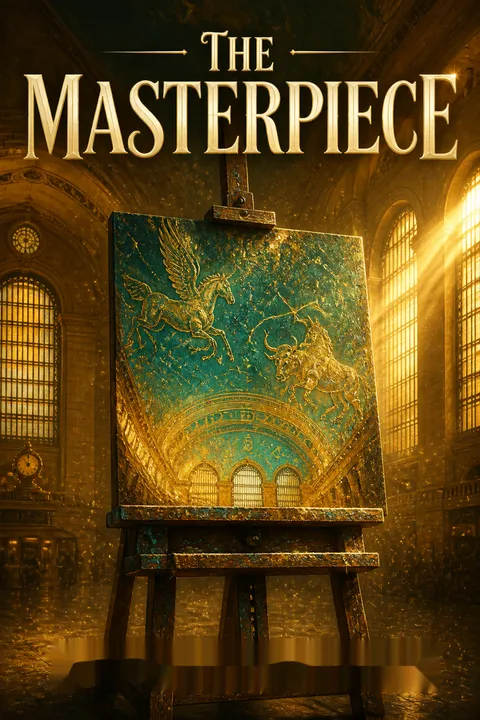
In The Masterpiece, Fiona Davis reframes the American historical novel as both a restoration project and a meditation on who gets to leave a mark on the world's great canvases. Spanning the late 1920s and the turbulent 1970s, the book explores how women's creative ambitions are thwarted, hidden, or outright stolen—often by the very institutions meant to nurture them. Through the parallel lives of Clara and Virginia, Davis argues that recovery—of self, of art, of history—is always possible, but only through risk, exposure, and the stubborn forging of new alliances. The motif of Grand Central Terminal, decaying yet beautiful, underscores the novel's treatment of both infrastructure and individuals: without vigilance and activism, masterpieces—be they buildings, artworks, or lives—are lost to time. Yet the novel offers a redemptive vision: legacies erased can be rewritten, wounds can become strengths, and the making of new family and community is its own act of art. The Masterpiece is not just about women claiming spaces and names denied them, but about the enduring power of creativity and solidarity to shape a more just remembrance.
Review Summary
The Masterpiece is a dual-timeline historical fiction novel set in New York's Grand Central Terminal, following Clara Darden in the 1920s and Virginia Clay in the 1970s. Most reviewers praised the richly researched historical backdrop, strong female characters, and the fascinating history of Grand Central Terminal, including its near-demolition. While many gave four or five stars, some found the pacing slow, the characters distant, or the formula repetitive. The twist ending and the convergence of the two storylines were frequently highlighted as standout elements.
People Also Read







Characters
Clara Darden
Clara is a fiercely talented artist and illustrator fighting for professional recognition in 1920s New York. Nearly erased from history by both gender prejudice and the literal destruction of her work, she combines artistic innovation with emotional courage. Psychoanalytically, Clara's alternating pride and insecurity stem from early adulation and abrupt social fall—her self-worth is always in negotiation with public reception. Relationships with her students, Levon (her artistic rival and soulmate), and Oliver (her lover and muse) are fraught with both tenderness and betrayal, reflecting her need for both independence and connection. In adopting the persona of Totto to survive, she navigates between exposure and invisibility, haunted by loss but ultimately refusing to be silenced.
Virginia Clay
Virginia is a 1970s divorcee struggling to rebuild her life, support her daughter, and reclaim dignity after marital abandonment and illness. At first timid and self-effacing, her character grows through acts of investigation, activism, and unexpected leadership. Her need to care for others masks deep wounds around self-worth and desirability, compounded by her mastectomy. The discovery of Clara's work catalyzes a journey toward agency and confidence, reflected in her professional metamorphosis, activism, and willingness to reveal her own physical and emotional scars. Her mother-daughter relationship with Ruby cycles through conflict and rapprochement, echoing the novel's theme of generational inheritance and healing.
Levon Zakarian
Levon, an Armenian immigrant and modernist painter, is a tempest of brilliance, ego, and trauma. Scarred by early loss and exile, his art is a vehicle for asserting presence in a world that repeatedly tries to minimize or erase him. His relationships are marked by intensity and volatility—he is both Clara's rival and collaborator, advocate and obstacle. Levon's struggles with debilitating illness (lead poisoning) mirror his sense of creative impotence and the toxicities of fame. Ultimately, Levon is both muse and ghost, a figure whose artistry shapes the novel's core questions about authorship, legacy, and who gets to be remembered.
Oliver Smith
Oliver is rich, charming, and intent on being an artist—or at least artist-adjacent—but his privilege leaves him restless and searching for authentic purpose. Psychoanalytically, his admiration for Clara is mingled with possessiveness and envy; he yearns for importance but isn't built for the hard survival required of true outsiders. His betrayal and destruction of Clara's pivotal painting reflect both his impotence and his inability to accept her independence. Oliver's storyline is one of elegy—a muse outgrown and left behind.
Ruby Clay
Ruby, Virginia's daughter, embodies the uncertainties of young womanhood in an era of social transition. She struggles with college, belonging, and the splits between her mother and father. Her foray into photography mirrors the search for perspective and clarity; ultimately, her collaborations with her mother—artistically and domestically—write a new script for femininity and generational healing. She is both a challenge to and a reflection of Virginia's deepest anxieties and hopes.
The Lorettes (Irving and Hazel)
Once pillars of the Grand Central School of Art, the Lorettes become representatives of institutional carelessness—or complicity—in erasing and exploiting female (and student) talent. Avuncular on the outside, they are capable of well-justified theft, rationalized by a sense of "protecting art." Their psychological justification of these acts reveals the peril of "legacy" being protected by those invested in maintaining historical narratives as-is.
Totto
Totto, the "elderly male" information booth clerk in the 1970s, is later revealed to be Clara herself—having lived for decades under an assumed name and gender for safety, privacy, and distance from past trauma. The persona of Totto highlights themes of gender fluidity, survival, and the costs (and strengths) of self-concealment. As Clara's cocoon, Totto is at once a shield and a cage, both hiding and preserving the artist within.
Dennis Huckle
Dennis is a Penn Central railroad lawyer whose attention—and duplicity—shake Virginia's tentative hope for new love. Outwardly solid and alluring, he ultimately represents the self-serving bureaucracy Virginia and her allies must overcome. His dual roles as lover and adversary underscore the necessary vigilance in trusting both people and social institutions.
Betsy
Betsy, Virginia's former friend, acts as a lens for class and reputational anxieties. Her pity and condescension reflect the ways that women, even well-meaning ones, can serve as gatekeepers to social acceptance—or exclusion. Her presence underscores Virginia's shame and the pressure to maintain appearances, finally catalyzing Virginia's allegiance to her booth colleagues and authentic self.
Janice Russo
Janice, the curator who helps Virginia decipher the provenance of the "Clyde" watercolor, represents a new generation of art professionals—competent, inclusive, and ready to rewrite stale narratives. Her allyship is instrumental in connecting the past to the present, and in giving Virginia's discoveries institutional backing.
Plot Devices
Dual-Timeline Structure
The novel relies on mirroring characters and events across 1928-1931 and 1974-1975, using cross-generational motifs—ambition versus loss, erasure versus recognition, art as wound and weapon. Through echo and juxtaposition, the structure maximizes suspense, emotional impact, and the sense that history reverberates through place.
The Art Motif as Historical Palimpsest
Paintings—especially "The Siren"—are at once literal objects, plot MacGuffins, symbols of erased genius, and catalysts for recovery. The physical journey of artworks (creation, theft, hiding, discovery, restitution) mirrors both the journey of female ambition and the broader arc of historical justice.
Foreshadowing and Clues
Lost paintings, mysterious signatures, hidden sketches, and moving artworks in the school operate as both suspense drivers and metaphors for the uncertainty of legacy. Clues—catalog entries, signature similarities, changes within the haunted school—invite readers to play detective, weaving together plot and analysis.
Masking, Disguise, and Gender
Clara's adoption of the "Totto" persona is the most central mask, but many characters (Clara, Virginia, Levon) must assume roles—teacher, clerk, lover, adversary—to survive. The theme of who gets credited, seen, or believed hinges on these identities, making their unmasking both climax and catharsis.
Protest as Public Art
The collective fight to save Grand Central—and to expose art theft—recasts spectacle, protest, and coalition-building as artistic, even performative, acts. The publicness of these actions contrasts with the private, often hidden nature of women's work, and supplies both narrative and thematic resolution.
Healing Through Vulnerability
Scenes of physical and emotional exposure—such as Virginia's decision to model nude—become vehicles for character growth and thematic synthesis. Self-acceptance, love, and legacy are possible only when the characters risk being truly seen.
About the Author
Other books by Fiona Davis
Download PDF
Download EPUB
.epub digital book format is ideal for reading ebooks on phones, tablets, and e-readers.








































