Plot Summary
Parisian Promises and Loss
In 1900 Paris, carousel-maker Gilbert Cloutier pours his soul into building a masterpiece for the Exposition, haunted by the deaths of his wife and beloved son, Théo. Driven by grief and a promise to immortalize his child, Gilbert's obsession with the carousel becomes both his solace and undoing. As debts mount and deadlines loom, he channels his pain into the creation of a singular horse named after Théo, etching his son's name into its form. The carousel, meant to be a testament to love and craftsmanship, is shadowed by Gilbert's despair and the sense that he is always being watched—by memory, by God, by the world. His heartbreak sets in motion a legacy that will ripple across continents and generations, binding strangers and kin to the fate of the midnight carousel.
Detective's Deductions
In 1914 Paris, Detective Laurent Bisset is celebrated for solving a string of disappearances linked to Victor Cloutier, Gilbert's nephew. Laurent's investigation, marked by dogged persistence and flashes of intuition, uncovers a pattern: children and adults vanish near a traveling carousel, always last seen with Victor. Despite Victor's conviction and execution, Laurent is haunted by unanswered questions—no bodies, no clear motive, and a carousel that seems to swallow its victims. The case, closed in the eyes of the law, remains open in Laurent's mind. His sense of justice and empathy for the lost propel him to keep searching for the truth, even as the carousel is shipped across the sea, its secrets unresolved.
Island of Orphans
On Canvey Island, England, young Maisie and her companion Tommy endure a harsh existence under the Sixpences, foster parents who treat them with indifference and cruelty. Their days are filled with foraging, rituals for luck, and dreams of escape. A mysterious, water-damaged picture of a carousel, found in a gin bottle, becomes their shared symbol of hope—a vision of beauty and possibility beyond their bleak world. When Maisie is unexpectedly claimed by an unknown aunt, she faces the bittersweet prospect of leaving Tommy behind, torn between longing for family and the pain of separation.
Jesserton's New Arrival
Maisie's arrival at Jesserton, a grand English estate, brings comfort, routine, and the warmth of her Aunt Mabel. Yet, questions about her parents linger, and the kindness of her new home is fragile. She forms a bond with Miss Catherine, the master's daughter, and tastes happiness at a local funfair, where she rides a carousel for the first time—recognizing it from her treasured picture. But joy is fleeting: scarlet fever sweeps through Jesserton, claiming Aunt Mabel and Miss Catherine. Alone once more, Maisie faces an uncertain future, her sense of belonging shattered.
Funfair and Farewells
With Jesserton's master, Sir Malcolm, planning to emigrate to America, Maisie is offered a chance to escape poverty and the workhouse. She accepts, realizing her parents are gone and that she must seize any opportunity for safety. The journey to America is both an ending and a beginning, as Maisie leaves behind the ghosts of England and steps into the unknown, carrying with her the memory of those she loved and lost.
Fever and Upheaval
In Chicago, Maisie adapts to life at Fairweather House under Sir Malcolm's guardianship. The carousel, now in America, arrives by chance, reigniting Maisie's fascination and linking her fate to its mysterious past. As she grows, Maisie navigates the complexities of class, race, and belonging, finding solace in the carousel's beauty and the rituals that once protected her. Yet, tragedy strikes again when a child disappears during a party at Silver Kingdom, the amusement park built around the carousel. Suspicion, guilt, and fear take root, and Maisie's sense of safety is once more upended.
Across the Atlantic
Silver Kingdom flourishes, but beneath its glittering surface, tensions simmer. Sir Malcolm's fortunes wane, and Maisie shoulders increasing responsibility. The carousel's allure draws crowds, but its shadow grows darker as more children vanish. Detective Laurent, now in America, is drawn back into the mystery, his obsession reignited by the familiar pattern of disappearances. Maisie, accused and imprisoned, finds an unlikely ally in Laurent, whose empathy and insight offer hope for redemption and truth.
Chicago's Carousel
Released from suspicion, Maisie and Laurent join forces to investigate the carousel's curse. Their partnership deepens into affection, each recognizing in the other a kindred spirit marked by loss and longing. Together, they uncover the carousel's mechanical secrets and the pattern behind the disappearances, even as new dangers emerge from within their circle—jealousy, betrayal, and the threat of violence from those who would exploit Silver Kingdom for personal gain.
Silver Kingdom's Birth
As Silver Kingdom expands, Maisie's leadership is tested by labor unrest, financial strain, and the machinations of her husband James and his criminal associates. The carousel, both centerpiece and curse, becomes a battleground for control and survival. Maisie's resilience is matched by her growing love for Laurent, but their happiness is threatened by secrets from the past and the carousel's unresolved legacy. The park's success is shadowed by the knowledge that something sinister still lurks at its heart.
Disappearances and Doubt
The carousel's deadly mechanism is finally revealed: a poisoned horse, a hidden trapdoor, and a legacy of grief engineered by Gilbert Cloutier. The bodies of the missing are discovered, and the true nature of the curse is laid bare. Laurent and Maisie, united by their quest for justice, must confront the consequences of the past—innocents lost, wrongs unrighted, and the cost of obsession. The revelation brings closure for some, but guilt and sorrow linger.
The Cursed Horse
As Silver Kingdom faces ruin—by fire, betrayal, and the weight of its own history—Maisie is forced to make a final, desperate choice. To protect others, she destroys the carousel, ending its cycle of tragedy but also erasing a piece of her own story. The act is both liberation and loss, freeing her from the carousel's grip but leaving her to reckon with the aftermath: broken relationships, shattered dreams, and the ghosts of those who vanished.
Love, Loss, and Letters
In the wake of destruction, Maisie and Laurent find each other again, their love rekindled by shared suffering and hope. They build a life together in Paris, blending families and healing old wounds. Yet, the past is never far: letters from lost parents, the memory of friends left behind, and the knowledge that survival often means letting go. Maisie's journey comes full circle as she learns to forgive, to cherish what remains, and to embrace the future.
Fire and Revelation
The fire that consumes Silver Kingdom exposes the carousel's final secrets and forces Maisie to confront her own complicity and courage. The community rallies, old friends return, and the truth about the disappearances is finally accepted. Maisie's leadership and compassion guide the survivors through grief and rebuilding, even as she prepares to leave behind the world she helped create.
Endings and Beginnings
With Silver Kingdom sold and her ties to the past severed, Maisie embarks on a new chapter—motherhood, independence, and the possibility of love without fear. She reconciles with old friends, finds peace with her choices, and honors the memory of those lost to the carousel's curse. The story closes with Maisie and Tommy, reunited after decades, riding a carousel together—no longer haunted, but uplifted by the knowledge that they have survived, endured, and found joy.
Full Circle
Decades later, Maisie reflects on a life shaped by loss, resilience, and the magic of carousels. She has built a family, a business, and a sense of belonging that transcends place and blood. The carousel's legacy is both cautionary and redemptive—a reminder that beauty and darkness are intertwined, that survival is an act of will, and that love, once found, can never be entirely lost. As she rides a carousel with Tommy, Maisie feels the presence of all she has loved and lost, soaring at last beyond the veil of sorrow into the midnight sky.
Analysis
A meditation on grief, belonging, and the cycles of trauma and hopeThe Midnight Carousel is a sweeping, multi-generational tale that uses the motif of a haunted carousel to explore the ways in which loss, love, and longing shape lives across continents and decades. At its core, the novel asks what it means to survive—how we carry the wounds of the past, how we seek connection and meaning, and how we find the courage to let go. Through Maisie's journey from orphaned outcast to self-possessed matriarch, and Laurent's evolution from haunted detective to loving partner, the story affirms that healing is possible, but never simple. The carousel, with its blend of beauty and danger, becomes a metaphor for life itself: cyclical, unpredictable, and capable of both joy and devastation. The novel's ultimate lesson is one of resilience—the capacity to endure, to forgive, and to embrace new beginnings, even as we honor the ghosts that ride with us.
Review Summary
Reviews for The Midnight Carousel are generally positive, averaging 3.75 out of 5. Many praise the atmospheric writing, compelling mystery, and strong character development, particularly protagonist Maisie Marlowe. Several reviewers compare it favorably to The Night Circus by Erin Morgenstern. Common criticisms include genre inconsistency, plot holes, pacing issues, and the story not delivering on its more fantastical-seeming premise. Despite mixed feelings about the romance subplot and some underdeveloped characters, most agree it is a promising debut with beautiful prose and an intriguing carousel-centered mystery spanning Paris and Chicago.
Characters
Maisie Marlowe
Maisie is the heart of the novel—a mixed-race orphan whose journey from the bleakness of Canvey Island to the grandeur of Jesserton, and finally to America, is marked by loss, longing, and fierce determination. Her relationships—with Tommy, Aunt Mabel, Sir Malcolm, and later Laurent—shape her evolving sense of self. Psychologically, Maisie is driven by a need for safety and love, haunted by abandonment and the fear of being unwanted. Her rituals and superstitions are both coping mechanisms and acts of hope. Over time, she transforms from a passive recipient of fate to an active shaper of her destiny, learning to forgive, to lead, and to love without fear. Her arc is one of survival, self-discovery, and ultimately, transcendence.
Laurent Bisset
Laurent is a Parisian detective whose life is defined by his pursuit of justice and his inability to let go of unsolved mysteries. His early trauma—the suicide of his mother and the emotional coldness of his father—leaves him with a deep empathy for the lost and a tendency toward obsession. His marriage to Odette is marked by duty rather than passion, and his connection with Maisie awakens in him a capacity for vulnerability and love. Laurent's psychological complexity lies in his struggle between logic and emotion, justice and mercy. His development is a gradual opening to intimacy, culminating in his willingness to risk everything for Maisie and her son.
Sir Malcolm Randolph
Sir Malcolm is both benefactor and tragic figure—a man whose generosity is shadowed by grief, guilt, and addiction. His relationships with Maisie, Aunt Mabel, and his own daughter are fraught with unspoken love and regret. Psychologically, he is driven by a need to atone for past failures, to protect those in his care, and to find meaning in a world that has repeatedly disappointed him. His decline mirrors the unraveling of Silver Kingdom, and his ultimate fate is both a sacrifice and a release from suffering.
James Squires
James is Maisie's cousin by marriage and eventual husband—a man whose charm masks insecurity, resentment, and a hunger for status. His relationship with Maisie is transactional, rooted in the desire to possess rather than to cherish. Psychologically, James is shaped by a sense of entitlement and a fear of inadequacy, leading him into criminal schemes and ultimately to self-destruction. His arc is a cautionary tale of ambition unmoored from empathy.
Aunt Mabel
Aunt Mabel rescues Maisie from the Sixpences and provides her first experience of unconditional love. Yet, her own limitations—her unhappy marriage, her inability to answer Maisie's questions about her parents—cast shadows over their bond. Psychologically, Mabel is both nurturing and evasive, a protector who cannot fully shield Maisie from pain. Her death is a pivotal loss that propels Maisie into adulthood.
Tommy
Tommy is Maisie's childhood friend and surrogate sibling, sharing in her hardships and dreams. His presence represents innocence, loyalty, and the enduring power of shared memory. Psychologically, Tommy is shaped by abandonment and resilience, mirroring Maisie's journey. Their eventual reunion is a testament to the bonds that survive even the longest separations.
Nancy Randolph
Nancy is Hugo's wife and Maisie's foil—a woman whose outward glamour conceals deep insecurity, longing for motherhood, and eventual mental decline. Her relationship with Maisie oscillates between rivalry and kinship, and her actions—culminating in the fire at Silver Kingdom—are both destructive and desperate. Psychologically, Nancy embodies the costs of unfulfilled desire and the dangers of envy.
Hugo Randolph
Hugo is Sir Malcolm's brother, a stabilizing force whose loyalty is tested by family drama and business pressures. His relationship with Nancy is marked by affection and frustration, and his interactions with Maisie reveal both kindness and obliviousness. Psychologically, Hugo is a survivor, adapting to changing circumstances but often missing the emotional undercurrents around him.
Arnold
Arnold is the carousel's operator and a quiet pillar of support for Maisie. His love of performance and his kindness to children make him a beloved figure at Silver Kingdom. Psychologically, Arnold is content in his role, finding meaning in small acts of joy and loyalty. His presence is a reminder of the goodness that persists amid chaos.
Madame Rose
Madame Rose is both comic relief and a source of wisdom, her cryptic pronouncements guiding Maisie at key moments. Psychologically, she represents the power of intuition, the importance of listening to one's inner voice, and the role of fate in human affairs. Her interventions are often timely, nudging characters toward self-awareness and courage.
Plot Devices
The Carousel as Central Symbol
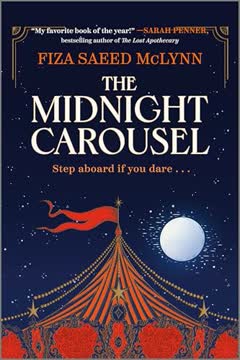
The carousel is both literal and metaphorical—a marvel of engineering, a vessel of grief, and a site of horror. Its beauty masks a deadly mechanism, and its journey from Paris to Chicago mirrors the migration of trauma and hope across generations. The carousel's cursed horse, with its blue diamond and hidden trapdoor, is the linchpin of the mystery, drawing characters together and driving the plot. As a symbol, it represents the interplay of joy and sorrow, the cyclical nature of trauma, and the possibility of transcendence.
Nonlinear Narrative and Multiple Perspectives
The novel employs a nonlinear structure, shifting between past and present, Paris and America, childhood and adulthood. This layering of perspectives—Maisie, Laurent, and others—creates suspense, allows for dramatic irony, and mirrors the fragmented nature of memory and trauma. The gradual revelation of secrets, through letters, investigations, and confessions, sustains tension and emotional engagement.
Foreshadowing and Ritual
Rituals—Maisie's pebbles, prayers to the Lord of the Water, and the recurring motif of origami birds—foreshadow key events and reflect characters' attempts to impose order on chaos. These devices blur the line between superstition and intuition, suggesting that survival often depends on small acts of faith and the willingness to heed inner warnings.
The Detective Story
The mystery of the disappearances, and Laurent's relentless pursuit of answers, provides the narrative spine. The detective story structure—clues, red herrings, interrogations, and eventual revelation—serves as both plot engine and metaphor for the search for meaning in suffering. The resolution is bittersweet: justice is partial, and healing comes not from punishment but from understanding and forgiveness.
Letters and Lost Histories
Letters—between lovers, from parents, and as confessions—function as both plot devices and emotional touchstones. They reveal hidden truths, catalyze change, and allow characters to connect across time and distance. The motif of lost and found letters underscores the novel's themes of memory, longing, and the enduring power of words.








































