Key Takeaways
1. Your Brain is Remarkably Malleable and Thrives on Movement
Everything you do, every thought you have, modifies the brain a little bit.
Dynamic brain. Contrary to old beliefs, your brain isn't a fixed, unchangeable organ; it's more like modeling clay than china, constantly reshaping itself throughout your life. This incredible capacity for change, known as neuroplasticity, allows new brain cells to develop, connections to form and disappear, and your entire neural architecture to adapt based on your experiences and actions. This means you have the power to actively sculpt your brain.
Exercise's impact. Physical activity is one of the most powerful drivers of this neuroplasticity. Research shows that even short bursts of exercise (20-30 minutes) can make the brain more flexible and better at reorganizing itself. This is partly due to the reduction of GABA, an amino acid that acts as a "brake" on brain activity, allowing for greater malleability and making your brain more akin to a child's in its capacity for change.
Enhanced efficiency. Regular movement doesn't just make your brain more adaptable; it makes it more efficient. Studies using MRI scans have shown that physically active individuals develop stronger connections between different brain regions, leading to better integration and overall function. This improved connectivity translates into faster information processing, enhanced intellectual resource mobilization, and even an "extra mental gear" for focus and calm.
2. Exercise is Your Brain's Most Potent Stress and Anxiety Antidote
Exercise teaches the body not to overreact to stress, regardless of what caused the stress.
Rebalancing stress. Stress is a natural survival mechanism, activating the HPA axis and releasing cortisol to prepare for "fight or flight." While useful in short bursts, chronic stress can shrink the hippocampus (memory center and stress brake) and frontal lobe (higher cognitive functions), leading to memory issues and increased anxiety. Exercise, however, acts as a powerful countermeasure.
Strengthening brakes. Physical activity initially raises cortisol levels, but regular training teaches your body to reduce its overall stress response. It strengthens the hippocampus and frontal lobe, acting as robust "brake pedals" against the amygdala's (stress trigger) alarm signals. This improved control means you're less likely to overreact emotionally to everyday stressors, fostering a calmer and more resilient mind.
Multi-faceted relief. Exercise tackles anxiety from multiple angles:
- Cortisol reduction: Levels drop below baseline after a workout, and chronic levels decrease with regular training.
- GABA activation: Movement boosts this "fire extinguisher" neurotransmitter, calming brain activity.
- "Nanny neurons": Exercise creates new GABA cells that inhibit overactivity in other newborn brain cells, reducing anxiety.
- Muscle as a "treatment plant": Muscles neutralize kynurenine, a stress metabolite that can harm the brain.
This comprehensive approach makes exercise a superior treatment for stress and anxiety, often surpassing medication alone.
3. Sharpen Your Focus and Attention with Physical Activity
Exercise is effective medicine for improving concentration with no side effects whatsoever.
Boosting dopamine. A key reason exercise enhances concentration is its ability to raise dopamine levels in the brain's reward system (nucleus accumbens). Dopamine is crucial not just for pleasure and motivation, but also for filtering out distractions and directing attention. Low or poorly regulated dopamine can lead to restlessness and difficulty focusing, a common issue in conditions like ADHD.
Silencing the "din." Dopamine acts like a volume knob, turning down both external sensory noise (like chatter in a coffee shop) and internal "hum" caused by spontaneous brain cell activation. By increasing and stabilizing dopamine, exercise quiets this background noise, allowing for clearer, sharper focus. This effect is immediate, lasting for hours after a workout, and compounds with regular training.
Strengthening the "boss." The frontal lobe, particularly the prefrontal cortex, is the brain's "boss," responsible for higher cognitive functions like planning, impulse control, and sustained attention. Exercise strengthens this area by:
- Increasing blood flow and oxygen supply.
- Creating new blood vessels.
- Improving connections to other brain parts, enhancing its ability to filter distractions and maintain focus.
This makes you more adept at mobilizing intellectual resources and accessing an "extra mental gear" when needed.
4. Movement is the Real "Happy Pill" for Mood and Depression
Regular physical activity is as effective as pharmaceuticals in the treatment of depression.
Comparable to medication. Studies have unequivocally shown that regular physical activity can be as effective as antidepressant medication in treating depression, especially for mild to moderate cases. It works by influencing key neurotransmitters—serotonin, noradrenaline, and dopamine—which are vital for mood, alertness, and motivation. Unlike pills, exercise offers these benefits without undesirable side effects.
The BDNF miracle. Beyond neurotransmitters, exercise significantly boosts levels of Brain-Derived Neurotrophic Factor (BDNF), often called the brain's "natural fertilizer." BDNF is a protein that:
- Protects existing brain cells from damage.
- Oversees the birth and survival of new brain cells (neurogenesis).
- Strengthens connections between cells, crucial for learning and memory.
- Slows brain cell aging.
Low BDNF levels are linked to depression, and exercise is the most effective natural way to increase it, helping to reverse brain shrinkage associated with the condition.
Empowerment and breaking cycles. Depression often involves feelings of helplessness and withdrawal, leading to a "mental standstill." Exercise provides a sense of self-efficacy, empowering individuals to take an active role in their recovery. It breaks the vicious cycle of isolation and lack of stimulation, fostering a more positive personality, reducing neuroticism, and increasing social openness.
5. Jog Your Memory: Exercise Rejuvenates the Brain's Memory Center
You can stop, and may even reverse, your brain’s ageing, and strengthen your memory, by power-walking or running a few times a week!
Hippocampus growth. The hippocampus, your brain's thumb-sized memory center, naturally shrinks by about 1% annually after age 25. However, remarkable research shows that regular endurance training (like power-walking 40 minutes, three times a week) can not only halt this shrinkage but actually increase its size by 2% in just one year, effectively making it two years younger. This growth is strongly linked to increased BDNF levels.
New brain cells. It was once believed that adult brains couldn't generate new cells, but we now know that approximately 1,400 new cells are created daily in the hippocampus. Exercise significantly boosts this neurogenesis, doubling the rate of new cell formation. These new cells are crucial for memory, emotional control, and "pattern separation"—the ability to distinguish subtle differences between similar experiences, leading to a more nuanced world view.
Enhanced learning. Exercise improves both short- and long-term memory. Training before or during learning can boost word recall by up to 20%. This is because movement increases blood flow to the hippocampus and releases BDNF, strengthening the connections between brain cells during the critical "memory consolidation" phase when information is transferred from short- to long-term storage. This applies to both academic learning and motor skills.
6. Unleash Your Creativity and Idea Flow Through Physical Activity
The moment my legs begin to move my thoughts begin to flow.
Ideas on the move. Many creative giants, from Beethoven to Steve Jobs, have intuitively used movement to spark inspiration. Scientific studies now confirm that physical activity, particularly walking, significantly boosts divergent thinking—the ability to brainstorm many different solutions and generate new ideas. This effect is immediate, lasting for about an hour after a workout, and is independent of mood or environment.
Thalamus filter. Creativity is linked to how your brain's thalamus, a central filter for consciousness, manages information flow. People with fewer dopamine receptors in the thalamus tend to let through more signals, leading to unexpected associations and "thinking outside the box." Exercise, by fine-tuning the dopamine system, can influence this filter, potentially enhancing the flow of ideas.
Strengthening the channel. While a high flow of information can be a double-edged sword (sometimes linked to mental illness), the frontal lobe is crucial for channeling these ideas into something productive. Exercise strengthens the frontal lobe, improving its ability to process and utilize this increased information flow. This means physical activity not only influences the quantity of ideas but also your capacity to make sense of them.
7. Exercise Makes Children Smarter, More Focused, and Resilient
For children to reach their full potential, they need to be active.
Academic boost. Research, like the Bunkeflo study in Sweden, demonstrates a clear link between daily physical education and improved academic performance in subjects like math, reading, and English, without extra tutoring. Physically fit children consistently achieve higher grades and show better cognitive function across the board, challenging the stereotype of "smart kids" being sedentary.
Brain development. Exercise directly impacts children's brain structure:
- Larger hippocampus: Fit children have a bigger hippocampus, leading to better memory.
- Improved white matter integrity: The "cables" connecting brain regions become thicker and more efficient, enhancing information transmission and academic ability.
- Increased prefrontal cortex activity: This area, vital for abstract thinking, concentration, and planning, shows greater activity in active children.
These changes contribute to better working memory, reading comprehension, and problem-solving skills.
Enhanced resilience. Physical activity also makes children more resilient. Even short bursts of exercise (as little as 4-20 minutes) immediately improve attention span and focus. Long-term, active children are less sensitive to stress, exhibiting lower cortisol responses in challenging situations. Encouraging children to choose activities they enjoy, rather than forcing specific sports, is key to unlocking these profound cognitive and emotional benefits.
8. Combat Brain Aging and Dementia with Consistent Movement
A drug showing the same promise as a daily walk would be hailed as the most groundbreaking invention since antibiotics.
Halting brain shrinkage. As we age, the frontal lobe and hippocampus naturally shrink, impairing cognitive functions like concentration, multitasking, and memory. However, physical activity can significantly slow this process. Studies show that fit older adults exhibit brain activity patterns similar to younger individuals during cognitive tests, indicating that exercise effectively "rejuvenates" the brain.
Powerful dementia prevention. One of the most astonishing findings is that a brisk daily walk can cut the risk of developing dementia by 30-40%. This simple, free intervention is more effective than any pharmaceutical developed to date, yet it receives far less attention. Even for those with a genetic predisposition to Alzheimer's, regular training can significantly mitigate their risk, proving that lifestyle choices often outweigh genetic fate.
Holistic brain health. Movement protects the brain by creating an ideal internal environment:
- Stable blood pressure and glucose.
- Reduced free radicals and inflammation.
- Increased BDNF production.
- Enhanced blood flow.
These factors ensure the brain receives optimal nutrients and growth factors, fostering a "sound mind in a sound body." Even everyday activities, like taking the stairs or walking a few bus stops, contribute to this protective effect, as seen in the long-lived, dementia-free populations of "blue zones."
9. Our Stone Age Brain Needs Movement to Thrive in the Digital Age
We’re walking out of step with our biological age, or should I say we’re sitting out of step.
Evolutionary mismatch. Our brains, largely unchanged for 10,000 years, are still wired for a hunter-gatherer existence on the savanna. Yet, in a mere "blink of an eye" in evolutionary terms (the last 200 years), our lifestyle has shifted dramatically from constant movement to unprecedented sedentarism. This profound mismatch between our ancient biology and modern digital life is a root cause of many contemporary mental health issues.
The paradox of laziness. Our brains evolved to conserve energy, rewarding us for resting and consuming calorie-dense foods—a survival strategy in times of scarcity. Today, this innate drive to "sit and save energy" leads to couch-potato habits and overeating, preparing us for a famine that never comes. This biological imperative, once a strength, now contributes to anxiety, depression, and lack of focus.
Rewarding survival. When we engage in physical activity, our Stone Age brain interprets it as behaviors that increased our ancestors' survival chances (hunting, escaping danger, finding new homes). In response, it rewards us with surges of dopamine, serotonin, and endorphins, making us feel good and encouraging us to repeat these actions. Conversely, prolonged inactivity is "punished" with feelings of malaise because it was historically detrimental to survival.
10. The Right Prescription: Every Step Counts for Optimal Brain Health
The most important thing is that you do something.
Consistency over intensity. The single most crucial takeaway is that "the brain counts every step." Any movement is better than none. While optimal benefits come from more vigorous activity, even a five-minute walk contributes positively. The key is to find activities you enjoy and make them a regular part of your life, fostering a sustainable habit rather than sporadic, intense efforts.
Optimal activity levels. For maximum brain benefits, aim for:
- Cardiovascular training: 45 minutes, at least three times a week (running, cycling, swimming, team sports). This raises your pulse and is generally more beneficial than weight training for brain health.
- Moderate intensity: Break a sweat and be unable to speak long sentences without catching your breath (e.g., 70-75% of maximum heart rate).
- Regularity: Structural changes in the brain (new cells, blood vessels, stronger connections) take months to manifest, so patience and persistence are vital.
Beyond the workout. Remember that the brain benefits from movement extend beyond structured exercise:
- Daily walks: A brisk 20-30 minute walk, five times a week, significantly reduces dementia risk and improves memory.
- Standing: Using a standing desk at school or work improves focus, working memory, and executive control.
- Avoiding exhaustion: While intense exercise is good long-term, avoid pushing to exhaustion if immediate creativity or memory recall is needed, as blood flow can temporarily divert from the brain to muscles.
Embrace movement as your brain's most powerful, free, and side-effect-free upgrade.
Review Summary
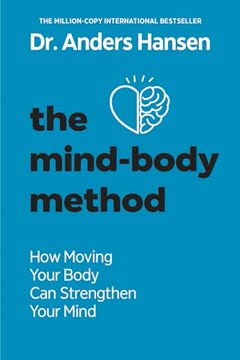
The Mind-Body Method holds an overall rating of 3.96/5, with most readers praising its scientific backing and accessible writing style. Many found it motivating, crediting it with inspiring them to exercise more. Common criticisms include excessive repetition of the core message and a lack of practical, actionable advice beyond general exercise recommendations. Some noted the book's failure to address disabilities. Highlights include compelling research on dementia reduction, mental health benefits of aerobic exercise, and the brain's ability to generate new cells through movement.
People Also Read