
Plot Summary
Heat Wave Apocalypse
In the opening, a catastrophic heat wave strikes a small Indian town, killing nearly everyone. Frank May, an American aid worker, survives by chance, traumatized by the mass death around him. The event is a harrowing vision of climate disaster: power fails, water runs out, and people die in droves, including children and the elderly. The horror is both intimate and collective, as Frank tries to help but is ultimately powerless. This tragedy is not isolated; it is a warning of what unchecked climate change can do. The emotional toll is immense, searing Frank with guilt and PTSD, and the world is forced to confront the reality that climate change is no longer a distant threat but a present catastrophe.
Birth of the Ministry
In response to the Indian disaster, the Paris Agreement nations create the Ministry for the Future, headquartered in Zurich. Its mission: advocate for future generations and the voiceless—animals, ecosystems, unborn people. Mary Murphy, an Irish diplomat, becomes its head. The Ministry is both idealistic and pragmatic, tasked with coordinating global climate action, legal innovation, and economic reform. The world's inertia and self-interest are immediately apparent, but the Ministry's existence signals a shift: the future now has a voice at the table. The emotional arc is one of hope and skepticism, as Mary and her team face the enormity of their task.
Global Failure, Local Action
Despite the Ministry's efforts, global emissions continue. The world mourns, then forgets, the Indian heat wave, and business as usual resumes. Yet, in India, the trauma catalyzes political revolution: the old order is swept away, and a new coalition government embarks on radical decarbonization, land reform, and social justice. The Ministry watches as India becomes a model for post-colonial, bottom-up transformation. The emotional tone is bittersweet—global systems fail, but local and national movements ignite real change, showing that hope can be found in unexpected places.
India's Reckoning
India's new government nationalizes energy, dismantles caste barriers, and launches massive renewable projects. The trauma of the heat wave becomes a rallying cry: "Never again." India's assertiveness on the world stage—threatening economic war if the West does not decarbonize—marks a turning point. The Ministry for the Future is both ally and observer, learning from India's blend of democracy, diversity, and urgency. The emotional arc is one of pride, anger, and determination, as India refuses to be a victim and instead becomes a leader in the global climate struggle.
The Shadow of Trauma
Frank May's survival leaves him haunted, unable to escape the memories of mass death. His trauma mirrors the world's: denial, guilt, and paralysis. Therapy, activism, and even violence become outlets for his pain. The Ministry recognizes that climate change is not just a technical problem but a psychological one, affecting individuals and societies. The emotional journey is raw and honest, exploring the limits of healing and the necessity of action even when hope feels impossible.
Geoengineering the Skies
In the wake of further disasters, India unilaterally launches a geoengineering campaign, injecting aerosols into the stratosphere to cool the planet. The world is divided: some see it as reckless, others as necessary. The Ministry is forced to mediate, balancing scientific uncertainty, political sovereignty, and moral hazard. The emotional tension is high—geoengineering is both a lifeline and a Pandora's box, and the stakes are nothing less than the stability of the planet's climate.
Justice and the Lawless
The Ministry's legal team, led by Tatiana, struggles to find venues for climate justice. International courts are weak, and fossil fuel interests are powerful. Meanwhile, radical groups like the Children of Kali take justice into their own hands, targeting climate criminals with sabotage and assassination. The Ministry debates the ethics of violence versus the rule of law, and Mary is forced to confront the limits of legality in the face of existential threat. The emotional core is a battle between idealism and pragmatism, justice and vengeance.
The Economics of Survival
The Ministry and its allies realize that the root of the crisis is economic: fossil fuels are profitable, and the future is discounted to near zero. They push for new economic models—carbon taxes, progressive taxation, and most radically, the carbon coin: a new currency backed by carbon sequestration. Central banks resist, but the logic is inescapable. The emotional journey is one of frustration and breakthrough, as old systems crumble and new ones are painfully born.
The War for the Earth
As climate disasters multiply, a shadow war erupts. Planes are brought down, ships are sunk, and fossil fuel infrastructure is sabotaged. The Ministry's "black wing" operates in secrecy, blurring the line between activism and terrorism. The world is forced to adapt: air travel collapses, shipping is reinvented, and the rich are no longer safe. The emotional tone is tense and chaotic, as violence becomes both a symptom and a catalyst of systemic transformation.
The Black Wing Emerges
Mary and her chief of staff, Badim, grapple with the necessity of extra-legal action. The Ministry's black wing orchestrates sabotage and financial warfare against climate criminals, while maintaining plausible deniability. The emotional arc is one of moral ambiguity and personal risk, as Mary is kidnapped, Tatiana is assassinated, and the Ministry itself is bombed. The cost of change is high, and the line between hero and villain blurs.
The Age of Sabotage
The world economy enters a Super Depression, triggered by coordinated strikes, debt resistance, and the collapse of trust in money. Old systems fail, but new forms of cooperation emerge: co-ops, job guarantees, universal basic services, and the rise of the commons. The Ministry helps orchestrate a shadow government, ready to step in as the old order falls. The emotional journey is one of fear, improvisation, and resilience, as people invent new ways to live together.
The Great Turn
Amid chaos, the Ministry's efforts bear fruit: the carbon coin is adopted, central banks are nationalized, and massive investments flow into decarbonization and restoration. The Half Earth movement expands, rewilding vast tracts of land and restoring animal populations. Refugee camps are emptied as new citizenship and job guarantees are offered. The emotional arc is one of relief, exhaustion, and cautious optimism, as the world begins to heal.
Half Earth Rising
The vision of Half Earth—reserving half the planet for nature—becomes reality. Habitat corridors, reforestation, and regenerative agriculture transform landscapes. Animal populations rebound, and the Internet of Animals connects people to the wild. The emotional tone is one of wonder and humility, as humanity learns to share the planet with other life.
The Carbon Coin Revolution
The carbon coin, backed by central banks and tied to carbon sequestration, becomes the world's reserve currency. Fossil fuel companies are paid to keep carbon in the ground, and new wealth flows to those restoring the biosphere. Economic justice advances as wage ratios are capped, tax havens are eliminated, and the rentier class is euthanized. The emotional journey is one of vindication and transformation, as money is finally harnessed for the common good.
Refugees and New Citizens
The world's refugees are granted global citizenship, job guarantees, and new homes. Former camps become neighborhoods, and dignity is restored. The emotional arc is one of release, gratitude, and the bittersweet passage of time, as old lives are left behind and new ones begun.
The Collapse and the Commons
As the population peaks and declines, cities shrink, and rural areas are rewilded. The commons—public ownership of necessities—becomes the foundation of society. Money is digital, transparent, and democratic. The emotional tone is one of acceptance, adaptation, and quiet joy, as people find meaning in community and stewardship.
The End of Capital
Capitalism, as it was known, ends—not with a bang, but with a slow euthanasia. The rentier class is dismantled, and wealth is redistributed. The Ministry for the Future retires, its work largely done, as new generations take up the task. The emotional arc is one of closure, legacy, and the passing of the torch.
The Celebration and the Reckoning
The world gathers for a global celebration, singing to the Earth in every language. The Ministry's final conference tallies both achievements and outstanding problems. Frank May, the story's wounded conscience, dies quietly, his trauma finally at rest. Mary Murphy retires, finding peace in community and the wild. The emotional tone is one of gratitude, humility, and hope—a recognition that history is never finished, but the future is now open.
Analysis
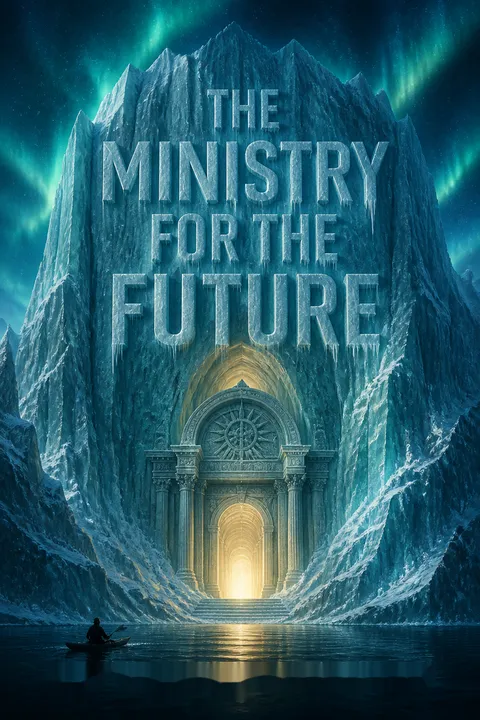
Kim Stanley Robinson's The Ministry for the Future is a sweeping, polyphonic meditation on the climate crisis and humanity's capacity for transformation. The novel's central lesson is that survival requires both systemic change and personal reckoning: new laws, new money, new values, and new ways of relating to each other and the planet. Robinson refuses easy answers—there is no single solution, no hero, no final victory. Instead, he offers a vision of change as bricolage: messy, contested, and always incomplete. The book insists that justice and survival are collective projects, demanding both idealism and compromise, law and sabotage, grief and celebration. Its most radical proposal is that the future must be given legal, economic, and moral standing in the present—a shift that requires reimagining everything from money to citizenship to the meaning of dignity. Ultimately, The Ministry for the Future is a call to action and a work of hope: it argues that even in the face of catastrophe, humanity can invent new forms of solidarity, stewardship, and joy. The future is not fated; it is made, together, every day.
Review Summary
The Ministry for the Future receives mixed reviews, with praise for its ambitious scope and exploration of climate change solutions. Readers appreciate Robinson's detailed examination of economic, political, and technological approaches to addressing global warming. However, some find the narrative structure disjointed and characters underdeveloped. The book's blend of fiction and non-fiction elements divides opinion, with some valuing its thought-provoking ideas while others struggle with its dense exposition. Despite criticisms, many readers find the novel hopeful and consider it an important contribution to climate change literature.
People Also Read






Characters
Mary Murphy
Mary is the Irish head of the Ministry for the Future, a former diplomat and union lawyer. She is both idealistic and hard-nosed, balancing hope for systemic change with the realities of power and inertia. Mary's relationships—with her staff, with Frank, with her own trauma—reveal a deep empathy and a willingness to make hard choices. She evolves from a rule-bound official to a leader willing to sanction extra-legal action, always haunted by the cost of compromise. Her journey is one of endurance, moral struggle, and eventual acceptance of her own limits and legacy.
Frank May
Frank is an American aid worker who survives the Indian heat wave, only to be left with crippling PTSD. His trauma is both personal and symbolic, representing the psychic toll of climate disaster. Frank oscillates between despair, rage, and a desperate need to act—sometimes violently. His relationships are fraught, and he struggles to find meaning or healing. Ultimately, Frank's arc is tragic but redemptive: he becomes a helper, a witness, and finally finds peace in death, his suffering acknowledged and shared.
Badim Bahadur
Badim is Mary's chief of staff, a former Nepalese official with experience in revolution and law enforcement. He is the architect of the Ministry's "black wing," orchestrating sabotage and covert action against climate criminals. Badim is calm, calculating, and loyal, but also burdened by the moral ambiguity of his work. His relationship with Mary is one of mutual respect and necessary secrecy. He embodies the tension between means and ends, and the psychological cost of fighting dirty for a just cause.
Tatiana Voznesenskaya
Tatiana is the Ministry's Russian head of legal, a veteran of international law and treaty negotiation. She is relentless in pursuing climate justice through courts, but frustrated by the system's impotence. Her wit and dark humor mask a deep commitment to the cause. Tatiana's assassination is a turning point, symbolizing the dangers faced by those who challenge entrenched power. Her legacy is one of courage and the unfinished struggle for justice.
Chandra Mukajee
Chandra is the Indian delegate who channels the rage and grief of the heat wave into global demands for justice. She is uncompromising, eloquent, and instrumental in India's political revolution. Her relationship with Mary is tense but respectful, as both women navigate the complexities of post-colonial power and global responsibility. Chandra represents the emergence of the Global South as a force for change.
Janus Athena
Janus is the Ministry's digital and AI lead, responsible for innovations like YourLock and the shadow government plan. They are enigmatic, gender-fluid, and deeply committed to open-source, democratic technology. Janus's work underpins the transformation of money, data, and governance, embodying the hope that new tools can enable new forms of cooperation and justice.
Bob Wharton
Bob is the Ministry's natural catastrophe and mitigation expert, a scientist with a deep love for the living world. He is both a realist and an optimist, championing rewilding, Half Earth, and the restoration of animal populations. Bob's perspective grounds the Ministry's work in the realities of ecology, reminding others that the ultimate goal is the health of the planet.
Imbeni Halle
Imbeni is the Ministry's infrastructure head, focused on redirecting fossil fuel expertise toward decarbonization and restoration. She is pragmatic, resourceful, and skilled at leveraging existing systems for new purposes. Imbeni's work exemplifies the Ministry's ethos of adaptation and improvisation.
Dick Bosworth
Dick is the Ministry's economic lead, a sardonic Australian who pushes for progressive taxation, carbon coins, and the end of the rentier class. He is both a critic and a builder, helping to design new systems of value that prioritize the future and the commons. Dick's dry humor and clear-eyed analysis cut through ideological fog.
Arthur Nolan
Art is a minor but symbolic character, a shy Irishman who pilots an airship around the world, showing passengers the restored landscapes and wild animals of the new era. He represents the possibility of healing, wonder, and quiet companionship in a world remade.
Plot Devices
Polyphonic Narrative Structure
The novel employs a mosaic of narrative forms: traditional third-person chapters, first-person testimonies, dialogues, essays, and even non-human perspectives. This polyphony mirrors the complexity of the climate crisis, allowing for a chorus of voices—scientists, refugees, bureaucrats, activists, animals, and even photons and carbon atoms. The effect is both immersive and disorienting, emphasizing that no single viewpoint can capture the whole.
Foreshadowing and Recurrence
The opening heat wave foreshadows later events: American heat waves, refugee crises, and the global Super Depression. Recurring motifs—trauma, justice, sabotage, rewilding—create a sense of cyclical struggle and gradual progress. The deaths of key characters (Frank, Tatiana) are foreshadowed by earlier violence and loss, underscoring the personal cost of systemic change.
Symbolic Devices
The Half Earth movement, the carbon coin, and the rise of the commons are not just policy proposals but symbols of a new relationship between humanity and the planet. They function as plot devices that drive action, create conflict, and embody hope. The statue of Ganymede, recurring throughout, becomes a symbol of offering, aspiration, and the ambiguous relationship between humans and the divine/natural.
Shadow Organizations and Moral Ambiguity
The existence of covert groups—both within the Ministry and outside—introduces moral ambiguity and tension. The line between justice and terror, law and violence, is constantly blurred. These devices force characters (and readers) to confront uncomfortable questions about means and ends, and the price of survival.
Open-Ended Resolution
The novel ends not with a final victory but with a global celebration, a reckoning of achievements and outstanding problems, and the passing of the torch to new generations. The future remains open, history unfinished, and the work ongoing. This device resists the temptation of utopia or apocalypse, insisting instead on perpetual struggle and hope.



Download PDF
Download EPUB
.epub digital book format is ideal for reading ebooks on phones, tablets, and e-readers.








































