
Key Takeaways
1. The Rise of the New Small: Nimble, Tech-Empowered, and Purpose-Driven
For several reasons, it’s no longer a liability to be the little guy.
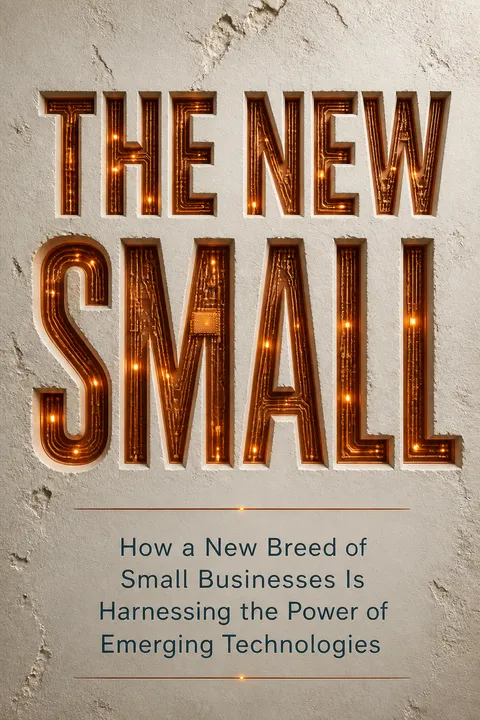
A new business breed. The New Small represents a class of highly agile, technologically sophisticated small businesses that leverage emerging tools to compete directly with multinational corporations. Unlike traditional small businesses that view technology as a costly headache, these companies embrace it as a core strategic asset. They are run by experienced corporate refugees or serial entrepreneurs who value autonomy, speed, and impact over bureaucratic hierarchy.
Overcoming historical barriers. Historically, small businesses lagged behind large enterprises due to resource constraints, lack of scale, and high IT maintenance costs. The New Small bypasses these hurdles entirely by adopting flexible, scalable, and affordable digital platforms. This allows them to:
- Deploy enterprise-grade systems in days rather than years
- Operate with minimal or no dedicated internal IT staff
- Scale operations up or down instantly based on market demand
- Compete globally from day one
Pragmatism over hype. These companies are intensely pragmatic, choosing technologies based on actual business needs rather than industry trends. They are willing to experiment, but they refuse to reinvent the wheel, preferring to customize existing tools rather than build proprietary software from scratch. This balance of innovation and practicality defines their competitive edge.
2. The Five Enablers: Democratizing Enterprise-Grade Technology
New Small companies effectively deploy and use the Five Enablers.
The technological equalizer. The dramatic shift in the competitive landscape is driven by five specific technologies: cloud computing, software as a service (SaaS), free and open source software (FOSS), mobility, and social technologies. Together, these "Five Enablers" allow small businesses to access the same computing power and operational sophistication as Fortune 500 companies. This democratization of technology removes the traditional scale advantages of large corporations.
Core components of the stack. Each of the Five Enablers plays a distinct role in streamlining operations and reducing overhead. By combining these tools, the New Small builds a highly integrated, flexible, and low-cost infrastructure. The stack consists of:
- Cloud Computing: Providing on-demand, scalable computing power and storage
- SaaS: Renting web-native applications instead of purchasing expensive software licenses
- FOSS: Utilizing high-quality, community-supported software to eliminate licensing fees
- Mobility: Enabling employees to work productively from any location using smartphones
- Social Technologies: Engaging directly with customers and building organic brand communities
Strategic integration. The true power of the Five Enablers lies in their complementary nature. For example, cloud computing hosts SaaS applications, which are accessed via mobile devices and integrated with social networks. This interconnected ecosystem allows the New Small to operate with unprecedented speed and efficiency.
3. The Shift from Fixed to Variable Costs via Cloud and SaaS
To a much greater extent than large organizations, the New Small has replaced many fixed costs with variable ones...
Financial flexibility. Traditional IT infrastructure required massive upfront capital expenditures (CAPEX) for servers, databases, and software licenses, followed by high ongoing maintenance costs. The New Small avoids these financial traps by converting technology into a variable operational expense (OPEX). By paying only for what they use on a monthly basis, these companies maintain maximum financial liquidity and minimize risk.
The power of pay-as-you-go. This variable cost model is particularly valuable during economic downturns or periods of rapid growth. If business slows, a company can easily scale back its software licenses or cloud storage to reduce expenses. Conversely, when demand spikes, they can instantly acquire more capacity. Key financial benefits include:
- Eliminating the need for expensive, multi-year IT support contracts
- Avoiding large upfront software licensing fees
- Reducing the need for dedicated, full-time internal IT personnel
- Aligning technology expenses directly with business revenue
Real-world application. Case studies like Skjold-Barthel demonstrate this financial shift in action. By moving its data and applications to the cloud, the law firm reduced its capital expenditures and converted its IT budget into a predictable monthly service fee. This transition resulted in a 16% reduction in overall technology spending in the first year alone.
4. Work Doesn't Have to Suck: Redefining the Employee-Employer Compact
Work can actually be fulfilling.
Fostering meaningful employment. The New Small rejects the soul-crushing bureaucracy, rigid hierarchies, and political infighting endemic to many large corporate environments. Instead, these companies leverage technology to create flexible, trusting, and highly engaging workplaces where employees feel valued and empowered. They prove that work does not have to be a mind-numbing chore; it can be a source of personal fulfillment and growth.
Workplace flexibility in action. By utilizing mobile and collaborative tools, the New Small allows employees to work when and where they are most productive. This true flexibility helps restore the work-life balance that has been obliterated in the modern corporate world. Key elements of this culture include:
- Emphasizing results and productivity over physical "face time" in the office
- Allowing employees to work remotely from home, coffee shops, or even the beach
- Encouraging autonomy and self-direction rather than micromanagement
- Providing opportunities for employees to wear multiple hats and learn new skills
Winning the talent war. This progressive approach to people management makes the New Small highly attractive to top-tier talent. Many ambitious professionals are willingly leaving prestigious corporate roles for the autonomy and impact offered by smaller firms. By treating employees as trusted partners rather than mere production units, the New Small builds a highly loyal and motivated workforce.
5. The Power of the Social Customer and Social CRM
The social customer expects you to listen and engage with her, not only when it coincides with an e-mail blast or new feature release, but rather when she needs you.
The shift in power. The internet and social media have fundamentally shifted power from companies to consumers. Today's "social customer" is highly connected, vocal, and impatient, capable of amplifying their satisfaction or grievances to a global audience in seconds. The New Small recognizes that social customer relationship management (Social CRM) is not a threat, but a massive opportunity to build trust and loyalty.
Active listening and engagement. Unlike large corporations that hide behind automated phone menus and slow email responses, the New Small engages with customers in real-time. They use social listening tools to monitor conversations, address complaints immediately, and turn detractors into brand advocates. Effective social CRM strategies include:
- Monitoring brand mentions and industry keywords using Google Alerts or specialized platforms
- Responding to customer inquiries and feedback on social media within minutes
- Using crowdsourcing to involve customers in product development and design decisions
- Providing transparent, authentic, and humanized communication across all channels
The impact of customer rescue. Chef Tony's restaurant illustrates the power of active social engagement. When an unhappy customer blogged about a bad dining experience, Chef Tony used Google Alerts to find the post, reached out to the customer immediately, and resolved the issue. This rapid "customer rescue" turned a potential public relations disaster into a glowing endorsement, proving that responsiveness is the ultimate competitive advantage.
6. FOSS and Freemium: Bootstrapping without Sacrificing Quality
FOSS has not only leveled the playing field between small and large businesses, in many cases it has helped propel small businesses ahead of their larger counterparts.
Cost-effective innovation. Free and Open Source Software (FOSS) and the freemium business model allow the New Small to bootstrap their operations with minimal capital. By utilizing high-quality, community-supported software, these companies eliminate the need for expensive proprietary licenses. This allows them to allocate their limited financial resources to core business activities like product development and customer service.
Leveraging the open-source ecosystem. The New Small uses FOSS across all areas of their business, from operating systems to content management. These tools are often more reliable, stable, and secure than their proprietary counterparts because they are constantly updated by a global community of developers. Common FOSS applications used by the New Small include:
- WordPress, Drupal, and Joomla! for robust website content management
- OpenOffice and Google Docs for collaborative document creation
- Ubuntu Linux for secure and free operating systems
- MySQL and Apache for reliable database and web server infrastructure
The freemium test drive. The popularity of the freemium model allows the New Small to "try before they buy." They can test applications like Salesforce, MailChimp, or Dropbox for free, upgrading to paid versions only when their business needs justify the expense. This minimizes the risk of making bad technology investments and ensures that every tool delivers clear value.
7. True Collaboration Trumps the Inefficiencies of Traditional E-mail
E-mail is inefficient, unruly, cumbersome, and in serious need of a complete overhaul.
The collaboration illusion. Many organizations mistakenly believe that sending endless email attachments back and forth constitutes collaboration. In reality, traditional email is a major source of confusion, version-control issues, and information silos. The New Small replaces the "email is collaboration" mindset with Collaborative Work Environments (CWEs) designed to streamline communication and keep everyone on the same page.
Modern collaborative tools. By adopting web-native collaboration platforms, the New Small ensures that all team members have real-time access to the latest project information. These tools eliminate the need for messy email threads and ensure that knowledge is preserved centrally. Key collaborative technologies include:
- Basecamp and HighRise for centralized project and task management
- Google Docs and Dropbox for real-time, multi-user document editing and storage
- Wikis and internal blogs for sharing best practices and company procedures
- Slack, Yammer, or Google Talk for instant, context-specific team communication
Establishing a single source of truth. At companies like Voices.com and Torrance Learning, the rule is simple: if it's not in the collaborative system, it doesn't exist. By routing all project communication through centralized tools, these companies eliminate misunderstandings and ensure that remote team members can collaborate seamlessly. This disciplined approach to information management dramatically increases productivity.
8. The Distributed, Virtual Workforce Built on Trust and Accountability
I never have to babysit my staff.
The virtual organization. The New Small proves that maintaining a physical office is no longer a requirement for running a highly successful business. By leveraging cloud computing, SaaS, and mobile technologies, companies like Fuentek and Torrance Learning operate with entirely distributed workforces. This virtual model eliminates expensive rent and utility costs while allowing companies to hire the best talent regardless of geographic location.
Trust as a business imperative. Operating a distributed company requires a fundamental shift in management philosophy from control to trust. The New Small does not monitor employee keystrokes or enforce rigid "face time" requirements; instead, they focus entirely on results and accountability. Key practices for managing a virtual team include:
- Hiring highly independent, self-motivated, and low-maintenance professionals
- Using collaborative tools to make all work progress visible to the entire team
- Establishing clear, results-oriented performance metrics rather than tracking hours worked
- Maintaining regular, short touchpoints like daily standing huddles to foster connection
Accountability over micromanagement. Fuentek's Laura Schoppe notes that if you cannot trust your employees to work from home, you shouldn't trust them to work for you at all. By combining high trust with robust tracking systems (like Sophia for IP management), Fuentek manages over 40 remote associates across the country with minimal administrative overhead. This model proves that accountability, not physical presence, is the key to remote success.
9. Pragmatic General Management: Failing Fast and Avoiding Egolock
New Small companies understand that the best-laid plans often go awry.
Agile decision-making. The New Small operates with a high degree of emotional intelligence and pragmatism, particularly when it comes to managing technology and change. Unlike large corporations that suffer from "egolock"—where executives refuse to admit a decision was wrong—the New Small is quick to admit mistakes and pivot. They recognize that in a fast-paced digital economy, the cost of inaction is far greater than the cost of making a mistake.
The philosophy of failing fast. These companies embrace iterative, agile development methodologies rather than traditional, rigid "Waterfall" project management. They release products early, gather immediate customer feedback, and make continuous improvements. This approach allows them to:
- Identify design flaws and operational issues before investing significant capital
- Pivot their business model quickly based on real-world market data
- Avoid the "sunk cost fallacy" by abandoning projects that aren't working
- Maintain a culture of continuous learning and experimentation
Real-world pivots. RedSeven's evolution is a perfect example of this pragmatic approach. The company shifted from selling custom hardware to a highly successful computer leasing and service model after realizing that customers valued peace of mind over raw processing power. By listening to their customers and acting decisively, the founders transformed their business model and unlocked massive growth.
10. The Thermostat Mentality: Changing the Temperature of Business
...some people are thermometers, some are thermostats. You’re a thermostat. You don’t register the temperature in the room, you change it.
Proactive leadership. The ultimate differentiator of the New Small is their proactive, "thermostat" mentality. While traditional businesses act like thermometers—merely registering and reacting to the economic and technological climate—the New Small acts like a thermostat, actively setting the temperature and shaping their industries. They use emerging technologies not just to survive, but to redefine the rules of engagement.
Shaping the future of work. By combining the Five Enablers with a progressive, human-centric management philosophy, the New Small is creating a more fulfilling and sustainable model for the future of work. They prove that small businesses can be highly profitable, technologically advanced, and deeply rewarding places to work. Key impacts of this mindset include:
- Challenging the necessity of traditional corporate structures and physical offices
- Democratizing access to global markets and enterprise-grade tools
- Fostering a culture of mutual trust, flexibility, and continuous learning
- Proving that business success and employee happiness are mutually reinforcing
An open invitation. The New Small is not an exclusive club reserved for tech geniuses or venture-backed startups. Any small business owner, entrepreneur, or corporate refugee can join this movement by embracing an open mind, a willingness to learn, and a passion for doing things differently. The tools are available, the path has been cleared, and the future belongs to the nimble.
Review Summary
Download PDF
Download EPUB
.epub digital book format is ideal for reading ebooks on phones, tablets, and e-readers.








































