
Plot Summary
Lemon Cake Revelation
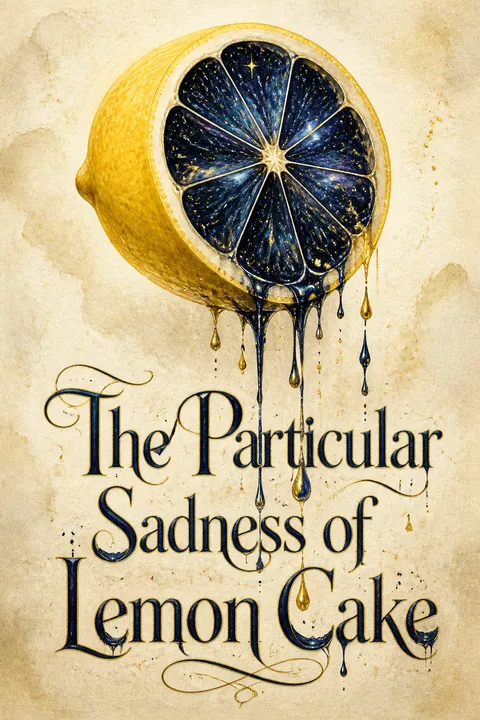
On the eve of her ninth birthday, Rose Edelstein's life shifts when she tastes her mother's homemade lemon-chocolate cake and is overwhelmed by a sensation far beyond flavor. Instead of joy, she detects a hollow sadness, a craving, and a sense of absence—her mother's secret emotional turmoil baked into the cake. This moment marks the beginning of Rose's strange gift: the ability to taste the hidden feelings of anyone who prepares her food. The kitchen, once a place of comfort, becomes a minefield of emotional truths, and Rose's innocence is forever altered. The revelation is both magical and isolating, setting her apart from her family and friends, and leaving her desperate to understand the meaning behind the flavors she cannot escape.
The Taste of Emptiness
Rose's new sensitivity to food quickly becomes a curse. Every meal prepared by her mother is laced with longing, dissatisfaction, and a gnawing emptiness. Even her father's distracted, absent-minded cooking and her brother Joseph's blank, utilitarian snacks carry their own emotional signatures. Rose tries to explain her experience to her mother and the school nurse, but her words are dismissed as childish imagination or a passing illness. The world around her continues as normal, but Rose is now acutely aware of the emotional undercurrents in every bite. She becomes wary of homemade food, seeking solace in factory-made snacks that are emotionally neutral, and begins to realize how much people hide from each other—even within a family.
Family in Fragments
The Edelstein family appears ordinary on the surface, but Rose's gift exposes the cracks beneath. Her mother, Lane, is restless and unfulfilled, cycling through hobbies and projects in search of meaning. Her father, Paul, is loving but emotionally distant, more comfortable with routines than intimacy. Joseph, Rose's older brother, is brilliant but withdrawn, preferring solitude and abstraction to connection. The family's interactions are marked by missed signals and unspoken needs. Rose's ability to taste their feelings makes her both a witness and a victim of their disconnection. She longs for closeness but is overwhelmed by the intensity of what she perceives, and she begins to understand that every family harbors secrets and sadnesses that are rarely spoken aloud.
The Secret Ingredient
As Rose experiments with her ability, she discovers that every food carries a story: the baker's anger in a cookie, the hurried anxiety in a sandwich, the resigned sadness in cafeteria pizza. With the help of Joseph's friend George, she tests her gift outside the home, confirming that her perceptions are real and not just a product of her imagination. George's scientific curiosity and kindness offer Rose a rare sense of validation and companionship. Yet, the more she learns, the more isolated she feels. The gift is a burden she cannot share, and it forces her to confront the emotional realities that others can ignore. Rose's world becomes a landscape of invisible wounds, and she must navigate it alone.
Testing the Gift
George devises a series of taste tests, bringing Rose to bakeries and delis to sample food made by strangers. Each bite reveals the emotional state of the cook—anger, hurry, longing, or love—proving that Rose's gift is genuine and not limited to her family. The tests are both liberating and distressing; Rose realizes she can never eat without knowing too much. She envies George's ability to eat without consequence and wishes for the oblivion that others enjoy. The experiments deepen her understanding of people's hidden lives but also reinforce her sense of alienation. Rose's gift is both a window and a wall, offering insight but denying comfort.
Joseph's Distance
Joseph, always aloof, becomes increasingly distant as he grows older. He excels academically but avoids social interaction, retreating into his room and eventually disappearing for hours or days at a time. Rose senses that Joseph, too, harbors a secret—one that is even more profound than her own. Their mother dotes on him, seeing him as special and enigmatic, while Rose feels both jealous and relieved to be less scrutinized. Joseph's disappearances unsettle the family, and Rose's attempts to connect with him are met with indifference or irritation. The siblings' relationship is marked by longing and misunderstanding, and Joseph's mystery becomes a central thread in Rose's journey.
George's Friendship
George, Joseph's only friend, becomes an anchor for Rose. His warmth, intelligence, and acceptance provide her with a sense of belonging she cannot find elsewhere. George listens to Rose, believes in her gift, and treats her with kindness and respect. Their friendship is a refuge from the emotional chaos of her family and the isolating effects of her ability. As they grow older, George's path diverges—he excels academically and eventually moves away—but his influence remains. For Rose, George represents the possibility of connection and understanding, even in a world where most people are unknowable.
The Burden of Knowing
Rose's gift forces her to confront truths that others avoid. She becomes aware of her mother's deep unhappiness and eventual affair, her father's emotional limitations, and Joseph's growing estrangement. The knowledge is overwhelming, and Rose struggles with the responsibility of what she knows. She cannot unsee or untaste the pain in her family, and she feels powerless to help them. The burden of knowing shapes her adolescence, making her cautious, guarded, and sometimes resentful. Rose learns that empathy can be both a gift and a curse, and that understanding others does not always lead to healing.
Mother's Restlessness
Lane Edelstein's dissatisfaction permeates the household. She moves from project to project—gardening, carpentry, baking—seeking fulfillment but never finding it. Her restlessness is palpable in her food and in her interactions with her children. Lane's inability to settle or find contentment drives a wedge between her and her husband, and her emotional volatility leaves Rose feeling both protective and exhausted. The mother-daughter bond is complicated by Rose's awareness of Lane's inner life, and Rose becomes both a confidante and a silent witness to her mother's struggles. Lane's journey is one of searching, and her longing becomes a defining flavor in Rose's world.
The Affair Unveiled
As Rose matures, her gift exposes her mother's affair with a colleague from the carpentry co-op. The evidence is not in words or actions, but in the overwhelming feelings of guilt, excitement, and romance that Rose tastes in her mother's cooking. The revelation is devastating, not only because of the betrayal but because Rose must carry the secret alone. She cannot confront her mother without revealing her own secret, and she is forced to navigate the complexities of adult relationships before she is ready. The affair becomes a symbol of the hidden lives that everyone leads, and Rose's gift is both a curse and a key to understanding.
Joseph's Disappearances
Joseph's absences become more frequent and inexplicable. He moves out, lives alone, and eventually disappears for days at a time, leaving the family in a state of anxiety and confusion. When Rose finally discovers the truth, it is stranger than she could have imagined: Joseph has the ability to literally disappear, to become part of inanimate objects—chairs, beds, tables—escaping the world in a way that is both magical and tragic. His gift, like Rose's, is a form of extreme sensitivity, a response to the overwhelming demands of life. Joseph's vanishing is both a loss and a revelation, forcing Rose to confront the limits of understanding and the pain of letting go.
The Emergency Room
Overwhelmed by her gift and the emotional chaos of her family, Rose suffers a breakdown, begging her mother to "take her mouth off" after a particularly painful meal. She is taken to the emergency room, where doctors dismiss her symptoms as psychosomatic. The experience is humiliating and isolating, but it marks a turning point. Rose realizes that her gift will not go away and that she must find a way to live with it. The episode deepens the family's sense of helplessness and underscores the limits of medical and parental understanding. Rose emerges from the crisis with a new resolve to manage her gift on her own terms.
Growing Up Hungry
Rose's teenage years are marked by hunger—literal and metaphorical. She avoids homemade food, subsisting on processed snacks and vending machine fare that are free of emotional residue. Friendships and romantic interests are complicated by her inability to share her secret or fully participate in normal life. Rose watches her peers move forward—falling in love, leaving home, finding purpose—while she remains stuck, unable to escape the weight of her knowledge. Her relationship with her parents evolves as they age and change, but the family remains haunted by Joseph's absence and the unresolved tensions of the past.
The Chair and the Vanishing
In a climactic visit to Joseph's apartment, Rose discovers the full extent of her brother's ability: he has become part of a chair, his body and self literally merging with the furniture. The revelation is both shocking and strangely fitting—Joseph's lifelong desire for invisibility and escape has found its ultimate expression. Rose marks the chair with a line, hoping to anchor him to something tangible. The moment is a profound confrontation with the limits of empathy and the mysteries that even the closest families cannot solve. Joseph's vanishing is both a tragedy and a release, and Rose must learn to live with the unanswered questions he leaves behind.
The Search for Filling
In the aftermath of Joseph's disappearance, Rose embarks on a quest to find food that is truly filling—not just physically, but emotionally. She becomes a dishwasher at a French café, drawn to the honest, joyful cooking of the chefs. Through her work, she encounters people whose food reflects contentment, humor, or simple satisfaction, and she learns that not all meals are haunted by longing or pain. Rose's journey is one of gradual healing, as she discovers that connection and meaning can be found in unexpected places. The search for filling becomes a metaphor for her search for belonging and peace.
Factories and Farewells
As Rose grows into adulthood, she learns to accept the limitations of her gift and the inevitability of loss. She finds solace in factory-made food, which is emotionally blank, and in the routines of work and friendship. Her parents age, her mother finds a measure of contentment in her work, and Rose herself begins to imagine a future that is not defined by hunger or sadness. The family's wounds do not heal completely, but they learn to live with them, finding moments of grace and connection amid the pain. Farewells—both literal and symbolic—become a part of life, and Rose learns to say goodbye without bitterness.
Acceptance and Moving Forward
In the final chapters, Rose comes to terms with her gift, her family's history, and the mysteries that will never be solved. She continues to work at the café, finding satisfaction in honest labor and the company of people who accept her as she is. Her relationship with her parents settles into a new equilibrium, marked by mutual respect and understanding. Joseph remains absent, but his memory is honored in small rituals and acts of remembrance. Rose's journey is one of acceptance—of herself, her family, and the world's imperfections. She learns that wholeness is not the absence of pain, but the ability to live fully in its presence.
Analysis
Aimee Bender's The Particular Sadness of Lemon Cake is a haunting meditation on empathy, family, and the hidden emotional lives we carry. Through the lens of magical realism, the novel explores the costs and consequences of knowing too much about those we love. Rose's ability to taste emotions in food is both a metaphor for extreme sensitivity and a literal burden, forcing her to confront the pain, longing, and secrets that shape her family. The story interrogates the limits of understanding—how even the deepest empathy cannot always bridge the gaps between people, and how some mysteries remain unsolvable. Bender's narrative suggests that wholeness is not the absence of pain, but the capacity to live with it, to find moments of connection and meaning amid the fractures. The novel ultimately offers a message of acceptance: that we must learn to carry our gifts and wounds, to seek filling where we can, and to move forward even when the answers elude us. In a world where everyone hungers for something, the greatest act of love may be to witness each other's sadness and keep going.
Review Summary
People Also Read






Characters
Rose Edelstein
Rose is the protagonist, whose life is transformed at age nine when she discovers she can taste the emotions of anyone who prepares her food. This gift is both a blessing and a curse, making her hyper-aware of the hidden pain, longing, and secrets of those around her. Rose is introspective, compassionate, and often overwhelmed by the intensity of her perceptions. Her journey is one of self-discovery and acceptance, as she learns to navigate the complexities of empathy, family, and growing up. Rose's relationships—with her mother, father, brother, and George—are shaped by her longing for connection and her struggle to find a place in a world that feels both too much and not enough.
Lane Edelstein (Mother)
Lane is Rose's mother, whose dissatisfaction and longing are the first emotions Rose tastes in food. Lane cycles through hobbies and projects, searching for fulfillment she cannot find in domestic life. Her restlessness leads to an affair, which Rose uncovers through her gift. Lane's relationship with her children is marked by love, but also by a lack of understanding and an inability to provide the stability they crave. She is both a source of comfort and pain for Rose, and her journey reflects the challenges of motherhood, identity, and the search for meaning.
Paul Edelstein (Father)
Paul is Rose's father, a lawyer who provides for the family but struggles with emotional intimacy. He is loving in his own way, but prefers routines and avoids difficult conversations. Paul's aversion to hospitals and his inability to confront the family's deeper issues make him both a stabilizing and limiting presence. His relationship with Rose is marked by awkward affection and missed opportunities for closeness. Paul represents the limits of rationality and the challenges of connecting across emotional divides.
Joseph Edelstein
Joseph is Rose's older brother, a prodigy who becomes increasingly isolated as he grows older. He is emotionally distant, preferring the world of science and abstraction to human connection. Joseph's own supernatural gift—the ability to disappear and merge with objects—mirrors Rose's sensitivity, but his response is to escape rather than engage. His disappearances are both a symptom and a cause of the family's pain. Joseph's relationship with Rose is complex, marked by longing, misunderstanding, and a shared sense of otherness.
George Malcolm
George is Joseph's best friend and a rare source of comfort for Rose. He is intelligent, kind, and open-minded, providing Rose with validation and companionship as she navigates her gift. George's scientific curiosity leads him to help Rose test her ability, and his friendship offers her a glimpse of acceptance and understanding. As they grow older, George's path diverges from Rose's, but his influence remains a touchstone in her life.
Grandma (Lane's Mother)
Rose's maternal grandmother lives far away and maintains contact through packages and phone calls. She is emotionally distant and often critical, but her presence looms large in the family's history. Grandma's relationship with Lane is fraught, and her influence is felt in the family's patterns of longing and disappointment. Her death and final gift to the family serve as a moment of reflection and closure.
Larry
Larry is Lane's colleague and eventual lover, whose presence brings both excitement and guilt into Lane's life. His relationship with Lane is discovered by Rose through her gift, and he becomes a symbol of the hidden lives adults lead. Larry's role is largely offstage, but his impact on the family is significant, forcing Rose to confront the complexities of love, loyalty, and betrayal.
Eliza Greenhouse
Eliza is Rose's childhood friend, whose life follows a more traditional path. She provides Rose with moments of normalcy and support, but their friendship is tested by the changes and secrets that come with adolescence. Eliza represents the world Rose longs to be part of, but also the limitations of conventional understanding.
Sherrie
Sherrie is a high school friend who becomes briefly close to Rose, drawn by her ability to "read" emotions in food. Their friendship is intense but ultimately unsustainable, as Sherrie's neediness and Rose's boundaries clash. Sherrie's role highlights the dangers of empathy without limits and the importance of self-care.
Madame and Monsieur Dupont
The owners of the French café where Rose works, Madame and Monsieur represent the possibility of honest, fulfilling work and connection. Their cooking is infused with contentment and care, offering Rose a respite from the emotional turmoil of her family. They become mentors and friends, helping Rose find a place in the world and a sense of purpose.
Plot Devices
Magical Realism as Emotional Lens
The novel's central device is Rose's supernatural ability to taste emotions in food, a form of magical realism that serves as both metaphor and plot engine. This device externalizes the internal, making visible the hidden emotional lives of the characters. It allows the narrative to explore themes of empathy, secrecy, and the limits of understanding in a concrete, sensory way. The magical element is treated matter-of-factly, grounding the story in the realities of family life while opening up new dimensions of meaning.
Food as Emotional Conduit
Food is not just sustenance but a medium for emotional communication. Every meal becomes a message, intentional or not, from the cook to the eater. This device structures the narrative, with key plot points and revelations occurring through the act of eating. The motif of food underscores the interconnectedness of people and the ways in which emotions are transmitted, often unconsciously, in daily life.
Foreshadowing and Symbolism
The novel employs foreshadowing through Rose's early experiences with food, her mother's restlessness, and Joseph's withdrawal. Symbols such as the lemon cake, the card-table chair, and the family's various projects recur throughout the story, deepening the emotional resonance and connecting disparate events. The use of magical abilities as metaphors for psychological states—empathy, escapism, longing—adds layers of meaning to the narrative.
Fragmented Narrative Structure
The novel unfolds in a series of vignettes and memories, reflecting the fragmented nature of family life and personal growth. This structure allows for deep dives into character psychology and thematic exploration, rather than a strictly linear plot. The episodic approach mirrors Rose's own process of piecing together meaning from disparate experiences.
The Unreliable Witness
Rose's perspective is deeply subjective, colored by her gift and her emotional state. The narrative often blurs the line between reality and perception, leaving room for ambiguity and interpretation. This device invites readers to question the nature of truth, the reliability of memory, and the limits of empathy.








































