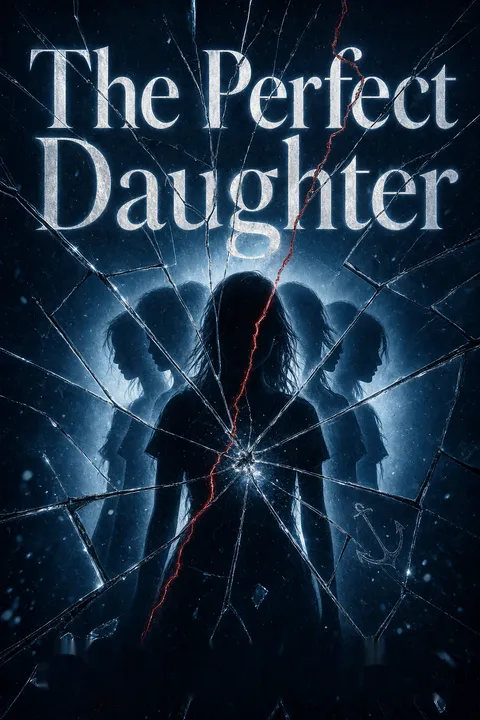
Plot Summary
Police Lights and Panic
The story explodes into chaos as sixteen-year-old Penny Francone is abruptly taken into custody, blood-soaked and unresponsive, accused of brutally murdering her birth mother, Rachel Boyd. Her adoptive mother Grace's world shatters in an instant, spiraling her into desperate fear, confusion, and a mother's worst nightmare. Even as Penny claims amnesia and presents as a personality named "Eve," Grace is forced to protect her daughter, grappling with shock as law and psychology collide. The opening scene draws the reader into a maelstrom of emotion—helplessness, dread, and the fierce, unwavering love that compels a parent to fight even when the evidence seems insurmountable.
Blood, Arrest, and Eve
Grace rushes to secure legal aid, meeting Greg Navarro, the charming but enigmatic lawyer, and is forced to reveal to him—then police—that Penny suffers from Dissociative Identity Disorder (DID). As the case's darkness intensifies, Eve, Penny's most combative alter, emerges during the police interview. Covered in someone else's blood and missing all memory of the event, Penny's alternate self shows both aggression and wit, highlighting both her vulnerability and the peril she presents to herself and others. For Grace, the agony of seeing her child so lost—and of witnessing her obvious mental fracture—drives her to defy the rules and remain by Penny's side, showcasing a love stretched to its thinnest threads.
Family Secrets Uncovered
As Penny's family reels, Jack, her devoted brother, constructs a narrative film project in hopes of understanding his sister—is she a victim, or is she dangerous? Rivalries, jealousy, and blame surface among siblings, especially with Ryan, who cannot forgive Penny. Secrets leak from the past: previous violent incidents, threats involving Rachel, and a "hit list" written by Penny and her friend Maria Descenza. The family's past fractures, amplified by psychiatric uncertainty, mirror Penny's own inner split—leaving everyone doubting whether Penny's illness is real or a convenient excuse for terrible actions.
A Dangerous Diagnosis
With legal and medical advocates debating the authenticity of DID, Grace struggles against a skeptical system. Dr. McHugh enters as Penny's new psychiatrist, bringing more compassion than his predecessor but skepticism as well. The debate crystallizes: Is Penny sick—or evil? DID becomes a courtroom battleground, with shifting alters and doubt thick in the air. Grace battles her own guilt for not seeing warning signs, reliving Penny's troubled past and her desperate decision to adopt despite unknowns. Hope and despair alternate as the system drags the family through humiliating and exhausting hurdles.
Edgewater's Locked Doors
Penny is detained in the notorious Edgewater State Hospital for evaluation, its institutional cruelty echoing her psychological confinement. The hospital is both punishment and therapy—a fortress of surveillance, violence, and stripped dignity. Weekly visits from Grace yield little but heartbreak, as Eve dominates in this harsh setting, sheltering Penny from harm but also blocking recovery. Edgewater's hostile environment seems designed to prevent healing. Meanwhile, Dr. McHugh balances being Grace's only real ally with his own shame and struggles, his empathy for troubled youth deepening the connection—and the novel's tensions.
Trapped in a Broken Mind
Bitter therapy sessions fail to crack Eve's hard shell, while a foray into art therapy and triggering scents unexpectedly recall memories and swap states. The family learns that, with DID, distinct personas hold separate sets of skills, traumas, and memories—sometimes even physical abilities or accents. Chloe, the perfectionist; Ruby, the effervescent British teen; and Eve all emerge, alternately charming and chilling. Each episode reveals further memory gaps shielding Penny's deepest wounds, raising new questions—was someone else with her at the crime scene? Does she remember more than she admits, or are her amnesias genuine?
Fractured Memories Surface
Carefully orchestrated therapy—smells of ammonia, childhood art supplies, or probing questions—pulls forth fugitive glimpses from Penny's fractured mind. Her alters leak clues: flashbacks to a blue book with boats on the cover; rhythmic tapping that mirrors the 911 call made during Rachel's murder; and fragments of dialogue and dread. Details of an unexplained burning house and a "bad girl" feeling intertwine with past and present accusations. The search for the truth morphs into a struggle against the mind's own smoke and mirrors—memories surfacing only in glimpses through terror and pain.
The Girl in the Park
The heart of the family's bond is revealed through flashback: how a rain-soaked, speechless four-year-old girl was found alone in a park and adopted by Grace and Arthur. Small details—anchor necklaces, hiding places, the refusal to answer to her birth name, Isabella—loom large as possible markers of deeper trauma. The wounds of abandonment and possible abuse run quietly through the narrative, casting doubts over Rachel's choices and intentions, and laying the psychological groundwork for Penny's later mental fracture.
Alters and Anchor Charms
Penny's art—signed with a strange anchor symbol—becomes a diagnostic Rosetta Stone, suggesting identity, longing, and fragmentary memory. Investigation into the symbol, coupled with the emergence of new alters under creative stress, ties Penny's present struggles back to her earliest years and to hidden relationships—especially with her birth mother and possible birth father. Grace and Dr. McHugh hope to use art and these symbols to heal, but the secrets embedded in Penny's creative expressions contain the dark knot at the center of the novel: trauma, guilt, and the longing to be anchored somewhere safe.
Guilt in the Restaurant
The family's struggles ripple into the everyday fabric of life: Jack and Ryan's conflict boils into violence, business at the family restaurant collapses under the weight of scandal and debt, and Grace's resolve wavers as she is threatened and harassed. Meanwhile, shifting memories and finger-pointing infect every relationship—Grace's guilt for adopting, for missing trauma, for needing hope; Ryan's guilt and resentments; Jack's obsession with truth; and the whole Francone clan splintering much like Penny herself. Each character internalizes blame while the true culprit remains maddeningly elusive.
Daisy Chains of Blame
Bracing themselves for the legal horror show ahead, Grace, Annie, and Jack chase every speculation: Could Vince Rapino—Rachel's criminal boyfriend—be the killer, leaving his DNA behind? Or did Maria, the pyromaniac and co-conspirator, outdo their dark childhood "murder list" fantasies and manipulate Penny into committing the crime? Layer by layer, suspects are examined and eliminated, but the conspiracy of trauma, secrecy, and manipulation—by criminals, doctors, and even lawyers—means the guilt always finds a new resting place.
Turmoil at Edgewater
Just as the family closes in on possible external threats (Vince, Maria), the enemy strikes from within: Penny is attacked in the hospital when a manipulated fellow patient, Darla, tries to kill her. Revelations multiply: threats coded in childish handwriting, notes possibly authored by Penny's own fractured mind (or unwittingly by someone else), and evidence that her "bad girl" alter may be seeking punishment. The family and therapy team realize the truth cannot wait for trial; danger is closing in, and time is vanishing.
Triggered by Scents
Deliberate therapy with Dr. McHugh uses scents, childhood art and gentle encouragement to coax out lost memories and alternate selves. Chloe, the perfectionist, emerges again, painting a haunted house scene and mentioning a burning toaster, clues that lead to the shocking history of Penny's early childhood—her own house destroyed in an unexplained blaze. Further, everyone realizes her shifting states are not random but triggered, and that paradoxically, sometimes healing can bring more danger as the mind fights to protect what it cannot bear.
Who Was With Penny?
Further investigation yields crucial evidence—photos of rope marks on Penny's wrists, likely not from handcuffs but from being tied up. This silent testimony pushes the team to reconsider everything: Was Penny truly alone in Rachel's apartment, or was someone else there who forced her to witness, or even unwittingly mimic, the brutal crime? Was she set up? As the defense scrambles, they realize the physical evidence and Penny's psychological splinters might together just be enough to undermine the prosecution's case.
The Past Burns Bright
As Annie, Jack, and Grace trace Penny's childhood through public records, they learn of a house fire set by Penny/Isabella as a small child—ostensibly to "burn it all up." The woman who lived next door describes Rachel as battered, a drifter, and the father as an angry, secretive shadow. Lost memories and clues multiply: an anchor gift, a blue book with boats, and an artfully forgotten identity. The haunting past, not present-day violence, is refining the truth about the murder and about Penny's core wound.
Therapy and Clues
Dr. McHugh, desperate for a breakthrough, delves deeper via medication into Penny's psyche, reaching alternates (including "Ruby") who, under chemical relaxation, reference the book, the anchor, and a host of mysterious place-names. Suddenly, startling clarity manifests: these fragments aren't simply evidence of trauma or defensive walls—they point toward a profound truth hidden underneath Penny's carefully constructed self. Each therapy session closes the distance between the mystery and its devastating answer.
Dangerous Allies
Pursuing the possibility of outside manipulation, Grace and Annie confront Rapino, and are menaced by Vince's associates. When the police refuse to help, they risk their lives to gather DNA and confront the undercurrents of violence swirling around their family. The closer they get to the truth, the more personal danger erupts—not just legal, but physical. The line between protecting Penny and endangering themselves blurs with every step they take.
A Mother's Relentless Hunt
Grace's obsessive, unyielding search for answers—armed with only faith, intellect, and raw courage—leads her to old addresses, neighbors, schools, and bars. These investigations, driven by the love only a parent can command, uncover the ties between trauma, abandonment, and revenge. Crucially, seemingly minor symbols (an anchor pendant, a hidden book) and repeated phrases ("gone and gone for good") start to reveal a greater narrative pattern—with Grace's intuition piecing together what the police, lawyers, and even doctors missed.
Rope, Lies, and Revelations
When Penny testifies in her own defense, under searing legal fire, she dissociates—and in one of the story's most devastating scenes, the original child self emerges: Isabella. Here, at last, the tales of rope, ammonia, and terror are revealed not as present-day fantasy but as memories of abuse at the hands of her biological father. Grace and her family realize—along with the stunned courtroom—that Penny is just an alter, a mask created to survive what Isabella could not. Their enemy lies not in Penny's mind, but in the legal system itself.
Trial by Fire
The shocking climax arrives: the family's dogged investigations, Jack's mapping of Isabella's strange "place names," and trigger phrases all converge, unmasking attorney Greg Navarro as both Penny's biological father and Rachel's killer. Navarro's position as legal defender is revealed as mere subterfuge, a predator hiding in plain sight. In a fury that binds the family instead of breaking it, Grace, Annie, and Jack help see justice served, while Navarro attempts to escape, only to be stopped in a burst of poetic justice and courtroom drama.
Identity Unraveled
As the truth is laid bare, the family—and especially Grace—must face the most difficult psychological question of all: If Penny is not "the real girl," who is their child? Integration, recovery, and justice settle uneasily atop the ruins of trauma. But healing requires surrendering to what cannot be undone. Penny, freed from accusation, faces the task of becoming a whole self for the first time in her life. The family, at last united, gives and receives forgiveness.
Truth on the Witness Stand
Penny (now also Isabella, her baseline self) comes home at last, the legal nightmare over. Navarro is charged, Rachel remembered for the desperate love and impossible choices she made, and the family gathers in honest reconciliation. Ryan confesses his guilt—his jealousy, spying, and failure to save Penny from suspicion—while Jack, Grace, Annie, and Penny/Isabella process the reality that trauma, healing, and redemption are always collaborative, always ongoing. The scars remain, but so does hope.
Shattered and Home Again
In the aftermath, the family figures out how to live with the truth: that the self, like their family, is always "better together." Olivia Francone (formerly Penny/Isabella), with her many faces, steps into a life where trauma and love, brokenness and healing, can coexist. Meanwhile, the novel's other characters—Grace, Jack, Ryan, Annie, Dr. McHugh—seek their own recoveries, accepting that identity is always complex, always shifting, and worth fighting for. The closing notes are both mournful and hopeful, emphasizing endurance, the importance of support, and the possibility of recovery after even the most perfect life has shattered.
Analysis
D.J. Palmer's The Perfect Daughter is as much a psychological excavation as it is a thriller, centering the tangled interplay of trauma, illness, and the desperate search for truth and healing within a broken system. By fusing the mystery genre with a nuanced (if sensationalized) exploration of Dissociative Identity Disorder, the novel interrogates not only "whodunnit" but "who am I really?"—for Penny, for her family, and for all survivors of trauma. The book spotlights the persistent failure of institutions—law, psychiatry, even family itself—to adequately grapple with complex psychological suffering, and ultimately places responsibility, faith, and redemption squarely in the hands of love and collective grit. In a cultural climate often impatient with ambiguous stories and "messy" truths, Palmer urges us to believe women, children, and those whose pain doesn't fit orderly psychiatric boxes. The family's mantra—"better together"—summarizes the lesson: that only by gathering fragments into a whole can we hope to survive and to heal. Moreover, the novel delivers a fierce indictment of how predators can manipulate both individuals and the very systems designed to protect them. Yet the book's final gift is one of hope: that recovery, though never a return to innocence, can mean the forging of something new, integrated, and resilient—both in the psyche and in the bonds of family.
Review Summary
People Also Read





Characters
Grace Francone
Grace is the emotional core of the story—a mother buffeted by fear, guilt, and love, who will stop at nothing to save her child. Her psychological journey is relentless: from hopeful adopter of a traumatized child, through endless cycles of worry and determination, she is forced to confront not only forces outside her control (police, lawyers, the media) but also her own blind spots. Her resilience, ingenuity, and capacity for self-blame underwrite the family's efforts to uncover the truth. Grace's fractured, forward-driven love is both heroic and raw; it births as much pain as hope, and her fight is emblematic of the trials all parents face when loving a child through darkness.
Penny Francone / Isabella Boyd / Alters
Penny, the "perfect daughter," is revealed to be a multiplicity: at her core, abandoned and traumatized Isabella, who creates alter egos—Eve, Chloe, Ruby, and more—as shields against the unbearable. Penny embodies the cost of survival: intellectual, shy, desperate for approval; Eve is her wrathful protector; Chloe, the overachieving perfectionist; Ruby, the light-hearted, socially adept alter. Each is distinct yet all are facets of a shattered whole. Her trauma-induced dissociation is both a tragedy and a miracle of adaptation, and her struggle for integration and witness of her own abuse becomes the driving force for both mystery and meaning.
Dr. Mitch McHugh
Dr. McHugh, Penny's psychiatrist, is a wounded healer: fired from a previous post, haunted by his son's drug addiction, and burdened by depression. In Edgewater's grim halls, Mitch's struggle to help Penny—and to believe her—parallels his journey to heal himself and his family. Open-minded but skeptical, he becomes a rare anchor for Healing, determined to see the "real" Penny beneath the clinical fog. His own acceptance, growth, and refusal to give up mark him as a pillar of the story's resilience and compassion.
Jack Francone
Jack is the family's conscience and narrator-in-disguise, using his film project to process pain, chronicle the mystery, and confront the family's secrets. Psychanalytically, he's a quester caught between loyalty, doubt, and a desperate need to understand complexity—not just in Penny but in himself. His relationship with Penny is tender, honest, sometimes harsh but ultimately healing. Through Jack, the novel explores what it means to bear witness to trauma and to assemble a coherent story from fragments.
Ryan Francone
Ryan is the story's dark soul: angry, jealous, crushed by guilt, and hiding secrets. His relationship with Penny is tense, sometimes hostile; he blames her for their father's death, her illness, and the brokenness of the family. Ryan's eventual confession about his spying and his failure to save his sister from suspicion are moments of profound catharsis—demonstrating that blame, left unaddressed, breaks individuals as thoroughly as trauma does.
Annie Francone
Annie, Grace's sister-in-law, is emotionally astute, fiercely protective, and a vital support system—offering both practical courage (guns, research, backup) and emotional ballast as Grace nearly unravels. She bellies the family's "better together" ethos—her presence in the investigation and her interventions during the climactic courtroom scene are crucial. Annie's humor, grit, and loyalty provide the family with the external strength they sometimes lack.
Greg Navarro
At first, Navarro appears a lifeline: capable, empathetic, even personally invested. But as the plot steadily ticks forward, his role as both Penny's biological father and Rachel's killer is revealed. Greg is a predator: a lawyer who exploits his position to manipulate and then destroy. Psychological analysis reveals him as both a symptom of institutional rot (abuser hiding behind respectability) and as the ultimate mirror of the story's themes—deception, control, and how evil can blend seamlessly into normal life.
Dr. Dennis Palumbo
Palumbo, the earlier psychiatrist, represents the rigid medical establishment: dismissive of DID, eager for clear-cut labels, and ultimately more interested in gatekeeping than healing. His refusal to see the authentic pain beneath Penny's symptoms is emblematic of a broader failure of the system to recognize complex trauma.
Maria Descenza
Maria, Penny's childhood "partner in crime," is a fellow outcast: pyromaniac, obsessed with the occult, and drawn to Penny's darkness. Psychologically, she can be both friend and exploitative catalyst: together, she and Penny stoke each other's worst tendencies, giving shape to terrible fantasies and crossing the boundary between the imaginative and the criminal. She's a user's symbol for how complicity and vulnerable friendship can lead to real-world catastrophe.
Vincent Rapino
Vince, Rachel's boyfriend and neighborhood criminal, acts as both a red herring and a looming symbol of external threat: violent, unpredictable, and yet revealed eventually as not the killer. His interplay with the case continually interferes with the family's search for the truth and mirrors the systemic failings of both law and community.
Plot Devices
Dissociative Identity Disorder as Central Mystery
The main plot device is the use of Penny's DID—not merely as "quirky" but as the literal engine of the mystery. Readers, like the characters, are kept guessing: Is Penny's shattered memory a symptom of trauma and innocence, or a clever mask for evil? The switching of alters is not only a narrative thrill, but also a shield against prosecution and a code for the reader: we see truth only in fragments, each piece colored by the emotional state of the presenting personality. DID's role refines not just the story arc but the entire psychological texture of the book.
Therapy and Triggered Memory
The narrative structure leans heavily on therapy scenes, with Dr. McHugh using art, smells (ammonia), and dialogue to trigger state switches, unlocking repressed memories. These scenes act as confessionals, flashbacks, and procedural revelations, blurring the boundary between healing and investigation. Therapy is not just a source of possible healing but also a device to access clues no one else can.
Family Chronicle as Mosaic
The story jumps fluidly between past and present, using journals, Jack's film diary, and multiple POVs to construct a mosaic of family history, trauma, and recovery. By leveraging the shifting perspectives, the novel withholds and dispenses information with almost clinical precision, letting readers experience the disassociation, confusion, and gradual dawning of truth that the characters themselves endure.
Red Herrings and Suspense
The plot is layered with red herrings—Vince Rapino's criminality, Maria's violence, possible errors in therapy, and lies by omission or commission (from Ryan, from Navarro). Each is structured to divert attention and build suspense, echoing the broader theme: the real truth is always buried under multiple lies, traumas, and vantage points.
Climactic Courtroom Drama
The narrative climaxes in a slow-burning, then explosive, courtroom scene, blending therapeutic revelation (Isabella's alter's testimony) with classic legal drama. The uncovering of Navarro's guilt—masterfully achieved through family teamwork, Jackie's research, and testimony—is both the logical solution to the crime and the final healing blow delivered to a system that couldn't process the truth without extraordinary effort.
Symbolism: Anchor, Blue Book, Boats
The anchor motif, a blue book with boats, and repeated sets of city names work together as recurring symbols—psychological "tells" that point to trauma, lost identity, and clues hidden in childhood. These devices are not just atmospheric but essential to cracking the mystery, doubling as both healing mechanisms and forensic clues.
Integration and "Better Together"
The final plot device is a thematic one: the notion that neither individuals nor families can survive trauma alone. Integration—of Penny's alters, and of the family as a fighting unit—is both the medical cure and the spiritual message of the book. Everyone plays a role; everyone participates in recovery and justice.
Download PDF
Download EPUB
.epub digital book format is ideal for reading ebooks on phones, tablets, and e-readers.








































