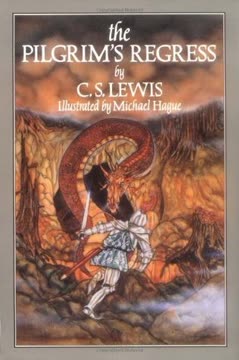
Plot Summary
Childhood Rules and Yearning
John, a boy in Puritania, learns the rules of life from his parents and the mysterious Steward, who terrifies him with dire threats about breaking the Landlord's rules—warnings of a black hole full of snakes for those who disobey. John's earliest experiences are a confusing tangle of prohibitions, rituals performed without understanding, and fears too vast for a child to articulate. Yet somewhere behind the stern laws lies a more powerful sensation: an ache of longing, which erupts when he glimpses a mystical Island through a window in a wall, accompanied by a haunting music and a voice calling, "Come." The Island is not just a daydream; it pierces John's soul, making ordinary pleasures fade and inciting a restless yearning that he can neither name nor satisfy. This is the first note of a lifelong quest sparked by confusion, fear, and inexplicable desire.
The Longing for the Island
John's longing for the Island intensifies as he grows. Visits to the wood near his home teach him only disappointment: the music and visions become rare, and attempts to recapture them through memory or imagination yield only frustration. In striving to re-experience the initial thrill, John becomes almost obsessive—frustrated by unfulfilled promises, yearning for something more than physical enjoyment, fixated on recovering a purity of longing untainted by mere pleasure or physicality. Eventually, he meets a brown girl in the wood—an embodiment of sensual temptation—whom he both pursues and later abandons in disgust, realizing this is not what he sought. Haunted by guilt, fears of punishment, and a sense that longing itself has become corrupted, John is driven to leave Puritania and set out on the road to search for the Island, compelled by a desire that is itself both painful and essential.
Enlightenment's Denial
On his journey, John meets Mr. Enlightenment, who assures him there is no Landlord or higher authority—only the fabrications of the Stewards. The promise of complete intellectual and moral freedom seems exhilarating, and with his new companion Vertue, John enters a period of heady liberation. However, this rationalist outlook soon reveals its own limitations: Enlightenment's "facts" are riddled with circular reasoning and dismissals of longing as mere childishness or repressed desire. John tastes the freedom of doing "as he likes," but it is hollow; without a transcendent purpose, the road seems as arbitrary as the rules left behind. The escape from fear offers no true satisfaction, and the ache of the Island returns, now complicated by skepticism and self-doubt.
Seduction and Disillusionment
John is seduced by alternate paths: the city of Thrill, presided over by Media and Mr. Halfways, offers art and romance as substitutes for the Island's longing. Here, imaginations and feelings reign—John believes he has found what he was seeking in love with Media and aesthetic rapture, only to discover that these satisfactions are short-lived, superficial, and tainted by the same emptiness as his earlier temptations. Encounters with art's "Clevers" and the logical deconstructions of pleasure unmask his passions, reducing them to impulses or pathology. Each new attempt to realize or hold on to the thrill—through beauty, love, self-invented rules, or intellectualized experience—only sharpens John's disappointment. The longer he quests, the more painfully he learns that even the deepest joys can degrade or reveal themselves as mere echoes of a purer yearning.
The Land of Artifice
Escaping from disillusionment in personal pleasure, John is tempted by society's alternative rewards—safety, comfort, and respectable living. In the houses of Mr. Sensible and encounters with Drudge, he experiences the numbing routine of habit, diluted joys, and the pursuit of intellectual amusements as distractions from deeper pain. The artificial pleasures of Epicurean detachment, intellectual skepticism, and academic debate, while polished and safe, turn out to be spiritually barren—a life lived in secondhand contentment with a diet of borrowed joys and borrowed rules. Even the wise in their own eyes—Neo-Classicals, Humanists, Neo-Angulars—prove unable to cross the chasm that divides true fulfillment from mere survival or cultivated taste. The Island remains out of reach, its memory bringing both pain and hope.
The Spirit of the Age
John next confronts the most daunting foe yet: Zeitgeistheim, the dominion of the Spirit of the Age. Here Reason is imprisoned, and the giant Spirit's gaze turns all beauty and desire into anatomy, dissection, and self-exposure. John becomes a prisoner among "Clevers," subjected to their cynical mantras—gender and pleasure as social constructions, longing as psychological trickery, beauty as exploitation. The logic of this realm is that meaning, goodness, and love are all rationalizations; every hope is either wish-fulfillment or self-deceit. This reductive clarity threatens to annihilate John's sense of self and render even the longing for the Island meaningless. He is freed only by the intervention of Reason, personified as a luminous, armored woman who challenges the Spirit's claims and leads John away to seek better answers.
Reason's Intervention
Reason, as John's new guide, helps him see the reality and limits of both natural longings and rationalist attacks. She teaches him to distinguish between the copy and the original; to recognize that mere physical pleasure is an imperfect shadow of something more real and sacred. She explains that rational arguments can undercut themselves—those who say all beliefs are rationalizations have undermined every conviction, including their own. Reason helps John discover that the wish for a Landlord, rules, and meaning is not simply a projection or a pathology, but a clue that points beyond itself. Afterward, Reason departs, leaving John to continue alone—but now equipped with a critical faculty that can challenge both cynicism and sentimentality.
Seeking Wisdom's Valley
The next leg of John's journey—crossing the Grand Canyon—brings him to the limits of individual effort. Meeting Mother Kirk, he learns the tale of the Landlord and humanity's separation caused by forbidden fruit. John and Vertue attempt different strategies: Vertue with self-denial and willpower; John with a quest for experience and satisfaction. Both fail to cross on their own. True crossing, Mother Kirk insists, is possible only by her aid—a metaphor for grace and faith—yet even this grace must be freely chosen. Attempts at rational systems, disciplined virtue, or aesthetic substitutes all collapse at the precipice; only humility and surrender prepare the traveler for the crossing.
The Grand Canyon's Edge
The Grand Canyon stands as the physical and spiritual chasm separating longing from fulfillment. It is the wound of human existence, caused by ancient disobedience and compounded by each generation's attempts to manage, rationalize, or ignore it. Mother Kirk's parable makes clear that all self-made rules, schools of thought, and humanistic endeavors are ultimately powerless to bridge it. The meaning of the Island, the role of rules, the nature of desire—all are clarified atop the precipice, but practice, not philosophy, will finally matter. John begins to sense that crossing—salvation—must involve a dying to self and old patterns.
North and South—Failed Virtues
John and Vertue journey Northward to the plateau of the "tough-minded," where cold intellectual rigor reigns; and Southward, where comfort, feeling, and sentiment drench every experience. Both extremes—ascetic rationalism and indulgent sentimentalism—prove false refuges. The cold, proud, disembodied reason of the North lacks the warmth of love and connection; the overheated, permissive spirit of the South dissolves integrity and identity. Each is defended fiercely by its "virtues," but each leaves John unsatisfied and alone. Even the House of Wisdom, seeking synthesis, cannot grant entrance except through humility, suffering, and patient longing.
Southward Restlessness
John's restlessness compels him to move Southward, through increasingly subtle and seductive philosophies and pleasures—temporary solace found in gentle stewards like Mr. Broad, whose kindness masks evasion of ultimate questions. The road is lined with comforting voices that counsel moderation and compromise, discouraging the ardor of desire or fear of judgment. Even in Wisdom's Valley, with its learned traditions and peaceful resignation, there is no full answer—the view of the Island is misted, the principles explained but not enlivened. Satisfactions are offered as means to quiet desperation, but not to resolve, only to soothe.
Hospitality and Evasion
John lodges with hosts who offer hospitality, pleasant talk, and judicious caution, but whose wisdom always turns backward at the crucial moment. Each denies either the reality or attainability of the Island, suggesting the journey itself is the goal, or that metaphors will suffice where realities cannot. John encounters "moonlight revels," symbolic of escapist dreams that never endure the light of day. In these circles, contentment is achieved by lowering or disguising one's desires—a quiet betrayal, gentle but deadly to longing. Such hosts urge patience, acceptance, and maturity, confusing resignation with wisdom.
The House of Wisdom
In the House of Wisdom, John finally rests in a temporary synthesis: the Island (and the Landlord's reality) is explained as both more than a place and less than a literal objective; desire is good, but fulfillment, by design, is withheld. Wisdom teaches the paradox—desire for something enduring cannot be satisfied here, but the desire is itself evidence of something real, albeit inaccessible in life. Here John, and a now-blinded Vertue, learn that all "pictures"—art, myth, longing—are imperfect images of a deeper truth. The journey becomes less about achievement and more about recognizing the structure of longing and the impossibility of full arrival in this life.
The Final Crossing
John is led to a final confrontation with the chasm, in which surrender replaces self-assertion. On the edge of the canyon—symbolizing the ultimate boundary of mortality—he is confronted by all his former guides and temptations, each urging him to shrink from the leap. Only in yielding to Mother Kirk and submitting to the waters (baptism, death to the old self) can he pass through the tunnel beneath the canyon. In a transformative sequence of symbolic deaths and rebirths, John and Vertue emerge into a strange, beautiful land. Here Reason, formerly an external guide, becomes a companion; the crowd of pilgrims who accompany them dissolves John's sense of isolation, and the Island shimmers tantalizingly ahead—now altered by humility and colored by hope and fear.
Dragons and Surrender
Having traversed the canyon, John and Vertue return by a new path through land revealed in harsher clarity: formidable dragons of pride (cold North) and passion (hot South) must each be encountered and overcome. Vertue and John are forced to face the two perils—extremes of ascetic detachment and indulgent surrender—discovering that virtue lies not in either extreme but in the self-forgetful surrender that allows for transformation. Only by dying to one's preferred strategy—whether self-mastery or feeling—can one inherit the other side. Their trials leave them changed, rid of illusion, and prepared for the final reconciliation.
Beyond the Brook
The return journey brings John to a changed homeland, his own Puritania now invested with new meaning and clarity. Relationships with parents, familiar settings, and childhood rules are all altered by his journey, now seen in the light of the Landlord's mercy rather than merely as threats or mere conventions. At the brink of the final boundary—the brook of death—John grieves all he has loved and lost, yet recognizes this loss as part of the costly gift of particularity. Crossing the brook now is not mere annihilation, but a return home, a unity of past ache and promised fulfillment. The journey's end is a return that is also a beginning.
The Regress Revealed
The Guide reveals the ultimate irony: the Island, longed for in the farthest West, is the same summit as the Landlord's castle in the East. The pilgrim's regress—or return—shows that longing was itself a shadow and taste of home; all striving, all apparent digression, was part of a path that returns to its source. John and Vertue see that the journey was not wasted, even though the truth eluded their grasp for so long. The tale closes in a chorus of humility, desire, and hard-won acceptance. The painful years of search yield a new, deep gladness—a hope no longer based on self, but on a promise and a presence that was with John all along.
Analysis
With The Pilgrim's Regress, C.S. Lewis set out to dramatize the modern soul's journey from the confused, fearful religiosity of childhood, through skeptical liberation, artistic rapture, moral self-discipline, and the successive disappointments of pleasure, ideologies, and culture, toward a reconciliation that is less arrival than surrender. Modern readers encounter a parable for the agony and necessity of longing, a work that exposes both the weaknesses of sentimental romanticism and reductionist rationalism. The book's central lesson lies in its psycho-spiritual honesty: the fundamental human longing—what Lewis called "Sehnsucht"—cannot be killed, outgrown, or finally fulfilled by possession, mastery, or resignation. Instead, it must be accepted as both a gift and a guide, a painful hunger that points beyond all finite satisfactions to a reality that encompasses, transforms, and ultimately contains all loss and hope. The regress—the return home—is the essential surprise: not an abandonment of the journey, but its true completion. In allegorizing his own conversion and those of many in the modern world, Lewis pleads for the restoration of humility, critical reason, community, and a faith that dares to hope for what cannot now be possessed. The tale's greatest insight is that neither reason nor desire, virtue nor pleasure, suffices alone; only the journey through all of them, and the humility to surrender and trust, opens the way home.
Review Summary
The Pilgrim's Regress receives generally positive reviews, with readers praising its intellectual depth as an allegorical retelling of Lewis's conversion to Christianity, inspired by Bunyan's Pilgrim's Progress. Many admire its exploration of philosophical movements and the concept of Sehnsucht (deep longing). However, common criticisms include its dense, esoteric nature and heavy reliance on obscure philosophical references that challenge modern readers. Lewis himself acknowledged these shortcomings. The annotated edition and companion resources are frequently recommended to enhance understanding and appreciation of the work.
People Also Read
Characters
John
John is both everyman and autobiographical self, whose pilgrimage is propelled by a yearning for something beyond mere pleasure, knowledge, or ethical living—a seemingly unreachable Island glimpsed on childhood days. He is naive, earnest, and easily distracted, but ultimately courageous in confronting his desires and limitations. His journey takes him through nearly every major philosophical, psychological, and spiritual temptation: legalism, rationalism, sensuality, romanticism, skepticism, intellectual pride, and despair. John's core trait is his refusal to settle, even though his restless heart brings him repeated suffering and disappointment. Psychoanalytically, he reflects both Lewis's own young adulthood and the universal struggle with desire, repression, projection, and the oft-perverted longing for transcendence. Spiritually, John's arc moves from fearful obedience to skeptical autonomy, then to humility and surrender, culminating in acceptance of the grace needed for reconciliation with his true home and self.
Vertue
Vertue—whose very name signals his path—is John's traveling companion and counterpoint. Driven by self-mastery, the passion for independence, and a personal code, Vertue resists both external authority and emotional seduction. He pursues virtue almost for its own sake, determined not to be bribed by carrot of paradise or goaded by stick of damnation. Over time, the limitations of a strictly self-chosen path become evident: Vertue cannot survive on discipline and rules alone—his "thirst" proves incurable. His arc is one of tragic self-exposure; his pride remains lurking at the heart of his quest for virtue, rendering him both admirable and desperately isolated. Through illness, blindness, and final surrender, Vertue learns that the greatest virtue is not mere willpower but self-forgetfulness and grace.
Mother Kirk
Mother Kirk transcends mere allegory to represent the one who can truly carry pilgrims across the chasm, symbolizing the historic Christian Church and, more specifically, those means of grace—baptism, community, and tradition—that offer deliverance beyond solitary striving. She is practical, earthy, and maternal; her aid is offered freely but must be accepted humbly, for she insists on the necessity of renouncing self-reliance, whether that be willful virtue or intellectual pride. Mother Kirk commands the crossing of the canyon but requires the surrender and vulnerability that John and Vertue have resisted. Deeply connected to history and to all others who have accepted the Pilgrimage, she is both guide and gatekeeper, the tender mother who embodies the paradoxical wisdom of losing life to find it.
Reason
Appearing as an armored and brilliant woman, Reason frees John from intellectual captivity in the Spirit of the Age. She challenges his assumptions, exposes reductive thinking, and helps him distinguish between shadow and substance—imitations and the archetype. Reason refuses to provide easy answers, functioning instead as a Socratic guide who leads John to see both the limitations of skepticism and the folly of unexamined tradition. She is a force for liberation—not from rules per se, but from unjustified rules and the self-imposed prison of despair. Psychoanalytically, Reason is the discerning ego, separating desire from fantasy and guiding the pilgrim through the seductions of both rationalism and irrationality.
Mr. Enlightenment
Mr. Enlightenment is the herald of intellectual liberty and materialist denial. He flatters John with arguments against the Landlord's existence, borrowing science and progress as his evidence, but ultimately offering circular logic and emotionally empty conclusions. Like many of the "Clevers" he represents, his skepticism is both liberating and deeply unsatisfying, shutting down possibility without offering any alternative joy, hope, or meaning. His certainty serves to insulate him from longing, but at the cost of existential flatness.
Media Halfways
Media embodies the alluring, artistic, and emotional alternatives John finds in the city of Thrill. She offers pleasure without depth, aesthetic enthrallment without spiritual direction—the pleasures of art, romance, and subjective experience in place of transcendent desire. Though her appeal is strong, the relationship is haunted by dissatisfaction and dissolves into emptiness. Media reveals the peril of confusing passing feelings for ultimate fulfillment.
Mr. Halfways and Gus Halfways
Mr. Halfways is the father of Media and a composer of enchanting music, an allegory for the role of art in awakening, intensifying, but ultimately frustrating desire. Gus, his son, is the new generation—machine-loving, materialist, and ironically "anti-romantic," yet equally trapped in sentimentality disguised as progress. Together, they represent the inadequacy of aesthetics and technology as final answers, and the transition from sincere enchantment to performative cynicism.
The Spirit of the Age
The giant Spirit rules the era, turning all beauty, meaning, and emotion into mere biological or psychological mechanisms—the prison of cynicism, pathology, and dissection. His eyes strip all virtues naked, making even highest love seem ugly and ordinary. The Spirit's greatest weapon is convincing pilgrims that all hope is a cheat. Ultimately, he is defeated by Reason, but his lingering presence infects the intellectual climate with suspicion, boredom, and contempt.
Mother Wisdom
Wisdom, the aged sage, offers a middle position: explaining that the Island desire is real but unattainable, admonishing desire but urging its continuance as a kind of noble suffering. He leads a household that is loyal, sober, but tempted by melancholy compromise and secret dissipation. Wisdom's teaching is helpful but incomplete—he points toward the need for more, but cannot carry John across the chasm.
The Guide (Slikisteinsauga)
A native of the Mountain, the Guide leads John and Vertue in the last phase—showing that the journey's end was always, paradoxically, the same as its beginning. He reveals the circularity of the path and the fusion of Island and Eastern Mountains. The Guide is a voice of humility, urging the acceptance that the real answers encompass both what was sought and what was lived through, and that the quest changes the quester.
Plot Devices
Allegory as endless interpretive landscape
Lewis employs allegory not as a simple code but as a dynamic landscape—every figure, location, and event stands for a worldview, philosophical movement, psychological pattern, or spiritual challenge. Childhood rules, longing, the journey itself, rivers, canyons, dragons, feasts, and cities each symbolize inner realities. The allegory's richness—sometimes frustrating in its complexity—invites the reader to see their own history of desires, doubts, failures, and hopes mapped onto the terrain. The journey through competing philosophies, emotions, and means of "crossing" stands for the dialectic of maturity, self-discovery, and faith.
The motif of longing as both blessing and curse
The "regress"—the return—is structured as the movement from naive, doomed questing, to self-aware suffering, to surrender to something greater than oneself. The longing for the Island, which confers pain and estrangement, paradoxically also keeps John from contenting himself with false answers. Each time he believes he has found fulfillment, the longing returns—showing desire to be less about attaining and more about being shaped by the pursuit.
Encounters as self-confrontations
John's meetings with Enlightenment, Art, Reason, Sensible, Mother Kirk, and the dragons are not merely plot turns, but dramatizations of inner arguments: rationalization, temptation, exhaustion, intellectual pride, humility. Each chapter represents a moment of self-encounter and a testing or refining of desire.
The cycle of deaths and rebirths
John's journey is repeatedly marked by symbolic deaths—leaving home, abandoning lovers, losing companions, descending into canyons, entering waters—each followed by a new perspective, a rebirth of some kind. The story is less about accumulating wisdom than enabling self-forgetfulness, a stripping away of false selves so that the pilgrim can become transparent to the greater reality waiting behind and within.
Circular structure and foreshadowing
From the earliest window vision to the final crossing, the story anticipates the solution: that what the hero seeks is not elsewhere but the deep truth of home, hidden all along where he started. Every false solution, when exposed, becomes a clue toward the greater riddle. The repeated motifs of rivers, windows, music, and islands serve as hints that the end is also the beginning.








































