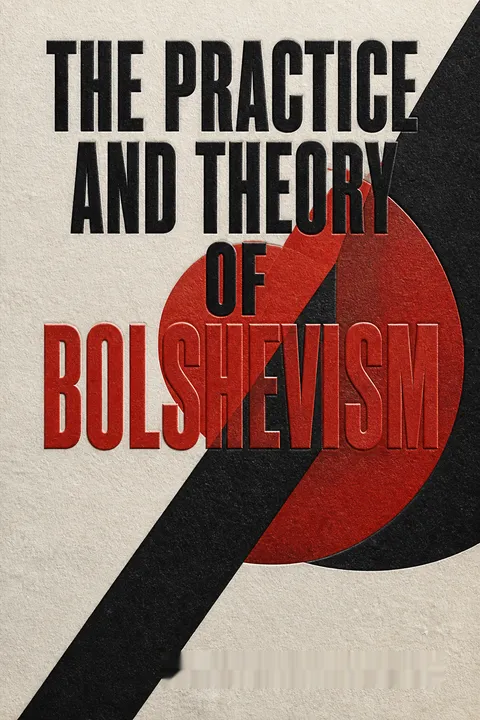
Key Takeaways
1. Bolshevism: A Hopeful but Dangerous Religion
The chief thing that the Bolsheviks have done is to create a hope, or at any rate to make strong and widespread a hope which was formerly confined to a few.
New religion. Bolshevism, like a new religion, emerged from the disillusionment following the war, offering hope for a world free of injustice, economic slavery, and war. It promised unity, purpose, and an end to the perceived falsehoods of commercialism. This vision attracted many who yearned for a society where work was wholesome and despair was banished.
Fanaticism's peril. However, Russell cautions that such fervent belief can be dangerous, as it often masks cruelty. He draws a parallel to the early Christians, whose admirable teachings led to the horrors of the Inquisition. The principles of the Sermon on the Mount are admirable, but their effect upon average human nature was very different from what was intended.
Seeds of progress. Despite his reservations, Russell acknowledges that Bolshevism, even if it fails, will leave behind a heroic legend that inspires future progress. He believes that a fundamental economic reconstruction is necessary to make industrialism serve humanity, but warns against sacrificing intellectual freedom for a more just economic system.
2. The Bolsheviks' Literal Dictatorship
When a Russian Communist speaks of dictatorship, he means the word literally, but when he speaks of the proletariat, he means the word in a Pickwickian sense.
Not representative government. The "dictatorship of the proletariat" is not a new form of representative government, but a literal dictatorship by the Communist Party. The term "proletariat" is used selectively to include those with the "right opinions," regardless of their actual class, and exclude wage-earners who disagree.
Ruthless measures. This belief in the necessity of Communism leads to ruthless measures to construct and preserve the Communist State. Opposition is crushed without mercy, often employing the same methods as the Tsarist police. The ends justify the means, as all evils are attributed to private property, which will vanish once Communism succeeds.
Historical parallels. Russell draws parallels between the Bolsheviks and Cromwell's rule, as well as Plato's Republic. Like the Puritan soldiers, the Bolsheviks are driven by a stern politico-moral purpose, sacrificing democracy for their enforced ideology. The Communist Party functions as the guardians, with a similar approach to family life as suggested by Plato.
3. Lenin's Grim Intellectual Aristocracy
He is dictatorial, calm, incapable of fear, extraordinarily devoid of self-seeking, an embodied theory.
Lenin's character. Russell describes Lenin as friendly, simple, and devoid of self-importance, yet also dictatorial, calm, and fearless. He embodies the materialist conception of history and possesses an intellectual aristocracy, despising those who misunderstand or disagree with his theories.
Revolutionary tactics. Lenin believes that violent revolution is inevitable, even in England, and hopes that a Labour Ministry will demonstrate the futility of Parliamentarism. He dismisses the possibility of achieving change without bloodshed as a bourgeois prejudice.
Peasant problem. Lenin acknowledges the difficulty of establishing Communism in a country with a large peasant majority, but believes that things will improve when there are goods to offer in exchange for food. He sees the dictatorship over the peasant as a long-term necessity due to their desire for free trade.
4. Art and Education Under Communism
Communist artists of the future may erect public buildings surpassing in beauty the mediaeval churches, they may paint frescoes, organize pageants, make Homeric songs about their heroes.
Artistic freedom. Initially, the Bolsheviks allowed artists complete freedom, regardless of their political beliefs, and provided them with special treatment. However, this approach led to a disconnect between art and popular feeling, with artists continuing to perform old classics that seemed meaningless to the audience.
Propaganda art. As a result, there's a growing push for art to embody the revolutionary mood, leading to propaganda art that serves Communist doctrine. This includes revolutionary plays, cartoons of Bolshevik leaders, and woodcuts depicting Lenin and Trotsky as Moses and Aaron.
Education and industry. In education, the focus is shifting towards industrial development, potentially sacrificing the full and humane development of the child. There's a risk that schools will become exclusive to Communists, preparing leaders while the proletariat receives only basic technical training and Communist doctrine.
5. The Soviet System: Power Concentrated
I did see an interesting experiment, but not in representative government.
Moribund Soviets. The Soviet system, initially envisioned as a new form of representative government, is now moribund. Free elections would not give majorities to the Communists, so various methods are used to ensure government candidates win.
Suppression of dissent. Voting is by show of hands, marking those who oppose the government. Non-Communist candidates are denied access to printing and meeting halls, and the press is entirely official. Despite these obstacles, Mensheviks have won some seats by campaigning through word of mouth.
Power structure. Real power is concentrated in the hands of the Communist Party, with the All-Russian Soviet serving only to ratify decisions made by the party. The bureaucracy is divided into old revolutionists, arrivistes, and those who work for the government out of patriotism or opportunity.
6. Industry's Failure: A Vicious Cycle
The ninth Congress approves of the decision of the Central Committee of the Russian Communist Party on the mobilization of the industrial proletariat, compulsory labour service, militarization of production and the application of military detachments to economic needs.
Collapse of industry. Russian industry has collapsed, with factories idle and machinery unusable. This is due to dependence on foreign assistance, sabotage by skilled workers, and the blockade. The food shortage exacerbates the problem, weakening workers and hindering production.
Industrial conscription. To address the crisis, the Bolsheviks have implemented industrial conscription, forcing workers to remain in their jobs and punishing desertion. They have also militarized production and applied military detachments to economic needs.
Need for assistance. Despite these measures, the situation remains dire, and the Bolsheviks recognize the need for outside economic assistance. However, this assistance from capitalist countries poses a threat to Communist principles.
7. Daily Life: Austerity and Control
The whole impression is one of virtuous, well-ordered activity.
Hardship and order. Daily life in Moscow is characterized by hard work, order, and a lack of crime. Theatres and ballets continue, and there is little drunkenness or prostitution. Women are safer from molestation than anywhere else in the world.
Food shortage and long hours. However, life is very hard for most people due to the food shortage and long working hours. The eight-hour day has been extended, and many people do extra work to earn a living wage.
Police interference. The police play a significant role in daily life, and everyone breaks the law almost daily. There is little social life due to the fear of arrest, and newspapers are scarce. Religion remains strong, with devout congregations in churches.
8. Town vs. Country: A Divided Nation
The typical Russian peasant has never heard of the Allies or of this country ; he does not know that there is a blockade ; all he knows is that he used to have six cows but the Government reduced him to one for the sake of poorer peasants, and that it takes his corn (except what is needed for his own family) at a very low price.
Food problem. The problem of feeding the towns is a major challenge, with the government struggling to obtain food from the peasants. The peasants are unwilling to part with their produce for paper money, and the government's forced requisitions have antagonized them.
Peasant perspective. The peasants are largely ignorant of affairs outside their own villages and resent the government's demands. They desire free trade and independence for their villages, regardless of the government in power.
Urban dominance. The government represents the interests of the urban and industrial population and is essentially encamped amid a peasant nation. The economic situation favors the country, but the towns maintain power through force.
9. International Policy: Revolution or Empire
The present world-situation in politics places on the order of the day the dictatorship of the proletariat; and all the events of world politics are inevitably concentrated round one centre of gravity: the struggle of the international bourgeoisie against the Soviet Republic, which inevitably groups round it, on the one hand the Sovietist movements of the advanced working men of all countries, on the other hand all the national movements of emancipation of colonies and oppressed nations which have been convinced by a bitter experience that there is no salvation for them except in the victory of the Soviet Government over world-imperialism.
Peace vs. conquest. The Bolsheviks face a choice between pursuing peace and developing Russia industrially or embarking on a policy of conquest in Asia. The latter is driven by a desire for Asiatic dominion and the belief that it can lead to revolution in the West.
Asiatic policy. The Russian government's Asiatic policy is a move against the British Empire, supporting nationalist movements with money and agitators. This policy affords opportunities for imperialism under the cover of propaganda.
Bolshevism as religion. Bolshevism is a religion, not an ordinary political movement, with dogmas that go beyond or contrary to evidence. It is to be reckoned with Mohammedanism rather than with Christianity, focused on winning the empire of this world.
10. Materialism vs. Human Passions
All politics are governed by human desires.
Economic motives. The materialist theory of history assumes that all political phenomena are determined by economic motives, with individuals primarily driven by the desire to increase their share of commodities.
Non-economic factors. However, non-economic factors such as nationalism, religion, and the desire for power also play a significant role in politics. Men desire power, they desire satisfactions for their pride and their self-respect.
Political psychology. There is a need for a treatment of political motives by the methods of psycho-analysis, recognizing that men invent myths to rationalize their conduct. Modern psychology reveals the ocean of insanity upon which human reason floats.
11. Democracy's Downfall: A Minority's Coup
It is therefore, in their view, the duty of the Communist party in a capitalist country to prepare for armed conflict, and to take all possible measure for disarming the bourgeoisie and arming that part of the proletariat which is willing to support the Communists.
Bolshevik argument. The Bolsheviks argue that Parliamentary democracy is unlikely to achieve Socialism due to capitalist propaganda and corruption. They advocate for a sudden, catastrophic destruction of capitalism through armed conflict led by a minority.
Treachery of leaders. However, this theory fails to consider the possibility of treachery among Communist leaders and the potential for a bureaucratic aristocracy to emerge. Love of power can be as strong a motive as love of money.
Minority violence. In a democratic country, it is more difficult for the proletariat to destroy the government by arms than to defeat it in a general election. The Bolshevik theory of revolution by a minority is only possible if the majority can be induced to acquiesce.
12. Revolution's Price: Despotism and Cruelty
The system created by violence and the forcible rule of a minority must necessarily allow of tyranny and exploitation; and if human nature is what Marxians assert it to be, why should the rulers neglect such opportunities of selfish advantage?
Bolshevik program. The Bolsheviks have a definite program for achieving Communism, involving armed conflict, seizure of power by a minority, and the introduction of Communism into every department of economic life.
Cost of conflict. However, the conflict involved in achieving Communism by Bolshevik methods is so bitter and prolonged that its evils outweigh the ultimate good. The world-war prophesied by the Third International would be one compared to which the late war will come to seem a mere affair of outposts.
Tyranny and exploitation. The system created by violence and the forcible rule of a minority must necessarily allow of tyranny and exploitation. It is sheer nonsense to pretend that the rulers of a great empire such as Soviet Russia, when they have become accustomed to power, retain the proletarian psychology.
Review Summary
The Practice and Theory of Bolshevism is praised for its insightful analysis of early Soviet Russia and Bolshevism. Readers appreciate Russell's first-hand observations, critical perspective, and prescient predictions. Many found his arguments against Bolshevism compelling, particularly his critique of centralized power and dogmatic adherence to Marxism. Some reviewers noted Russell's sympathetic yet ultimately rejecting stance towards communism. The book is considered valuable for understanding early communist theory and practice, though a few critics found it biased or lacking in certain areas.
FAQ
What is "The Practice and Theory of Bolshevism" by Bertrand Russell about?
- Examination of Bolshevism: The book is a critical analysis of the Russian Revolution and the Bolshevik regime, focusing on both its practical implementation and underlying theory.
- Firsthand Observations: Russell draws on his visit to Soviet Russia in 1920, offering personal impressions and detailed accounts of daily life, politics, and society.
- Theoretical Critique: The work explores Marxist philosophy, the materialistic conception of history, and the nature of revolutionary change.
- Comparative Perspective: Russell compares Bolshevism to other historical movements, such as the French Revolution and the rise of Islam, and discusses its global implications.
Why should I read "The Practice and Theory of Bolshevism" by Bertrand Russell?
- Insightful Historical Context: The book provides a unique, contemporaneous perspective on the early years of Soviet Russia from a renowned philosopher.
- Balanced Critique: Russell offers both admiration for the Bolsheviks' aims and a critical assessment of their methods and outcomes.
- Philosophical Depth: The analysis goes beyond politics, delving into the philosophical and psychological roots of revolutionary movements.
- Relevance to Modern Debates: The book’s exploration of ideology, fanaticism, and the dangers of dogmatism remains pertinent to current political discussions.
What are the key takeaways from "The Practice and Theory of Bolshevism"?
- Bolshevism as Religion: Russell argues that Bolshevism functions as a secular religion, with dogmas and intolerance of dissent.
- Dangers of Fanaticism: He warns that revolutionary zeal can lead to cruelty, suppression of liberty, and the rise of new forms of oppression.
- Economic and Social Realities: The collapse of Russian industry and the hardships of daily life under Bolshevism are highlighted as central failures.
- Gradual Reform vs. Revolution: Russell advocates for gradual, democratic reforms over violent revolution, emphasizing the importance of individual liberty and skepticism.
How does Bertrand Russell describe the main goals and hopes of Bolshevism?
- End of Injustice: Bolshevism aspires to abolish class divisions, economic slavery, and war, promising equality and meaningful work for all.
- Creation of a New Order: The movement seeks to replace capitalism with a radically new social and economic system based on communal ownership.
- Transformation of Human Nature: Bolsheviks hope to mold future generations through education and propaganda, aiming for a society of collective mentality.
- Global Revolution: The ultimate goal is worldwide socialism, with Russia serving as the vanguard for international change.
What are the main criticisms Bertrand Russell raises about Bolshevik methods?
- Use of Dictatorship: Russell criticizes the Bolsheviks for establishing a minority dictatorship, suppressing democracy and free speech.
- Reliance on Violence: He argues that the Bolshevik approach depends on violence and coercion, which breeds further oppression and instability.
- Suppression of Liberty: The regime’s intolerance of dissent and dogmatic enforcement of ideology are seen as antithetical to scientific inquiry and individual freedom.
- Economic Mismanagement: Russell points to the collapse of industry and the failure to provide basic necessities as evidence of flawed methods.
How does "The Practice and Theory of Bolshevism" analyze the materialistic theory of history?
- Economic Determinism: Russell explains that Marx’s materialistic conception of history attributes all major historical events to economic motives.
- Critique of Reductionism: He challenges the idea that economic factors alone drive history, emphasizing the roles of nationalism, religion, and psychological motives.
- Importance of Non-Economic Factors: Russell argues that desires for power, rivalry, and social status are equally significant in shaping political events.
- Need for Nuanced Analysis: He advocates for a more complex understanding of history that incorporates both material and psychological elements.
What does Bertrand Russell observe about daily life and social conditions in Soviet Russia?
- Hardships and Scarcity: Most people face severe food shortages, long working hours, and a lack of basic comforts.
- Social Control: The state exerts tight control over daily life, with pervasive police presence and restrictions on movement and expression.
- Limited Social Life: Cultural and social activities are constrained, and fear of arrest or denunciation is widespread.
- Persistence of Religion: Despite official atheism, religious practices and devotion remain strong among the population.
How does Russell compare Bolshevism to other historical movements and philosophies?
- French Revolution and Islam: He sees Bolshevism as combining the revolutionary zeal of the French Revolution with the missionary fervor of early Islam.
- Plato’s Republic: Russell draws parallels between the Communist Party and Plato’s guardians, noting the aristocratic and authoritarian tendencies.
- Puritan England: The moral rigor and suppression of individual pleasure under Bolshevism remind him of Cromwell’s Puritans.
- Distinction from Western Socialism: He argues that Western countries could achieve socialism through less violent, more democratic means.
What does "The Practice and Theory of Bolshevism" say about art and education under the Soviet regime?
- Art as Propaganda: While initially tolerant, the regime increasingly channels artistic expression into propaganda, stifling individual creativity.
- Education for Indoctrination: Schools focus on instilling Communist doctrine, often at the expense of free inquiry and scientific skepticism.
- Impact of Industrialization: Russell and his secretary note that rapid industrialization threatens traditional crafts and artistic impulses.
- Long-Term Concerns: The book warns that fanaticism and utilitarianism may undermine both artistic and intellectual development.
What are Russell’s views on the prospects for Communism’s success, according to "The Practice and Theory of Bolshevism"?
- Need for Gradual Change: He believes successful Communism requires gradual reform, widespread education, and the diffusion of power.
- Dangers of Centralization: Excessive centralization and dictatorship are likely to produce new forms of inequality and oppression.
- Importance of Industrial Stability: A Communist revolution must avoid paralyzing industry, or it will lead to chaos and suffering.
- Role of International Context: Russell argues that Communism cannot succeed in isolation, especially if opposed by powerful capitalist nations like America.
What are the best quotes from "The Practice and Theory of Bolshevism" and what do they mean?
- “Bolshevism is not merely a political doctrine; it is also a religion, with elaborate dogmas and inspired scriptures.”
- Russell highlights the dogmatic and quasi-religious nature of Bolshevik ideology, warning of its intolerance.
- “Fanatics are seldom genuinely humane, and those who sincerely dread cruelty will be slow to adopt a fanatical creed.”
- He cautions against the dangers of fanaticism, which often leads to cruelty rather than compassion.
- “The damage to civilization done by revolution in one country may be repaired by the influence of another in which there has been no revolution; but in a universal cataclysm civilization might go under for a thousand years.”
- Russell warns that global revolutionary upheaval could destroy civilization itself.
- “The present holders of power are evil men, and the present manner of life is doomed.”
- He expresses both condemnation of the existing capitalist order and a sense of historical inevitability about its end.
What is Bertrand Russell’s final assessment of Bolshevism in "The Practice and Theory of Bolshevism"?
- Mixed Admiration and Critique: Russell admires the Bolsheviks’ courage and the necessity of their attempt but is deeply critical of their methods and outcomes.
- Warning Against Dogmatism: He stresses the importance of skepticism, liberty, and gradual reform over revolutionary fanaticism.
- Lessons for the West: Russell urges Western socialists to learn from Russia’s failures and to pursue socialism through democratic, humane means.
- Enduring Relevance: The book concludes that while Bolshevism may fail, the hope for a more just and cooperative society should not die.
Download PDF
Download EPUB
.epub digital book format is ideal for reading ebooks on phones, tablets, and e-readers.








































