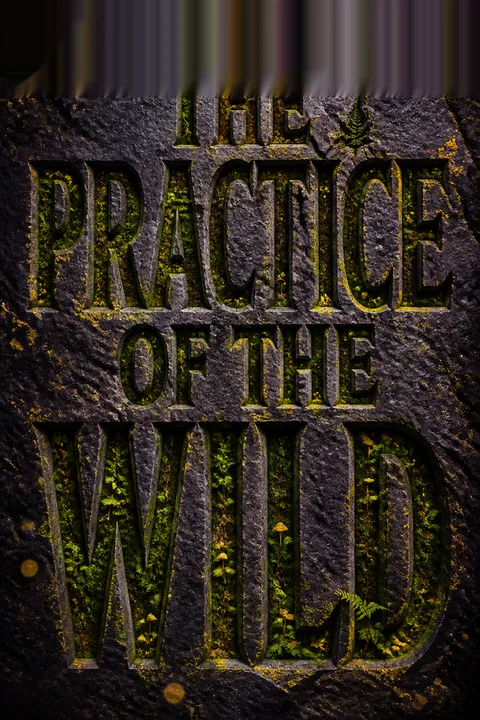
Key Takeaways
1. Wildness is an active, self-organizing force, not a state of chaos
The world is nature, and in the long run inevitably wild, because the wild, as the process and essence of nature, is also an ordering of impermanence.
Redefining the wild. Society often equates the wild with disorder, violence, or lawlessness, but it is actually a highly sophisticated, self-regulating system. True wildness is self-organizing, independent, and complete, operating under its own intricate laws rather than human design.
Our wild bodies. We must realize that our own physical existence is fundamentally wild. The involuntary beating of our hearts, the sudden turn of a head at a sound, and the deep, unbidden flow of our thoughts all occur without conscious ego control.
Key distinctions:
- Nature: The physical universe and all its properties, including human creations.
- Wild: Self-propagating, independent, and self-maintaining systems.
- Wilderness: A place where wild potential is fully expressed in its complete wholeness.
2. To be truly free, we must practice the etiquette of the wild
To be truly free one must take on the basic conditions as they are—painful, impermanent, open, imperfect—and then be grateful for impermanence and the freedom it grants us.
The etiquette of freedom. Living in harmony with the wild requires a shift from exploitation to mindful manners and style. This etiquette is built on a foundation of generosity, good-humored toughness, and a deep respect for the boundaries of other species.
The gift-exchange. Indigenous cultures teach us that the natural world is a grand potlatch where we are all members. To live ethically, we must acknowledge that we will eventually become part of the meal ourselves, accepting the sacramental nature of our temporary existence.
Core practices of wild etiquette:
- Mindfulness: Being constantly aware of how our presence ripples through the ecosystem.
- Gratitude: Saying "please" and "thank you" to the beings that sustain us.
- Restraint: Avoiding wastefulness, stinginess of spirit, and unnecessary harm.
3. True belonging requires becoming deeply placed within a bioregion
There are tens of millions of people in North America who were physically born here but who are not actually living here intellectually, imaginatively, or morally.
Becoming placed. Modern life has made us rootless, but human beings are shaped by the specific gravity, temperature, and terrain of the places they inhabit. To truly live, we must undergo the process of becoming "placed"—learning the local watersheds, plants, and landforms as our primary home.
Bioregional awareness. A bioregion is defined by natural criteria like biota, watersheds, and landforms rather than arbitrary political borders. By aligning our minds with these natural boundaries, we begin to understand the "spirit of the place" and our role within it.
Steps to reinhabitation:
- Explore on foot: Walk the land to map its contours, smells, and textures in your mind.
- Learn the locals: Develop an intimate familiarity with native plants, animals, and weather patterns.
- Honor the history: Recognize the deep history of the land, calling it "Turtle Island" to honor its ancient roots.
4. The recovery of the commons is essential for ecological and social survival
The commons is the contract a people make with their local natural system.
Understanding the commons. Historically, the commons was not a lawless free-for-all, but a highly regulated local institution that managed shared resources sustainably. It occupied the space between private plots and deep wilderness, providing communities with firewood, pasture, and wild game through strict customary rules.
The tragedy of enclosure. The destruction of the commons began when central governments and private corporations fenced off shared lands, turning self-sufficient peasants into a dependent working class. This enclosure of the wild has led to severe ecological degradation and the loss of vernacular cultures worldwide.
Paths to recovery:
- Local control: Returning public lands to regional, community-based management.
- Sustainable contracts: Establishing clear limits on resource extraction based on local carrying capacity.
- Shared responsibility: Actively participating in the defense and sharing of our local ecosystems.
5. Language and culture are wild, biological systems of the mind
Without having ever been taught formal grammar we utter syntactically correct sentences, one after another, for all the waking hours of the years of our life.
Wild language. Language is not a human invention or a domesticated tool; it is a wild mind-body system that co-evolved with our biological needs. It rises unbidden from the depths of the unconscious, mirroring the complex, branching patterns of the natural world.
Tawny grammar. True wisdom comes from what Thoreau called gramatica parda—a wild, dusky knowledge or mother-wit derived from nature. This wild grammar of culture and language is learned in the fields and forests, not in the sterile classrooms of the state.
The role of oral tradition:
- Preserving values: Passing down "grandmother wisdom" through stories and songs.
- Connecting with the non-human: Using language to speak directly to animals, plants, and mountains.
- Resisting obsolescence: Keeping ancient myths alive as tools for critical, place-based thinking.
6. Sacred land is not a human invention but optimal wild habitat
If even some small bits of land are considered sacred, then they are forever not for sale and not for taxing.
The sacred and the wild. For indigenous peoples, sacred sites are not abstract religious symbols, but physical places of high spiritual and ecological density. These locations—like waterholes, ancient groves, or mountain peaks—represent optimal habitats where the boundaries between species become fluid.
The dreaming places. In the Australian Aboriginal tradition, "dreaming" places connect the essence of a species with the human psyche and the landscape. These sacred shrines are both practical ecological refuges and portals to the eternal, creative moment of being.
Contrasting land ethics:
- Good land: Agrarian monoculture that weeds out the wild for economic yield.
- Wild land: Self-sustaining ecosystems left to follow their own natural succession.
- Sacred land: Shared, untouchable spaces that connect us to the larger-than-human universe.
7. Nature is a non-dualistic, constantly moving mandala
The blue mountains are constantly walking.
Non-dualistic nature. Drawing on Zen Master Dogen's Mountains and Waters Sutra, we must see that nature is not a static backdrop for human drama. Mountains and waters are active, living processes that form each other and represent the ultimate union of wisdom and compassion.
Seeing through other eyes. Different beings experience the world in radically different ways; what humans see as flowing water, dragons see as a palace, and hungry ghosts see as fire. To understand the wild, we must move beyond our narrow human-centered perspective and appreciate these nested realities.
The lessons of the mandala:
- Impermanence: Accepting that all forms are constantly shifting, flowing, and walking.
- Interdependence: Recognizing that a food source sucks a species into existence.
- Thusness: Seeing each thing as totally its own unique, unmediated self.
8. Ancient forests are irreplaceable webs of life, not mere timber crops
We need ancient forests for the survival of ancient forests.
The forest ecosystem. An ancient forest is not just a collection of standing trees, but a complex, multi-layered palace of organisms. It relies on a delicate balance of living giants, standing snags, decaying logs, and a vast underground network of fungal mycelia that nourishes the soil.
The tragedy of clearcutting. Modern industrial forestry treats wild forests as mere "fiber-growing" crops, replacing diverse ecosystems with sterile, even-aged plantations. This short-sighted approach destroys critical habitats, erodes soils, and wipes out the evolutionary wisdom of millennia.
Principles of sustainable forestry:
- Slower rotations: Managing forests on a time scale of centuries, not decades.
- Selective logging: Harvesting only what the system can spare while leaving the canopy intact.
- Protecting elders: Preserving old-growth stands as vital seed reservoirs and habitat corridors.
9. Going off the trail is where we find our true practice
Off the trail is another name for the Way, and sauntering off the trail is the practice of the wild.
The path and the wild. While paths and trails are necessary for navigation and order, they can also limit our vision to a linear, predictable reality. True practice requires us to occasionally step off the beaten path and plunge into the unstructured complexity of the watershed.
The art of work. Apprenticeship in a traditional craft or a spiritual discipline is a way of training the self to become one with the work. However, we must eventually go beyond formal training to experience the "surprise" of effortless, unconditioned action.
Practicing the ordinary:
- Lay practice: Finding spiritual depth in daily chores, family life, and local politics.
- Embracing chores: Seeing dishwashing, carpooling, and maintenance as the path itself.
- Sauntering: Wandering without a destination to open ourselves to the unexpected.
10. Eating is a sacramental act of gift-exchange within the food-web
There is no death that is not somebody's food, no life that is not somebody's death.
The sacramental economy. A subsistence lifestyle is inherently sacramental because it directly confronts the reality of taking life for food. Modern industrial food production distances us from this truth, allowing us to remain ignorant of the blood on our hands and the sacrifices made for our survival.
The practice of grace. Saying grace before a meal is a simple but profound way to acknowledge our place within the food-web. It is an act of gratitude that connects us to our ancestors, honors the lives of the plants and animals we consume, and prepares us for our own eventual return to the soil.
The ethics of consumption:
- Acknowledge the sacrifice: Face the reality of the lives taken to sustain your own.
- Avoid waste: Treat every meal as a sacred gift-exchange that must not be squandered.
- Accept edibility: Recognize that we, too, are ultimately food for other organisms.
Review Summary
Readers largely admire The Practice of the Wild as a profound, essential collection of essays exploring humanity's relationship with nature, wilderness, and wildness. Many consider it transformative and among the most important books of the 20th century. Snyder's blend of Zen Buddhism, Daoist philosophy, Native American mythology, and personal experience resonates deeply, though some find the Buddhist elements less compelling. His lyrical prose, rooted in lived experience including logging and wilderness immersion, is widely praised, with occasional criticism that his ideas feel more impactful in poetry than expository writing.








































