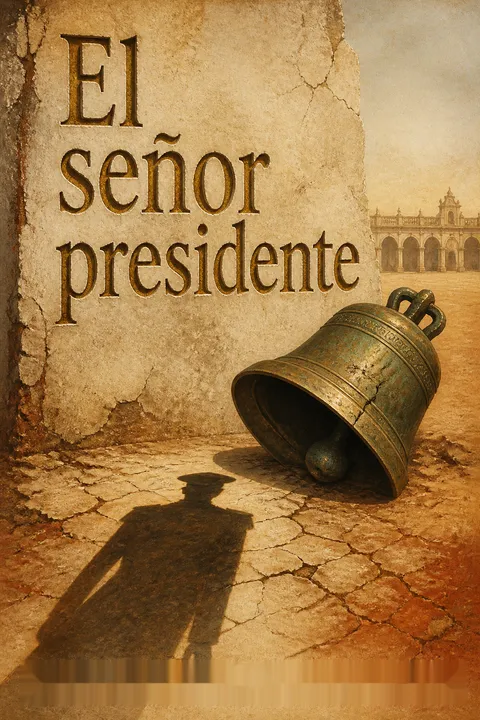
Plot Summary
Night of the Beggars
In the shadowy cathedral porch, a ragged fraternity of beggars huddle together, their lives marked by hunger, suspicion, and violence. Their nightly rituals—mockery, laughter, and cruelty—reveal a society fractured by poverty and fear. The city's darkness is punctuated by the cries of the "Zany," an idiot tormented by the word "mother," and the ever-present threat of the police. This opening scene immerses us in a world where the marginalized are both victims and perpetrators, their suffering a microcosm of the nation's decay. The beggars' uneasy camaraderie is shattered when a drunken taunt leads to a brutal murder, setting in motion a chain of events that will entangle the powerful and powerless alike.
Murder in the Cathedral Porch
The murder of Colonel Parrales Sonriente, "the man with the little mule," shocks the city. The authorities, desperate for culprits, round up the beggars and subject them to brutal interrogations. Under torture, the beggars are coerced into naming General Canales and the lawyer Abel Carvajal as the assassins, despite knowing the real killer was the idiot Zany. The Mosquito, a blind beggar, resists the false confession and is killed for his honesty. The machinery of state violence grinds on, indifferent to truth or justice, as the President's regime seeks to maintain its grip through fear and scapegoating. The city awakens to a new day, but the seeds of terror have been sown.
Torture and False Confessions
The beggars' confessions, extracted through torture, become the foundation for a political purge. The Judge Advocate General, a figure of bureaucratic cruelty, orchestrates the fabrication of evidence against Canales and Carvajal. The regime's logic is circular: innocence is guilt if the President wills it. The Mosquito's death is dismissed as irrelevant, his blindness rendering his testimony useless. The machinery of repression is relentless, consuming the innocent and guilty alike. The city's underclass returns to the streets, haunted by the knowledge that survival depends on silence and complicity.
The Idiot's Flight
The Zany, traumatized by his role in the murder and the relentless cruelty of the townspeople, flees into the city's outskirts. His journey is a fevered hallucination, pursued by mocking voices, stones, and even birds of prey. His broken leg and delirium mirror the nation's fractured psyche. The Zany's suffering is both physical and existential—a symbol of innocence destroyed by a society that delights in tormenting the weak. His flight is a desperate search for refuge in a world where none exists, his cries echoing the collective agony of the oppressed.
Angel Face's Intervention
Miguel Angel Face, the President's enigmatic favorite, intervenes at key moments, both helping and exploiting the vulnerable. He assists the wounded Zany, orchestrates the escape of General Canales, and becomes entangled with Camila, Canales' daughter. Angel Face's motives are ambiguous—part compassion, part self-interest, always under the shadow of the President's will. His beauty and charm mask a capacity for ruthlessness, and his actions set the stage for further tragedy. The lines between savior and betrayer blur, as personal desires become inseparable from political machinations.
The President's Fury
The President, a figure of omnipresent menace, responds to the murder with a campaign of terror. His paranoia and caprice are manifest in the arbitrary punishment of subordinates, the public humiliation and death of "that swine," and the orchestration of Canales' downfall. The President's court is a theater of sycophancy and fear, where loyalty is rewarded with violence and dissent is crushed without mercy. The regime's spectacle of power is both grotesque and banal, its rituals designed to instill obedience and erase individuality.
General Canales Framed
General Canales, once a respected military leader, is framed for the murder and forced into hiding. Angel Face, acting on the President's orders, manipulates Canales into fleeing, knowing that escape is both a necessity and a trap. Canales' honor and loyalty are weaponized against him, his fate sealed by the regime's need for scapegoats. The city's surveillance apparatus—dogs, informants, invisible threads—ensures that no act goes unnoticed. Canales' flight is a journey through a landscape of betrayal, where even family ties are poisoned by suspicion.
Camila's Ordeal
Camila, Canales' daughter, becomes a pawn in the political game. Her abduction, orchestrated by Angel Face and a band of criminals, is both a means of facilitating her father's escape and a pretext for further violence. The ransacking of her home, the brutalization of her nurse, and the betrayal by her uncles underscore the collapse of familial and social bonds. Camila's suffering is emblematic of the regime's assault on innocence, her fate determined by forces beyond her understanding or control.
The Abduction and Escape
The plan to abduct Camila and facilitate Canales' escape descends into chaos. The house is looted, the nurse is blinded and killed, and Camila is hidden in a squalid tavern. Angel Face's ambiguous protection offers little comfort, as the city's police and informants close in. The regime's apparatus of surveillance and repression is omnipresent, and the possibility of safety is always illusory. The episode is a microcosm of the nation's descent into lawlessness, where violence begets violence and trust is impossible.
The Collapse of Family
Camila's attempts to seek refuge with her uncles are met with rejection and indifference. The family, once a source of security, is revealed as complicit in the regime's logic of self-preservation. The doors remain closed, and Camila is left to wander the streets, her suffering ignored by those who should protect her. The collapse of family mirrors the collapse of society, as fear and opportunism replace solidarity and compassion. The personal becomes political, and the cost is measured in broken lives.
The Living Tomb
Nina Fedina, a humble woman caught in the regime's web, is imprisoned and tortured for her supposed role in Canales' escape. Her child dies in captivity, and she is sold into prostitution by corrupt officials. Her suffering is both physical and spiritual—a living tomb from which there is no escape. The regime's cruelty is total, extending even to the most vulnerable. Nina's story is a testament to the dehumanizing effects of absolute power, and her grief echoes through the city's prisons and brothels.
The President's Spectacle
The President orchestrates a series of public spectacles—parades, speeches, and celebrations—to reinforce his image as the nation's savior. The city is transformed into a stage, its inhabitants actors in a drama of loyalty and submission. The regime's propaganda is relentless, its rituals designed to erase memory and enforce conformity. Yet beneath the surface, fear and resentment simmer, and the machinery of repression grinds on. The spectacle is both dazzling and hollow, a mask for the regime's violence.
Love Amidst Terror
Amidst the chaos, Angel Face and Camila find a brief respite in love. Their marriage, performed in extremis, is both a defiance of the regime and a fragile sanctuary. Yet their union is haunted by trauma, betrayal, and the ever-present threat of violence. Love offers no escape from the realities of power, and their happiness is always provisional. The personal and political are inseparable, and the cost of intimacy is measured in fear and loss.
The Council of War
Abel Carvajal, the lawyer, is subjected to a show trial and condemned to death. The proceedings are a farce, the outcome predetermined by the regime's need for scapegoats. The beggars, now witnesses, are paraded as instruments of state violence. Carvajal's execution is both a spectacle and a warning, his death a testament to the regime's capacity for cruelty. The machinery of repression is self-perpetuating, its victims interchangeable.
Marriage in Extremis
As Camila hovers near death, Angel Face marries her in a desperate act of love and defiance. The ceremony, witnessed by neighbors and spinsters, is both a sacrament and a protest against the regime's dehumanization. The power of love is set against the power of the state, and for a moment, hope flickers in the darkness. Yet the forces arrayed against them are relentless, and the cost of resistance is high.
The Road to Exile
General Canales' journey into exile is marked by hardship, betrayal, and the ever-present threat of capture. His encounters with peasants and smugglers reveal the depth of the nation's suffering, and his death—possibly by poison—underscores the futility of resistance. The regime's reach is long, and the possibility of safety is always illusory. Exile is both a physical and spiritual condition, a state of perpetual displacement.
The Trap at the Port
Angel Face, sent abroad on a diplomatic mission, is betrayed at the port. His identity is stolen, his possessions confiscated, and he is imprisoned in a living tomb. The regime's logic is circular: loyalty is rewarded with destruction, and individuality is erased. Angel Face's suffering is both physical and existential—a descent into oblivion from which there is no return. The machinery of repression consumes even its most faithful servants.
Blindness and Oblivion
In the novel's final movement, the survivors are left to grapple with loss, trauma, and the erasure of memory. Camila, abandoned and bereft, clings to the hope of reunion, but the machinery of the state ensures that hope is always deferred. The city's landmarks are destroyed, its history rewritten, and its people reduced to silence. The regime's victory is total, its legacy measured in blindness and oblivion.
Analysis
Miguel Ángel Asturias's The President is a searing indictment of authoritarianism, a nightmarish vision of a society consumed by fear, violence, and betrayal. Written in the shadow of Latin American dictatorships, the novel explores the psychological and social costs of absolute power. Asturias exposes how tyranny corrupts not only the rulers but also the ruled, eroding trust, compassion, and even the possibility of truth. The regime's violence is both spectacular and banal, its rituals designed to erase memory and enforce obedience. Yet amidst the terror, moments of love, solidarity, and resistance flicker—brief sanctuaries in a world bent on their destruction. The novel's fragmented narrative, surreal imagery, and shifting perspectives mirror the disintegration of self and society under repression. Ultimately, The President is a warning and a lament: a testament to the resilience of the human spirit, and a reminder that the struggle for justice and dignity is both necessary and perilous. Its lessons remain urgent in any age where power seeks to silence, erase, and control.
Review Summary
El Señor Presidente is a powerful critique of dictatorship in Latin America, praised for its poetic language and vivid portrayal of oppression. Readers appreciate Asturias's use of magical realism and surrealism to create a nightmarish atmosphere. The novel's depiction of fear, corruption, and human suffering under tyranny resonates deeply. While some find the narrative challenging, many consider it a masterpiece of Latin American literature. The book's relevance endures, offering insight into the effects of authoritarianism on society and individuals.
People Also Read
Characters
The President
The President is the unseen, omnipresent force that shapes every life in the novel. His rule is marked by arbitrary cruelty, paranoia, and a relentless need for control. He manipulates, punishes, and destroys with impunity, his whims becoming law. Psychologically, he is a study in megalomania—isolated, suspicious, and incapable of genuine connection. His relationships are transactional, his affections fleeting, and his violence both public and private. The President's development is circular: his power breeds fear, which in turn breeds more violence, until all that remains is a hollow spectacle of authority.
Miguel Angel Face ("Angel Face")
Angel Face is the President's confidant and enforcer, a man whose beauty and charm mask a deep ambivalence. He is both savior and betrayer, capable of compassion yet complicit in the regime's crimes. His relationship with Camila offers a glimpse of redemption, but he is ultimately trapped by the logic of power. Psychologically, Angel Face is marked by self-doubt, longing, and a capacity for self-delusion. His development is tragic: the more he seeks to do good, the more he is ensnared by the machinery of repression, until his identity is erased and he becomes a victim of the very system he served.
General Eusebio Canales
Canales is a figure of integrity and loyalty, undone by the regime's need for enemies. His flight and eventual death symbolize the destruction of the old order and the futility of resistance. Psychologically, Canales is torn between duty and survival, his sense of honor weaponized against him. His relationship with his daughter Camila is tender but ultimately powerless in the face of state violence. Canales' development is a descent from respectability to exile and oblivion, his fate a warning to all who would challenge the President's authority.
Camila Canales
Camila is the daughter of General Canales, whose beauty and vulnerability make her a target for the regime's violence. Her abduction, illness, and abandonment are emblematic of the destruction of innocence under tyranny. Psychologically, Camila is marked by trauma, longing, and a desperate search for safety. Her relationship with Angel Face offers a brief respite, but she is ultimately left alone, her hope sustained only by memory and imagination. Camila's development is a journey from naivety to tragic wisdom, her suffering a testament to the costs of power.
Abel Carvajal
Carvajal is a figure of principle and intellect, targeted by the regime for his supposed involvement in the murder. His trial and execution are a farce, his fate sealed by the machinery of repression. Psychologically, Carvajal is marked by courage, despair, and a refusal to submit to falsehood. His development is a descent into martyrdom, his death a warning to all who would speak truth to power.
Nina Fedina
Nina is a humble woman caught in the regime's web, imprisoned and tortured for her supposed role in Canales' escape. Her child's death and her own descent into prostitution are emblematic of the regime's capacity for dehumanization. Psychologically, Nina is marked by resilience, grief, and a desperate clinging to hope. Her development is a journey through the darkest recesses of suffering, her story a microcosm of the nation's agony.
The Judge Advocate General
The Judge Advocate is the regime's chief enforcer, orchestrating torture, show trials, and the fabrication of evidence. Psychologically, he is a study in sadism and self-justification, his actions driven by a need for power and recognition. His relationships are transactional, his loyalty to the President absolute. The Judge Advocate's development is a descent into moral bankruptcy, his legacy measured in ruined lives.
Lucio Vasquez ("Velvet")
Vasquez is a minor functionary in the regime's apparatus of violence, responsible for the murder of the Zany and the betrayal of friends. Psychologically, he is marked by insecurity, resentment, and a capacity for cruelty. His development is a cautionary tale of how ordinary men become instruments of terror, his fate sealed by the very system he serves.
The Zany (The Idiot)
The Zany is a mentally disabled beggar whose life and death are shaped by the cruelty of others. His suffering is both physical and existential, a symbol of innocence destroyed by a society that delights in tormenting the weak. Psychologically, the Zany is marked by fear, confusion, and a desperate search for refuge. His development is a journey through madness and persecution, his fate a testament to the costs of indifference.
The Beggars
The beggars who populate the cathedral porch are both victims and perpetrators, their lives marked by hunger, suspicion, and violence. Psychologically, they are shaped by deprivation and fear, their relationships defined by mistrust and competition. As witnesses to the regime's crimes, they become instruments of repression, their complicity a survival strategy. Their development is a collective descent into complicity and despair, their suffering a microcosm of the nation's decay.
Plot Devices
Fragmented Narrative and Multiperspectivism
Asturias employs a fragmented, nonlinear narrative structure, shifting between multiple perspectives—beggars, officials, victims, and perpetrators. This device mirrors the chaos and uncertainty of life under dictatorship, where truth is elusive and reality is constantly rewritten. The use of interior monologue, stream-of-consciousness, and hallucinatory imagery blurs the boundaries between dream and reality, victim and oppressor. The narrative's disjointedness is both a reflection of trauma and a critique of authoritarian control over language and memory.
Symbolism and Surrealism
The novel is rich in symbolism—the cathedral porch as a site of both sanctuary and violence, the Zany as a Christ-like figure, the President as a demonic puppet-master. Surreal imagery—delirious flights, talking animals, grotesque spectacles—serves to heighten the sense of unreality and horror. These devices allow Asturias to evoke the psychological effects of terror, the collapse of meaning, and the persistence of hope in the face of despair.
Foreshadowing and Irony
The novel is suffused with foreshadowing—dreams, omens, and prophecies that hint at the characters' fates. Irony abounds: acts of compassion lead to destruction, loyalty is punished, and innocence is no protection against violence. The regime's rituals of power are both absurd and deadly, their logic circular and self-perpetuating. The use of irony underscores the futility of resistance and the moral bankruptcy of the system.
Theatricality and Spectacle
The President's regime is obsessed with spectacle—parades, speeches, show trials, and public punishments. The city becomes a stage, its inhabitants actors in a drama of submission and terror. Theatricality is both a means of control and a mask for violence, its rituals designed to erase individuality and enforce conformity. The novel's own narrative structure mimics this theatricality, inviting readers to question the boundaries between reality and performance.
Download PDF
Download EPUB
.epub digital book format is ideal for reading ebooks on phones, tablets, and e-readers.








































