
Plot Summary
Toll Barrier Tension
Inspector Harry Hole is stationed at a Norwegian toll barrier with his partner Ellen, tasked with presidential security. What begins as slow, mundane "slow time" turns into a potential disaster when Harry spots a suspicious, armed man in a toll booth. Instincts and tension collide—should he shoot or not? His moral hesitation is weighed down by responsibility, the pressure of authorities, and the ever-present threat of violence. The decision to act is fraught: Harry fires, but the potential assassin is revealed to be a Secret Service agent, not a terrorist. What should have been a seamless operation instead explodes into bureaucratic chaos and grave personal reckoning, setting off repercussions that ripple through Harry's career and his psyche, while exposing the tangled protocols of international power and security.
Echoes of War
Parallel to the present, an old man walks Oslo's streets, reeling from a cancer diagnosis. His steps intersect with a city simmering with ideological and racial strife, visible in the trial of a violent neo-Nazi, Sverre Olsen. Harry, pulled reluctantly onto the witness stand, faces the raw hatred of both the accused and his own society. The courtroom is a crucible, where personal and national betrayals are debated and denied. In the crowd's shadows and Oslo's chill, the scars of World War II and collaboration with the Nazis continue to haunt the Norwegian present, the old man's memories bleeding into the city's pulse as it moves on, heedless of its ghosts.
Cancer and Conscience
The unnamed old man, dying of cancer, reflects on a life shaped and misshaped by the choices of war and peace. As a young man, he fought on the Eastern Front for Nazi Germany; now, facing death, he broods over betrayals—personal and national—and the way Norway's collective memory has been fashioned to erase men like him. His bitterness crystallizes in a plan for reckoning. Encounters with innocence—a curious child, park-goers oblivious to history—only intensify his alienation. The passage of time becomes a slow reckoning, every breath an accounting for past deeds, and the city's oblivion is a final insult that he cannot abide.
Power Games Unfold
At the upper echelons of power, Undersecretary Brandhaug orchestrates the complex logistics of the presidential visit, vying with other Norwegian officials and U.S. Secret Service for control. Brandhaug's smooth manipulation echoes the underlying cynicism of Norway's elite. They joke about threats and medals but play for real stakes—reputation, authority, the nation's self-image on the global stage. All around, egos jostle and practicalities clash as past failures, buried secrets, and political calculations shape their decisions. For Harry, this environment sharpens his suspicion that not everything about the supposed threats—and the country's way of dealing with them—is as simple as it appears.
Robin's Last Winter
Ellen, Harry's trusted partner, likens the redbreast that faces the Norwegian winter to human reckoning: weigh the odds, stay or run, risk everything for a slim advantage. The metaphor becomes personal as their professional bond faces stress and Harry's own struggles with guilt, addiction, and resilience unfold. Their camaraderie—shot through with humor and trauma—serves as a fragile bulwark against the dark and violent realities of policing. Ellen guides Harry through his worst times, offering hope and tough love, but their partnership, like the robin's gamble, remains always poised on the edge of loss or reward.
Shadows and Skinheads
Neo-Nazi Sverre Olsen, released on a technicality, becomes conduit and catalyst for far-right violence, linking the world of street-level thuggery with shadowy figures pulling strings. The proliferation of weapons, ideological manifestos, and personal vendettas thread together ideological hatred and criminal enterprise. Behind every act of bravado is desperation. The city's margins—Herbert's pizza, the Palace Gardens at night—serve as stages for old scores and new alliances. Harry and Ellen, investigating, discover how easily the boundaries between political extremism and organized crime blur, and how the ghosts of the past, still unquiet, recruit the disaffected for new battles.
The Middleman's Price
The old man, determined to settle scores, seeks out Sverre Olsen, who connects him to the underworld arms market. A fateful meeting arranges for a Marklin rifle—a weapon with a notorious assassin's pedigree—to be smuggled into Norway. The negotiation is ice cold, the price steep, the purpose concealed. This exchange—businesslike, deadly—reveals the symbiosis of ideology and profit, as today's hate merchants draw power and purpose from yesteryear's unresolved wars. Meanwhile, Oslo's marginalized—immigrants, drunks, criminals—circle each other in fragile truces, snippets of a city at once modern and mired in old hate.
Secrets and Suicides
Harry's investigation draws him into a web of buried wartime identities: the men who fought for the Nazis, punished then forgotten, and those, like Even Juul, who crafted the postwar national narrative. As bodies fall—an old soldier murdered, Ellen herself brutally killed—the line between victim and perpetrator blurs. Juul, a historian and judge of memory, proves haunted by his own past and yet perhaps manipulated by another's darker history. Members of the old regime, now dying or desperate, are forced to confront what they did and what they've become. Juul's suicide—or is it murder?—echoes with the unresolved violence of the war and the present.
The Rifle's Long Journey
The Marklin rifle's story, stretching from the battlefields of Europe to the streets of Oslo, is traced through a series of interviews, forensics, and international clues. A weapon made for hunters, adopted by assassins, passed from hands motivated by ideology, profit, and vengeance. It becomes a motif for the novel's central question: is violence ever expunged, or only handed from one generation to the next, one cause to another? The past's instruments of death, meticulously engineered, answer to new masters but serve the same ends. The rifle will claim more victims before its story ends.
Love and Loss in Vienna
In flashback, the story of Gudbrand ("Uriah") and Helena unfolds, from the Eastern Front to postwar Vienna. Their love blooms among the dying and the mutilated; war afflicts, but cannot destroy, their mutual hope. Deceit, betrayal, and compulsion—personified by Dr. Brockhard—pull them into tragic choices, ending in death, murder, and years of hiding. The traumas of their generation, and the secret they share, will echo down into their daughter's life in Oslo. Helena's conviction—that "humans were created by God to love"—contrasts sharply with the violence unleashed in the story's present.
Doppelgangers and Ghosts
As the investigation intensifies, Harry and his team piece together how "Sindre Fauke" is in fact the old man formerly known as Gudbrand Johansen, who assumed his dead comrade's identity to escape justice in 1944. His psychological fracture, worsened by trauma and guilt, has given rise to a kind of double life—a living ghost. Those who remember him, including witnesses scattered through Europe, speak of two men, two names, two fates. Harry's pursuit becomes as much a hunt for a living legend as a real perpetrator—a man both murderer and victim, patriot and traitor.
Justice and Betrayal
The memoirs and actions of Sindre Fauke/Gudbrand Johansen reveal a mind obsessed with capital "B" Betrayal: by his country, by his family, by the powerful who re-wrote Norway's history. Johansen's last act is to attempt to shoot the "traitor's lineage" from the vantage of the SAS hotel onto the Palace Square. Harry races to stop him, piecing clues from confessions, police work, and a final realization that the assassin's true target is himself—a reckoning as much internal as public. The climax is both averted and fulfilled; justice is not served, but neither is total tragedy permitted.
Mayday in Oslo
Independence Day is overshadowed by panic; the city's celebrations become the backdrop for a race to prevent murder. Harry, battered and desperate, drives against crowds and traffic to intercept the old man. The plot's strands—rival police, corrupt bureaucrats, hunted witnesses—converge in chaos, but also with moments of grace: human resilience, the accidental heroism of those who act from instinct and decency. In the end, peace is precarious, the wounds of the war still threading through the city. The queen of the day is not the monarchy, but the peace that doesn't quite arrive.
A Secret Kept
After the failed assassination, Harry and Moller confront the aftermath: how to keep the truth safe, whom to shield, what stories to bury. Norway's ability to suppress uncomfortable facts is shown in the political machinations above the police's heads. The heroism, the crimes, the betrayals—all are too dangerous for public discourse. The survivors, including Rakel and her son Oleg, inherit only the silence and the hope that old sins will not pass as legacies. The cost of a secret kept is that every burden, every confession may be only postponed for the next generation.
Redemption and Resurrection
Harry, broken but alive, finds meaning in small bonds: Rakel's love, Oleg's laughter, the forgiveness of those left. The city is reborn in sunlight and freedom, but the novel closes with the sense that no justice is ultimate, no redemption total. History, like trauma, cycles through generations—until someone dares to choose hope. Harry's future is uncertain, Norway's history unhealed, but for one brief moment, in love and in acceptance, there is peace. The story ends, as it must, with unfinished business—scars old and new overlaying the promise of spring.
Analysis
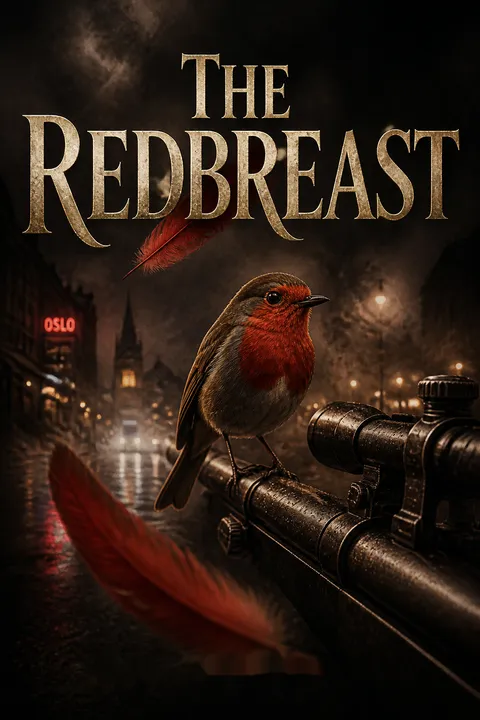
The Redbreast is Jo Nesbø's masterwork of historical reckoning disguised as a crime novel: a meditation on how national identity is shaped by what is remembered, suppressed, or violently erased. By chaining Norway's contemporary crises—racist violence, immigration, state secrets, and the failings of law enforcement—to the unresolved traumas of Nazi collaboration and war, Nesbø reveals how nations, like people, are prone to denial, split-selves, and moral amnesia. The novel's structure—a dance of past and present, truth and cover-up, guilt and longing—lays bare how easily old hatreds are resown, and how those excluded from history's redemptive narrative will seek their own bloody justice. Yet in the end, Nesbø also offers fragile hope: through the rediscovery of love (Rakel and Harry), the innocent play of a child (Oleg), and the simple, determined act of facing one's demons (Harry's last confrontation). The lessons are sobering: evil denied is never vanquished, memory cannot be shunned, and redemption, when it comes, is fleeting and incomplete. But perhaps the world is made tolerable, Nesbø suggests, not by perfect justice or collective virtue, but by the capacity of individuals to choose decency, even in the face of violence and history's cold indifference.
Review Summary
The Redbreast is widely praised as a significant leap forward in Jo Nesbø's writing, earning an overall rating of 3.95/5. Readers admire its dual timeline structure, alternating between WWII's Eastern Front and present-day Oslo, and appreciate the rich historical context surrounding Norwegian Nazi collaboration. Harry Hole is celebrated as a compelling, flawed protagonist. Common criticisms include the novel's length, complexity, and occasional convolution. The introduction of key characters like Rakel and Ellen resonates emotionally with readers, and the gripping finale is frequently highlighted.
People Also Read
Characters
Harry Hole
Inspector Harry Hole is the novel's wounded centre, a man wrestling with guilt, addiction, self-loathing, but also a fierce moral compass. His police work is as much exile as vocation: he cannot rest, nor quite belong, never sure if he is hero or bystander. His psychological depths include childhood neglect, trauma from violent incidents (Sydney, Bangkok), and a savior-complex that drives him to take the burdens of colleagues and friends. Hole's relationships, notably with Ellen and Rakel, offer glimmers of hope, but loss and professional betrayal weigh on him. His investigations are acts of penance and retribution, and his evolution—sober, temporarily promoted, finally shunted aside—is both a personal journey and a reflection of Norway's shadowed national conscience.
Ellen Gjelten
Ellen is Harry's partner and emotional support: whip-smart, intuitive, unfailingly loyal but never sentimental. She pulls Harry back from the brink after his worst episodes, embodies Norwegian empathy and resilience, and is a surrogate sibling to Harry. Her death—shockingly brutal, senseless, yet intimately linked to the story's criminal plot—devastates Harry and impels the second half of the book. Even after her death, Ellen's wisdom, sense of humor, and memory guide Harry's thought processes. She stands for all that can be lost in the fight against evil, and the price of justice when the system falls short.
Sindre Fauke / Gudbrand Johansen / Uriah
The old man behind the spree of killings, Sindre Fauke is revealed to be a survivor of the Eastern Front, who stole the identity of a dead comrade (the real Fauke) to avoid justice. His life is marked by trauma, war crimes, existential bitterness, and a festering sense of betrayal by the country he fought for and now despises. Suffering from cancer and dissociative identity disorder, he is psychologically fractured: at times "Daniel," at times "Gudbrand," sometimes Uriah. His murders are rooted in a quest for meaning and retribution, but also a tormented desire for closure, love, and acknowledgment. He is at once villain, victim, and judge—his schizophrenia a cipher for national amnesia and the impossibility of resolution.
Rakel Fauke
The daughter of Gudbrand/Helena, Rakel is intelligent, independent, and fierce—yet her life is palpably shaped by the silence and trauma she inherited. Her relationships—with her father, her son Oleg, and Harry—are marked by guardedness and yearning for connection. As a single mother and a member of Norwegian intelligence (POT), she is at the intersection of personal and collective memory: her mother's tragic love story with Uriah shapes her, while her position exposes her to the machinations and violence of the modern world. Rakel is a figure of strength who seeks to reconcile a past she cannot fully know, while seeking love and shelter for her vulnerable son. Her eventual bond with Harry represents a hesitant, hard-won hope.
Even Juul
As Norway's leading war historian, Juul is both guardian and manipulator of national memory. On the surface, he is a pillar of postwar society—intelligent, authoritative, credibly moral. Yet he is a man chased by shadows, compartmentalizing truths, hiding personal traumas (abuse, rootlessness), and vulnerable to manipulation by others. His ambiguous relationship with both Signe (his wife) and the "legend" of Daniel is psychological doublethink: he both exposes and preserves the comforting narratives that the country requires, while suppressing the darker truths. His eventual psychological breakdown and staged suicide reflect a lifetime spent walking the line between remembering and forgetting.
Bernt Brandhaug
As Undersecretary at the Ministry of Foreign Affairs, Brandhaug is a master bureaucrat, charming, ambitious, and ruthlessly manipulative. His romances and political schemes intertwine—lying to colleagues, pressuring subordinates, and using his position for personal gratification. He is representative of a Norway that prefers appearances, plausible deniability, and the diplomatic cover-up of uglier truths. Brandhaug's callousness is not just personal but symptomatic of a ruling class that represses, exploits, and ultimately becomes a victim of its own need for control. His murder is both random and inevitable—a sign that no one, however powerful, can fully escape history's reckoning.
Sverre Olsen
Sverre is a conduit between the violent neo-Nazi subculture and the novel's wider conspiracies. Sensationalist, chronically insecure, he vacillates between being a tool and a braggart, always on the verge of failure, terror, or violence. His personal story is a tragic one: manipulated by "the Prince," motivated by hatred, fame, and belonging, and ultimately destroyed by forces beyond his understanding. Sverre's fate symbolizes how easily anger and confusion are weaponized by those in power—a cycle as old as the war that destroyed his predecessors.
Tom Waaler
Waaler is Harry's professional and temperamental opposite—experimental, calculating, potentially corrupt. He is the embodiment of everything Harry fears in the force: ambition without scruple, a willingness to flout rules, connections to the underworld. Waaler's looming shadow over Harry's cases, and his willingness to exploit Ellen's murder for advancement, destabilize Harry and hint at rot inside the institution. He is a reminder that evil is not only in history, but always present, always waiting for a moment to rise.
Helena Lang (later Mayer/Fauke)
The love of "Uriah's" life, Helena is the heart of the novel's wartime narrative: a nurse marked by extraordinary goodness and strength. Her love for Gudbrand/Johansen threads through trauma, escape, murder, and exile. Through her, the story explores how love and loyalty conflict with survival and truth. Helena's later life, struggles, and loss of her own family, as well as her letters from Vienna, show both how trauma can echo for decades and how, in spite of everything, humans may choose love.
Hallgrim Dale / Signe Juul / Minor Characters
Dale and Signe represent the "collateral" of the book's great adult betrayals—bystanders pulled into the vortex of ideological violence, victims of the secrets kept and the wounds not acknowledged. Their deaths are both random and fated, reminders that it is always the innocent who pay for long-past sins.
Plot Devices
Dual Timeline and Interlaced Narratives
The heart of The Redbreast is its double-helix structure: a modern murder investigation layered over the personal, wartime, and postwar histories of multiple characters. Present and past are joined by the recurring traumas and betrayals of both, with revelations in one timeline illuminating the mysteries of the other.
Psychological Fracture / Dual Identity
Through the characters of "Sindre Fauke"/Gudbrand and Even Juul, the novel explores the psychological devastation of war—MPD (multiple personality disorder), suppressed memory, and generational trauma. The splitting and switching of identities, both literal and symbolic, serve as both red herrings in the investigation and as parables of a country unable to face its divided past.
Echo and Irony
The story abounds with historical echoes: betrayals repeated, weapons reused, ideologies repackaged. The use of national holidays as settings (17 May), and the recurrence of certain settings (Schroder's, the Palace Gardens), reinforce how cycles of history both bind and blind society.
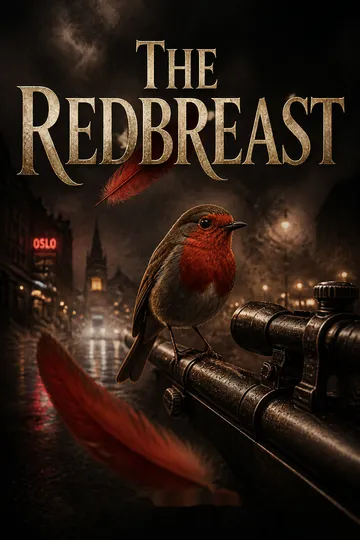
Symbolism of the Redbreast
The motif of the robin redbreast—braving winter, risking death for the chance of life and primacy—embodies the existential dilemma facing all the characters. It is a symbol of Norway itself: the gamble to stay or go, to confront or erase the past.
The "Need-to-Know" and the Bureaucracy of Secrets
The pervasive secrecy of the police, politicians, and foreign office is matched by the secrets kept by families, lovers, and survivors. Characters are repeatedly told, and tell themselves, to forget, to move on—but the truth outlasts every cover-up.
Forensics and Confessions as Revelatory Engines
Police methodology, diaries from the past, and the pursuit of physical evidence (the Marklin rifle, the old man's memoirs) gradually unravel the plot—yet final confession resolves only what the living can bear to know, and always leaves more hidden.
Harry Hole Series





About the Author
Other books by Jo Nesbø
Download PDF
Download EPUB
.epub digital book format is ideal for reading ebooks on phones, tablets, and e-readers.








































