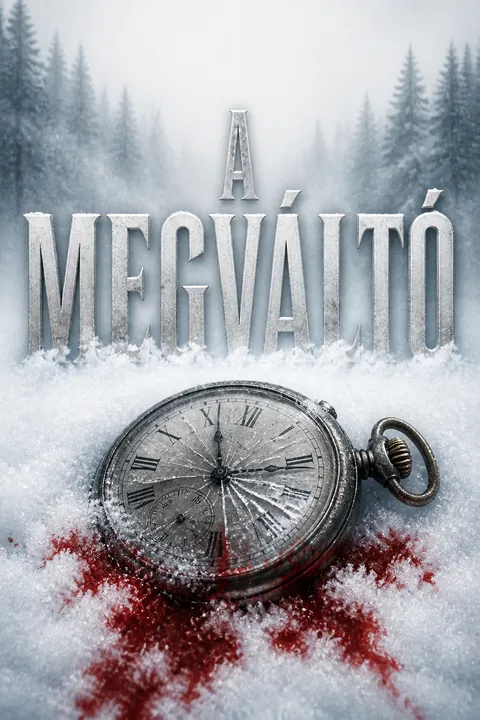

Summary Temporarily Unavailable
This summary is temporarily unavailable and is currently being updated. You can still explore the FAQs and other metadata below.
Plot Summary
1. Summer Shadows at Østgård
In the summer of 1991, the Salvation Army's youth gather at Østgård, a newly acquired camp. Fourteen-year-old Martine, blossoming into adolescence, is caught between the innocent excitement of first love and the undercurrents of jealousy and rivalry among the boys—especially between brothers Jon and Robert Karlsen. The camp's wholesome surface is shattered when Martine is raped in the night by someone she knows, a trauma she buries in silence. This event, witnessed only by the stars she tries to see through the roof, becomes the seed of guilt, shame, and secrecy that will haunt the characters for years. The summer's events, and the choices made in their aftermath, set the stage for a tragedy that will ripple through the lives of everyone involved.
2. The Contract in Zagreb
Twelve years later, in 2003, a professional killer known as "the little redeemer" is hired in Zagreb. The contract is simple: kill Jon Karlsen in Oslo. The go-between is anonymous, the payment unusually high, and the instructions precise. The killer, shaped by the traumas of the Balkan wars, is emotionally numb, efficient, and haunted by his own past. The job is meant to be his last before escaping to a new life. The contract's origins are shrouded in secrecy, but its consequences will be anything but hidden. The killer's journey from Zagreb to Oslo is marked by memories of violence, loss, and the cold logic of survival, as he prepares to bring death to a city that knows nothing of his existence.
3. A Killer Arrives in Oslo
The redeemer arrives in Oslo under a false identity, blending into the city's winter crowds. He scouts the location for the hit—a Salvation Army Christmas concert in Egertorget—meticulously planning his escape. Meanwhile, Inspector Harry Hole, still reeling from personal losses and the fallout of his last case, senses something amiss in the city's underbelly. The killer's presence is invisible to most, but his path crosses with the vulnerable and the desperate: junkies, social workers, and the Salvation Army's faithful. As the redeemer prepares, Oslo's own shadows—addiction, poverty, and hidden violence—mirror the darkness he brings with him.
4. The Wrong Brother Falls
On a snowy December night, the killer executes his plan in Egertorget, shooting a Salvation Army soldier in front of a crowd. But the victim is not Jon Karlsen, as intended, but his brother Robert, who had swapped shifts at the last minute. The city reels from the public murder, and Harry Hole is drawn into the investigation. The killer, realizing his mistake only after the fact, is trapped in Oslo by a snowstorm that grounds all flights. The error sets off a desperate scramble: the redeemer must finish the job, while Harry and his team race to understand the motive behind the killing and prevent further bloodshed.
5. The Hunt for Stankic
With the killer still at large, Oslo becomes a city on edge. Harry and his colleagues sift through contaminated crime scenes, unreliable witnesses, and a tangle of Salvation Army relationships. The investigation uncovers hints of a professional hit, but the lack of evidence frustrates the team. Meanwhile, the redeemer, now identified as Christo Stankic, struggles to survive in the city's margins, evading police and searching for Jon. The killer's resourcefulness and ability to change his appearance make him a ghost in the city, while Harry's instincts tell him the case is more complex than a random act of violence.
6. Faces in the Crowd
Beate Lønn, a forensic specialist with a rare gift for facial recognition, discovers that the killer possesses an extraordinary ability to alter his appearance—"visage du pantomime." Surveillance photos and eyewitness accounts are contradictory, making it nearly impossible to track him. The investigation turns up connections to Zagreb and the Balkan wars, and the team learns of the redeemer's code name and history. As Harry delves deeper, he uncovers the layers of trauma and violence that shaped both the killer and his employer. The city's own faces—addicts, refugees, and the faithful—reflect the hidden wounds beneath Oslo's surface.
7. The Family's Hidden Sins
The Karlsen family's history is revealed to be fraught with secrets: a father's embezzlement, a brother's violence, and a legacy of shame. Jon, now a respected Salvation Army officer, is haunted by his past and the threat Robert posed to his carefully constructed life. The investigation uncovers a web of blackmail, sexual abuse, and moral compromise within the Army's ranks. Martine, still scarred by her childhood trauma, struggles with her feelings for Harry and her own need for justice. The sins of the past, long buried, begin to surface, threatening to destroy the fragile peace the characters have built.
8. The Survivor's Guilt
As the investigation intensifies, Harry is forced to confront his own demons: his failed relationship with Rakel, his surrogate fatherhood to Oleg, and the loss of his partner Ellen. The case becomes personal as Halvorsen, Harry's loyal colleague, is gravely wounded in an attack meant for Jon. The team's sense of guilt and responsibility grows heavier, and the lines between victim and perpetrator blur. Martine's revelation of her rape at Østgård brings her pain into the open, and the survivors of past violence struggle to find forgiveness—for themselves and for each other.
9. The Croat's Pursuit
Stankic, now desperate and wounded, continues his pursuit of Jon Karlsen. The city's underworld becomes his refuge, as he hides among junkies and the homeless, evading police dragnets and using his skills to survive. The investigation uncovers the killer's connection to a shadowy network in Zagreb, and Harry travels there to confront the woman who controls the redeemer. Deals are struck, promises made, and the true nature of the contract is revealed: the hit was ordered by someone close to Jon, for reasons rooted in betrayal and fear. The chase becomes a test of will, cunning, and the limits of justice.
10. The Truth in Blood
Forensic evidence and confessions unravel the tangled web of the case. It is revealed that Jon Karlsen, not Robert, was the intended target—and that Jon himself orchestrated the contract on his own life, using Robert's identity to hire the redeemer and create the perfect alibi. The plan was for Robert to die in his place, erasing the threat Robert posed to Jon's secrets. But the plan unravels as Stankic, realizing the deception, turns his sights on Jon. The truth comes out through blood: Sofia, a young Croatian girl, reveals Jon's abuse and the cycle of violence he perpetuated. The cost of redemption is measured in suffering and loss.
11. The Price of Redemption
As the case nears its end, the characters grapple with the meaning of redemption. Harry, burdened by guilt and the failures of the justice system, faces impossible choices. Martine, seeking closure for her own trauma, must decide whether to help or hinder the pursuit of Jon. The Salvation Army's ideals of mercy and forgiveness are tested against the reality of human frailty and evil. The killer's own quest for freedom and absolution mirrors the struggles of those he hunts. In the end, the price of redemption is paid not in money, but in truth, sacrifice, and the willingness to confront the darkness within.
12. The Final Confession
The climax unfolds at Gardermoen Airport, where Jon Karlsen, attempting to flee, is cornered by both Stankic and Harry. In a tense standoff in a men's room, Jon confesses to orchestrating the murder of his brother and the abuse of Sofia. Stankic, seeking justice for his own pain and the wrongs done to others, becomes the instrument of Jon's destruction. Harry, torn between his duty as a policeman and his own sense of justice, steps aside, allowing the cycle of violence to complete itself. The confession is both an act of liberation and a final judgment, as Jon faces the consequences of his actions.
13. The Crucifixion at Gardermoen
Jon's death is both a crucifixion and a release. The symbolism of the redeemer—one who suffers for the sins of others—echoes through the narrative. The characters are left to grapple with the aftermath: the meaning of justice, the possibility of forgiveness, and the scars left by violence. Harry, having broken the rules to allow a form of justice outside the law, must live with the knowledge of what he has done. The cycle of guilt and redemption, begun in the summer shadows of Østgård, comes to its inevitable end.
14. The Resurrection of Guilt
In the days following the case's resolution, the survivors struggle to rebuild their lives. Halvorsen's death leaves a void in the police force and in Harry's heart. Martine and Harry part ways, unable to bridge the gap between their pain and their need for connection. The Salvation Army, its reputation preserved but its soul wounded, continues its work. The city returns to its routines, but the echoes of violence and loss linger. Harry, haunted by guilt and the knowledge of his own complicity, seeks solace in small acts of kindness and the hope of new beginnings.
15. The Circle Closes
As winter gives way to spring, Harry reflects on the events that have transpired. The case has changed him, forcing him to confront the limits of justice, the complexity of forgiveness, and the enduring power of guilt. The watch given to him by his former boss becomes a symbol of time's relentless march and the possibility of repair. The survivors move on, carrying their scars and their memories. The circle of violence and redemption, begun in a summer long ago, closes—leaving behind the hope that, in time, everything can be repaired.
Analysis
Jo Nesbø's The Redeemer is a masterful exploration of the interplay between guilt, justice, and the longing for redemption. Set against the wintry backdrop of Oslo, the novel uses the conventions of the crime thriller to probe deep psychological and moral questions. At its heart, the story is about the consequences of silence: the secrets we keep to protect ourselves and others, and the ways in which those secrets fester, corrode, and ultimately destroy. The Salvation Army, with its ideals of mercy and charity, becomes both a sanctuary and a site of hypocrisy, mirroring the broader society's struggles with forgiveness and accountability. Harry Hole, as both detective and flawed redeemer, embodies the tension between the demands of the law and the complexities of human frailty. The novel's structure—interweaving past and present, victim and perpetrator—forces the reader to confront the ambiguity of truth and the impossibility of simple answers. In the end, The Redeemer suggests that justice is never pure, redemption is always costly, and the only way forward is through the painful, honest reckoning with our own capacity for both harm and healing.
Last updated:
Report IssueReview Summary
The Redeemer receives mostly positive reviews, praised for its complex plot, intriguing characters, and unexpected twists. Readers appreciate Nesbø's skillful writing and Harry Hole's flawed yet compelling character development. Some find the Norwegian names and multiple subplots challenging, while others enjoy the intricate storytelling. The book's exploration of themes like redemption, justice, and human frailty resonates with many readers. Overall, fans of Nordic noir and detective fiction find The Redeemer a satisfying addition to the Harry Hole series.
People Also Read



Characters
Harry Hole
Harry is the central figure—a brilliant but deeply troubled Oslo police inspector. Scarred by past losses, including the death of his partner and the collapse of his relationship with Rakel, Harry is driven by a relentless sense of justice and a profound guilt that colors his every action. His investigative genius is matched by his self-destructive tendencies: alcoholism, isolation, and a tendency to break rules when he believes the system fails. Throughout the novel, Harry's journey is one of confronting his own limitations, wrestling with the moral ambiguities of justice, and seeking a form of redemption for himself and those he cannot save. His relationships—with colleagues like Halvorsen and Beate, with Martine, and with the ghosts of his past—reveal a man both compassionate and deeply wounded, forever walking the line between law and mercy.
Martine Eckhoff
Martine is the daughter of the Salvation Army's commander, marked by the trauma of her rape at Østgård as a teenager. Intelligent, empathetic, and quietly strong, she becomes both a witness and a participant in the unfolding drama. Her relationship with Harry is complex—rooted in mutual recognition of pain and a longing for connection. Martine's journey is one of reclaiming agency: confronting her past, seeking justice for herself and others, and ultimately making choices that reflect both her wounds and her resilience. Her psychological depth is revealed in her struggle to forgive, her ambivalence about love, and her role in the final reckoning.
Jon Karlsen
Jon is the outwardly upright Salvation Army officer, admired for his intelligence and dedication. Beneath the surface, however, he is a man haunted by guilt, shame, and a capacity for violence. His childhood rivalry with his brother Robert, his unresolved trauma, and his need for control drive him to orchestrate the murder that sets the novel's events in motion. Jon's psychological complexity lies in his ability to compartmentalize: presenting a façade of virtue while committing acts of abuse and betrayal. His final confession is both an act of self-destruction and a desperate plea for understanding, revealing the tragic consequences of secrets left to fester.
Robert Karlsen
Robert, Jon's younger brother, is a charming but troubled figure—impulsive, rebellious, and ultimately doomed. His relationship with Jon is fraught with rivalry and unresolved tensions, and his own moral failings mirror those of his brother. Robert's death, the result of a fatal case of mistaken identity, becomes the catalyst for the novel's unraveling. In life, he is both a threat and a victim; in death, he becomes the scapegoat for sins not his own. His legacy is one of ambiguity, reflecting the novel's themes of guilt, innocence, and the complexity of human motivation.
Christo Stankic ("The Redeemer")
Stankic is the professional assassin hired to kill Jon Karlsen. Shaped by the horrors of the Balkan wars, he is emotionally detached, highly skilled, and capable of extraordinary violence. Yet beneath his cold exterior lies a longing for escape, redemption, and a life beyond killing. His relationship with his mother, his memories of loss, and his own code of honor add layers to his character. Stankic's pursuit of Jon is relentless, but his actions are driven as much by a desire for meaning as by the logic of his profession. In the end, he becomes both judge and executioner, embodying the novel's exploration of justice outside the law.
Beate Lønn
Beate is a key member of Harry's team, distinguished by her rare ability to remember every face she has ever seen. Methodical, intelligent, and quietly determined, she provides crucial breakthroughs in the investigation. Beate's psychological insight and empathy make her both a formidable investigator and a grounding presence for Harry. Her own journey—coping with loss, supporting her colleagues, and seeking justice—reflects the novel's themes of resilience and the search for truth in a world of shifting identities.
Halvorsen
Halvorsen is Harry's steadfast colleague, known for his optimism, dedication, and unwavering support. His relationship with Harry is one of mutual respect and camaraderie, providing a counterbalance to Harry's darkness. Halvorsen's wounding and eventual death are pivotal moments in the novel, underscoring the personal costs of the pursuit of justice. His loss leaves a void in the team and in Harry's life, symbolizing the fragility of hope in a world marked by violence.
David Eckhoff
Eckhoff is the charismatic leader of the Salvation Army in Oslo, embodying both the ideals and the contradictions of the organization. He is a father figure to many, including Martine, and a man burdened by the knowledge of past failures and compromises. Eckhoff's role in covering up scandals, protecting reputations, and navigating the Army's internal politics reveals the complexities of leadership and the moral ambiguities of institutional life. His relationship with his children and his own doubts add depth to his character.
Sofia Miholjec
Sofia is a young Croatian refugee whose abuse at the hands of Jon Karlsen becomes a key to unraveling the case. Her silence, born of fear and powerlessness, is finally broken through the efforts of Beate and Harry. Sofia's story is one of vulnerability, resilience, and the struggle to be believed. Her courage in the face of trauma highlights the novel's concern with the voices of the marginalized and the cost of speaking the truth.
Mads Gilstrup
Mads is the scion of a wealthy family, drawn into the Salvation Army's world through business dealings and personal connections. Weak-willed, self-loathing, and ultimately destroyed by his own actions, Mads represents the corrosive effects of privilege and the inability to escape the consequences of one's choices. His confession, suicide, and the fallout for his family illustrate the destructive power of secrets and the impossibility of buying redemption.
Plot Devices
Dual timelines and shifting perspectives
The novel employs a structure that alternates between the formative events of the past—especially the summer at Østgård—and the unfolding investigation in the present. This dual timeline allows the reader to gradually uncover the roots of the characters' traumas, motivations, and betrayals. The shifting perspectives—moving between Harry, Martine, Stankic, and others—create a mosaic of viewpoints that deepen the psychological complexity and suspense. Foreshadowing is used to hint at hidden connections, while the gradual revelation of secrets builds tension and emotional resonance.
Mistaken identity and the unreliable witness
Central to the plot is the theme of mistaken identity: the killer's error in targeting Robert instead of Jon, and Jon's use of Robert's identity to orchestrate the murder. The novel plays with the unreliability of witnesses, the malleability of memory, and the difficulty of discerning truth in a world of masks and shifting faces. The redeemer's ability to change his appearance, Beate's unique gift, and the confusion of the crowd all serve to underscore the fragility of perception and the ease with which justice can be subverted.
The cycle of guilt, redemption, and justice
The narrative is driven by the interplay of guilt and the longing for redemption. Characters are haunted by past sins—personal, familial, and institutional—and seek absolution through confession, sacrifice, or violence. The Salvation Army's ideals of mercy and forgiveness are tested against the realities of abuse, betrayal, and the failures of the justice system. Harry's own journey mirrors this cycle, as he grapples with his role as both redeemer and judge. The novel questions whether true redemption is possible, and at what cost.
Symbolism of the watch and time
The motif of the watch—passed down, broken, repaired, and ultimately revealed as a priceless artifact—serves as a symbol of the passage of time, the persistence of guilt, and the hope of repair. Time is both an enemy and a potential savior: it erodes memories, exposes secrets, and offers the possibility of new beginnings. The ticking of the watch echoes the relentless march toward judgment, while its repair suggests that, with effort and honesty, even the most damaged lives can be mended.
About the Author
Jo Nesbø is a renowned Norwegian author and musician, best known for his Harry Hole crime novel series. Born in Oslo and raised in Molde, Nesbø studied economics before pursuing a career in writing and music. He is the lead vocalist and songwriter for the rock band Di Derre. Nesbø's work extends beyond crime fiction, including children's books like the Doktor Proktor series. His novels are celebrated for their complex plots, dark themes, and compelling characters, particularly the troubled detective Harry Hole. Nesbø's international success has established him as a leading figure in Nordic noir literature, with his books translated into numerous languages and adapted for film and television.
Download PDF
Download EPUB
.epub digital book format is ideal for reading ebooks on phones, tablets, and e-readers.








































