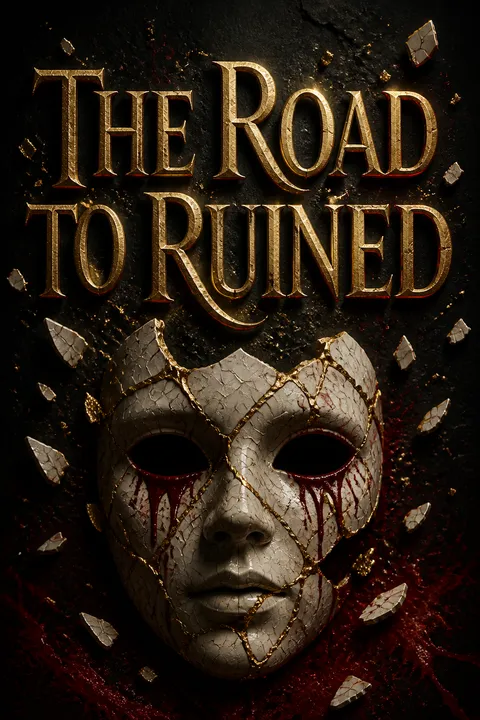
Plot Summary
Waking in White Walls
She is haunted by dreams of Declan and Luca, the men who seduced and destroyed her. Her reality is fractured—she converses with hallucinations, struggles with medication, and is isolated from the world. The institution is sterile, her only comfort the ghostly presence of her lost lovers. Teagan's pain is raw, her sense of self eroded by trauma and abandonment. She is desperate for touch, for meaning, for escape from the beige monotony of her new existence. The world outside is obsessed with the cult she was part of, but inside, she is just another broken girl, counting the days until release, unsure if she can ever be whole again.
Homecoming and Hollow Promises
The world is unchanged, but she is not. Her mother and sister impose strict rules—no social media, no lovers, curfew, therapy. Teagan is numb, going through the motions, haunted by scars both visible and invisible. Her family's attempts at normalcy only highlight her alienation. She is an outsider in her own life, unable to connect, her pain dismissed or misunderstood. The promise of a fresh start feels empty; she is expected to be better, to forget, to fit into a life that no longer fits her. The ache of loss and the weight of expectation threaten to crush her spirit.
Beige World, Bloody Dreams
She is plagued by hallucinations—ghostly lovers, masked intruders, and violent fantasies. The world is colorless, her desires twisted by trauma. She seeks solace in self-harm, alcohol, and the forbidden allure of blood. The internet is a minefield of conspiracy theories and cult worship, fueling her obsession and despair. She is both repulsed and aroused by the darkness within her, unable to escape the cycle of longing and self-destruction. The boundaries between dream and reality blur, leaving her adrift in a world that feels both too real and utterly unreal.
Family Ties, Frayed Nerves
Teagan's family tries to include her—wedding plans, dress shopping, forced celebrations—but her scars make her a spectacle. She is shamed for her body, her past, her pain. The world's gaze is cruel, and even her sister's kindness is conditional. Teagan is reminded at every turn that she does not belong, that her trauma is an inconvenience, her presence a problem to be managed. The pressure to conform, to be "better," only deepens her sense of isolation. She is a ghost at her own family's table, longing for acceptance but finding only judgment.
Ghosts, Hallucinations, and Hunger
She is visited by masked figures—sometimes lovers, sometimes threats. Her hunger for touch, for blood, for meaning grows insatiable. She seeks out anonymous sex, but even that is tainted by her notoriety and self-loathing. When threatened, she lashes out with violence, discovering a dark satisfaction in the act. The line between victim and monster blurs. She is both hunted and hunting, desperate for connection but capable of cruelty. Her mind is a battlefield, and she is losing ground to the darkness within.
The Lure of Monsters
He is both protector and predator, a masked enforcer of the cult's will. Teagan is drawn to him, repulsed and fascinated by his violence and control. He offers her a place among the faceless killers, a purpose in the organization that destroyed her life. Their relationship is toxic, built on pain, dominance, and a shared hunger for blood. Teagan is forced to confront the monster she is becoming, even as she clings to the hope of love and redemption. The world of the Order is seductive and terrifying, offering power at the cost of her soul.
Reunion and Revelations
Their reunion is bittersweet—shared trauma binds them, but trust is fragile. They reveal the true extent of the cult's reach and the impossibility of escape. Plans are made for new identities, new lives, but Teagan cannot let go of the hope that Declan or Luca will return for her. The past is a wound that will not heal, and the future is uncertain. The bonds of chosen family are tested by fear, love, and the ever-present threat of violence. Teagan must choose between survival and the ghosts of her past.
Cults, Orders, and Control
Teagan is drawn deeper into their rituals—blood, sacrifice, and the machinery of control. She witnesses the true horror of the organization: ritualistic murder, the commodification of bodies, the erasure of identity. Bone Saw becomes both her captor and her teacher, showing her the mechanics of killing and the cold logic of survival. Teagan is forced to participate, her humanity eroded by necessity and desire. The cult's promise of belonging is a lie; power is bought with blood, and freedom is an illusion. She is trapped in a cycle of violence, both victim and perpetrator.
Blood, Sex, and Survival
Teagan's relationships with Bone Saw, Declan, and Luca become increasingly complex—love, hate, need, and pain are inseparable. Sex is both comfort and weapon, a way to assert control and surrender it. The act of killing becomes eroticized, a release for the rage and longing that consume her. She is shaped by trauma, but also by choice—embracing the darkness that was forced upon her, finding power in her own monstrosity. Survival demands sacrifice, and Teagan learns to take what she needs, even as it costs her pieces of her soul.
The Trap is Set
The Order uses her as leverage, forcing her to kill to protect her friends. She is manipulated by those she loves and those who would destroy her. The lines between ally and enemy blur—Bone Saw is revealed to be Sebastian, Declan's lost brother, and the web of betrayal tightens. Teagan's agency is stripped away, her every move watched and controlled. She is forced to confront the reality that she is both a pawn and a player, her survival dependent on her willingness to become what she fears most.
Love, Lies, and Lures
He is both friend and monster, shaped by a lifetime of abuse and indoctrination. Teagan's love for him is real, but it cannot save either of them. Their relationship is a mirror of the cult's twisted logic—affection expressed through violence, loyalty bought with pain. The past cannot be undone, and forgiveness is elusive. Teagan must choose between the comfort of the familiar and the possibility of freedom. The cost of love is high, and the wounds it leaves may never heal.
The Wedding and the Goodbye
She plays the role of normalcy one last time, saying goodbye to the family that could never understand her. Sebastian is there, both protector and executioner, preparing to fake her death so she can disappear. The ceremony is bittersweet—a reminder of the life she can never have, the love she must leave behind. Teagan's final acts are ones of kindness and closure, ensuring her family can move on. The world will believe she is dead, but she is finally free to choose her own fate.
Escape from the Ordinary
With Sebastian's help, she fakes her death and reunites with Declan and Luca. The plan is dangerous, the risks immense, but the promise of freedom is worth it. The past is left behind—her family, her old identity, the cult's reach. Teagan is reborn, her scars a testament to survival. The journey is not without loss—Sebastian cannot come with them, his own chains too strong to break. The goodbye is painful, but necessary. Teagan steps into a new life, uncertain but unburdened by the ghosts that once haunted her.
Monsters, Brothers, and Betrayal
The brothers—Declan, Luca, and Sebastian—are united and divided by blood and betrayal. Violence erupts, and Teagan is forced to choose between love and survival. The cost of freedom is high—lives are lost, and innocence is irretrievable. The bonds of family are tested, and the truth of their shared monstrosity is laid bare. In the end, only those willing to embrace their darkness can survive. Teagan's journey is one of acceptance—of herself, her past, and the monsters she loves.
The Last Goodbye
Their love is acknowledged, but their paths diverge. He cannot escape the Order, and she cannot stay. The pain of parting is sharp, but necessary. Teagan chooses life, love, and the possibility of healing. The world will remember her as a victim, but she knows the truth—she is a survivor, a monster, and a woman who loved fiercely. The past is honored, but not allowed to define her. The future is uncertain, but it is hers to claim.
Immortal in Exile
Teagan, Declan, and Luca build a family in exile, joined by River and Hazel. The world believes them dead, but they find peace and purpose in anonymity. The scars of the past remain, but they are no longer wounds—they are reminders of survival, of love, of the price paid for freedom. The cult's reach is long, but their bonds are stronger. Together, they create a life filled with color, music, and meaning. The cycle of violence is broken, if only for a time.
Full Circle: The True Crime Victim
The world consumes her narrative as true crime entertainment, missing the truth of her survival. Her family mourns, but finds closure. Teagan watches from afar, grateful for the peace anonymity brings. She is both myth and memory, immortalized by the violence that shaped her. The story ends not with justice or redemption, but with acceptance—a life reclaimed from ruin, a heart restored by love, and a future painted in every color but beige.
Family, Freedom, and Color
Teagan's chosen family thrives in their hidden paradise. The wounds of the past are not forgotten, but they no longer define her. She is free—free to love, to create, to exist without fear. The world outside may never know the truth, but within her circle, she is seen, cherished, and whole. The journey from victim to survivor is complete, and the road to ruined has led, at last, to home.
Analysis
Elle Mitchell's The Road to Ruined is a harrowing exploration of trauma, identity, and the search for belonging in a world that punishes difference. Through Teagan's fractured perspective, the novel interrogates the ways in which violence, both inflicted and endured, shapes the self. The toxic romances at the heart of the story are not glamorized, but rather dissected—revealing how love can be both salvation and damnation, how intimacy can be weaponized, and how the longing for connection can lead us into the arms of monsters. The cult and its rituals serve as a metaphor for the systems—familial, societal, institutional—that demand conformity and punish those who cannot or will not comply. Ultimately, the novel refuses easy answers or redemption; healing is possible, but it is hard-won and incomplete. The lesson is not that monsters are born or made, but that survival often demands the embrace of darkness—and that even in exile, even in the aftermath of ruin, there is hope for color, for family, and for a life reclaimed on one's own terms.
Review Summary
The Road to Ruined receives an overall 4.24/5 rating, with most readers praising its unhinged, dark, and chaotic storytelling. Many fell unexpectedly in love with the new MMC, Bone Saw/Sebastian, often preferring him over the original love interests. Common criticisms include an abrupt ending, lack of closure around Sebastian's fate, and insufficient page time for Luca and Declan. Readers consistently highlight the intense spice, blood play, and cult elements as standout features, calling it a must-read for dark romance enthusiasts.
Characters
Teagan Townsend
Teagan is the emotional core of the story—a young woman shattered by trauma, manipulation, and loss. Her journey is one of survival, self-discovery, and the struggle to reclaim agency in a world determined to define her by her scars. Teagan's relationships are fraught with longing and violence; she is both victim and perpetrator, seeking love in the arms of monsters. Her psychological complexity is profound—she is self-aware, darkly humorous, and unflinchingly honest about her own monstrosity. Teagan's development is marked by her refusal to be defined by others, her willingness to embrace her darkness, and her ultimate choice to seek healing and freedom, even at great cost.
Declan De Rossi
Declan is both lover and destroyer—a rockstar cult leader whose intelligence and charm mask deep wounds and a hunger for control. He is the architect of Teagan's ruin and her greatest source of comfort. Declan's love is possessive, his loyalty conditional, and his remorse genuine but insufficient. He is haunted by his own trauma, particularly the loss of his brother Sebastian, and his inability to protect those he loves. Declan's arc is one of reckoning—forced to confront the consequences of his actions, he seeks redemption through love, but can never fully escape the darkness he helped create.
Luca De Rossi
Luca is the softer counterpart to Declan's intensity—a man who loves deeply, cares for Teagan, and is ultimately destroyed by the violence surrounding him. His trauma manifests in addiction, guilt, and a desperate need for connection. Luca's love for Teagan is pure but complicated by his own pain and the demands of survival. He is both victim and enabler, complicit in the cult's crimes but longing for innocence. Luca's journey is one of healing—learning to accept help, to forgive himself, and to build a new life from the ashes of the old.
Sebastian Torres / Bone Saw
Sebastian is the story's most complex antagonist—both protector and predator, shaped by a lifetime of abuse and indoctrination. As Bone Saw, he is the Order's weapon, stripped of identity and humanity. As Sebastian, he is vulnerable, longing for love but convinced he cannot have it. His relationship with Teagan is toxic, built on pain, dominance, and a shared hunger for blood. Sebastian's arc is one of tragic inevitability—he cannot escape the Order, cannot accept love, and is doomed to loneliness. His connection to Declan and Luca adds layers of betrayal and longing, making him both villain and victim.
River Pinault-Hollis
River is Teagan's anchor—a friend and lover who understands her pain and offers unconditional support. She is pragmatic, nurturing, and fiercely loyal. River's own trauma mirrors Teagan's, and their bond is forged in shared suffering. She represents the possibility of healing, the importance of chosen family, and the strength found in vulnerability. River's development is marked by her willingness to fight for survival, to build a new life, and to forgive without forgetting.
Hazel Pinault-Hollis
Hazel is River's wife and Teagan's ally—a woman hardened by betrayal and loss. She is outspoken, skeptical, and unafraid to confront uncomfortable truths. Hazel's anger is both shield and weapon, protecting herself and those she loves from further harm. Her arc is one of acceptance—learning to let go of the past, to trust again, and to find peace in the present. Hazel's loyalty to River and Teagan is unwavering, and her willingness to risk everything for their safety is a testament to the power of chosen family.
Blakely Townsend
Blakely represents the life Teagan can never have—a world of weddings, family, and acceptance. Their relationship is fraught with misunderstanding, jealousy, and conditional love. Blakely's attempts to help are often misguided, highlighting the gulf between their experiences. She is both a source of pain and a reminder of what is lost. Blakely's arc is one of gradual understanding—learning to see Teagan's pain, to offer forgiveness, and to find closure in the face of tragedy.
Jennifer Townsend (Teagan's Mother)
Jennifer is a mother desperate to save her daughter but unable to understand her. Her love is conditional, her support rigid and rule-bound. She represents societal expectations—the demand for conformity, the fear of difference, and the inability to accept what cannot be fixed. Jennifer's arc is one of resignation—she cannot save Teagan, but she can mourn her, and in doing so, find a measure of peace.
The Order / Cult
The Order is both antagonist and environment—a secret society built on blood, violence, and the erasure of identity. It offers belonging at the cost of self, power at the cost of humanity. The Order's rituals are seductive and horrifying, drawing in the broken and the desperate. It is a mirror of society's darkest impulses, a system that perpetuates trauma and rewards monstrosity. The Order's influence shapes every character, its reach inescapable, its promises always a lie.
Sonia (Cake Girl)
Sonia is a tragic figure—a girl sold into the Order, forced to lure and harm others to survive. Her brief connection with Teagan is marked by shared pain and fleeting intimacy. Sonia's fate is a warning—what happens when survival demands the sacrifice of self. She is both victim and villain, a reminder that the line between the two is often razor-thin.
Plot Devices
Unreliable Narration and Hallucination
The novel's structure is built on Teagan's fractured perspective—her hallucinations, dreams, and unreliable memories create a sense of disorientation and instability. This device immerses the reader in her psychological state, making it difficult to distinguish between what is real and what is imagined. The use of hallucinated lovers, shifting timelines, and ambiguous events heightens the tension and underscores the theme of trauma's impact on perception. The reader, like Teagan, is forced to question every interaction, every memory, every act of violence or tenderness.
Toxic Romance and Power Dynamics
Relationships in the novel are defined by manipulation, dominance, and the interplay of pain and pleasure. Sex is both comfort and control, a means of asserting agency and surrendering it. The power dynamics between Teagan and her lovers—Declan, Luca, Sebastian—are constantly shifting, reflecting the broader themes of control, survival, and the search for belonging. The toxic nature of these romances is not romanticized; instead, it is dissected, exposing the ways in which trauma can warp desire and love can become a form of violence.
Cult and Secret Society Structure
The cult's rituals, hierarchies, and codes of silence create an atmosphere of paranoia and inevitability. The Order is both a literal threat and a metaphor for the systems that perpetuate abuse and demand conformity. Its faceless enforcers, ritualistic violence, and erasure of identity serve as both plot engine and thematic core. The cult's promise of belonging is seductive, but always comes at the cost of selfhood and freedom.
Cycles of Violence and Survival
The novel explores the cyclical nature of violence—how those who are hurt become capable of hurting others, how survival can demand monstrous acts. Teagan's journey is marked by her transformation from victim to killer, her struggle to reclaim agency without losing her humanity. The narrative structure mirrors this cycle, with acts of violence leading to moments of tenderness, and vice versa. The question of whether healing is possible, or whether some wounds are too deep, is left open.
Foreshadowing and Symbolism
The recurring imagery of blood—both as violence and as intimacy—serves as a symbol of connection, power, and loss. Scars, both physical and emotional, mark the characters, reminders of what has been endured and what cannot be undone. The motif of color—particularly the shift from beige to red—mirrors Teagan's journey from numbness to feeling, from victimhood to agency. The use of foreshadowing—dreams, hallucinations, and repeated phrases—creates a sense of inevitability, underscoring the novel's fatalistic tone.
Download PDF
Download EPUB
.epub digital book format is ideal for reading ebooks on phones, tablets, and e-readers.








































