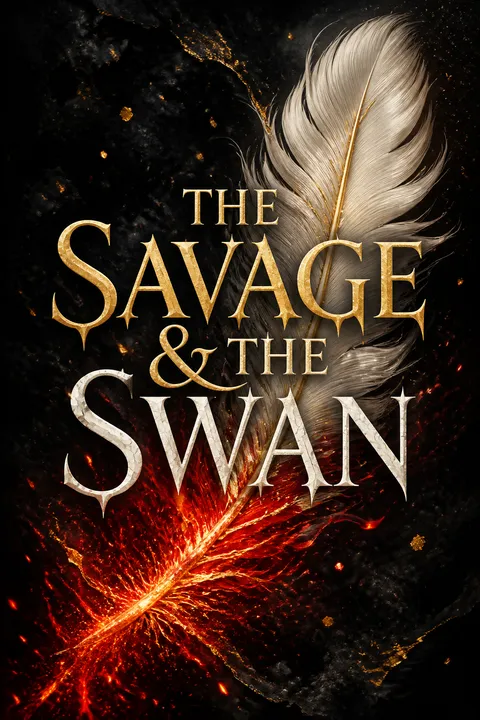
Plot Summary
Royal Bargain Unraveled
Opal Gracewood, fae princess of Sinshell, overhears her parents' desperate plan to marry her to a human prince for the sake of their kingdom's survival. The arrangement is a bitter pill, meant to shield her from the bloodthirsty crimson fae across the ravine. But Opal's heart rebels against being a pawn, and her flight into the night marks the first step toward unraveling the fragile peace her family has built. The world is divided by ancient wounds, and Opal's escape into the woods is both a protest and a search for agency. Her journey is shadowed by the weight of duty, the ache of loss, and the fear that her fate is not her own to choose.
The Wolf in Shadows
Fleeing her destiny, Opal stumbles upon a mysterious, hooded stranger in her secret refuge—a fallen tree bridging the lands. He is not human, nor of her golden kin, but a crimson fae: a wolf shifter, dangerous and alluring. Their banter is sharp, their curiosity mutual, and beneath the threat of violence, a strange understanding flickers. The wolf, later known as Fang, challenges Opal's assumptions about her enemies and herself. He is both threat and teacher, forcing her to confront her own helplessness and the reality of war. Their meeting is a collision of worlds, setting in motion a chain of events that will test loyalty, trust, and the boundaries between love and hate.
Lessons Beneath the Tree
Opal's secret meetings with Fang become lessons in survival. He pushes her to become a weapon, not a tool, teaching her to fight with sword and dagger. Their sparring is both physical and emotional, each cut and bruise a lesson in resilience. Fang's presence is a paradox—he is the enemy, yet he is the only one who sees her as more than a pawn. Through pain and sweat, Opal discovers her own strength and the beginnings of a dangerous attraction. The lessons beneath the tree are not just about battle, but about identity, agency, and the possibility of forging one's own fate in a world determined to use her.
A Kingdom Divided
The fragile peace between Sinshell and Vordane shatters as villages burn and refugees flood the city. Opal is helpless, forced to watch from the sidelines as her people suffer. The divide between the golden fae and the crimson wolves is more than physical—it is a wound that festers with every loss. The human prince arrives, bringing with him the promise of alliance and the threat of betrayal. Opal's role as heir is both a privilege and a prison, her every move dictated by the needs of the kingdom. The cost of survival grows heavier, and the lines between friend and foe blur in the smoke of war.
The Enemy's Name
Opal's clandestine relationship with Fang deepens, but trust is a fragile thing. When he finally reveals his name—Dade, the blood king himself—Opal is shattered by the realization that she has been confiding in the very monster her people fear. The revelation is a betrayal and a revelation, forcing Opal to confront the complexity of her enemy. Dade is not just a beast, but a man shaped by loss, vengeance, and the burdens of kingship. Their connection is undeniable, but it is built on lies and blood. The truth threatens to destroy them both, even as it binds them together in ways neither can escape.
Blood and Blossoms
As the war escalates, so does the forbidden attraction between Opal and Dade. Their encounters are fraught with danger, desire, and the ever-present threat of betrayal. Opal is torn between duty and longing, her heart caught in the crossfire of ancient grudges. Dade's violence is matched only by his tenderness, and their bond deepens in the shadows of the ravine. The world around them burns, but in stolen moments beneath the blossoms, they find solace—and the seeds of something that could change everything. Love and violence become inseparable, each feeding the other in a cycle as old as the kingdoms themselves.
The Human Prince's Game
Prince Bron's arrival brings new complications. His charm is a mask for ambition, and his interest in Opal is as much about power as affection. The marriage negotiations become a game of manipulation, with Opal as the prize. The humans are not the saviors they pretend to be, and their alliance is as dangerous as any enemy. Opal is forced to navigate a web of lies, her every action scrutinized and her every word a potential weapon. The prince's advances are both flattering and suffocating, and Opal must decide where her loyalties truly lie as the stakes grow ever higher.
Gold Thread, Golden Cage
Opal's rare gift—the ability to weave gold into fabric—becomes both a blessing and a curse. The humans imprison her, demanding she create wealth to fund their armies. Her magic is exploited, her freedom stripped away. Dade's secret visits are her only respite, his touch the only thing that reminds her she is more than a tool. The golden cage is both literal and metaphorical, a symbol of the ways in which power can be used to imprison as well as liberate. Opal's struggle is not just for survival, but for the right to define her own worth.
The Sorceress's Warning
A visit to the enigmatic serpent sorceress reveals a prophecy: "When feather meets fire, vengeance will expire." The riddle haunts Opal, its meaning elusive but its weight undeniable. Fate is a character in its own right, shaping the lives of mortals and immortals alike. The sorceress's warning is both a threat and a promise, a reminder that the choices Opal and Dade make will have consequences far beyond their own lives. The prophecy becomes a guiding star and a looming shadow, its fulfillment both inevitable and uncertain.
The King of Wolves
The tension between Opal and Dade erupts into passion, their bond sealed in blood and desire. The mating is both a surrender and a victory, a moment of vulnerability that changes everything. Their love is a rebellion against the world that made them enemies, a defiance of the roles they were born to play. But love does not erase the past, and the wounds of war run deep. Their union is both a hope for peace and a spark for further conflict, as the world refuses to let go of old hatreds.
Betrayal at Gracewood
Opal and Dade's marriage is meant to end the war, but it is a trap set by her mother. The ceremony is interrupted, Dade is imprisoned, and Opal is locked away. The betrayal is complete, and the fragile hope of peace shatters. Opal's loyalty is tested as she is forced to choose between her family and her mate. The cost of love is revealed in blood and chains, and the consequences of vengeance come home to roost. The wedding, meant to unite, becomes the catalyst for the final reckoning.
The Maze and the Elves
Imprisoned and desperate, Opal finds allies among the Little Folk—the elves who dwell in the hidden places of the world. Their magic and cunning offer a glimmer of hope, and their friendship is a reminder that not all is lost. The maze becomes a symbol of the journey Opal must undertake, a labyrinth of choices and consequences. With the help of the elves, she begins to unravel the threads of fate, searching for a way to save Dade and herself from the traps set by those who claim to love them.
The Bond Forged in Blood
In the chaos of battle, Dade is mortally wounded, and Opal's grief unleashes a power she never knew she possessed. Her love becomes a force of healing, her forgiveness the key to breaking the cycle of vengeance. The bond between them is tested in fire and blood, but it endures. Sacrifice becomes the price of peace, and forgiveness the only path forward. In the ashes of war, Opal and Dade find the strength to begin again—not as enemies, but as partners in a new world.
The Price of Vengeance
The final battle is a reckoning for all. The human prince's betrayal, the burning of villages, and the slaughter of innocents lay bare the true cost of vengeance. Dade's past is revealed, his pain and rage understood at last. Opal's compassion becomes a weapon more powerful than any sword, and together they confront the legacy of hatred that has shaped their lives. The price of vengeance is paid in full, and the survivors must decide what kind of world they wish to build from the ruins.
The Wedding Trap
The aftermath of the wedding trap leaves Opal and Dade's relationship in tatters. Trust is shattered, and the wounds of betrayal run deep. Yet even in the darkness, the bond between them endures. They must learn to forgive not only each other, but themselves, if they are to have any hope of healing. The journey from enemies to lovers is not a straight path, but a labyrinth of pain, hope, and redemption.
The Orb's Imprisonment
Trapped within a magical orb, Opal and Dade are forced to confront the consequences of their choices. The sorceress's riddle becomes clear: only by working together, by choosing love over vengeance, can they break free. The orb is both prison and crucible, a test of their bond and their resolve. In the end, it is Opal's willingness to forgive—and Dade's willingness to change—that shatters the prison and sets them free.
Flames Across the Border
As the human armies invade Vordane, Opal and Dade must unite their fractured kingdoms to survive. Old enemies become allies, and the lines between friend and foe blur. The battle is fierce, the losses great, but in the crucible of war, a new world is forged. The lessons of the past are hard-won, and the future remains uncertain, but hope is born in the ashes of old hatreds.
The Fall of Kings
In the heat of battle, Dade falls, and Opal's grief unleashes a power that defies death itself. Her love and forgiveness become the magic that brings him back, breaking the curse of vengeance that has haunted their families for generations. The fall of kings is both literal and symbolic, a turning point that marks the end of an era and the beginning of something new. Love triumphs over hate, and the world is changed forever.
Forgiveness in the Ashes
In the aftermath of war, Opal and Dade must learn to live with the consequences of their choices. Forgiveness is not easy, but it is necessary. Together, they begin the work of healing their kingdoms and themselves. The scars of the past remain, but they are no longer chains. In the ashes of old hatreds, a new world is born—one built on trust, compassion, and the hard-won lessons of love.
A New Dawn Together
Opal and Dade, once enemies, now rule together as partners and equals. Their love is a testament to the power of forgiveness and the possibility of change. The kingdoms of Sinshell and Vordane are united, not by force, but by choice. The world is still imperfect, but hope endures. In each other, Opal and Dade find the strength to face whatever comes next—together.
Analysis
Ella Fields' The Savage and the Swan is a sweeping, emotionally charged fantasy that reimagines the enemies-to-lovers trope as a meditation on the cost of vengeance and the transformative power of forgiveness. At its heart, the novel is a story about breaking cycles—of violence, of trauma, of inherited hatred. Through the dual perspectives of Opal and Dade, Fields explores the ways in which love can be both a weapon and a balm, capable of wounding as deeply as it heals. The narrative is rich with symbolism—golden cages, burning bridges, and the ever-present prophecy—that externalize the characters' internal struggles. In a world where power is both a blessing and a curse, Opal's journey from pawn to queen is a testament to the importance of agency, compassion, and the refusal to be defined by the past. Dade's transformation from beast to partner is equally compelling, a reminder that redemption is possible even for those most lost to darkness. The novel's modern resonance lies in its insistence that peace is not the absence of conflict, but the presence of understanding—and that the courage to forgive is the greatest magic of all.
Review Summary
The Savage and the Swan received mixed reviews, with some readers praising its engaging enemies-to-lovers romance and intriguing fantasy elements, while others found the worldbuilding lacking and the plot convoluted. Many enjoyed the chemistry between the main characters, Dade and Opal, and the book's blend of fairy tale inspirations. However, some readers criticized the underdeveloped side characters and inconsistent pacing. Despite these issues, many reviewers found the book entertaining and compared it favorably to popular fantasy romance series like ACOTAR and From Blood and Ash.
Characters
Opal Gracewood
Opal is the golden fae princess of Sinshell, raised in the shadow of loss and the burden of duty. Her role as heir is both a privilege and a prison, her every action dictated by the needs of her fractured kingdom. Opal is compassionate, stubborn, and fiercely intelligent, but she is also haunted by the knowledge that she is a pawn in a game she did not choose. Her journey is one of self-discovery, as she learns to wield her power—not just her rare gift of weaving gold, but her capacity for forgiveness and love. Opal's relationship with Dade is the crucible in which she is transformed, her compassion becoming both her greatest strength and her greatest vulnerability. She is the heart of the story, the compass that guides the world from vengeance to hope.
Dade Volkahn (Fang, The Blood King)
Dade is the king of wolves, the blood fae ruler of Vordane, and the story's most complex figure. Raised in violence and loss, he is shaped by the need for revenge and the expectation of brutality. Dade is both monster and man, his savagery matched only by his capacity for tenderness. His relationship with Opal is a journey from hatred to love, from vengeance to forgiveness. Dade's struggle is internal as much as external—he must learn to let go of the past, to trust, and to accept that he is worthy of love. His transformation is the heart of the story's emotional arc, a testament to the power of change and the possibility of redemption.
Nikaya Gracewood
Nikaya is Opal's mother and the queen of Sinshell. She is a figure of strength and sorrow, her life defined by loss and the relentless demands of leadership. Nikaya's love for her daughter is fierce, but it is often at odds with her sense of duty. Her grief for her mate and her fear for her kingdom drive her to desperate measures, including betrayal and manipulation. Nikaya is both antagonist and ally, her actions shaped by the impossible choices she must make. Her journey is one of acceptance, as she learns to let go of vengeance and trust in her daughter's strength.
Prince Bron
Bron is the human prince, a figure of charm and ambition. His interest in Opal is as much about politics as affection, and his actions are driven by the desire for power. Bron is both ally and adversary, his loyalties shifting with the winds of fortune. He is a reminder that not all enemies are obvious, and that the greatest threats often come from those who claim to be friends. Bron's fate is a cautionary tale, a warning about the dangers of ambition unchecked by compassion.
Silver, the Serpent Sorceress
Silver is the serpent sorceress, a figure of mystery and power. She is both guide and trickster, her prophecies shaping the course of the story. Silver's motivations are inscrutable, her actions guided by a knowledge that transcends mortal understanding. She is the voice of fate, the keeper of riddles, and the architect of the story's most pivotal moments. Silver's presence is a reminder that destiny is both a burden and a gift, and that the choices of individuals can shape the course of history.
Fang (Fanerin)
Fang, also known as Fanerin, is Dade's closest friend and a warrior of Vordane. He is loyal, brave, and often the voice of reason—or irreverence—in the midst of chaos. Fang's humor and pragmatism provide balance to Dade's intensity, and his loyalty is unwavering. He is a reminder that even in the darkest times, friendship endures.
Scythe
Scythe is a formidable warrior, marked by loss and hardened by battle. His loyalty to Dade is matched only by his skepticism, and his presence is both a comfort and a challenge. Scythe's scars are both physical and emotional, and his journey is one of learning to trust and to hope again.
Serrin
Serrin is Dade's uncle and the architect of his early training. He is both mentor and tormentor, his love twisted by grief and the demands of vengeance. Serrin's actions are driven by a desire to protect, but his methods are brutal and often misguided. His relationship with Dade is fraught with pain and regret, a reminder of the ways in which love can be both a weapon and a wound.
Linka
Linka is Opal's childhood friend and confidante, a pixie with a fierce sense of loyalty and a gentle heart. She is the voice of conscience, the reminder of what is at stake, and the anchor that keeps Opal grounded. Linka's presence is a testament to the power of friendship and the importance of holding on to hope.
Beshal
Beshal is one of the Little Folk, an elf whose wisdom and kindness provide guidance in Opal's darkest moments. She is a keeper of tradition, a bridge between worlds, and an unexpected ally in the struggle for peace. Beshal's presence is a reminder that help can come from the most unlikely places, and that the bonds of community are as important as those of blood.
Plot Devices
Enemies-to-Lovers Arc
The central device is the enemies-to-lovers arc, in which Opal and Dade's initial animosity and distrust slowly give way to understanding, attraction, and ultimately love. Their relationship is the crucible in which the story's themes of forgiveness, redemption, and the possibility of change are tested. The arc is driven by a series of betrayals, revelations, and moments of vulnerability, each one deepening the bond between them and challenging the assumptions of their world.
Prophecy and Fate
The prophecy delivered by the serpent sorceress—"When feather meets fire, vengeance will expire"—serves as both foreshadowing and a guiding thread. Fate is a character in its own right, shaping the lives of Opal and Dade and forcing them to confront the consequences of their choices. The prophecy is both a burden and a promise, its fulfillment dependent on the willingness of the characters to forgive and to change.
Dual Narrative Structure
The story alternates between Opal and Dade's perspectives, allowing readers to experience the emotional arc from both sides. This dual structure deepens empathy, revealing the complexity of each character's motivations and the ways in which their pasts shape their present. The alternating voices also heighten tension, as secrets are revealed and misunderstandings abound.
Magical Realism and Symbolism
Magic is both literal and metaphorical, a reflection of the characters' inner lives. Opal's ability to weave gold is a symbol of her value and her imprisonment, while Dade's shifting is a metaphor for the struggle between savagery and humanity. The magical orb, the maze, and the prophecy are all devices that externalize the characters' internal conflicts, making the abstract tangible and the emotional epic.
Betrayal and Forgiveness
Betrayal is a recurring motif, each one testing the limits of trust and the possibility of forgiveness. The story is a meditation on the ways in which cycles of vengeance can be broken—not by violence, but by compassion and understanding. Forgiveness is not easy, and it is not always deserved, but it is the only path to healing and peace.








































