
Plot Summary
Ghosts of the Rug
Joe Leaphorn, the legendary retired Navajo Tribal Police Lieutenant, struggles with restless retirement. When a magazine photo surfaces of an ancient, supposedly destroyed Navajo rug—infamous for commemorating The Long Walk and rumored to be cursed—Leaphorn senses the past demanding a reckoning. The rug, last seen in a trading post fire years ago, was thought to be ashes, along with an unidentified corpse. Now it dangles in the mansion of a mysterious collector, sparking haunting questions. Leaphorn's mind is pulled into the investigation, reawakening mysteries about greed, suffering, and transformation that clouded his final case—one he never fully resolved. The discovery unsettles not just him but triggers fears that something or someone dangerous might have survived the flames, with secrets still buried.
Retired But Restless
Despite intentions to "just be a civilian," Leaphorn can't let go of unanswered questions. Friends Jim Chee and Bernie Manuelito have just returned from their honeymoon, but Leaphorn is largely on his own. When Mel Bork, an old FBI Academy friend, notifies him of the rug's reappearance and subsequently vanishes under threat, Leaphorn's sense of duty overwhelms any wish for peace. He juggles the expectations of those who want him to let the past rest with his conviction that justice and the truth about the rug—and the violence that shadowed it—are unfinished business. The lines of the recent present and traumatic history blur in Leaphorn's mind, as the case draws him back to old friends, old enemies, and the unsettling legacy of evil.
Artifact of Sorrow
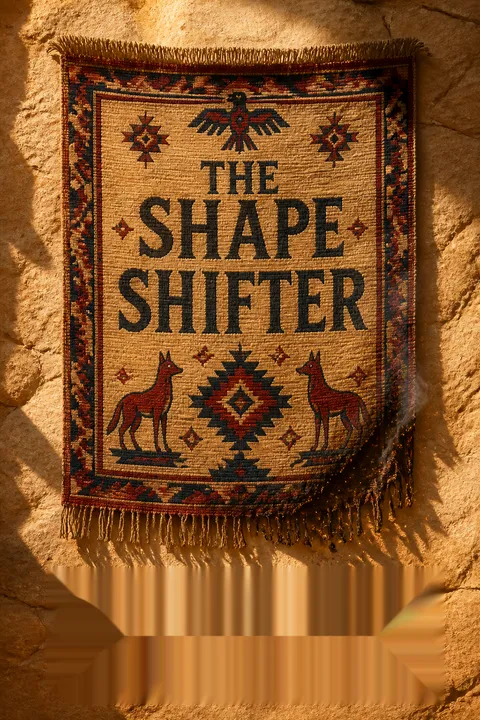
A Navajo "tale-teller" rug, woven after the tribe's traumatic exile to Bosque Redondo, is both sacred art and a memory of collective pain. Its symbols—Rainbow Man, Coyote, feathers, and spider-egg red—immortalize sorrow, greed, and survival, violating the Navajo principle of harmony (hozho) by refusing to let old hatreds die. Story has it the rug is cursed, passing misfortune to new owners. Scholars, collectors, and tribal elders dispute its provenance, but all share unease about its power. The rug's supposed destruction in fire should have ended its legacy. Yet its image in a luxury magazine, attributed now to an eccentric collector named Jason Delos, demands a reckoning with history, the pull of unresolved grief, and the power of artifacts to animate harm.
A Threatening Omen
As Leaphorn reaches out to Bork's wife, Grace, she reveals an unnerving threatening message on their answering machine: a warning to stop "digging up old bones." Bork's disappearance feels sinister, and his search for the rug's origins—contentious because of supposed insurance fraud and rumors of murder—seems to have awakened dangerous forces. The line between Navajo legends of "shape shifters" and very real threats sharpens. Unlike most cases, the stakes here are personal and uncanny: the killer may be hiding in plain sight, slipping between truths, disguises, and names. Leaphorn resolves to follow the secrets—despite the omens and the danger to his own peace.
A Colleague Disappears
Leaphorn's investigation into Bork's disappearance brings him to art dealers, museum curators, and old police contacts. They reminisce about the infamous fire, the complicated cast of accomplices and betrayed partners in the original crime, and the list of those who might want revenge. Bork's inquiries about the rug had set off a chain of calls and visits; now that he is missing, Leaphorn can't ignore creeping dread. The search for Bork's whereabouts links present danger to the bitter old rivalries and unsolved violence of decades prior. The rug becomes less artifact and more a tangled net, pulling in anyone who touches it.
The Woven Curse Returns
Experts debate whether the rug in Delos's home is a perfect copy or the original; all agree its creation was an act of remembrance and an outpouring of bitterness. Leaphorn's inquiries suggest someone benefitted from its "destruction" financially—possibly through fire, insurance fraud, or theft. Everyone connected to the old gallery fire—accomplices, informants, and family—has suffered accidents, suicide, or deep ruin, feeding the legend of a curse. Leaphorn battles a dual investigation: untangling criminal malice from Navajo lore, and deflecting his own tendency to look for supernatural causes when the world's evils often have mundane, human perpetrators.
Legendary Villains, Lingering Grudges
Memories gather around Ray Shewnack, a calculating, notorious criminal whose betrayals and murders left a trail of dead accomplices—and who was thought dead in the rug's gallery fire. Betrayals drove his partners to prison, madness, and obsession; all emerged from incarceration changed, some filled with forgiveness, some thirsting for retribution. Leaphorn and a current sheriff, Garcia, revisit old files, suspecting the "accident" was orchestrated and that either revenge or cover-up fueled the fire. The legend of the "shape shifter"—the one who can be cop, collector, killer—takes shape around Shewnack's legacy and its ghostly recurrence.
Threads of Motive
Leaphorn systematically interviews survivors and suspects from the old case, from embittered ex-cons to the shifty art world elite. He uncovers family betrayals and the bitterness wrought by Shewnack's manipulations. A pattern emerges: people who come near the rug, or the events of the fire, meet misfortune. Exonerating or condemning the very human motives of greed, betrayal, and guilt becomes as difficult as determining if a supernatural curse could be at work. The passage of time has muddied alibis and enflamed suspicions, but Leaphorn's doggedness ties together theft, fire, insurance fraud, and murder as interwoven crimes of opportunity and survival.
The Cursed Collector
Jason Delos, eccentric and reclusive, lives surrounded by trophies of both the hunt and the auction house. Leaphorn's meeting with him is civil—polite drinks, discussions of Navajo lore, and the story of the rug's supposed destruction and survival. Delos reveals how he acquired the rug, sketchily attributing it to a street sale in Santa Fe, and smoothly deflects further inquiry. All around Delos, hints of alternate identities and scandal circulate: rumors of past CIA connections, dark financial dealings, and a capacity for arranging violence. Delos, in his shifting guises, gives Leaphorn little but more questions—and another set of deadly "gifts."
Tangled Identities
An intricate web of impersonations and false deaths emerges. Leaphorn, aided by Tommy Vang—a Vietnamese Hmong immigrant and Delos's houseman—realizes Delos may be none other than Ray Shewnack, who staged his own death and adopted multiple new identities. A string of killings or suspicious deaths—handled to look like suicide, accident, or plain bad luck—trails behind Delos/Shewnack. With new lives, and always a step ahead of the law, the shape shifter's greatest asset is the confusion sown around his true self. The boundaries between cop and killer, hunter and hunted, and innocent and doomed are blurred by time, pride, and survival.
The Shape-Shifter Revealed
In a tense and fateful mountain encounter, Leaphorn and Delonie (a former accomplice) confront Delos/Shewnack, the living embodiment of the shape-shifting evil that preys on trust, love, and redemption. Delos, suspicious and brutal, shoots Delonie, but before he can execute Leaphorn, Tommy Vang turns on his master, killing Delos and fulfilling the cycle of prey besting predator. The chain of vengeance, justice, and evil comes to a bitter, necessary end—one that teeters between legal closure and moral ambiguity. The shape shifter—both man and myth—is finally undone not by law, but by the loyalty and desperation of those he once controlled.
Death and Deliverance
With Delos dead, Leaphorn, Delonie, and Tommy quietly cover up the crime, repaying old tribal debts (even for 'stolen' pinyon sap), and granting both justice and mercy by ensuring Delos's grave is unmarked and unreachable. Tommy Vang is finally free to seek out his Hmong homeland, having paid an unimaginably high price for servitude and survival. The cycle of violence closes, and the prophecy of the shape shifter—the ruin they spread, the suffering they cause, and the ultimate cost of allowing evil to wear many faces—is both fulfilled and nullified in this small act of mortal courage and tired grace.
Old Wounds and Departures
Delonie, wounded but alive, is left at a clinic; Tommy flees for a long-overdue homecoming, escaping every net of "the shape shifter." Leaphorn, exhausted, keeps the truth close. There is no legal triumph, only relief, a sense of the ancient world's justice playing out in the "glittering world" the Dineh inhabit. The living and the dead are finally at rest—for now—though Leaphorn wonders always if these stories truly end, or merely slumber until the next generation stirs them.
Legends Living and Lost
Leaphorn reflects on mythic roots: the origin stories, the belief in harmony, and the nuanced line Navajo draw between evil as human and evil as supernatural. The case becomes a meditation on the stories people remember, retell, and hide within. Traditions—of forgiveness, curing, healing—are tested anew, as is the Dineh's resolve to live according to harmony even when evil shape shifts and returns. The power of story, both a survival tool and a danger, is at the heart of all loss and all recovery.
Echoes in Retirement
Back home, Leaphorn seeks solace in familiar places—and familiar people. His relationships, especially with his late wife and with Louisa Bourbonette, are his anchor and source of renewal. His meditations on aging, loneliness, and memory are peaceful, but unsettled; the world keeps shuttling people into roles of victim, investigator, villain, or healer. The Dineh's way is not just survival, but remembering—and letting go, lest past hatreds become a curse. Leaphorn, at last, is able to lay down both the badge and the burden, content to be a teller of tales, not merely their hunter.
Justice, Culture, and Memory
The case's conclusion leaves Leaphorn—and those around him—deeply changed. Justice is achieved not by court or jury, but by community, courage, and a willingness to let the dead rest. The book closes on the subtle work of healing: Bernie returns to policing, old debts are repaid to elders, and stories, both joyful and sobering, are shared over coffee. Leaphorn finally finds a way to rejoin the world of the living, his past no longer a haunting force, but a source of hard-won wisdom—a legacy of generations both haunted and healed.
Analysis
A nuanced reflection on evil, memory, and cultural survival"The Shape Shifter" is more than a mystery—it is an investigation into the persistence of evil and the means by which individuals and cultures survive it. Tony Hillerman uses the devices of the police procedural only as a frame for deeper questions: Who truly owns historical suffering? Can justice be achieved when evil takes on new names, new faces? The rug itself is a microcosm of generational trauma: each time someone tries to profit from, or even simply remember, a great wound, they risk being infected or destroyed by it—unless healing comes from within. The story respects and employs Navajo cosmology, not as magical realism, but as a way of seeing human danger as both myth and everyday threat. In an era where identities are fluid and history is easily obscured, Leaphorn's struggle is both timely and timeless: truth is hard, justice is messy, and healing is the real endpoint. Hillerman's ultimate lesson is that stories—whether told, woven, or lived—are thread and shield against despair; the path to "hozho" (harmony) is neither simple nor straight, but it is possible, as long as the stories, and those who remember them, endure.
Review Summary
Reviews of The Shape Shifter are mixed, averaging 4.06 out of 5. Fans of the long-running Leaphorn and Chee series appreciate it as a fitting, nostalgic farewell, praising its Navajo cultural elements and Leaphorn's characterization. Critics note the mystery is too easily solved, the plot feels like an unpolished draft, and beloved characters Jim Chee and Bernie Manuelito are largely absent. Most agree it isn't Hillerman's strongest work, but devoted series readers find sentimental value in this final installment.
Characters
Joe Leaphorn
Leaphorn is defined by his relentless pursuit of truth, tempered by Navajo wisdom and a bone-deep understanding of human frailty. His relationships—with Chee, Bernie, and Louisa—anchor his emotional arc, reflecting both his inability to "retire" from the obligations of justice and his yearning for reconciliation, harmony, and belonging. Psychologically, Leaphorn is a man caught between tradition and modernity, myth and fact, skeptical of the supernatural yet respectful of its influence. His journey here is a reckoning with ghosts—not just of the dead, but of guilt, unfinished duty, and cultural inheritance. Growth comes in the form of acceptance: that justice is often incomplete, the past never neatly finished, and that life's final work is in storytelling, not only in solving crimes.
Jason Delos / Ray Shewnack
Delos is a master of disguise, a criminal who reinvents himself as art collector, CIA man, rancher, murderer—a living "shape shifter." His relationships are predatory, manipulating those around him for his own protection and gain. Delos embodies the psychological shadow: the charisma, cunning, and amorality that allow evil to pass unremarked except by those attuned to its presence. His psychological strength—his ability to read and exploit others—is also his weakness, as it isolates him, making genuine human connection impossible. His death is no legal justice but a mythic reckoning: the predator finally brought down by those he misjudged as harmless prey.
Mel Bork
Bork's role as Leaphorn's old friend and fellow seeker marks him as both innocent and vulnerable: he pursues truth with integrity, but is undone by his proximity to danger. Psychoanalytically, Bork represents the risks of curiosity and conscience in a world where power is masked by affable deceit. His disappearance and murder set the plot's danger in motion, proving how the pursuit of old bones can awaken predatory forces. Bork's fate is a reminder that justice is never truly safe or bloodless.
Tommy Vang
Tommy Vang's journey is that of the perpetual outsider, shaped by diaspora, trauma, and dependence. His history—rescued from war-torn Laos by Delos and turned into a servant/son—leaves him both grateful and lost, unable to return home or fully belong. Psychologically, Tommy is torn between loyalty and fear, never sure if he is predator or prey. His climactic act—killing Delos to save the others—represents the shattering of that dynamic, an unwilling heroism forged from desperation and accumulated pain.
Tomas Delonie
Delonie is one of Shewnack's surviving victims—betrayed, imprisoned, embittered, but still seeking some restitution for the irreparable manipulation he suffered. His psychology is marked by years of hardening in prison, yet he remains, ultimately, less bent on revenge and more on understanding. In facing down Delos, Delonie is forced to choose between vengeance and survival, and in the end is rescued by others' courage rather than his own wrath.
Bernadette Manuelito Chee
Bernie's role, though less central than in prior Hillerman stories, is vital for grounding Leaphorn emotionally and professionally. As Jim Chee's new wife and police partner, she embodies both the hope for renewal and the ongoing strength of Navajo womanhood. Psychologically, Bernie bridges worlds—of tradition and change, duty and compassion—and her natural curiosity and warmth help reconvene the "circle" of allies that support Leaphorn through the case.
Jim Chee
Chee, newly married, remains Leaphorn's loyal junior and spiritual foil. His dual ambition—being both cop and healer—exemplifies the Navajo aspiration to unite belagaana (white) law and Dineh tradition. Child of elders, yet adolescent in heart, Chee's gentle, probing presence softens Leaphorn's rough edges and offers a path forward for Navajo policing: where harmony, not just order, is sought.
Grandma Peshlakai
Peshlakai is the 'old law' of the book: patient, persistent, skeptical of the justice system, and unyielding in her expectation of restitution. Her years-long grudge over pinyon sap theft forms a humorous but profound counterpoint to the larger crimes. She frames justice as personal and ongoing, not institutional, and reminds readers that small debts, like great ones, shape the moral fabric of a community.
Louisa Bourbonette
Louisa is both confidante and the voice of modernity for Leaphorn. She represents the pull of intellect, change, and romance—though it is a friendship, not marriage, she endorses. Her presence helps Leaphorn process pain, loss, and the need to move forward; she is a healer, not of body or spirit, but of memory.
Sergeant Kelly Garcia
Garcia, the contemporary cop, offers Leaphorn the practical, institutional perspective necessary to tie together old and new cases. A foil to Leaphorn's doggedness, Garcia is both supportive and skeptical, helpful in both unraveling the procedural aspects of the mystery and keeping the personal elements in check.
Plot Devices
The Cursed and Missing Artifact
The central narrative device is the journey of the cursed Navajo rug—both a literal object (subject to theft, insurance fraud, and murder) and a metaphor for historical trauma, greed, and the persistence of collective memory. Its reappearance in a magazine photo, when it should not exist, both foreshadows the return of old crimes and acts as an irresistible lure for Leaphorn and his allies. Each "owner" of the rug absorbs or reflects a piece of its curse, and their unraveling marks the progress of the plot.
Shape Shifting and Identity Swap
Identity theft and disguise are integral to the mystery: Shewnack's ability to swap names, evade detection, and literally "become" someone else (Delos, Totter, Perkins) blurs the line between mythic skinwalkers and real-world sociopaths. This device allows the plot to explore how human evil continually reinvents itself, tricking justice, family, and tradition. Leaphorn's challenge is to see through the masks and recognize the constant behind the shifting faces.
Navajo Lore and Moral Dilemmas
Hillerman weaves Navajo cosmology—stories of monsters, healing songs, and the demand for harmony—into every investigation, allowing Leaphorn (and the reader) to reflect on the difference between justice as punishment and justice as moral repair. The recurring references to healing ceremonies and the futility of keeping anger alive are not mere garnish, but active guides for action, caution, and forgiveness. Foreshadowing is achieved through mythic references: each time evil reemerges, it recalls ancient warnings that cannot be ignored.
Non-Linear Investigation and Memory
Rather than a straight procedural, the novel loops backward and forward—interviews, flashbacks, and simultaneous investigations reveal new truths at the same time as new deceptions. Each character's memory, pain, and perspective complicate the unfolding of events, generating suspense less through "what happens next" than through "what haven't we yet understood." The convergence of old crimes, rumors, and survivors' reminiscences is the means by which the novel maintains narrative tension and depth.
Cultural and Emotional Resolution
The plot does not end with arrests or dramatic trials; rather, moral weight shifts toward restitution, storytelling, and private acts of courage. Justice arrives not through the hands of the law, but through the choices of individuals—Tommy's resistance, Leaphorn's mediation, Grandma Peshlakai's repayment—affirming that in the Dineh worldview, the healing of people and stories is as important as the punishment of villains.
Leaphorn & Chee Series Series
Download PDF
Download EPUB
.epub digital book format is ideal for reading ebooks on phones, tablets, and e-readers.








































