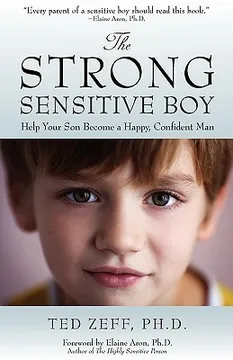
Key Takeaways
1. High sensitivity is an innate, biological trait, not a pathology or choice
Approximately twenty percent of all males are highly sensitive, or one out of every five boys has a finely tuned nervous system.
Innate biological wiring. High sensitivity is a genetically programmed trait characterized by a highly responsive central nervous system. Highly sensitive boys (HSBs) process sensory data and emotional cues much more thoroughly than their peers, making them easily overwhelmed by loud noises, bright lights, and chaotic environments.
The bridge brain. Neurological research suggests that the sensitive male brain may possess a larger corpus callosum, allowing for enhanced communication between the left and right hemispheres. This biological difference fosters deep intuition, empathy, and advanced verbal skills, rather than a drive for physical aggression.
A survival strategy. In nature, this trait serves as a crucial evolutionary survival mechanism observed in over 100 species.
- Cautious observation before taking physical risks
- Keen awareness of subtle environmental changes and dangers
- High levels of conscientiousness and social awareness
- Deep processing of sensory inputs like smells, textures, and sounds
2. The "boy code" forces sensitive boys to repress their authentic selves
When sensitive boys do not conform to the stereotypical “boy code” and instead express compassion, gentleness, and vulnerability, they are frequently ostracized and humiliated.
The act-like-a-man box. Modern Western society traps boys in a rigid cultural construct that demands physical toughness, emotional stoicism, and aggressive behavior. When an HSB displays natural traits like empathy, gentleness, or tears, he is often shamed by peers and adults who mistake his sensitivity for weakness or femininity.
Repressed emotional trauma. To survive this hostile peer culture, many sensitive boys learn to wear a "tough-guy mask," suppressing every emotion except anger. This chronic denial of their authentic selves creates deep-seated anxiety, low self-esteem, and a high risk of childhood depression.
Redefining true masculinity. True masculine power must expand to include emotional vulnerability, compassion, and peaceful conflict resolution.
- Recognizing that newborn boys are actually more emotionally reactive than girls
- Understanding that violence is a learned behavior, not an inherent male necessity
- Celebrating historical and spiritual male leaders who led with gentleness
- Validating that sensitivity in men is highly valued in many non-Western cultures
3. A mother's secure attachment and balanced protection form the foundation of resilience
The simple fact that you are reading this book means that all along you have been striving to be attuned to him, which is the most important part of parenting.
Secure attachment bond. A mother's primary role is to establish a secure attachment in infancy by responding consistently and lovingly to her sensitive son's needs. This stable foundation of trust acts as an emotional shield, helping the HSB navigate an aggressive world with confidence and resilience.
Avoiding overprotective traps. While mothers must protect their HSBs from harsh environments, they must avoid the trap of overprotection, which can prevent the boy from learning vital coping skills. Mothers should gently encourage outside activities while ensuring their son feels safe, supported, and never rushed.
Healthy parental boundaries. Single mothers and those with unsupportive partners must maintain clear parental boundaries, avoiding the temptation to make the HSB "the man of the house."
- Actively listening to the HSB's subtle emotional cues
- Shielding the boy from loud parental arguments and domestic conflict
- Enlisting a "tribe" of supportive female relatives, like grandmothers
- Using gentle, firm discipline instead of harsh, loud reprimands
4. Fathers must heal the "father wound" by embracing inclusive masculinity
A boy longs for approval from his dad. He needs reassurance from this primary male role model that the boy is masculine enough, just as he is.
The father wound. Many fathers, driven by their own internalized societal pressures, attempt to "toughen up" their sensitive sons through roughhousing, criticism, or forced athletic competition. This rejection creates a deep emotional "father wound" that can cause the boy to suffer from lifelong self-doubt and anxiety.
Acceptance over conformity. When a father accepts his son's sensitive trait rather than trying to mold him into a macho stereotype, the boy's self-esteem skyrockets. Fathers should actively participate in the HSB's preferred quiet hobbies, showing that they value his unique mind and spirit.
Modeling emotional vulnerability. Fathers serve as the primary blueprint for what it means to be a man, making it vital that they model healthy emotional expression.
- Spending quality, one-on-one time doing calm activities
- Defending the son when others mock or shame his sensitivity
- Expressing a full range of emotions, including sadness and fear, in front of him
- Introducing the boy to compassionate, non-aggressive male mentors and role models
5. Overstimulating school environments require active parental advocacy and alternative options
The highly sensitive boy has trouble screening out stimuli and can be easily overwhelmed by noise, crowds and time pressure.
Classroom sensory overload. The typical public school classroom—with its bright fluorescent lights, loud hallways, and constant performance pressure—is a minefield for the HSB. Because sensitive boys pause to reflect before speaking, teachers often misinterpret their quiet observation as a lack of understanding or attention.
Educating the educators. Parents must proactively meet with school staff to explain the biological nature of high sensitivity, ensuring teachers do not use harsh discipline. Teachers can support HSBs by allowing them to join group activities at their own pace and avoiding calling on them unexpectedly.
Exploring alternative schooling. If a public school environment remains toxic or unsupportive, parents should aggressively pursue alternative educational paths.
- Montessori or progressive private schools with calmer, self-paced structures
- Homeschooling or cooperative parent-led learning groups
- Utilizing quiet, one-on-one bonding activities with teachers during recess
- Requesting classroom accommodations, such as seating away from noisy distractions
6. Bullying must be countered with proactive boundary-setting and self-defense
Since bullies target people who stand out, sensitive boys are more vulnerable to bullying.
The bully's target. HSBs are prime targets for school bullies because they abhor physical violence, rarely fight back, and react with visible emotional distress. This visible reaction provides the exact emotional "payoff" the bully seeks, often trapping the sensitive boy in a cycle of silent terror.
Empowering through action. Parents must teach their sons practical, non-violent strategies to defuse bullying, such as maintaining strong body language, walking away, or using humor. It is crucial to validate the HSB's feelings, ensuring he knows the abuse is a reflection of the bully's issues, not his own.
The power of self-defense. Enrolling an HSB in a non-aggressive martial art, such as Aikido, can dramatically transform his self-confidence and physical presence.
- Teaching the HSB to look bullies in the eye and set firm verbal boundaries
- Utilizing the "buddy system" to ensure the boy is never isolated at school
- Documenting incidents of bullying and demanding immediate school intervention
- Helping the boy realize that asking an adult for help is a sign of strength, not weakness
7. Highly sensitive boys thrive in deep, one-on-one friendships rather than aggressive group packs
Unlike most boys, sensitive boys usually prefer to interact with only one friend or play by themselves rather than interacting with a large group of boys.
One-on-one connection. While typical boys often bond in large, competitive "packs" centered around physical tasks, HSBs find these dynamics exhausting and threatening. Sensitive boys thrive in quiet, intimate dyads where they can form deep, authentic, and highly loyal emotional connections with a single trusted friend.
The danger of peer mimicry. In a desperate bid to fit in, many HSBs attempt to mimic the aggressive, teasing behavior of non-sensitive peer groups. This mimicry comes at a massive psychological cost, forcing the boy to suppress his natural empathy and adopt a persona of self-loathing.
Fostering safe social spaces. Parents can support their HSB's social development by facilitating low-stress playdates with other gentle, like-minded children.
- Inviting single friends over for quiet, structured indoor activities
- Helping the HSB find peer groups centered around shared creative or academic interests
- Teaching non-sensitive siblings to respect the HSB's need for quiet and privacy
- Validating the HSB's need for solitary "downtime" to recharge his nervous system
8. Individual physical activities and self-defense are superior to high-pressure team sports
The competitive sports culture is anathema for many sensitive boys, yet boys who aren't athletic tend to feel undervalued and suffer socially.
The athletic pressure cooker. Team sports in Western culture are often dominated by an intense "win-at-all-costs" mentality and aggressive peer teasing. Forcing an HSB into this high-pressure environment can severely damage his self-worth, making him feel physically inadequate and socially isolated.
Embracing individual sports. HSBs still require daily physical exercise to release stress, boost endorphins, and build a healthy body image. Parents should steer them toward individual sports where they can build physical competence without the anxiety of public performance or team judgment.
Reframing physical competence. Physical activity should be a source of joy and personal growth, not a test of masculinity or dominance.
- Swimming, bicycling, running, and hiking in nature
- Non-contact, finesse-based sports like tennis or golf
- Martial arts focused on harmony and self-defense, such as Aikido
- Ensuring coaches are supportive, encouraging, and non-punitive
9. Nurturing the highly sensitive boy's natural spirituality, health, and connection to nature builds lasting self-esteem
With a spiritual base, you can build a solid self-esteem that can remain with you for life.
The healing power of nature. Nature is the ultimate sanctuary for the overstimulated sensitive boy, offering a quiet, beautiful space where his nervous system can deeply relax. Regular exposure to natural environments helps flush out the stress hormones and negative energy the HSB absorbs throughout the day.
Innate spiritual depth. HSBs possess a natural inclination toward deep existential questions, intuition, and spiritual experiences. Encouraging this spiritual side—whether through meditation, yoga, or reading about compassionate historical figures—gives the boy a profound sense of purpose and inner stability.
Holistic health maintenance. Because HSBs feel physical pain and illness intensely, a preventative, holistic approach to health is essential for their well-being.
- Practicing daily deep-breathing and progressive relaxation exercises
- Maintaining a healthy, organic diet free from excessive sugar and processed foods
- Establishing a strict, calming bedtime routine to ensure deep, restorative sleep
- Choosing compassionate, patient healthcare providers who respect the boy's sensitivity
I confirm that I have written detailed takeaways for ALL 9 key takeaways in the format requested.








































