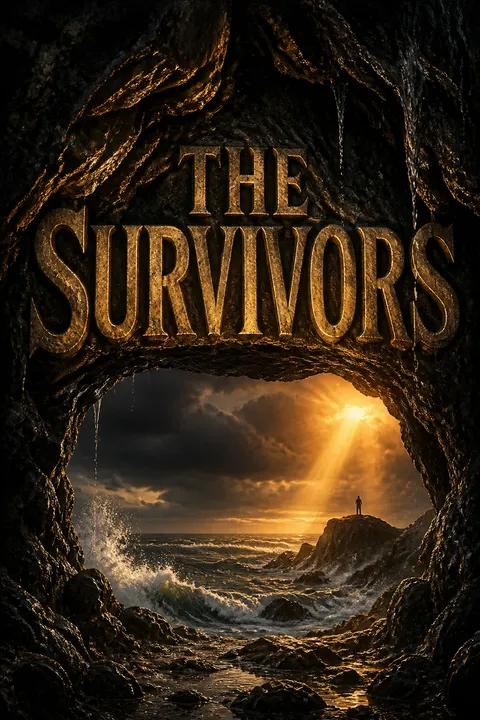
Plot Summary
Return to Evelyn Bay
Kieran Elliott, haunted by a tragic mistake from his youth, returns to his small Tasmanian coastal hometown, Evelyn Bay, with his partner Mia and their baby daughter Audrey. The visit is prompted by his father's worsening dementia and the impending move of his parents to a nursing home. The town, shaped by the sea and its dangers, is quiet in the off-season, but Kieran's return stirs old memories and unresolved guilt. The landscape is both beautiful and oppressive, and Kieran's presence is a reminder to many of a storm twelve years ago that changed everything. The emotional weight of the past is palpable, and Kieran's relationships—with his parents, old friends, and the town itself—are strained by what remains unspoken.
Old Friends, New Tensions
Kieran reconnects with childhood friends Ash, Sean, and Olivia, as well as new faces like Bronte, a young art student renting with Olivia. The group's dynamic is complicated by history: Ash and Olivia are now a couple, Sean is still close but distant, and Kieran's presence is a reminder of old wounds. The town's routines—drinks at the Surf and Turf, walks on the beach—mask deeper fractures. Kieran feels the weight of being both outsider and insider, and the group's conversations are laced with nostalgia, regret, and subtle blame. The past, especially the events of the storm, lingers in every interaction, and the sense of something unresolved is ever-present.
The Weight of Guilt
Kieran's life is defined by the guilt he carries from the storm that claimed his brother Finn and others. His father's decline and his mother's stoic resilience add to his burden. The town remembers, and so does Kieran—every glance, every silence, every casual conversation is colored by what happened. The trauma has shaped his relationships, especially with Mia, who knows the story but can't fully share the weight. Kieran's attempts to help his parents and reconnect with friends are shadowed by his sense of responsibility for the past, and he struggles to find peace or forgiveness, even as he tries to move forward.
A Body on the Beach
The discovery of Bronte's body on the beach shatters the uneasy calm. Bronte, young and full of promise, is found drowned, and the town is thrown into turmoil. The police investigation begins, led by Sergeant Renn and Detective Pendlebury from Hobart. The community's sense of safety is ruptured, and suspicion quickly falls on those closest to Bronte, including Liam, Sean's nephew, who was last seen with her. The tragedy echoes the storm years ago, and old fears and resentments resurface. For Kieran, the event is both a painful reminder of loss and a catalyst for confronting the secrets that have festered in Evelyn Bay.
Bronte's Last Night
The investigation focuses on Bronte's last night: her shift at the Surf and Turf, her interactions with friends and coworkers, and her return home. CCTV footage, witness accounts, and the discovery that she was seen with Liam complicate the picture. The town's gossip mill churns, and the online community forum becomes a battleground of rumor and accusation. Bronte's artistic ambitions, her relationships, and her outsider status are scrutinized. The police search for missing items—a camera and laptop—believed to hold clues. The sense of menace grows, and the community's unity begins to fracture under the strain of suspicion.
Suspicions and Secrets
As the investigation deepens, old secrets begin to surface. Liam becomes the prime suspect, but his guilt is far from certain. The town's collective memory of the storm and Gabby Birch's disappearance is reawakened, and parallels are drawn between past and present tragedies. Kieran and Mia, caught between loyalty and truth, struggle with what they know and what they fear. The police probe the alibis and histories of everyone connected to Bronte, and the search for her missing camera intensifies. The community's veneer of civility cracks, revealing long-held grudges, hidden relationships, and the corrosive power of guilt.
The Storm's Long Shadow
The storm that claimed Finn, Toby, and Gabby Birch casts a long shadow over Evelyn Bay. The survivors—Kieran, Sean, Olivia, and others—are marked by what they lost and what they did to survive. The town's rituals, from memorials to daily routines, are shaped by the need to remember and the desire to forget. The unresolved questions about Gabby's disappearance, the role of Kieran's father, and the choices made that day linger. The storm is both a literal and metaphorical force, shaping the landscape and the people. As the investigation into Bronte's death continues, the past becomes impossible to ignore.
The Survivors Remember
The survivors of the storm—Kieran, Sean, Olivia, and their families—are forced to confront their memories and the truths they have avoided. The return to the caves, the site of so much trauma, brings old emotions to the surface. Kieran's relationship with his mother Verity is strained by unspoken blame, and his father's dementia blurs the lines between past and present. The community meeting, Bronte's parents' grief, and the police's relentless questioning force everyone to re-examine what they know. The survivors' attempts to move on are complicated by the realization that the past is not done with them.
The Missing Girl's Echo
The mystery of Gabby Birch's disappearance is reignited by Bronte's death. The parallels—young women lost, the beach as a site of tragedy, the community's failure to protect—are impossible to ignore. Trish Birch's grief is raw, and her obsessive attempts to test the currents with backpacks are both heartbreaking and unsettling. The discovery that Gabby's bag was found on Finn and Toby's boat raises new questions. The town's collective guilt and the inadequacy of past investigations come under scrutiny. For Kieran, the echo of Gabby's fate is a reminder of the limits of memory, justice, and forgiveness.
Family Fractures
The investigation and the resurgence of old wounds strain family bonds to the breaking point. Kieran and Verity's relationship is tested by revelations about Finn, the storm, and the burden of blame. Brian's decline adds to the sense of loss and helplessness. Mia, caught between past and present, struggles to support Kieran while dealing with her own memories of Gabby. The families of the victims—Bronte's, Gabby's, Finn's, Toby's—are united by grief but divided by suspicion and regret. The question of what it means to survive, and at what cost, becomes central as the truth edges closer.
The Town Turns Inward
As the investigation stalls and rumors swirl, the town turns inward. The online forum becomes a site of accusation and defense, and old alliances fracture. The Surf and Turf, once a hub of community life, is nearly deserted. The police, under pressure to solve the case, revisit old evidence and question everyone's motives. The sense of safety is gone, replaced by fear and mistrust. The survivors, once united by tragedy, are now isolated by their secrets. The town's insularity, once its strength, becomes its weakness as the truth threatens to tear it apart.
The Search for Truth
The search for Bronte's missing camera and laptop becomes the key to unlocking the mystery. Detective Pendlebury's methodical approach, combined with Kieran's local knowledge, leads to new discoveries. Bronte's photographs, uploaded to a university server, reveal more than expected—images of the caves, the beach, and people who may have been involved. The investigation into Gabby's disappearance is reopened, and the timeline of the storm is re-examined. The realization that Finn and Toby were already at sea before the emergency call changes everything. The survivors must confront not only what happened, but why.
The Caves' Hidden Stories
The caves, both literal and symbolic, are the heart of the mystery. They are places of beauty, danger, and memory—where Kieran and Olivia met in secret, where Gabby was last seen, where Bronte sought inspiration, and where the truth is finally uncovered. The markings on the walls, the tides, and the hidden passages all play a role in revealing what happened. The caves are a metaphor for the town itself: dark, winding, and full of secrets. As the tide comes in, the past and present collide, and the survivors must face what has been hidden for too long.
The Past Resurfaces
The truth about the storm, Gabby's disappearance, and Bronte's death comes to light. Sean, burdened by guilt and fear, confesses his role in Gabby's fate—an accident born of shame, panic, and the desperate need to hide a mistake. Bronte's discovery of the cave markings threatens to expose the past, leading to her murder. The community's failure to protect its own, the inadequacy of justice, and the corrosive power of secrets are laid bare. The survivors are forced to reckon with what they have done, what they have lost, and what they must do to move forward.
The Reckoning
The final confrontation between Kieran and Sean is both devastating and cathartic. Sean's confession, the culmination of years of guilt and silence, is met with both horror and understanding. The police, the community, and the families must come to terms with the truth. The reckoning is not just legal, but emotional and moral. The survivors must decide what kind of people they want to be, and what kind of community they want to rebuild. The reckoning is both an ending and a beginning, as the tide washes away the old and makes room for the new.
Confessions in the Dark
In the aftermath of Sean's confession and the exposure of the town's secrets, the survivors are left to pick up the pieces. Kieran and Verity find a measure of reconciliation, Mia and Kieran look to the future, and the community begins the slow process of healing. The caves, once places of fear and shame, become sites of memory and understanding. The survivors are changed, but not destroyed, by what they have endured. The truth, though painful, offers the possibility of forgiveness and renewal. The story ends with the sense that, though the past can never be undone, the future is still unwritten.
The Tide Comes In
As the tide comes in, washing away the evidence of tragedy and secrets, the survivors gather what remains and look to what comes next. The town, scarred but resilient, begins to heal. Kieran, Mia, and Audrey prepare to leave, carrying with them both the weight and the lessons of Evelyn Bay. The survivors—those who remain—are marked by what they have lost, but also by what they have found: truth, forgiveness, and the possibility of peace. The tide, indifferent and eternal, reminds them that life goes on, and that survival is both a burden and a gift.
Analysis
A meditation on guilt, survival, and the corrosive power of secretsJane Harper's The Survivors is more than a crime novel; it is a profound exploration of how trauma shapes individuals and communities. The book interrogates the nature of survival—not just who lives, but how they live with what remains. The characters are all, in their own ways, survivors: of storms, of loss, of their own mistakes. The novel asks whether survival is a blessing or a burden, and whether the truth can ever truly set anyone free. The setting—Evelyn Bay, with its treacherous sea and insular community—mirrors the characters' inner landscapes: beautiful, dangerous, and full of hidden depths. The story warns of the dangers of silence and the costs of protecting secrets at the expense of justice and healing. Ultimately, The Survivors suggests that forgiveness is possible, but only when the truth is faced, no matter how painful. The tide, indifferent and eternal, becomes a metaphor for time and change: it washes away evidence, but it also brings the possibility of renewal. The lesson is clear—survival is not just about enduring, but about finding the courage to confront the past and choose what comes next.
Review Summary
Most readers praise The Survivors for its atmospheric coastal setting, rich character development, and slow-burn tension. Jane Harper's ability to evoke the Tasmanian seaside town of Evelyn Bay is consistently highlighted as a standout strength. The mystery, connecting a recent murder to a tragic storm twelve years prior, keeps readers engaged despite some criticism of pacing. Common complaints include an abrupt ending, an overly slow first half, and occasionally underdeveloped characters. Overall, fans of Harper's previous work largely enjoyed the novel, though many consider it slightly weaker than her earlier titles.
People Also Read


Characters
Kieran Elliott
Kieran is the emotional core of the novel, a man marked by guilt over a tragic mistake during a storm that led to the deaths of his brother Finn and others. His return to Evelyn Bay is both a homecoming and a reckoning, as he confronts the consequences of his actions and the unresolved grief of his family and friends. Kieran's relationships—with his partner Mia, his parents, and his old friends—are shaped by trauma, love, and the desperate need for forgiveness. Psychologically, Kieran is introspective, burdened, and searching for meaning. His journey is one of self-acceptance, as he learns that survival comes with its own costs and responsibilities.
Mia Sum
Mia, Kieran's partner and mother of their child, is both an outsider and an insider in Evelyn Bay. She was Gabby Birch's best friend and carries her own scars from the past. Mia is intelligent, compassionate, and quietly strong, often serving as Kieran's moral compass. Her relationship with Kieran is tested by the weight of history, but she remains steadfast. Mia's psychoanalysis reveals a woman who has learned to live with loss, who values honesty, and who is willing to confront painful truths for the sake of healing. Her presence is a source of stability and hope.
Verity Elliott
Verity, Kieran's mother, is a study in resilience and repression. She manages her husband Brian's dementia and the logistics of their impending move with outward calm, but beneath the surface she is deeply wounded by Finn's death and the family's unraveling. Her relationship with Kieran is fraught with unspoken blame and longing for the past. Verity's psychological complexity lies in her need for control, her struggle to accept change, and her eventual willingness to face the truth. Her journey mirrors the town's: a movement from denial to painful acceptance, and the possibility of forgiveness.
Sean Gilroy
Sean is Kieran's oldest friend and the novel's most tragic figure. He is haunted by his role in Gabby Birch's disappearance and, ultimately, Bronte's death. Sean's psychological profile is marked by shame, fear, and the desperate need to keep the past buried. His relationship with his nephew Liam, his brother Toby's memory, and his friends is shaped by loyalty and self-loathing. Sean's development is a slow unraveling, as the pressure of secrets becomes unbearable. His confession is both a release and a tragedy, forcing the community to confront the true cost of survival.
Ash McDonald
Ash is Kieran's childhood rival turned friend, now Olivia's partner. He is practical, competitive, and sometimes abrasive, but also deeply loyal. Ash's landscaping business and his relationship with Olivia are attempts to build a stable life, but he is unsettled by the past and by his own limitations. Psychologically, Ash is driven by a need for respect and belonging, but struggles with jealousy and insecurity. His role in the story is to challenge Kieran and to represent the town's ambivalence about change and forgiveness.
Olivia Birch
Olivia, Gabby's older sister and Ash's partner, is marked by loss and the burden of being left behind. She is intelligent, independent, and sometimes aloof, but her grief for Gabby and her complicated feelings about Evelyn Bay shape her actions. Olivia's relationship with Kieran is colored by shared trauma and unspoken history. Her psychoanalysis reveals a woman who wants to move on but is tethered to the past by guilt and love. Olivia's journey is one of gradual acceptance and the search for peace.
Liam Gilroy
Liam, Sean's nephew and Toby's son, is a young man adrift after the storm that claimed his father. He is sullen, misunderstood, and often the target of suspicion, especially after Bronte's death. Liam's psychological profile is shaped by loss, anger, and a desperate need for validation. His relationship with Sean is both a lifeline and a source of pressure. Liam's development is a study in the dangers of scapegoating and the long-term effects of trauma on the young.
Bronte Laidler
Bronte, the young art student from Canberra, is both catalyst and victim. Her curiosity, creativity, and outsider status make her both beloved and vulnerable. Bronte's pursuit of inspiration leads her to the caves and, ultimately, to her death. Her missing camera and laptop become the keys to the mystery. Psychologically, Bronte is open, ambitious, and trusting, but also naïve about the dangers of the town's secrets. Her fate is a tragic reminder of the costs of silence and the risks faced by those who seek the truth.
Sergeant Chris Renn
Renn is the local police sergeant, a man who has seen too much and carries the weight of the town's failures. He is competent, compassionate, and sometimes overwhelmed by the demands of his role. Renn's relationship with the community is complex—he is both protector and confessor, trusted and resented. Psychologically, Renn is marked by regret over past decisions, especially regarding Gabby's case, and by a desire to do right by Bronte's family. His development is a movement from resignation to action, as he finally confronts the consequences of old choices.
Detective Inspector Sue Pendlebury
Pendlebury, brought in from Hobart to investigate Bronte's death, is methodical, intelligent, and unafraid to challenge the town's narratives. She is an outsider, both respected and resented, whose presence forces the community to confront uncomfortable truths. Pendlebury's psychological profile is marked by empathy, persistence, and a willingness to see beyond appearances. Her role is to unravel the tangled web of secrets and to insist that the truth, however painful, must come to light.
Plot Devices
Dual Timelines and Layered Mysteries
The novel's structure alternates between the present-day investigation into Bronte's death and the long shadow of the storm twelve years earlier. This dual timeline allows for gradual revelation of secrets, as the characters' memories and the town's collective history are peeled back layer by layer. Foreshadowing is used extensively—small details, offhand comments, and recurring motifs (the caves, the tide, the Survivors sculpture) hint at deeper truths. The missing camera and laptop serve as classic MacGuffins, driving the plot and focusing the investigation. The caves themselves are both literal and symbolic, representing the hidden, dangerous, and inescapable nature of the past. The narrative's slow build, punctuated by moments of revelation and confession, creates a sense of inevitability and tragedy, while also allowing for moments of grace and redemption.








































