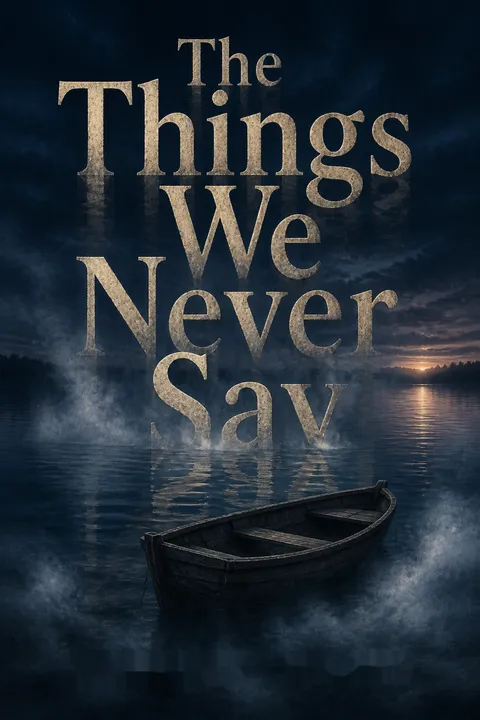

Plot Summary
June's Golden Departure
Artie Dam and Flossie share their last jovial meal at Spud's Bar, bound by loss and the comfort of familiar ritual. Her move to Ohio signals the rupture of one companionship, and Artie's promise to maintain his cheerful self cannot assuage his own growing loneliness. His loving but platonic bond with Flossie stands in contrast to the precise, orderly life he shares with his wife, Evie, whose disapproval of Flossie's theatricality highlights deeper divides. The warmth of that golden Massachusetts evening is at odds with the undercurrents of sadness. Artie sees through the reflective surface of the bay and those around him: things are ending, relationships transforming, and his sense of connection frays as Flossie leaves, prompting quiet self-examination about what he truly holds dear.
The Teacher and the Past
As a beloved high school history teacher, Artie still finds meaning in shaping young minds, though the pandemic has left his students anxious, subdued, and wary of expressing themselves. His empathetic, approachable manner in class is shadowed by memories of his own childhood hardships, particularly his mother's hospitalizations and violence visited on his sister, Maria. The act of collecting students' confidences and year-start essays signifies his attempt to understand and bridge generational gaps—yet the silent burdens of his youth haunt him. Scenes of classroom camaraderie are tinged with nostalgia and subtle anguish, revealing a man who invests himself in others in hopes it might soothe the old wounds he rarely voices, even as he worries about his own son's estrangement.
Fault Lines in Family
Ten years before, Artie's only son, Rob, survived a car crash that killed his girlfriend. The incident devastates the Dams: grief fractures their relationships as legal battles, shame, and guilt create a gulf between Rob and his parents. Evie pours herself into therapy and professionalism, seemingly hardening in the process, while Artie mourns the loss of intimacy with his once-vibrant son. The home that once vibrated with possibility grows colder and more formal, their roles constricted by sorrow—Artie an observer of his own life, Evie a determined survivor, Rob adrift and withdrawn. Yet beneath this, quiet longing and the weight of things left unsaid define every interaction, closing the space for reconciliation and deepening Artie's sense of failure.
Loneliness and Buried Pain
Artie wrestles with the reality that what people reveal is rarely what is true. At a school party, he laments the culture of concealment—knowledge of neighbors' abortions, addictions, affairs never openly acknowledged. Artie feels adrift in his own marriage and community; Evie's matter-of-fact retorts reveal deep emotional misalignment. The chapter ends with Artie's secret: for months, he's obsessed over ways to end his own life without anyone knowing. The logistical, even mundane, details of potential suicide are described in plain language, reinforcing his profound isolation. The urge for oblivion is counterbalanced only by the soft ache of care for his wife, son, and students—a battle he fights silently and alone.
Secrets, Accidents, and Sorrow
Each character's perception of Artie is different: friend, lover, dope, mystery, savior—yet none grasp the depths of his suffering or history. Artie remembers the stratification of class and how his marriage to Evie involved stepping uneasily into her family's world while absorbing, with hindsight, their quiet condescension. Memories of his sister Maria's violence-shadowed life, her yearning for sweetness, and sudden, tragic death, stir both guilt and pity within him. Artie finds little solace in the present—his old connections fading, his son increasingly a stranger. This ever-growing pain of what remains unspoken—between colleagues, friends, and especially within the Dam family—feeds a pervasive, inarticulate sadness.
Small Kindnesses, Small Cruelties
In the classroom, Artie defends awkward, struggling students like Rhonda from cruelty and ridicule—a fierce burst of protectiveness that draws both admiration and confusion. His empathy extends to a plumber, Tom, whose weeping over a wife's affair finds in Artie a gentle confessor. Everywhere Artie looks, secret pain refracts through ordinary exchanges: Rhonda's "sads," Anne Merrill's old affection, and Danny Marino's humiliation. These moments of unsolicited kindness and connection are tinged with the knowledge that most people do not see, or do not want to see, the depth of others' suffering. Artie's repetitive gestures of care for others only reinforce his isolation—a man who gives but struggles to ask for help.
To Say Anything Real
Through it all, Artie seeks meaning in honest conversation and the possibility that people might ever truly communicate their truths. That desire collides constantly with societal rules of silence and superficiality. With Evie, he repeatedly tries and fails to bridge their emotional distance. In his private hours, doubt gnaws at the significance of teaching and his own presence in the world. The cathartic release of his almost-tragic accident—falling into cold water while alone on the boat, fulfilling a precognitive dream—marks a psychological turning point; when rescued, he discovers he wants life, if only faintly. The experience lays bare the quiet blindness with which everyone, including himself, moves through life.
Boat, Water, and Dream
Artie's near-drowning is both literal and metaphoric—caught in the strong current, fighting the cold and exhaustion, he at last relinquishes control, only to be saved at his moment of greatest surrender. His time in the hospital is safe and deeply soothing, surrounded by gentle, competent caregivers and the love of Evie and Rob. The event stirs up memories of his own parents' suffering and his father's humble strength, reframing his perspective. Rob's tearful plea anchors Artie to the world: "You're my explorer," Rob says—if Artie goes, his son might too. The chapter closes with a reconciliation to living, and a fragile, profound connection with the son he feared lost.
Classroom and Conflict
Artie's classroom is where he feels most alive, but even here, conflicts break open the illusion of stability. Confrontations over cellphones, intolerance, and the telling of uncomfortable truths about history and society run parallel to the broader tensions roiling the country: division, anger, and the threat of authoritarianism. After his return from the hospital, Artie tries to bring hope to his students, even as he doubts it himself. Moments of real connection, particularly with Rhonda and Danny, underline the redemptive power of attentive presence. These exchanges are bittersweet; as the world outside grows darker, the classroom becomes a last refuge, the site of battles for young souls and fragile, fleeting guidance.
Free Will and Fate
The mounting political crisis—a polarizing election, rising fascist rhetoric, deteriorating civil discourse—is mirrored in the personal: Artie's musings on free will become more urgent as demands are made to "teach the Confederate side" and old forms of authority erode. Discussions with the principal, Hoover Lakeland—who himself will later succumb to suicide—deepen Artie's fears about the nation's future and the limits of autonomy. Personal agency, once a source of pride, becomes suspect; even Artie's "choice" to live or die seems less about will than about being swept along by forces he can barely name. Against the encroaching tide of despair, Artie's relationships and rituals are small acts of resistance.
Shifting Alliances
The Dam family and surrounding circle shift into new configurations. Rob, after an amicable split with Francesca, brings home Rachel, whose kleptomania further complicates the already tangled web. Evie and Artie's attempts to offer guidance are stymied by their own unresolved secrets. Artie develops a deep, unlikely friendship with Ken Moynihan, the man who rescued him, drawn together by shared experience rather than ideology. In these smaller acts of alliance, the novel probes the limits of understanding—parents plagued by worry for their grown children, teachers struggling to reach students, friendships altering as truths are withheld or revealed. The allure and terror of change permeate every reunion.
The Son's Revelation
Rob reveals to Artie that he is not his biological son, but the result of Evie and Reginald MacDonald's brief liaison, meant only to overcome "immunological infertility." The news devastates and confuses Artie; Rob's anguish is palpable, and he grieves not only the truth but the years of deception. Artie's response is generous, if numbed—declaring it changes nothing—but in the ensuing weeks he lives in a state of suspended disbelief and solitary knowledge, choosing not to confront Evie or disrupt what they have left. The discovery reconfigures Artie's sense of identity, parenthood, and belonging, casting new light on every relationship and memory.
Sins of Omission
The revelation of Rob's paternity breeds a toxic but quiet mutual dishonesty: Artie and Evie, each aware of worlds that the other has kept secret, settle into an uneasy complicity. A sense of power, of possessing one's own silent knowledge, becomes a shield and a prison. Meanwhile, Artie's sudden impulse to shoplift—first a comb, then shirts—reflects a disturbance deeper than guilt or curiosity, a flailing search for control or sensation. Anne Merrill's emotional outreach appears as a faint echo of intimacy now gone, and even Flossie's calls, once a comfort, lose their charm. Unresolved truths shape a life's second half, even as outer routines persist.
The Shoplifted Comb
Artie's inexplicable shoplifting and subsequent kindness from the storeowner, who recognizes the act as a sign of loss, mark a new nadir and a strange absolution. The incident underscores the manifold ways people act out their pain: through theft, through silence, through avoidance. He finds himself further withdrawn from Evie, unable to speak with candor, and their conversations skim surfaces—gardening, politics, the dull routines of marriage—without touching the deeper fault lines. Anne senses the change but remains at the periphery. Rhonda and Danny, in their own adolescent turmoil, seek meaning and comfort in Mr. Dam's quiet acts of understanding, his wounds rendering him ever more approachable.
Grown Children & Shifting Futures
Artie's students are worried, uncertain about the future—anxieties that mirror his own. He prompts them to share hopes and fears, recognizing their private vulnerabilities. Danny's secret passion for Shakespeare and the advice Artie gives Rob about relationships reflect the longing of all these children, and adults, for guidance and care amid the world's unpredictabilities. As Artie resists Evie's invitation to return to London—a place of illusory beginnings—he confronts the irreversibility of the past and the true core of how families are made and unmade. Small gifts, cookies and stories, exchanged in class take on outsized meaning for those who feel lost.
Final Lessons of Empathy
In the waning days of his career, Artie finds himself more moved than ever by the confessions and struggles of his students and friends. His intervention with Danny Marino—cleaning the "fuck you" graffiti, listening without judgement—becomes a formative moment that unlocks Danny's burgeoning understanding of adult pain. Rhonda cherishes Artie's pillowcase as a talisman of acceptance. Meanwhile, Rob returns to Francesca, discards Rachel and, with his father's help, recovers some clarity and hope for his own path. Yet for Artie, these acts of kindness are no longer redemptive, but nostalgic, the sum of what he has left to offer as he grows tired.
The Year Turns Dark
The political landscape worsens: friends disappear, repressive policies spread, social trust erodes. Artie's friendship with Ken is complicated by differences that come sharply into relief. Evelyn Peabody's suicide attempt, Francesca's miscarriage, Rob and Francesca's emigration—these events spiral outward, each person dealing in private with multiplied losses. In the classroom, Artie's purpose diminishes as technologies and values shift, cheating becomes normalized, and the ability to reach his students recedes. The insistent presence of absence—of colleagues, traditions, and hope—presses down, while small acts of mutual comfort become fleeting and fragile.
Memory's Weight and Letting Go
As Artie ages, memories of parents, sister, friends and long-suffering students resurface with greater intensity. His world contracts: Anne Merrill retires, Ken remains, Evie becomes both stranger and companion. Small acts of warmth and honesty—a hand held, a letter written, advice given to a son or student—become the precious currency of meaning. When illness overtakes him, and he dies of a heart attack during a heat wave, his legacy is not the truth of paternity or the sum of his achievements, but the incalculable, often invisible, influence he had on others: Rob, Danny, Rhonda—all bear his imprint. At the funeral, his wife finally understands the scope of his compassion and sorrow, and the importance of what was, and was not, said.
Analysis
"The Things We Never Say" is, at its heart, a book about silence: the inheritance of pain, the quiet labor of empathy, and the impossibility, yet urgency, of true communication. Elizabeth Strout crafts a portrait of ordinary lives shadowed by private wounds and public upheaval, using Artie Dam—teacher, husband, survivor, almost-casualty—as her lens for exploring the limits of what love, honesty, and courage can change. The personal and the political echo one another: just as Artie is battered by grief and the fragmentation of family, the country drifts toward authoritarianism and collective anxiety. Strout's central insight is that everyone moves through the world half-blind, carrying burdens and secrets which, even when revealed, seldom resolve cleanly. Yet, within this uncertainty, small acts of presence—teaching, forgiving, holding—make meaning possible. The novel argues for honesty, even in lies; for the value of witness and the indelible traces of kindness, all while acknowledging that resolution is impossible and loneliness endures. "The Things We Never Say" is a meditation on acceptance: of our limits, our blindness, and our need to touch and be touched—however imperfectly—by others.
Review Summary
The Things We Never Say receives an overall rating of 4.32/5, with most readers praising Strout's deeply moving portrayal of Artie Dam, a beloved history teacher grappling with loneliness, suicidal ideation, and family secrets against the backdrop of the 2024 presidential election. Many celebrate the novel's emotional depth, compassionate characters, and timely themes. Critics, however, find the political messaging heavy-handed and divisive, feeling it overshadows the intimate human story. Despite mixed reactions to its overt political content, the majority consider it a powerful, beautifully written work.
People Also Read








Characters
Artie Dam
Artie, central to the novel, is a beloved high school teacher, husband, and father who faces profound internal suffering masked by an affable exterior. His formative years, shadowed by a mother's mental illness and family violence, create an enduring anxiety and hunger for approval. He deeply values authenticity and kindness, connecting with students and friends through small acts of empathy—yet feels isolated by unspoken pain and a sense of inferiority in his marriage to the upper-class Evie. At the novel's heart is Artie's reckoning: with grief over his son's tragedy, growing distance from those he loves, the loss of purpose, and the unraveling of identity and free will. His development is marked by a hard-won humility, a willingness to find meaning through service despite events he cannot change, and, ultimately, his acceptance of life's inexorable sorrows and joys.
Evie Dam
Evie, Artie's wife, is a former member of the Boston Brahmin class, now a therapist by profession. Her approach to life is methodical and emotionally restrained, in part as a response to her own suffering—infertility, the loss of her parents, and the shattering aftermath of Rob's accident. Evie is more comfortable with compartmentalization and indirect communication than vulnerability, often missing or dismissing Artie's deeper emotional needs. Her affair with Reginald, revealed through the secret of Rob's paternity, is both a practical and devastating compromise that reverberates through her marriage. While she loves Artie, the marriage is defined by mutual misunderstandings, wavering intimacy, and long-held secrets that, even when known, are never truly discussed.
Rob Dam
Rob, Artie and Evie's only child, is the site where generational trauma and secrecy converge. Once lively and joyful, he is irreparably changed by the car accident that killed his girlfriend, afterwards becoming introverted, lonely, and haunted by shame. His pursuit of relationships with first Francesca (an older concert pianist) and then Rachel (a kleptomaniac) reflects his quest for emotional safety and acceptance. The revelation that Artie is not his biological father devastates him, but also paradoxically deepens his love for Artie, who remains the emotional center of his life. Rob's eventual move to Europe and work in tech solidify him as an exile—estranged, yet longing for continuity with his father and the endurance of love.
Flossie MacDonald
Flossie is Artie's most extroverted confidante after her husband Reginald's death. Her style—too made-up, too loud, too perfumed—annoys Evie but fills Artie with laughter and ease. Flossie's vulnerability is acute: she mourns a difficult marriage, navigates a fraught relationship with her daughter, and numbs herself with drink. Her presence exposes both the comfort and limitations of "saying everything," as her openness borders on overwhelming and sometimes prevents others from engaging honestly. Her own hidden affair reveals that even the seemingly "real" people mask their pain, loneliness, and their hunger for sweetness and belonging.
Francesca
Francesca, Rob's first wife, is an acclaimed concert pianist—older, mysterious, and fundamentally unknowable to Artie. Her art consumes her, and her background (rural Maine, humble origins) makes her paradoxically both self-possessed and provincial in Artie's eyes. Francesca is supportive and kind in Rob's darkest moments, and her ability to accept and move through tragedy (like her miscarriage and eventual divorce from Rob) shows resilience. She also becomes a sentinel for the truth and sorrows at the heart of the family, offering comfort and clarity to Artie at critical junctures.
Rachel
Rachel, Rob's later girlfriend, is slender, awkward, and persistently uneasy—a mirror of the Dam family's own emotional uncertainties. Her kleptomania, detected by Evie and Artie, brings family anxieties to a head and triggers decisive—and at last healthy—action from Rob. Rachel's inability to explain herself or form secure bonds underlines the persistent theme of the unacknowledged wounds everyone carries, and the way these can unsettle even those who try hardest to be understanding.
Anne Merrill
Artie's colleague and friend, Anne, is one of the few adults who observes and appreciates his unique gifts as a teacher and his generosity of spirit. Anne's life is marred by her husband's infidelity and her daughter's struggles with addiction, and she finds in Artie's friendship a safe harbor from her own suffering. Quietly in love with him, she refrains from disrupting his marriage but maintains a steady presence, showing the sustaining, even redemptive, power of platonic love and professional respect in the face of disappointment.
Rhonda Lazarre
Rhonda is one of Artie's most overlooked yet profoundly affected students. Anxious, physically awkward, and living with a mother battling mental illness, she finds in Artie's gentle defense and small acts of affirmation the seeds of self-worth. Later, Artie's kindness toward her—his words, his gifts—echo in her adulthood as she becomes a minister, using her empathy for outsiders to bring comfort to others. She embodies the idea that unnoticed, everyday compassion can be transformative.
Danny Marino
Danny, a student who bullies Rhonda, is later humbled and profoundly affected by Artie's stern but compassionate intervention. At home, he navigates parental turmoil and emotional instability, embodying adolescent anger and rebellion. Yet Artie's willingness to see him, discuss Shakespeare, and offer encouragement opens up a path toward healing. Danny's eventual adulthood, shaped by these moments of mentorship, testifies to the long, mysterious reach of a teacher's influence, and the catharsis possible through acknowledged pain.
Ken Moynihan
The boatowner who rescues Artie in his moment of crisis, Ken becomes an unlikely confidant. Though politically at odds, Ken and Artie's shared decency and openness surmount deeper divides. Ken listens as Artie reveals painful secrets, modeling an everyday goodness that stands in for the familial and social trust lost elsewhere. His role highlights the importance of chosen family—those who, though unconnected by blood or past, step in with steadiness and care just when most needed.
Plot Devices
Multiple Viewpoints and Interiority
The novel frequently shifts between Artie's point of view and glimpses into the lives and perceptions of others: Evie, Rob, Flossie, Rhonda, Danny, Francesca, Anne, and even minor characters. This structure is less a series of full perspectives and more a mosaic of how Artie is seen by those around him and how he sees himself—often at odds and filtered through their own wounds. This device underscores the theme of unknowability: that we are each mysteries to others and ourselves, constructing reality piecemeal from partial information and suppressed emotion.
Layered Temporal Structure
The narrative is not strictly linear; memories of Artie's childhood and pivotal tragedies resurface unpredictably, coloring present interactions. The foreshadowing of fate—Artie's obsession with suicide, his "precognitive" dream of drowning, the inevitable revelation of Rob's paternity—lend the story an air of inexorability, as if characters are both actors and acted upon. Political developments in the outside world echo the diminishment of personal agency; past choices reemerge as current predicaments.
Ambiguous Agency & Free Will
Central to the book is an ongoing meditation on whether anyone truly has free will. Artie's choices—whether to die or live, to reveal or conceal a secret, to connect or withdraw—are repeatedly undermined by circumstance, habit, and the long shadow of trauma. This is dramatized in large and small incidents: the accidental tumble into the water, involuntary laughter at Flossie's table, Artie's shoplifting, and the divided response to new revelations. Doubt becomes a lens through which even decisive acts appear preordained or inevitable.
Symbolic Motifs: Water, Boats, Music, Socks
Water and sailing function as metaphors for both freedom and risk, clarity and obscurity. Musical motifs—playing the piano, Francesca's concerts, Artie's own compositions—reflect yearning for harmony, communication, and transcendence, even as their beauty is often solitary. Artie's white socks, repeatedly mentioned, symbolize his resistance to conform and his gentle stubbornness, marking him as both an outsider and someone unconcerned with superficial forms.
Dialogue and Subtext
Much of the novel's force comes from conversations that skirt directness: Artie's polite colloquies with Evie, strained talks with Rob, students' hesitant admissions, traumatic queries and wordless comfort. The plot's emotional weight accumulates in these interstitial spaces, where the real drama is not what is spoken but what is withheld, misinterpreted, or left for the reader to piece together.
Download PDF
Download EPUB
.epub digital book format is ideal for reading ebooks on phones, tablets, and e-readers.








































