
Key Takeaways
1. The Trinity: One God, Three Co-Equal Persons
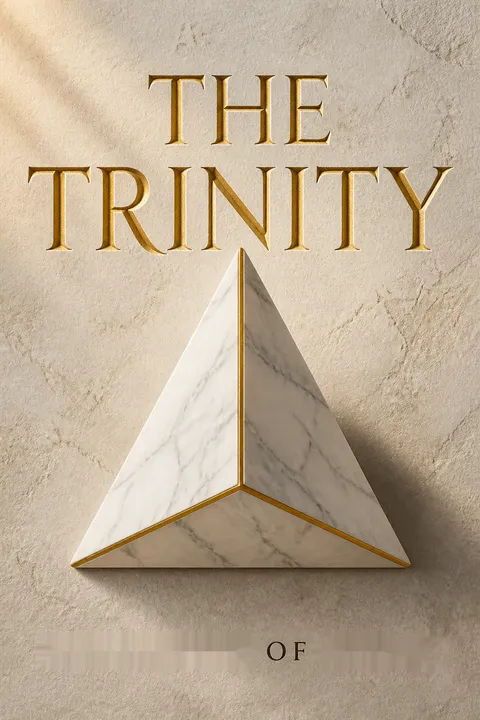
The purpose of all the Catholic commentators I have been able to read on the divine books of both testaments, who have written before me on the trinity which God is, has been to teach that according to the scriptures Father and Son and Holy Spirit in the inseparable equality of one substance present a divine unity; and therefore there are not three gods but one God.
Central dogma. The core of Christian belief, as articulated by the Catholic faith, is that God is a Trinity: Father, Son, and Holy Spirit. These three are distinct persons, yet they share one divine substance, ensuring there is only one God, not three. This unity is paramount, preventing any notion of polytheism.
Absolute equality. Each person of the Trinity is absolutely equal in divinity, power, goodness, and all divine attributes. The Father is not greater than the Son, nor are the Father and Son together greater than the Holy Spirit. This equality is a fundamental truth, challenging any subordinationist views that might arise from scriptural interpretations.
Distinct yet unified. While co-equal and consubstantial, the persons are distinct in their relationships: the Father begets the Son, the Son is begotten by the Father, and the Holy Spirit proceeds from both. This distinction is crucial for understanding the internal life of God, even as their shared essence ensures their singular divine identity.
2. Divine Missions Manifest Eternal Processions
As being born means for the Son being from the Father, so being sent means for the Son being known to be from the Father.
Temporal revelation. The "sending" or "mission" of the Son and the Holy Spirit into the world in time is not a sign of their inferiority, but a temporal manifestation of their eternal "processions" within the Godhead. The Son is eternally "born" of the Father, and the Holy Spirit eternally "proceeds" from the Father and the Son.
Purpose of sending. The Son was sent to become flesh, to mediate between God and humanity, and to accomplish salvation. The Holy Spirit was sent to sanctify and empower believers. These temporal missions reveal the eternal relationships and inner life of the divine persons, making the invisible God known to humanity.
Distinction from Old Testament. Unlike earlier theophanies, which were often mediated by angels or created forms, the New Testament missions of the Son (incarnation) and the Holy Spirit (Pentecost) are unique. They are direct, personal manifestations that reveal the eternal processions, rather than merely symbolizing God's presence.
3. Christ's Dual Nature: God and Servant
So the Son of God is God the Father’s equal by nature, by condition his inferior.
Reconciling paradoxes. Many scriptural passages seem to contradict Christ's equality with the Father, stating, for example, "The Father is greater than I." This apparent contradiction is resolved by understanding Christ's dual nature:
- Form of God: Equal to the Father in his divine nature, through which all things were made.
- Form of a Servant: Inferior to the Father in his assumed human nature, through which he suffered and died.
Mediator's role. As the "mediator of God and men, the man Christ Jesus," he bridges the gap between the divine and human. His humanity allows him to experience and overcome human weakness, while his divinity ensures his power to save and reconcile. This mediation is a central aspect of his mission.
Humility and exaltation. Christ "emptied himself" by taking on human form, demonstrating profound humility. This act of self-abasement, culminating in his death and resurrection, is the means by which humanity is elevated and reconciled to God. His suffering in the "form of a servant" does not diminish his eternal divine glory.
4. The Trinity's Inseparable Operations
Although just as Father and Son and Holy Spirit are inseparable, so do they work inseparably.
Unified divine action. All external works of God—creation, salvation, sanctification—are the work of the entire Trinity, acting inseparably. While a particular action might be attributed to one person (e.g., the Father sending, the Son incarnating, the Spirit sanctifying), the underlying divine power and will are always shared by all three.
Avoiding division. This principle safeguards the unity of God, preventing any notion that the divine persons act independently or that one is more active or powerful than another in creation or redemption. It emphasizes that their distinctness is in their internal relations, not in their external operations.
Manifestation, not separation. When the Son is born of Mary or the Holy Spirit appears as a dove, these are manifestations of a single, inseparable divine work. The visible form pertains to one person, but the creative power behind it is the Trinity's. This ensures that while we perceive distinct actions, we understand a unified divine will.
5. Speaking of God: Substance vs. Relationship
Therefore, although being Father is different from being Son, there is no difference of substance, because they are not called these things substance-wise but relationship-wise; and yet this relationship is not a modification, because it is not changeable.
Divine simplicity. God's nature is absolutely simple and unchangeable, meaning there are no "accidents" or modifications in Him. Attributes like "good," "great," or "wise" are not qualities God possesses but are identical with His very substance. Thus, when predicated of God, these terms are understood "substance-wise."
Relational distinctions. The terms "Father," "Son," and "Holy Spirit" are unique because they are predicated "relationship-wise." They describe the mutual, eternal, and unchangeable relations between the divine persons, not their shared substance. This allows for distinct persons without implying distinct substances.
Avoiding error. This logical framework helps refute heresies like Arianism, which argued that "unbegotten" and "begotten" implied different substances. By understanding these as relational terms, Augustine shows that difference in relation does not mean difference in essence, preserving both the unity and trinity of God.
6. The Holy Spirit: Common Gift, Unique Procession
If therefore any of these three can be distinctively named charity, which could it more suitably be than the Holy Spirit?
Spirit of both. The Holy Spirit is uniquely characterized as the Spirit of both the Father and the Son, signifying His procession from both as from a single principle. This "double procession" is crucial for distinguishing the Holy Spirit from the Son, who is eternally begotten by the Father alone.
The Gift of God. The Holy Spirit is often called the "gift of God" in scripture, emphasizing His role in bestowing grace and love upon humanity. This name highlights His relational aspect, as He is given by the Father and the Son, and is the very love that unites them and binds believers to God.
Not a Son. Despite proceeding from the Father (and Son), the Holy Spirit is not called "Son" because His mode of procession is not generation. He is not "born" but "proceeds," a distinction that preserves the unique filial relationship of the Son while affirming the Spirit's co-equality and distinctness.
7. Man: The Image of God in the Mind
It is his image insofar as it is capable of him and can participate in him; indeed it cannot achieve so great a good except by being his image.
Inner man's reflection. The true image of God in humanity resides not in the physical body or the lower, animalistic aspects of the soul, but in the "inner man"—the rational and intellectual mind (mens). This mind is capable of knowing and loving God, reflecting His nature.
Capacity for God. Man is the image of God because he possesses a capacity for God, a natural orientation towards his Creator. Even when distorted by sin, this image persists as a potentiality for divine participation, making humanity uniquely capable of seeking and finding God.
Dynamic image. The image is not a static imprint but a dynamic process of renewal. Through faith, understanding, and love, the mind is "reformed" and "renewed" to increasingly resemble its divine exemplar. This journey of transformation is central to the Christian spiritual life.
8. The Mind's Trinity: Memory, Understanding, Will
Here we are then with the mind remembering itself, understanding itself, loving itself. If we see this we see a trinity, not yet God of course, but already the image of God.
Analogical model. To grasp the incomprehensible divine Trinity, Augustine proposes an analogy within the human mind: the inseparable triad of memory, understanding, and will. These three mental acts are distinct yet co-equal and co-essential within the single substance of the mind.
Self-referential acts. The mind's ability to remember itself, understand itself, and love itself forms this internal trinity. These are not external acquisitions but intrinsic operations of the mind, reflecting the self-subsistent and self-knowing nature of God.
Eternal and active. While human mental acts occur in time, the mind's fundamental capacity for self-awareness (memory), self-knowledge (understanding), and self-love (will) is always present. When activated by "thought" (cogitatio), this potential becomes an actual, albeit temporal, reflection of the eternal divine processions.
9. The Fall's Distortion and Redemption's Restoration of the Image
What happens is that the soul, loving its own power, slides away from the whole which is common to all into the part which is its own private property.
Sin's disfigurement. The original sin, symbolized by Adam and Eve's disobedience, represents a profound distortion of the divine image in humanity. The soul, driven by pride and self-love, turns away from God, preferring its own private good over the common, unchanging good of God.
Psychological allegory. The Genesis narrative is allegorized to describe the internal fall of the human psyche:
- Adam: Higher reason (contemplation of eternal truth).
- Eve: Lower reason (management of temporal affairs).
- Serpent: Sensuality or carnal appetite.
The fall occurs when the higher reason consents to the lower reason's lust for material power, leading to a disordered psyche dominated by temporal desires.
Redemption's reversal. Christ's mediation, through his incarnation, death, and resurrection, initiates the restoration of the image. This involves a reversal of the fall's downward movement:
- Faith: Responding to Christ's humility and sacrifice.
- Virtue: Controlling carnal appetites.
- Contemplation: Releasing the higher reason for loving God.
This process, a continuous conversion, gradually reforms the mind to its original likeness to God.
10. Wisdom and Knowledge: Two Functions of the Mind
Behold piety is wisdom, while to abstain from evil things is knowledge.
Distinction of reason. The human mind possesses two distinct rational functions:
- Wisdom (Sapientia): The higher function, concerned with the intellectual contemplation of eternal, unchanging truths (e.g., God, divine ideas). This leads to blessedness.
- Knowledge (Scientia): The lower function, concerned with the rational management of temporal and material affairs, including moral action and historical understanding. This is necessary for living well in this mortal life.
Hierarchy of values. Wisdom is superior to knowledge, as eternal things are superior to temporal. While both are good and necessary, knowledge should always be subordinated to wisdom, serving the ultimate goal of contemplating God.
Practical application. This distinction guides the Christian life:
- Piety (worship of God): The essence of wisdom, directing the soul towards God.
- Abstaining from evil: The essence of knowledge, guiding moral conduct in the temporal world.
The pursuit of wisdom purifies the mind for divine contemplation, while knowledge provides the means to navigate earthly existence righteously.
11. The Image's Inadequacy: A Mirror, Not the Reality
We see now through a mirror in an enigma, but then it will be face to face.
Limited reflection. Even the most perfected human mind, reflecting God's image, remains infinitely dissimilar to the divine Trinity. The analogy of the mirror and enigma highlights this profound inadequacy: we see a likeness, but it is obscure, partial, and not the reality itself.
Dissimilarity in simplicity. Unlike the divine nature, where being, wisdom, and love are identical, in the human mind, memory, understanding, and will are distinct acts or capacities. Furthermore, human knowledge is acquired and lost, while God's knowledge is eternal and unchanging.
Creature vs. Creator. The fundamental dissimilarity lies in the distinction between creature and Creator. The human mind, though immortal and capable of God, is a created substance, always less than the uncreated, simple, and immutable divine substance it images. This humility is essential for true understanding.
12. Faith: The Essential Path to Divine Understanding
Unless you believe, you will not understand.
Prerequisite for understanding. Faith is not merely a temporary substitute for knowledge but the indispensable starting point for any genuine understanding of God. It is an act of intellectual humility, accepting divine revelation before full comprehension is possible.
Purification of the heart. Faith purifies the heart, making the mind capable of deeper intellectual apprehension. Without faith, the mind remains clouded by pride, worldly desires, and the limitations of sensory experience, unable to gaze upon the "light inaccessible" of divine truth.
Journey of discovery. The quest for God is a lifelong journey of seeking and finding, where finding leads to deeper seeking. Faith provides the initial certainty, allowing the mind to explore the mysteries of the Trinity, gradually moving from belief to a more profound, albeit always partial, understanding.
Review Summary
Readers largely praise The Trinity as a challenging yet rewarding masterpiece of theological thought. Most appreciate the first half's rigorous scriptural analysis over the latter's psychological analogies, which some find meandering. Augustine's humility, commitment to orthodoxy, and defense of Trinitarian equality are consistently highlighted. Many note the dense, repetitive style creates reading fatigue, while acknowledging profound moments of insight. Despite structural criticisms—partly attributed to unauthorized early publication—reviewers consider it essential reading for serious theology students and a foundational work in Western Christian thought.
People Also Read
About the Author
Other books by Augustine of Hippo

Download PDF
Download EPUB
.epub digital book format is ideal for reading ebooks on phones, tablets, and e-readers.








































