Plot Summary
We Three: Sisters and Secrets
Dara and Marie Durant, raised in the insular world of ballet by their enigmatic mother, inherit the Durant School of Dance after their parents' tragic death. Their bond is intense, shaped by a childhood of discipline, isolation, and the rituals of ballet. Charlie, once their mother's star pupil and now Dara's husband, completes their trio—bound by shared history, secrets, and a sense of belonging that is both comforting and suffocating. The school is their legacy and prison, a place where the past is ever-present. The sisters' differences—Dara's rigor and Marie's wildness—define their roles, but their connection is primal, forged in pain and love. The arrival of adulthood, and the pressures of running the school, begin to strain the delicate balance of their relationship, setting the stage for the unraveling to come.
Fire and Ashes
When a fire breaks out in the dance studio, it is both literal and symbolic—destroying part of their world and exposing the cracks beneath the surface. Marie, living in the studio's attic after leaving the family home, is blamed for the accident, deepening the rift between the sisters. The fire's aftermath brings chaos: insurance claims, anxious parents, and the urgent need for repairs. Yet, beneath the practical concerns, the fire stirs memories of childhood, loss, and the family's history of violence and secrecy. The sisters' shared trauma resurfaces, and the school's fragile stability is threatened. The fire becomes a catalyst, forcing the family to confront what has been smoldering beneath their carefully choreographed lives.
The Contractor Arrives
Into this vulnerable moment steps Derek, a charismatic, rough-edged contractor recommended by a dance parent. He promises not just repairs but transformation—expansion, modernization, a new future for the school. His presence is disruptive, his gaze lingering too long, his words laced with innuendo. He quickly becomes a fixture, his muddy boots and booming voice invading the feminine, disciplined world of ballet. Derek's attention unsettles both sisters, but especially Marie, who is drawn to his brute masculinity. His arrival marks the beginning of a dangerous game, as boundaries blur and the family's vulnerabilities are exposed. The studio, once a sanctuary, becomes a stage for new desires and old resentments.
The Hammer Falls
As Derek and his crew begin tearing down walls, the violence of renovation mirrors the emotional upheaval within the family. The hammer's blows echo through the studio, unsettling students and teachers alike. Marie is fascinated by the destruction, her attraction to Derek growing with each swing. Dara, meanwhile, feels both threatened and intrigued, her authority challenged. The sisters' rivalry intensifies, their roles shifting as Marie becomes emboldened by Derek's attention. The physical transformation of the studio becomes a metaphor for the family's unraveling—old structures are demolished, and what emerges is raw, exposed, and unpredictable. The hammer is not just a tool but a symbol of power, desire, and the potential for ruin.
Animal Desires Unleashed
The tension between Marie and Derek explodes into a secret, animalistic affair, conducted in the shadows of the studio. Dara discovers them, her shock mingling with jealousy and disgust. The affair is raw, degrading, and compulsive—Marie is both empowered and humiliated, seeking escape from her own pain. Derek's dominance awakens something primal in her, a need to be broken and remade. Dara is forced to confront her own desires and the boundaries of her relationship with both her sister and her husband. The studio, once a place of discipline and beauty, becomes a site of transgression and shame. The sisters' bond is tested as secrets multiply and loyalties shift.
The Curtain Between Worlds
The plastic curtain dividing the construction zone from the dance studios becomes a potent symbol—the thin barrier between order and chaos, innocence and experience. As Derek's influence grows, the sisters' world becomes increasingly unstable. Dara struggles to maintain control, enforcing rules and routines even as her authority is undermined. Marie flaunts her bruises, her affair with Derek an open secret. The students sense the tension, their own anxieties and rivalries intensifying. The curtain is both protection and provocation, a reminder that what is hidden cannot remain so forever. The family's private dramas threaten to spill into public view, and the line between performance and reality grows ever thinner.
The Spiral Staircase
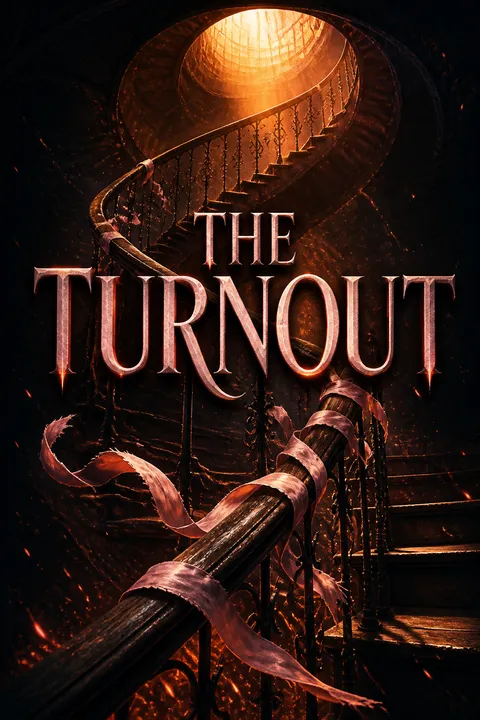
The spiral staircase to the attic, once their mother's sanctuary and now Marie's refuge, becomes a site of confrontation and revelation. It is unsafe, both physically and emotionally—a place where secrets are kept and boundaries are crossed. Derek's attempts to tear it down are met with fierce resistance, especially from Dara, who clings to the remnants of the past. The staircase is a symbol of the family's history, their entanglements, and the dangers of looking too closely at what lies above. As the sisters ascend and descend, they are forced to confront memories of childhood, parental violence, and their own complicity in the family's dysfunction. The staircase is both a path to escape and a trap.
The Flood and the Trap
A burst pipe floods the studio, compounding the chaos and further delaying the renovation. The disaster is both accidental and suspicious, raising questions about sabotage and intent. Derek's grip tightens as insurance money flows directly to him, and the family becomes ensnared in financial and emotional traps. Marie's dependence on Derek deepens, while Dara and Charlie struggle to regain control. The flood exposes the family's vulnerabilities, their inability to protect what matters most. The trap is not just financial but psychological—a web of desire, guilt, and resentment from which escape seems impossible. The family is caught between the need to survive and the fear of losing everything.
The House Divided
The family home, once a symbol of unity, becomes a battleground. Marie's claim to the house is revived, manipulated by Derek's ambitions. Dara and Charlie's marriage is strained by secrets, betrayals, and the intrusion of outsiders. The sisters' relationship, already fragile, is pushed to the breaking point as old wounds are reopened. The house is both fortress and prison, filled with memories of love and violence. As the battle for ownership intensifies, the family's true loyalties are revealed. The house divided cannot stand, and the threat of total collapse looms. The struggle is not just for property but for identity, belonging, and the right to define the family's future.
The Fire Eater and the Sword Swallower
The sisters' childhood memories of carnival performers—the Fire Eater and the Sword Swallower—become metaphors for their adult lives. Both women are drawn to danger, to the thrill of consuming or being consumed. Marie's affair with Derek is an act of self-immolation, a way to feel alive through pain. Dara, too, is drawn to the edge, her need for control masking deeper vulnerabilities. The family's rituals—breaking in pointe shoes, enduring physical pain for the sake of beauty—mirror their emotional struggles. Performance becomes survival, and the line between art and self-destruction blurs. The sisters are both fire eaters and sword swallowers, risking everything for a taste of freedom.
The Nutcracker's Dream
The annual Nutcracker production is the heart of the school and the family's life—a dream of innocence, transformation, and escape. The students' rivalries, especially for the role of Clara, mirror the sisters' own struggles. The ballet's story—a girl's journey from childhood to adulthood, from safety to danger—echoes the family's trajectory. The Nutcracker is both fantasy and warning, a reminder that dreams come at a cost. As opening night approaches, the pressure mounts, and the family's secrets threaten to erupt. The dream is beautiful but fragile, and the price of maintaining it grows ever higher.
Death on the Stairs
The simmering tensions culminate in a violent confrontation on the spiral staircase. Derek, emboldened and threatening, is confronted by Charlie and the sisters. In the chaos, he falls—pushed, pulled, or simply unlucky—and is killed, impaled on the bill holder below. The death is both accident and culmination, the inevitable result of months of conflict, desire, and betrayal. The family is united in shock and complicity, forced to cover up the truth to protect themselves. The spiral staircase, site of so many secrets, becomes a crime scene. The family's world is irrevocably changed, and the consequences of their actions begin to unfold.
The Widow's Tale
The aftermath of Derek's death brings new revelations. His widow, an acupuncturist and Charlie's physical therapist, emerges as a key figure—her own story of betrayal and desperation mirroring the Durants'. The insurance investigation intensifies, and the family's lies are tested. Dara learns of Charlie's emotional entanglement with Derek's wife, a betrayal that shatters her trust. The web of secrets grows more tangled, as each character's motivations and desires are laid bare. The widow's tale is a warning: the past cannot be escaped, and the consequences of desire are far-reaching. The family must reckon with what they have done and what they have become.
Confessions and Collisions
In the wake of Derek's death, confessions spill forth—about affairs, betrayals, and the family's history of violence and incestuous intimacy. Dara confronts Charlie about his role in Derek's death and his relationship with the widow. Marie admits her own complicity, her longing for escape, and her inability to break free from the family's grip. The sisters revisit childhood traumas, the blurred boundaries of love and pain, and the legacy of their parents' destructive marriage. The family's undoing is both shocking and inevitable, the result of years of secrets and suppressed desires. The collisions are both physical and emotional, leaving everyone changed.
The Family's Undoing
Charlie, unable to bear the weight of guilt and betrayal, takes his own life in the studio's attic. His suicide is the final rupture, the end of the family as it was. Dara and Marie are left to pick up the pieces, haunted by memories and regrets. The house, once a symbol of safety, is destroyed by fire—whether by accident or design, it is the final act of erasure. The sisters are forced to confront the truth: their family was always a hothouse, a place of beauty and rot, love and violence. The undoing is both tragedy and liberation, a necessary end to a story that could not continue.
Fire, Snow, and Ash
The fire that consumes the family home is both an ending and a beginning. Dara and Marie escape, watching as the past is reduced to ash. The fire is cleansing, a release from the burdens of history and expectation. Snow falls, mingling with the ashes—a symbol of loss and renewal. The sisters, finally free from the house and its ghosts, are left to imagine new lives. The destruction is total, but it makes possible a future unbound by the past. The fire is both punishment and mercy, a final act of transformation.
Eden Lost
One year later, the Durant School of Dance endures, transformed by loss but still a place of beauty and hope. Dara, now alone, watches as a new generation of dancers takes the stage, their dreams undimmed by the tragedies that came before. Marie has left, seeking her own path, her own freedom. The family's story is both cautionary and redemptive—a reminder that paradise is always lost, but something new can be built from the ruins. The cycle of longing, desire, and escape continues, but the possibility of change remains. The story ends with hope, however fragile, and the promise of new beginnings.
Analysis
Megan Abbott's The Turnout is a gothic ballet noir—a story of sisters, secrets, and the corrosive power of desire. At its core, the novel explores how families are both sanctuaries and hothouses, places where love and violence, beauty and rot, are inextricably entwined. The world of ballet, with its discipline, pain, and pursuit of perfection, serves as both setting and metaphor for the characters' emotional lives. The arrival of Derek, the contractor, is the catalyst that exposes the family's vulnerabilities, setting off a chain of events that leads to betrayal, violence, and ultimately, destruction. Abbott's narrative is rich with symbolism—the spiral staircase, the fire, the Nutcracker—each representing the dangers of longing and the costs of escape. The novel interrogates the boundaries between love and harm, tradition and transformation, innocence and experience. In the end, The Turnout is a meditation on the impossibility of returning to Eden, the necessity of confronting the past, and the hope that something new can be built from the ashes. Its lesson is both cautionary and redemptive: beauty and pain are inseparable, and the only way forward is through the fire.
Review Summary
Reviews for The Turnout are polarizing, averaging 3.11/5. Fans praise Abbott's atmospheric, gothic portrayal of ballet's dark underbelly, lauding the slow-burn tension, lyrical prose, and surprising twists. Many compare it favorably to her previous works exploring competitive female-dominated sports. Critics, however, found the pacing frustratingly slow, characters unlikeable and difficult to connect with, and certain scenes unnecessarily uncomfortable or disturbing. The contractor Derek was viewed by some as cartoonishly villainous. Most agree the final act delivers significant impact, though whether it justifies the buildup remains divisive.
Characters
Dara Durant
Dara is the elder Durant sister, shaped by a childhood of rigor and emotional deprivation. She is the keeper of tradition, enforcing discipline in the studio and in her own life. Her relationship with Marie is fraught—protective yet resentful, loving yet competitive. Dara's marriage to Charlie is both a comfort and a source of anxiety, as she fears abandonment and betrayal. Psychologically, Dara is driven by a need for control, masking deep insecurities and unresolved trauma. Her journey is one of gradual unraveling, as the events of the novel force her to confront her own desires, her complicity in the family's dysfunction, and the limits of her power. By the end, Dara is both broken and freed, able to imagine a life beyond the confines of her past.
Marie Durant
Marie is the younger sister, defined by her wildness, vulnerability, and hunger for love. She is both childlike and cunning, seeking escape from the family's suffocating embrace. Marie's affair with Derek is an act of rebellion and self-harm, a way to feel alive through pain and degradation. Her relationship with Dara is complex—she craves her sister's approval but also resents her authority. Marie's psychological landscape is shaped by trauma, abandonment, and a longing for freedom. She is both victim and agent, complicit in her own undoing. By the novel's end, Marie is transformed—scarred but liberated, able to leave the past behind and seek her own future.
Charlie
Once the golden boy of the Durant School, Charlie is now physically and emotionally damaged by years of dance and family entanglement. His marriage to Dara is loving but strained, haunted by secrets and unspoken desires. Charlie's role as mediator and caretaker masks his own vulnerabilities and resentments. His affair with Derek's wife is both a betrayal and a cry for help, a way to escape the family's grip. Psychologically, Charlie is torn between loyalty and self-preservation, unable to break free from the patterns of the past. His ultimate act—killing Derek and then himself—is both tragic and inevitable, the final expression of a life spent trying to please everyone and save no one, including himself.
Derek (The Contractor)
Derek is the outsider who invades the Durant family's world, exploiting their vulnerabilities for his own gain. He is both seducer and conman, promising transformation while sowing chaos. His affair with Marie is manipulative, feeding on her need for pain and validation. Derek's ambitions extend beyond the studio—he seeks control over the family home, the sisters' legacy. Psychologically, he is a mirror for the family's darkest impulses, a catalyst for their undoing. His death is both accident and retribution, the inevitable result of his intrusion into a world already on the brink.
Mrs. Bloom
A dance parent and former client of Derek, Mrs. Bloom is both victim and enabler. Her own affair with Derek mirrors Marie's, driven by longing and shame. She is manipulated into recommending Derek to the Durants, setting the tragedy in motion. Mrs. Bloom's story is a cautionary tale about the dangers of desire and the costs of complicity. Her interactions with Dara reveal the universality of longing and the ways women are trapped by their own fantasies and the men who exploit them.
The Durant Mother
The sisters' mother is a powerful presence, even in death. A former ballerina, she is both nurturing and cruel, shaping her daughters through discipline and emotional distance. Her own marriage is violent and unhappy, and her relationships with her children are marked by secrecy and blurred boundaries. The mother's legacy is both gift and curse—a love of beauty and art, but also a pattern of self-destruction and denial. Her influence lingers, haunting the sisters as they try to forge their own identities.
The Durant Father
The father is a shadowy figure, present mostly in memory. His alcoholism, violence, and emotional withdrawal leave lasting scars on his daughters. He is both protector and threat, his love unreliable and his anger unpredictable. The father's failures set the stage for the family's dysfunction, and his death is both liberation and loss. His legacy is one of pain and longing, a reminder of the dangers of unchecked desire and the costs of silence.
Randi Jacek (Insurance Investigator)
Randi is the insurance investigator who probes the circumstances of Derek's death. Her personal history with Derek adds complexity to her role—she is both friend and detective, seeking truth but also understanding. Randi's presence forces the family to confront uncomfortable questions and the reality of external judgment. She represents the intrusion of the outside world into the family's private dramas, and her empathy offers a counterpoint to the novel's pervasive cynicism.
Bailey Bloom
Bailey is the student who wins the coveted role of Clara, enduring bullying and sabotage from her peers. Her journey mirrors the novel's themes of longing, resilience, and transformation. Bailey's struggles and triumphs offer hope—a reminder that beauty and strength can emerge from pain. She is both a symbol of innocence and a testament to the power of perseverance.
Madame Sylvie
Madame Sylvie is the head of the partner ballet company and a surrogate mother to the Durant sisters after their parents' death. She embodies the best of the ballet world—discipline, artistry, and compassion. Her presence is stabilizing, offering guidance and perspective. Madame Sylvie's wisdom and kindness are a balm amid the novel's turmoil, and her belief in tradition and renewal anchors the story's conclusion.
Plot Devices
Ballet as Metaphor
The world of ballet is both setting and metaphor—a place of beauty, pain, and transformation. The rituals of dance, the breaking in of pointe shoes, the pursuit of perfection, all mirror the family's emotional struggles. Ballet's demands for discipline and sacrifice reflect the characters' attempts to control their lives and bodies. The Nutcracker, in particular, serves as a recurring motif—a story of innocence lost, desire awakened, and the dangers of fantasy. The discipline of ballet is both salvation and curse, offering structure but also perpetuating cycles of pain.
The Spiral Staircase
The spiral staircase to the attic is a central symbol—unsafe, winding, and mysterious. It represents the family's history, the ascent to forbidden knowledge, and the descent into chaos. Key events—affairs, confrontations, and ultimately death—occur on or around the staircase. Its physical instability mirrors the emotional instability of the family, and its presence is a constant reminder of the dangers of looking too closely at the past.
Foreshadowing and Repetition
The novel employs foreshadowing and repetition to underscore the inevitability of tragedy. Childhood stories, family rituals, and past traumas are echoed in the present—fires, accidents, and betrayals recur, suggesting that the characters are trapped in cycles they cannot escape. The repetition of phrases, images, and events creates a sense of fatalism, while also highlighting the possibility of change. The past is always present, shaping the characters' choices and destinies.
Unreliable Narration and Shifting Perspectives
The narrative is filtered through Dara's perspective, but her reliability is constantly in question. Memories are fragmented, emotions are suppressed, and key events are obscured by denial and self-deception. The shifting perspectives—between Dara, Marie, Charlie, and others—create ambiguity and tension. The truth is elusive, and the reader is forced to piece together the story from conflicting accounts and incomplete information.
The House as Character
The family home is more than a setting—it is a character in its own right, embodying the family's history, secrets, and desires. Its rooms are filled with memories, its walls bear the scars of violence and love. The house is both a refuge and a trap, a place the characters long to escape but cannot leave. Its destruction by fire is both an ending and a release, a necessary act of erasure that makes possible the hope of renewal.








































