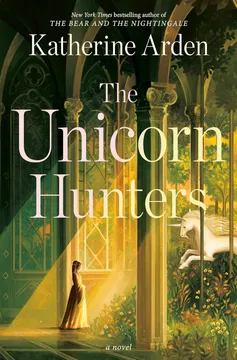
Plot Summary
Rain Over Nantes
Beneath a shroud of mist and the echo of bells, Duchess Anne of Brittany leads her diminished court from Mass through a soaked Nantes, unaware that a French envoy—La Trémoille—has come to force her to marry France's king, Charles. Her treasury near empty, Anne banters with her restless sister Isabeau and her loyal council while steeling herself against foreign pressure. Rain is constant, a hovering threat; so is the presence of France. In secret, Anne waits on news from a Flanders messenger, her hopes pinned to a clandestine alliance. Each step through her embattled city is heavy with the recent losses of war, every gesture layered with the determination not to be conquered.
Unicorn in Waiting
A chance riddle with her brother Henri launches Anne into a calculated charade for the French envoy: the court spins a tale of a recently sighted unicorn in Brocéliande. France, eager for mythology and power alike, is enticed by the promise of a unicorn hunt—a symbol of virtue and sovereignty. Anne and Henri wield their innocence as weapons, using the ostensible delay of her marriage for the spectacle of the hunt. In this clever manipulation, Anne wins precious time for her own secret plans. The legend of the unicorn intertwines with politics, setting in motion a story where myth and female agency challenge the brutal realities of conquest.
Secrets and Schemes
While the French envoy revels in supposed superiority, Anne's Austrian messenger, Baron Polhaim, is quietly drawn into the court's covert dances and clandestine meetings. Anne reveals herself incognita at a lively feast—clever, sharp, and nothing like the puppet France expects. Hidden rendezvous and subtle power-plays create a web of uneasy alliances and dangerous secrets. As Anne crafts her path between rival kings, her own council struggles to maintain control or even comprehension. The tension thickens: Brittany's fate will hinge not only on diplomatic marriages but on the successful outwitting of every force, human and magical, aligned against her.
The French Marriage Threat
La Trémoille pushes relentlessly for Anne to wed Charles of France, insisting on an alliance by force of tradition and arms. Anne, haunted by oaths to her late father, refuses—clinging to her realm's independence. With little hope, her court prepares to gamble everything on a covert Austrian marriage. In private moments with Isabeau, Anne voices the brutal truth: their inheritance comes at the price of personal freedom and future happiness. The young duchess's heart is pulled between the love of home, the promise to her father, and the sacrifices demanded by politics—her resolve hardening even as danger draws nearer.
The Proxy Betrothal
The court's plans crystallize when news arrives: Maximilien of Austria agrees to Anne's daring proposal—a proxy wedding, legally binding but secret, held in Brocéliande's magic-shadowed convent. Here, divination fails, communication is blocked, and the eyes of France are blind. At the moonlit chapel, Anne and Polhaim exchange vows amid uneasy omens, while a ghostly apparition delivers her a mysterious mirror, hinting at deeper powers at play. That night, outer rituals reinforce Anne's dignity, inner uncertainties swirl, and the path forward is only a thin thread of hope sewn through a forest alive with legend.
Moonlit Convent Bargain
Anne's night in the convent is haunted by visions both mystical and ominous. The abbess—revealed as something other than she appears—tests Anne's motives and warns her of Brocéliande's dangerous magic. The moonlight in her room carries no earthly logic; conversations slip between the sacred and supernatural. Ghosts, lost objects, and fading memories tangle with the present. The proxy marriage is performed in secrecy, shielded by the forest's magic, but Anne awakens to nightmares: each act of defiance comes with its own specters. Every step toward freedom also walks the knife-edge of the uncanny.
The Braided Mane
With the French general's obsession stoked, Anne's unicorn hunt becomes both ritual and ruse. Deep in Brocéliande, surrounded by myth, Anne alone faces the legendary beast. To her awe, a true unicorn appears—elegant, silent, and inexplicably drawn to her hand. But the convergence of hunts, both mortal and supernatural, threatens disaster. At the last moment, Anne flees with the unicorn into tangled realities, accepting a gift of its mane. The chase leaves her shaken, the political theater complete; France is deceived, Anne emboldened. Yet the encounter grants her more than a trophy—it awakens dangerous new sight.
The Lost Lands' Messenger
Among celebrations and unease, a stranger emerges—Julien Moreau, a diviner lost to the world for two centuries in the Lost Lands. His mind shattered, he delivers a chilling message: a prophecy that the korrigan-king (faerie king) seeks to marry Anne and will send three signs—water, fire, and memory. His presence sets the court on edge; secrets surface, and lost things begin to reappear. The unnatural overlays the familiar. Anne realizes Brocéliande's magic is not simply myth, but active, perilous, and intimately connected to her own fate.
Games of Power and Ghosts
Elsewhere, France's regent Marguerite and Duke Louis of Orléans plot their own maneuvers; unicorn rumors, the opportunity for conquest, and the mythic hunt fuel ambitions and distrust. Orléans, once Anne's childhood hero, is now a pawn and a risk, his divided loyalties as dangerous as open war. Anne is beset by haunting visions and visits from Moreau's ghosts, while her sister Isabeau yearns for ways to use magic to save Brittany. The boundaries between legend, memory, and politics blur; every character is forced to reckon with the shadows of their own choices.
Shadows on the Wall
As the three prophesied signs materialize—salt water flows impossibly through Nantes, fire haunts the castle by night, and supernatural memories invade the waking world—Anne's court teeters on collapse. Marguerite leverages fear to pressure Anne; Moreau manipulates from the shadows, his obsession spiraling. Ghostly women appear to Anne and Isabeau—victims of a madman's search for power in faerie. Anne's growing supernatural sight is both blessing and curse, offering glimpses of deeper reality yet binding her increasingly to the world of legend.
The Feast of Entry
To buy time and control her image, Anne arranges a triumphant procession through Nantes, weaving myth with statecraft. Banners, unicorn puppets, and pageant carts recall ancient legends and signal her claim to both tradition and innovation. The joyous spectacle is shattered when an enchanted flood surges through the city, sparking panic and awe—the first open sign from the Lost Lands. Anne's calm in disaster bolsters her following, but the court senses the stakes are shifting beyond human comprehension.
The First Sign: Water
Supernatural events escalate: water from the Lost Lands inundates festivals; fires and unquiet ghosts follow. Anne must navigate threats from within and without as rumors of faerie kings swirl and her marriage becomes both more critical and more impossible. Her own prophetic dreams and the sudden reappearance of lost and enchanted objects convince her that Brittany's destiny is entwined with powers no prince can control—and that sacrifice may not guarantee salvation.
Fire and Memory
The second and third signs arrive in waves—terrifying visions, a fire with no source, the return of objects from the dead, and anaon (restless ghosts) trailing ruin. The French regent uses these to justify removing Anne from Brittany 'for her own safety'; betrayals fracture the ducal household. Isabeau's impulsive bargain with Moreau grants him entry to the castle's secrets. Anne's inner circle collapses: her guardian betrays her to France, Moreau's magic endangers her life, and Isabeau is swept toward the Lost Lands.
Sisters and Sacrifices
Amid chaos, Anne's love for Isabeau deepens to raw determination—every plan, every alliance, is forged with her sister's safety foremost. Yet Isabeau's quest to save Anne and Brittany leads her straight to making faerie bargains and sacrifices, repeating familial cycles of pain for power. Elesbed, the orphan girl, becomes both witness and agent, threading together the brave and the forgotten. The call of the korriganed, the lure of enchantment, and the limits of self-sacrifice test every character's heart.
The Hunt Unleashed
The legendary unicorn hunt climaxes with myth and mortal peril intertwining: Anne becomes both bait and protector as the unicorn reveals itself, inviting her to change the story's ending. A supernatural chase tears between worlds—dogs, hunters, and Anne herself crossing into the Lost Lands and back. The unicorn's gift of its mane tests Anne's leadership and her understanding of power. The hunt's violence and mercy reshape all plans and cement Anne's singular, unbreakable will.
Between Light and Legend
Magic erupts in the mortal world: water floods, fire destroys, and the castle's walls become as thin as shadows. Julien Moreau, now fully the villainous king of the korriganed, unleashes his power to seize Anne—stealing Isabeau and Elesbed into the Lost Lands. Anne's options dwindle. In a desperate gamble for sovereignty and family, she pursues them, stepping through legend, memory, and her own fears to rescue her sister and challenge darkness directly.
Eyes of the Korriganed
Anne and Louis, Isabeau, Elesbed, and Henri are cast separately into the weird and shifting castle of Never-Was—a place that preys on memory, desire, and sorrow. Tempted by illusory victories, lost loves, and perfect happiness, they must confront their own hearts, discerning truth from comforting lies. Each reunion is hard-won. Driven by intellect, loyalty, and the force of Anne's will, they defeat Moreau with the help of his murdered wives. A bargain with the faerie queen sets the stage for a more audacious quest.
Revolt at Rennes
With her sister and friends safe, Anne claims her agency. Rather than return to France's control, she gambles Brittany and their independence on an even greater legend: Keris, the drowned city of myth. Supported by korriganed and the love she has chosen, Anne leaves her family in safety and enters a new realm. Her command over enchantment and her bond with the unicorn make her a player in a new world—one where history and legend intersect and the possibilities of agency, power, and love are not foreclosed.
Sorcery and Sovereignty
Anne and Louis step into the true Lost Lands in search of Keris. Guided by unicorn and legend, by spells and the wisdom of faerie, they traverse dangers both real and existential: the ruins of wishes, the boundaries of desire, the echoing loneliness of ambition. Faced with sacrifice and self-determination, Anne claims her power—to lead, to love, and to bind history and legend together. The unicorn, the grief-stricken king Gralon Meur, and the unyielding queen Ahèz all shape a gauntlet Anne must run to conquer her city's curse.
Keris Restored
Anne, riding the unicorn, faces the enchanted, decadent city of Keris—entrapped in perpetual festival under the rule of Ahèz. Rallying the people, confronting immortal sorcery, and drawing on her own magic, Anne frees the city from darkness, ending a thousand-year night. She refuses to die for power, instead insisting on living and forging a community. In a hard-won victory, she is acclaimed queen of both Keris and Brittany, reconciling mortal and magical realms. Her act reshapes not only personal destiny but the trajectory of nations—offering a new world where self-sacrifice is replaced by self-sovereignty, love, and the complex hope of dawn.
Analysis
Katherine Arden's The Unicorn Hunters is as much a meditation on female power and historical constraint as it is a tale of mythic adventure. At its core, the novel re-engineers the legend of Anne of Brittany through the double lens of enchantment and sovereignty: the magic here is neither simple wish fulfillment nor mere metaphor, but a device for interrogating what true agency looks like when choice itself is a precious rarity. Anne's journey transforms the familiar narrative of the sacrificial queen—one shaped by bargains, betrayals, and compulsory self-erasure—into an affirmation of creative, collective, and ultimately communal power. In challenging the inevitability of sacrifice, refusing to die for her country but instead living persistently, Anne discovers a new definition of what it means to rule: not mastery over others, but the invitation to join the dawn and bring the lost home. The blending of politics and faerie, family and ambition, emerges as an argument that the stories we inherit need not be the stories we repeat. Arden's retelling brings forward a modern sensibility: that love, nationhood, and freedom are not endpoints bestowed but processes—painful, collective, transformative. The book insists that legend can be rewritten, that midnight feasts can end, and that tomorrow is an invention of the courageous.
Review Summary
Characters
Anne of Brittany
Anne is the novel's axis: born into a losing game, crowned as a child, and haunted by the weight of legacy and promise. She is sharp, witty, and determined, but always aware of the cost of power. Her relationships—especially with her younger sister Isabeau—reveal layers of empathy and anguish; her capacity for love is matched only by her strength of will. Anne's journey is one of continual transformation: from pawn to player, human to legend, sacrifice to sovereignty. She learns to harness not just human politics but mythic magic, forging alliances with faerie, challenging patriarchal structures, and rewriting her fate. Her deepest struggle is negotiating between duty and desire, self-effacement and agency, all in service to a land she loves more than life.
Isabeau
Isabeau's childlike spirit hides a fierce intelligence and loyalty. Her idolization of Anne drives her to reckless deals with supernatural forces to try to keep her sister safe and Brittany free. She is both Anne's Achilles' heel and her anchor; their bond forms the emotional core of the story. Isabeau's willingness to risk herself highlights themes of love versus self-determination and the dangerous allure of magical shortcuts. Her journey is one from passive adoration to active, if hazardous, agency—her choices threaten and ultimately redeem her family, embodying both the beauty and peril of sacrifice.
Henri of Avaugour
Henri is a political outsider—a bastard, a knight, beloved but marginalized. Jovial and uncomplicated, he is Anne's confidant and guardian, wielding outward levity to mask the burden of powerlessness. His loyalty is unwavering, and his role expands from comic relief to stalwart support in war and magic alike. Henri's heart is big enough to encompass both affection for his sisters and the orphans they shelter. His actions—especially in rescuing Isabeau and standing by Anne through supernatural peril—anchor the story in familial love and signal the importance of chosen kin in battles both earthly and arcane.
Louis of Orléans
Louis is the narrative's outsider-within: a former rebel consigned to France's hierarchy, childhood hero to Anne, and later her partner in legend and love. Wry, capable, and honor-bound, he struggles with guilt and longing, torn between self-preservation and passion. Louis's journey charts a shift from pragmatic calculation to bold, irrational sacrifice—throwing his fate in with Anne when it matters most. Their love story is layered with regret and possibility, ultimately symbolizing hope for personal happiness beyond mere duty. In a world built on political barter, Louis's willingness to abandon reason for care gives the book its emotional triumph.
Marguerite of France
Marguerite embodies the ultimate adversary: brilliant, implacable, and determined to add Brittany to France at any cost. Behind her elegance and calculated composure lies a capacity for both tenderness and cruelty. Marguerite's relentless pressure on Anne—veering from negotiation to humiliation—mirrors the inexorable force of empire. Her psychology is shaped by survival, control, and her own history of female sacrifice. Yet the supernatural elements of Moreau—and Anne—ultimately pivot the contest from mere politics to an existential reckoning. Marguerite's relationship to power is both a warning and a mirror for Anne's potential fate.
Julien Moreau
Moreau represents the tragic cost of unchecked longing and the dangers of wielding magic without moral compass. Once a celebrated diviner, he becomes an obsessive, haunted by years in the Lost Lands. His powers—augmentation of senses, enchantment, shadow-walking—grow with his madness. Moreau's pursuit of Anne, invention of omens, and murders of former brides reveal a heart hollowed by ambition. His epic unraveling exposes the limits of power and the destructive potential of fantasy when divorced from human connection. He is both temptation and nemesis, holding a mirror up to the real sacrifices demanded by legend.
Elesbed
Rescued by Anne from a ruined farm, Elesbed becomes both comic relief and subtle oracle. Her practical clarity, bravery, and friendship with Isabeau challenge the adult world's hypocrisy and forgetfulness. Elesbed's child's view of magic—and courage in the Lost Lands—serves as a guide for others, linking themes of loss, memory, and the possibility of redemption. Her bond with the cat Butter suggests affinities with both magic and the everyday; she symbolizes the wisdom of the overlooked and the power of small, essential kindesses.
The Unicorn
The unicorn is both myth and character: a creature of grace, danger, and intelligence. Drawn to Anne's virtue and agency, it becomes her companion through trial—a guide, a protector, and a test. The unicorn's mane and blood are tokens of possibility and consequence, their acceptance marks the transformation from passive sacrificial lamb to active wielder of magic. The unicorn's actions shape the intersection of human will and faerie destiny, acting as the hinge on which enchantment turns.
The Korrigan-Queen
The nameless korrigan-queen is old magic incarnate—wise, proud, neither wholly benevolent nor cruel. She tests Anne's worth, proffers riddled advice, and ultimately becomes an ally on Anne's terms. Her own pain—her lost daughter, the curse of endless memory—mirrors Anne's paradoxical position between agency and predestined loss. Her help comes with warnings, and her judgment anchors the novel's commentary on power, gender, and the mutable nature of legend.
Ahèz
Half-mortal, half-korrigan, Ahèz is both victim and villain: a ruler trapped in an endless night of self-pleasure, refusing justice or connection. Her eternal banquet is the rot at the heart of lost Keris. Through confrontation with Anne, Ahèz becomes a reflection of what happens when sovereignty becomes narcissism, when isolation replaces community. Her ultimate defeat at Anne's hands signals the dawn—not as simple triumph, but as a hard-won return to responsibility, memory, and the living world.
Plot Devices
Dual Worlds and Layered Reality
The novel is anchored by the conceit that two worlds—mortal and Lost Lands—interpenetrate, both physically and psychologically. Brocéliande and Keris are not just settings, but states of being, metaphors for unresolved trauma and the reaches of ambition. The plot uses shadow-walking, the recurrence of lost things, and shifting light as narrative bridges. Events are continually doubled, mirrored, or rerouted, creating suspense and reflecting characters' inner fissures. The transformation between layers of reality echoes Anne's transformation from pawn to queen.
Prophecy and Foreshadowing
Prophecies—both real and invented—drive action and suspense. Moreau's prediction of three signs (water, fire, memory) shapes the narrative's supernatural rhythm and stakes. Early warning dreams and the significance of lost or returned objects serve as micro-foreshadowing: every riddle, every game portends chain reactions. The progression of supernatural signs is mirrored by the escalation of political threats—a fusion that underlines the indivisibility of legend and history in Anne's world.
Political Intrigue and Gendered Power
The major engine of suspense is the political trap: Anne's body is the battleground for empire, her virtue and marriageability the currency of sovereignty. The dance of oaths, proxy weddings, shifting alliances, and courtly spectacle all serve as the mechanisms by which gender and youth become at once power and curse. The repeated motif of self-sacrifice, the pressure to 'go' or 'stay' for the good of all, is subverted as Anne learns to rewrite the conditions of her own story.
Supernatural Agency and the Limits of Sacrifice
The plot repeatedly raises the stakes by requiring choices with no perfect solution—Anne must risk her sister, her realm, or herself; Isabeau must balance loyalty with autonomy. Supernatural elements both amplify and subvert the familiar tale: the unicorn is not just a prize but a collaborator; the Lost Lands are both a hell and a source of liberation. The price of magic is always personal, tying agency to consequence. The structure of repeated tests, hauntings, and reversals culminates in the reimagining of what power and victory mean.
About the Author
Other books by Katherine Arden

Download PDF
Download EPUB
.epub digital book format is ideal for reading ebooks on phones, tablets, and e-readers.








































