Plot Summary
May Day Magic and Fate
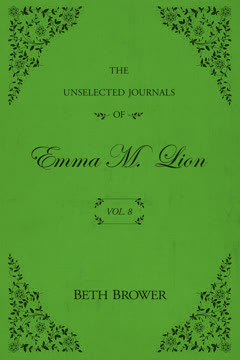
May bursts into St. Crispian's with its chaotic, communal fair, whirling Emma M. Lion — owner of Lapis Lazuli House — into a vivid swirl of games, fortune-tellers, and neighborly affection. Emma, never entirely at rest with herself or her place, notes an odd undercurrent of prophecy, especially after an unsettling visit to the Romani tent. Amid clever banter with her compatriots—Pierce, Islington, and Hawkes—Emma ponders ideas of fate, friendship, and the power or nonsense of predictions. The day's brightness is tinged by the old woman's words: Emma's heart, charred but not dead, splits into new lines of potential, love possible if uncertain. This electric possibility suffuses both her inner world and her outward adventures.
Lion in the Spotlight
Emma's anonymity collapses as rumor and gossip target her relationship with Islington, her sudden role as "the ward"—a position she did not seek. Balls, dinners, and fêtes and social events become gauntlets of stares and whispers, especially under Aunt Eugenia's sharp eye. Emma's irrepressible wit masks growing vulnerability as she navigates questions about her selfhood, legitimacy, and her bond with Islington. The bombardment unsettles her sense of safety, challenging what it means to stand at the center of the stage instead of the margin, as London's society craves scandal and spectacle alongside tradition. All the while, Emma relies on her friendships and sharp tongue to weather the exposure.
Pugilist and Prophecy
Events at St. Crispian's reach a frenetic pitch during the May Day fair, climaxing in a boxing match that transforms Young Hawkes—Emma's quiet, brooding friend—from vicar to local legend as he faces and overcomes brutality in the ring. Emma, torn between shock and pride, becomes custodian of Hawkes's dignity and wounds, only to find her own fate laid bare by the Romani fortune-teller: two possible loves, both genuine, emerging from the ashes of loss. Haunted by the prophecy, Emma finds her emotional world split anew: the possible and the impossible, past grief and hope, love's depth and completeness dueling at the edge of her palm.
Money, Mice, and Mishap
Back at home, Emma's world contracts to more mundane battles—a mouse chase (and Tybalt, the house cat, playing sphinx), Agnes the wise cook, Cousin Archibald's endless irritations, and the ever-tightening grip of financial insecurity. Pierce, the photographer, faces his own devastation: a market crash wipes away his careful savings, leaving Emma aware of her emotional and practical entanglement with him. Dreams of crisis blend into anxious waking hours, prompting Emma to consider work anew and to lean harder on found family amid persistent uncertainty. Resourcefulness, humor, and humility become survival tools as the bonds of household life are tested.
Victoria's Tears and Hidden Hearts
When Emma finds Victoria Braithwaite sobbing in The Keep, resentment and rivalry dissolve in shared humanity. Emma's gesture of kindness—offering comfort and company—draws forth necessary vulnerability, even as Pierce distracts shopgoers with a staged fall to help them escape, deepening trust and affection between all three. Later, Emma juggles tea with potential suitors, reveals and conceals feelings for Pierce, and manages the complex—or comic—interference of Charles Goddard. The chapter explores the shifting boundaries between roles: adversary and ally, friend and beloved, as private intimacy and public roles press tightly, often comically, often painfully.
Troubles of Friendship and Fortune
Emma agonizes over her own actions, notably submitting an account of Hawkes's May Day boxing victory to the St. Crispian's Gazette. Regretting, she tries to retract it, but finds herself trapped in the mechanisms of community history, forced to trust her telling more than others' "fluffery." The incident crystallizes the tension between Emma's care for others' dignity and her compulsion to record and shape narrative. Elsewhere, financial woes persist, roles and relationships are redefined through small disasters, and Emma leans into wit and solidarity—the heart of daily struggle amid minor humiliations and major affection.
Whispers Behind Velvet Curtains
Social obligations mount as Emma is pulled into an endless circuit of dinners, balls, and Aunt Eugenia's machinations—meant to shore up her cousin Arabella's prospects. Emma reflects on the constraints imposed on her as a woman, neither willing nor able to fit the role—yet also finding herself invigorated and made rebellious by it. Through earnest and comic exchanges with friends and family—some of whom are old rivals, some unexpected allies—Emma maintains her independence through wit, intellect, gentle defiance, and occasional subterfuge. Meanwhile, the deeper questions of love, ambition, and happiness gain focus.
Lost Cats and Found Siblings
The return of Tybalt's true owners—Pierce's friend and his "Accidental Wife"—brings unexpected loss even as reunions abound. Grief over Tybalt's departure is layered atop the broader sense of impermanence, as Emma witnesses the rhythms of borrowed joy and relinquished comfort. Meanwhile, a new family moves into the neighborhood, stirring daydreams about beginnings and the shape of happiness, while Emma's own relationships undergo trial—Pierce's hidden sorrows and history, Hawkes's mysterious disappearances, and shifting affections within the St. Crispian's set all make clear that every gain is shadowed by loss or longing.
Unraveling Secrets
A chance encounter with Gibbs, the pub owner, leads Emma to deliver Hawkes's letters to his private room, gaining privileged entry to his inner sanctum. Tension rises between the joy of discovery and the risk of transgression. Hawkes, returning unexpectedly, assures Emma that the door to friendship is open, if vaguely haunted. At the same time, the community's secrets—the d'Artagnan business, cryptic allusions to Irish plots, Hawkes's clandestine doings—create a web of trust strained at every turn. Meaning is always partial; comfort is bound up with vulnerability, and Emma is forced to choose faith over certainty.
Return of the Prodigal Son
The lightness of country walks with Islington and Hawkes is ruptured when a trek into the village of Nettle brings Pierce's past into present focus. Found by his estranged sister, he is drawn home to face the mother who failed to protect him and the stepfather whose cruelty still inflicts pain. Emma, Islington, and Hawkes accompany him as witnesses and allies. The confrontation is raw, violent, and cathartic: Pierce's rage meets the ruins of his childhood, pain laid bare for all to see. Emma's steady presence, Hawkes's philosophical anchoring, and Islington's protective pragmatism form the bulwark against devastation.
Storm, Fire, Forgiveness
In the aftermath of Pierce's emotional reckoning, Emma's circle draws more tightly together. Storms break—both literal and metaphorical—only to clear the way for fragile restoration. Friends nurse wounds through silence, labor, music, and ritual: fencing matches, secret walks, burning sage, and nighttime feasts bond the foursome in shared resilience. Even as old traumas threaten fissures, a fresh sense of purpose and mutual care arises, enabling sorrow and joy to cohabit in tentative peace. The healing is incomplete but real: forgiveness begins in the telling and the steady, sometimes bruised companionship of people who witness the whole of one another.
The Solaces of Stonecrop
June brings the central quartet—Emma, Pierce, Islington, Hawkes—together at Stonecrop, Islington's ancestral estate. The countryside offers space for healing, play, and rediscovery, loosening the city's anxieties and strictures. Wandering woods, swimming rivers, hunting butterflies, and spontaneous poetry readings provide sublime solace. Emma reflects on her friendships and her own evolving identity, the freedom of Stonecrop echoing the possibility for transformation. As old family wounds surface (Islington's lost twin sister Hannah), love and loss are woven together. The landscape's wildness and comfort become the ground for new bonds and the repair of battered spirits.
Fourfold Alchemy
The Stonecrop weeks forge the four friends into an "alchemy"—a unique and necessary affinity resistant to disbandment, even as external pressures and internal fears persist. Every game, argument, and adventure (from swimming holes to clandestine boxing matches), sharpens the quartet's affinity and interdependence. Emma, always narrator and observer, is both within and outside, noting the cost, joy, and unexpected ache of deep friendship. Family histories (Islington's portrait, the legends of Devereux twins) surface, as do unspoken vulnerabilities. The group's shared truth, Hawkes asserts, is immutable—yet this very irreplaceability is a source of both comfort and acute fear for Emma.
Revels, Rivalries, and Resistance
The arrival of Islington's sister Maggie and her husband Jonathan brings a disruptive energy—Maggie's charisma, boundary-breaking, and underlying pain stoke tensions within the house. Her rivalry with Islington and ambivalent relationship with Emma create new frictions, as old wounds, loyalties, and the challenge of "belonging" are worked and reworked through word and deed. Revels, games, and infractions (like re-naming the maze in the dead of night) become rituals for testing alliances and reinforcing boundaries, as Emma navigates being both outsider and insider, the recipient and objector of other people's projections and schemes.
Maze by Moonlight
Maggie's midnight escapade—relabeling the Ladies' and Gentlemen's Mazes with Emma—sends a playful but subversive shock through Stonecrop's inherited gender codes. This act of resistance, followed by a night on the tower under shifting stars, epitomizes both the absurdity and necessity of making new rules. Emma and Maggie, so unlike, reach a quiet understanding: both trapped and emboldened by their differences. The return to ordinary life is marked by ritual cleansing—literally burning sage to rid the house of Maggie's tumult—leaving Emma to reflect on what should be inherited, and what must be remade, in the architecture of home.
Coming Home
With the end of June, Emma and friends return to St. Crispian's, carrying rural calm and sore muscles back into the clutter and comfort of Lapis Lazuli House. The familiar rituals—tea, cleaning, assessments of the repaired carpet and reorganized garret—enforce a sense of renewal. Social obligations return with a vengeance, as Aunt Eugenia's ball demands Emma's presence, thrusting her again into the games of status and alliance. Balancing gratitude and frustration, Emma reflects on what she's brought back: resilience, readiness for the next challenge, and the gift of friendships that have been tested and found enduring.
The World Tilts Forward
Emma dreams of the charred tree renewed, waking to a sense of peace: what survives catastrophe may be stranger, greener, more promising than what came before. The final pages offer reunion, repair, and anticipation—a role in the annual Julius Caesar performance, a late-night token that intimacy and adventure are far from over. In the tangle of loss, love, and regeneration, Emma chooses hope: "profound, peaceful hope" that persists after grief, recreated and re-embodied through friendship, words, and the never-ending march of ordinary days.
Analysis
Beth Brower's The Unselected Journals of Emma M. Lion: Vol. 8 is a masterful blend of comedic social observation, personal memoir, and a powerful meditation on loss and regeneration. At its heart, the novel interrogates the relationship between fate and agency—playing out the tension between prophecy (what is told to us) and prophecy's slow, often messy fulfillment (how we live regardless). The book's structure—braiding everyday household chaos with larger crises and communal rituals—elevates the ordinary into the heroic, making survival, friendship, and laughter not only possible but revolutionary. Brower's greatest achievement is in her rendering of friendship as modern alchemy, a source of transformation that both destroys and remakes its participants. The lessons are deep: healing is collective, not solitary; love—whether romantic or platonic—demands risk, witness, and the ability to hold both pain and joy in the same hand. Emma's journey isn't about simple self-assertion but about learning to inhabit ambiguity: hope after devastation, yearning after disappointment, and the ever-possibility of new beginnings, even when scarred. The novel thus resonates as both a delight and a map for navigating life's irreducible complexity—reminding us that wholeness may best be found not in closing wounds but in living bravely, again and again, even (especially) after we are burned.
Review Summary
The Unselected Journals of Emma M. Lion receives an impressive 4.73/5 rating, with readers consistently praising its charming protagonist, witty writing, and beloved ensemble cast. Many highlight the deep emotional investment in characters like Pierce, Hawkes, and Islington, with spirited debates over Emma's romantic future. Volume 8 earns particular praise for its emotional depth and the Stonecrop setting, though some critics note pacing issues, excessive filler, and unresolved plotlines, expressing concern about the series' projected length diluting its otherwise exceptional storytelling.
People Also Read






Characters
Emma M. Lion
Emma, orphaned and fiercely independent, is the anchor and lens of the narrative—her wit, empathy, and self-doubt driving both humor and soul-searching. She straddles multiple worlds: the comic-anxious realities of domestic life, the knife-edge of the social hierarchy, and the wild territory of her own heart. Her bonds with the vibrant cast of friends—Islington, Hawkes, Pierce—are both solace and stress. Emma is expert at self-deprecation but trembles when pushed into the spotlight; she craves significance but resists captivity, and her need to observe and record is often at odds with her longing for intimate connection. Emma's journey is one of recalibrating hope after grief, remapping the possible, and discovering the radical power of her own presence.
Niall Pierce
Pierce, photographer and tenant, brings a restless, haunted energy. Outwardly capable and sardonic, his inner life is marked by painful secrets: childhood abuse, forced exile, and a relentless quest for security—financial, emotional, existential. His tender, pained romance with Emma is threatened by both practical disaster (lost savings) and more destructive ghosts (family trauma). Pierce longs for anchorage and fears his own darkness; when forced to confront his stepfather, his rage and shame threaten to unmake him. His arc is one of survival repeated and reframed, seeking to believe in love's possibility even when convinced that home and safety might never be permanent.
Young Hawkes
Hawkes is the quiet, watchful soul whose shadows run deep. Renowned for calm intelligence, he confounds expectations: both bookish and physically formidable (as seen in his victory in the May Day boxing ring). His rooms—and mind—are labyrinthine, full of coded messages, secret causes, and philosophical retreat. Always holding some part of himself apart, Hawkes is nonetheless the one others rely on—his wisdom and presence repeatedly pull friends back from despair. The cost is real: Hawkes's own needs and wounds often go unspoken. His affection for Emma, masked as "distance for your sake," is both real and enigmatic, suggesting a love possible, if not always accessible.
The Duke of Islington
Islington, Emma's supposed guardian, is the classic country house patriarch, effortlessly elegant and privately afflicted. Burdened by past tragedy (the loss of his twin, Hannah), he compensates with control, tradition, and wry humor, yet is most alive in the contexts of chosen friendship and the liberations of Stonecrop, his ancestral estate. His relationship with Emma is one of deep, tangled loyalty—he acknowledges both her independence and the necessity of her presence within his inner circle. Islington's struggle is between public role (guardian, host) and the vulnerability demanded by genuine friendship and personal history.
Agnes
Agnes, cook and housekeeper, is equal parts no-nonsense and gently subversive. The heart of Lapis Lazuli House, she holds the chaos—mice, carpets, emotional crises—at bay with practical counsel and quiet affection. Her membership in the S. S. C. S. S. (servants' society) is source of both comic formality and genuine competence. Agnes provides Emma with reminders of home, nurture, and the necessity of muddling through with good humor, even as societal expectations threaten to flatten her own wishes.
Aunt Eugenia Spencer
Aunt Eugenia is both nemesis and necessary evil. She personifies the strictures of class, gender, and social ambition—her schemes to secure Arabella's future (through dances, alliances, and machinations) are both farcically overbearing and existentially threatening. She is clever, relentless, and occasionally wise, loving her kin even as she steamrolls their agency. Her presence keeps Emma in perpetual rebellion, offering both obstacle and, occasionally, unintended encouragement for Emma's independence.
Cousin Arabella Spencer
Arabella, Emma's cousin, is both foil and mirror: unattainably beautiful and seemingly content in the role as society's darling, she endures the unending pressures of strategic marriage and social maneuvering. Beneath the gloss is an ambivalent, occasionally subversive spirit, dissatisfied with being traded as a "prize" yet lacking the tools Emma possesses for resistance. Arabella's interactions with Emma land somewhere between alliance and rivalry, as both women struggle with the costs of visibility.
Lady Mariana (Countess of Mirrenthorpe)
Islington's elder sister is the calm, organizing heart of Stonecrop. Governing through quiet authority, Mariana is both welcoming and judiciously skeptical, especially regarding new dynamics in Islington's circle (Emma in particular). She acts as both protector and stern mirror—her warnings and orchestrations shape the terms of belonging and reputation. Mariana's relationship with her siblings and their unconventional "alchemy" is marked by loving, if sometimes exasperated, intervention.
Maggie Revel
Maggie, Islington's younger sister, blows through Stonecrop like wild weather—combustible, clever, and unwilling to bend. Her relationship to Emma is fraught with rivalry and grudging recognition, while her marriage to Jonathan Revel is informed by both deep affection and high drama (notably kidnapping him into matrimony). Maggie both challenges and cements group bonds, making space for rebellion and testing the limits of loyalty and order. Her presence brings to the surface all that is unruly, delightful, and dangerous in the group's chemistry.
Tybalt
Tybalt, the house cat who comes and goes, embodies home's instability and the cost of attachment. His eventual return to former owners brings grief but also permits the wider turnings of fate, suggesting, with sly comfort, that nothing and no one is wholly possessed—or wholly lost—in Emma's world.
Plot Devices
Epistolary-Journal Narrative
The novel borrows heavily from diaries and private letters, with Emma as both teller and interpreter. Her journal is not just a record but a mechanism for self-inquiry, confession, and prophecy—allowing the external world's chaos to be rewritten as story, lesson, and intimate truth. The letters and diary entries enable dramatic irony and create space for secrets, half-spoken truths, and the possibility of reinvention through self-narration.
Social Ritual as Test and Stage
Set-piece events (May Day, balls, Visiting Sundays) serve as crucibles: the pressures of tradition, reputation, and competition force characters to drop facades, test alliances, and expose vulnerabilities. Public rituals frame moments of private revelation—a dance turns into a musing about selfhood; a fair's boxing match becomes the crucible for Hawkes's dual identity; a ball's gossip illuminates or wounds. Each event foreshadows changes to Emma's status, the group's dynamic, and the story's emotional arc.
Fortune-Telling and Prophecy
The Romani palm-reader's prophecy is both narrative engine and symbolic axis: Emma's sense of being split by loss and given multiple possible hope/loves is both literal plot device (whom will she choose?) and metaphor for the multiplicity of selfhood. This device foreshadows the arcs of loss, healing, and regeneration that define the novel's emotional core, and recurs in Emma's self-questioning and ultimate embrace of possibility over certainty.
Interlaced Humor and Melancholy
The narrative employs constant comic asides, quips, and ascerbic exchanges—often in the midst of pain or crisis. This device allows both avoidance and deeper intimacy, providing a safety net for characters facing vulnerability. It marks the group's chemistry and enables the book to approach grief, trauma, and longing with both gravity and an unflagging sense of survival.
Rituals of Belonging and Exclusion
Entry into private rooms (Hawkes's, Islington's estate), secret societies (the S. S. C. S. S.), or group rituals serve to mark belonging, trust, and sometimes betrayal. The use of symbolic keys, invitations, and passages not only grants literal access but indexes who is trusted, favored, or kept at arm's length. These thresholds are always fraught: to cross is to risk new hurts or find new sanctuary.
Foreshadowing via Repeated Motifs
Images recur—charred but living trees, split yet budding; ferns and their unlikely allies; the fourfold "alchemy" of Emma, Hawkes, Islington, and Pierce. These motifs foreshadow the resilience of hope, the necessity of embracing transformation, and the cost of real intimacy. The motifs circle and return, reshaping reader expectations and setting the emotional tone from chapter to chapter.