Key Takeaways
1. Addiction: An Ancient, Complex Human Condition
The thing that is terrifying to Susan, and to many others like her, is that they watch themselves making a choice even while feeling there is something wrong with the choosing.
A universal struggle. For thousands of years, humanity has grappled with behaviors resembling what we now call addiction, long before the term itself existed. Ancient texts, like India's Rig Veda, describe gambling addiction with vivid detail, capturing the despair of acting against one's better judgment. This internal conflict, known to the ancient Greeks as akrasia or "weakness of the will," highlights a disordered choice where individuals act contrary to what they truly believe is best for them.
Beyond simple binaries. Addiction is not a simple dichotomy of free choice versus total compulsion. Lived experience, from ancient poets to modern patients, reveals a confusing middle ground. Thinkers like Plato described a "divided self" where intellect struggles to wrangle irrational drives, a concept echoed in modern behavioral economics with "delay discounting" where immediate rewards irrationally overwhelm future goals. Modern interventions like contingency management leverage this understanding, offering immediate, smaller rewards to nudge choices towards long-term well-being.
A spectrum of suffering. The concept of addiction extends beyond substances, encompassing "addictions" to lust, achievement, or even thinking, as seen in Augustine's Confessions or Buddhist teachings on "grasping." This suggests addiction is not a discrete, unique ailment but a manifestation of ordinary, albeit detrimental, psychological processes—a universal human vulnerability. The very word "addiction," from its Latin roots, originally implied a "willed compulsion" or strong devotion, capturing this paradox of active surrender rather than total overthrow of will.
2. Epidemics: Beyond the "Demon Drug" Narrative
Drug epidemics throughout history have commonly featured not just a novel drug but also a powerful industry promoting that drug.
The psychoactive revolution. Beginning around 1500, the world experienced a "psychoactive revolution" as transoceanic commerce introduced new mind-altering substances like tobacco, coffee, and opium to Europe. These new drugs, often initially seen as panaceas, quickly became widespread, leading to "drug scares" – moral panics often stoked by elites to buttress social order amid rapid change. Early examples include King James I's "A Counterblaste to Tobacco," which castigated the plant as a "barbarous and beastly" custom.
Industry's role in addiction. "Addiction supply industries" play a significant role in these epidemics, selling products with "inelastic" demand, meaning heavy users are crucial for revenue. These industries externalize the harms of their products (e.g., cirrhosis, overdoses) onto society, while governments often become financially dependent on drug taxes. This pattern, seen from English tobacco to Purdue Pharma's OxyContin, demonstrates that addiction epidemics are often features of the system itself, not just individual failings or inherent drug power.
Social wounds and demonization. Beyond industry, social dislocation is a profound driver of addiction. The "dislocation theory of addiction" posits that societal wounds—like poverty, war, and loss of culture—are fundamental causes. Examples include:
- Opium Wars fueling addiction in impoverished China.
- The Gin Craze numbing the pain of England's working poor.
- "Deaths of despair" among working-class Americans today.
Drug scares often demonize substances and users, like the "firewater myths" about Native Americans or the "Negro cocaine fiend" stereotype, obscuring systemic oppression and justifying punitive crackdowns.
3. The Shifting Idea of Addiction as a Disease
In some ways, disease does not exist until we have agreed that it does—by perceiving, naming, and responding to it.
Pioneering the disease concept. Benjamin Rush, a Founding Father and "Father of American Psychiatry," was the first influential champion of the idea that habitual drunkenness was a disease. Amidst America's post-Revolution alcohol epidemic, Rush argued that habitual drunkenness was a chronic, relapsing "insanity," resembling "hereditary, family, and contagious diseases." This marked a significant shift, moving the understanding of alcohol problems from purely moral failings to a medical concern.
Reductionism's allure and pitfalls. The term "disease" is slippery; it can mean amenability to medical treatment or imply a sole biological cause. Rush himself, despite his medical framing, also advocated for prayer and moral guidance. However, later figures like Leslie Keeley, with his "bi-chloride of gold" cure, exploited the disease concept for profit, promising "miracle cures" based on simplistic, reductionist theories. This pattern of overconfident, biology-based claims, often misleading, has recurred throughout addiction's history.
The "brain disease" debate. In the late 20th century, the "brain disease model" gained prominence, arguing that addiction is "fundamentally" a brain disease caused by drugs "hijacking" reward circuits. While neuroscience offers valuable insights, critics worry this model oversimplifies, prioritizing biology over psychological, social, and political dimensions. It can also inadvertently increase stigma by portraying individuals as passive subjects with "broken brains," eroding hope and reinforcing a false dichotomy between choice and compulsion.
4. The Rise of Mutual Help and the "Alcoholism Movement"
“I could finish their sentences! They could finish my sentences! We talked each other’s language! It was not a room of strangers. These were my people.”
A new path to sobriety. In the 19th century, the Washington Temperance Society emerged as a groundbreaking mutual-help movement, offering hope and community to "drunkards" who felt doomed by the prevailing "demon rum" narrative. Unlike the elitist temperance movement, the Washingtonians were egalitarian, welcoming diverse members and emphasizing personal testimony and agency over moralistic lectures. This bottom-up approach, focusing on shared experience and mutual support, laid crucial groundwork for future recovery movements.
AA's enduring influence. Alcoholics Anonymous (AA), co-founded by Bill Wilson and Dr. Bob Smith in the 1930s, became the most significant social movement in addiction history. Wilson's own spiritual epiphany and his collaboration with Dr. Bob led to the Twelve Steps, a program balancing medical insight (powerlessness over alcohol) with pragmatic spirituality (a "Power greater than ourselves") and ongoing personal change. AA's emphasis on community, shared identity, and service to others proved profoundly effective, growing into a global fellowship.
Medicalizing alcoholism. Marty Mann, a brilliant strategist and early AA member, spearheaded the "modern alcoholism movement" in the 1940s. Her National Council on Alcoholism (NCA) campaigned to destigmatize alcoholism by framing it as a treatable disease, akin to cancer or tuberculosis. This advocacy, supported by researchers like E. M. Jellinek and later by figures like Betty Ford, shifted public perception, leading to:
- Increased medical acceptance of alcoholism.
- Establishment of specialized treatment units.
- Federal legislation like the Hughes Act.
However, this medicalization, while reducing blame, sometimes oversimplified addiction as a singular, progressive disease, overlooking its diverse manifestations and the potential for spontaneous recovery.
5. Good Drugs, Bad Drugs: A History of Unequal Treatment
There is no drug addiction if the child comes from a good family, with the church, the home, and the school all integrated.
The "junkie" paradigm. In the early 20th century, the U.S. Narcotic Farm (Narco) in Lexington, Kentucky, became a unique prison hospital for people with addiction. While researchers like Lawrence Kolb sought to understand addiction as a psychological problem, the dominant narrative, heavily influenced by Federal Bureau of Narcotics head Harry Anslinger, demonized "junkies" as "psychopaths" and "inferiors." Anslinger's racist scare tactics, exemplified by "Reefer Madness" and the "Negro cocaine fiend" myth, solidified a "pharmacological determinism" that justified harsh prohibitionist policies and mass incarceration.
The illusion of "psychic addiction." Narco's research focused on opioid withdrawal as the "sine qua non of addiction," equating physical dependence with true addiction. This narrow, biology-based definition led to a dangerous blind spot: other substances like cocaine and amphetamines, which caused less dramatic physical withdrawal, were dismissed as only causing "psychic addiction" and thus less "truly" addictive. This distinction, often promoted by pharmaceutical companies, allowed for the widespread, unregulated use of stimulants and sedatives, leading to new epidemics.
Therapeutic entitlement and its costs. This "good drugs/bad drugs" divide created a two-tiered system:
- "Pharmaceuticals" (stimulants, sedatives) were seen as therapeutic entitlements for white, middle-class consumers, often over-prescribed and under-regulated.
- "Drugs" (opioids, cannabis, cocaine) were criminalized, associated with minorities and the poor, leading to punitive enforcement.
This system, fueled by pharmaceutical marketing and racial prejudice, caused immense harm on both sides. It led to devastating drug wars in communities of color and a hidden epidemic of pharmaceutical addiction among privileged whites, demonstrating how distorted understandings of addiction perpetuate inequality.
6. Rehabilitation on Trial: From Coercion to Compassion
The addict is a sick person, and it would be barbarous if the law allowed sickness to be made a crime and permitted sick people to be punished for being sick.
A legal turning point. In 1962, the Supreme Court's decision in Robinson v. California declared it unconstitutional to criminalize addiction as a status, proclaiming that "even one day in prison would be a cruel and unusual punishment for the 'crime' of having a common cold." This landmark ruling marked a shift away from purely prohibitionist approaches, recognizing addiction as a medical problem amenable to treatment rather than solely a crime. It opened the door for a new era of rehabilitative ideals.
The rise of treatment models. This era saw the emergence of diverse treatment models:
- Therapeutic Communities (TCs): Like Synanon, these were long-term residential programs, often confrontational and hierarchical, aiming for "character reconstruction."
- Minnesota Model: Pioneered by Hazelden, this 28-day, 12-step based rehab became the dominant treatment program, professionalizing recovery.
These models filled a void left by the medical profession's historical neglect of addiction, but their rapid expansion often led to a one-size-fits-all approach, rigid adherence to abstinence, and confrontational tactics with limited evidence of effectiveness.
Medication-assisted treatment. Vincent Dole and Marie Nyswander revolutionized addiction treatment with methadone maintenance in the 1960s, demonstrating its effectiveness in stabilizing patients and reducing "narcotic hunger." Despite initial success, methadone faced fierce opposition from prohibitionists and even some treatment providers, leading to overzealous regulation that transformed it into a system of control rather than integrated medical care. Later, buprenorphine emerged, but its access remains racially stratified, highlighting persistent inequities in addiction treatment.
7. Recovery: A Diverse, Lifelong Journey of Change
The longer people are in recovery, the better their quality of life, family engagement, and functioning.
Natural recovery and its implications. Landmark studies, like Lee Robins's research on Vietnam veterans, revealed surprisingly high rates of "natural recovery" from heroin addiction, even without formal treatment. This challenged the traditional view of addiction as a permanent, progressive disease (like the flawed "Jellinek Curve"), demonstrating that a significant proportion of people with substance use problems improve spontaneously. This research underscores the diversity of addiction experiences and the potential for change beyond conventional treatment.
Beyond a "broken brain." While biological factors influence addiction, an overly reductionist view that portrays individuals as doomed by a "broken brain" is misleading. Neuroscience increasingly shows that addiction is a complex interplay of biological, psychological, and environmental factors, and the brain has a remarkable capacity for change in recovery. Brain areas affected by addiction can return to normal, or even surpass baseline levels, with sustained abstinence, demonstrating that recovery is a powerful biological process itself.
Multiple pathways to wellness. Recovery is not a single, uniform path, nor is it solely defined by total abstinence or adherence to a specific program like AA. A growing body of research supports "multiple pathways of recovery," recognizing diverse approaches:
- Self-initiated change.
- Mutual-help alternatives (SMART Recovery, Buddhist Recovery Dharma).
- Medication-assisted treatment (buprenorphine, methadone).
- Psychotherapy for underlying issues (like the author's experience with IFS for anger).
The goal is ongoing positive change, improved functioning, and purpose in life, rather than just the absence of pathology.
Confronting structural stigma. Despite progress, the addiction treatment system remains fragmented, under-regulated, and often exploitative, heavily influenced by the "war on drugs" and its punitive ethos. Structural stigma, manifested in policies and practices, continues to deny many, especially marginalized communities, access to evidence-based care. Harm reduction, a philosophy prioritizing health and safety over prohibition, offers a pragmatic way forward, acknowledging that drug use is a fact of life and that policies should aim to decrease harms, not just stamp out substances.
Review Summary
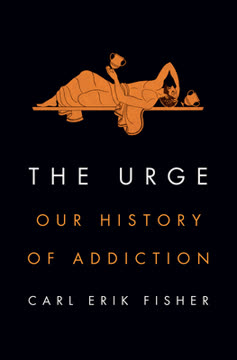
Reviews for The Urge are largely positive, averaging 4.03/5. Readers praise Fisher's unique blend of personal memoir with historical and academic research, calling it illuminating, humane, and important. Many appreciate his vulnerability in sharing his own addiction story alongside centuries of addiction history. Positive reviewers highlight the book's compassionate, non-judgmental approach and its exploration of treatment models, policy failures, and societal stigma. Critical reviewers cite the book as occasionally dry, disjointed, or overly focused on American alcohol history, with some wishing for deeper personal narrative.
People Also Read
 Immersive