
Plot Summary
Cathedral of Captivity
French soldiers, wounded and defeated, are herded into Chartres Cathedral, now a makeshift camp under German occupation. The grandeur of the Gothic nave is pierced by sunlight and the roar of tanks, while the floor is covered in straw, a symbol of both humiliation and endurance. Rumors swirl—of armistice, betrayal, and shifting power—while the men, stripped of identity and news, cling to scraps of humanity. The cathedral, once a place of faith, becomes a liminal space between life and death, hope and despair. The prisoners' world shrinks to rumors, hunger, and the simple act of writing letters home, their only fragile link to the world beyond the barbed wire.
Letters on the Wind
Permission to write home sparks a frenzy among the wounded. Letters are dictated by German rules—no addresses, only permitted phrases, envelopes left unsealed. The act of writing becomes both a ritual and a rebellion, a way to assert existence. Yet, as the wind scatters returned letters across the camp, hope turns to bitter irony: most are mere copies of the German template, their individuality erased. The prisoners' longing for connection is met with bureaucratic indifference, and the barbed wire becomes not just a physical barrier but a symbol of existential isolation.
Endurance in Straw and Silence
The camp's daily life is marked by hunger, cold, and the slow construction of makeshift shelters. Men scavenge for bricks, mark out territories, and dream of home. Writing letters becomes an instinctive gesture, a way to maintain dignity and sanity. The prisoners' gestures—rummaging for crumbs, clutching paper—are ancient, echoing the endurance of prehistoric man. In the silence of captivity, the men's faith in survival is both animal and deeply human, a testament to the enduring mystery of mankind's ability to persist through suffering.
The Suicide's Legacy
The narrative shifts to the past, recounting the suicide of the narrator's grandfather, Dietrich Berger. His death, shrouded in silence and respect, exposes the fractures within the family—between those who accept German domination and those who resist. The absent uncle Walter, estranged yet named executor, looms as a figure of authority and mystery. The family's history is marked by eccentricity, stubbornness, and a fierce sense of duty, embodied in stories of religious defiance, hospitality to outsiders, and the haunting refrain of the family parrot: "Do your duty."
The Absent Patriarch
Walter, the crippled, austere uncle, is both feared and respected. His absence at the funeral intensifies his mythic status. A scholar and organizer, he founds the Altenburg Discussion Groups, gathering intellectuals from across Europe. His relationship with his brothers is fraught, marked by both warmth and resentment. Walter's life is shaped by physical limitation, intellectual ambition, and a relentless pursuit of authority. His legacy is one of both connection and estrangement, a reminder of the complexities of family and the burdens of inheritance.
Ottoman Dreams, Asian Dust
The narrator's father, Vincent, emerges as a restless intellectual and adventurer. In Constantinople, he becomes a confidant of Enver Pasha, shaping the Young Turk movement and orchestrating propaganda and guerrilla warfare. His talents for action and analysis make him indispensable, yet his loyalty is always to ideas rather than nations. Vincent's journey through Turkey, Libya, and Central Asia is marked by both triumph and disillusionment. He seeks meaning in Ottomanism, only to find it a mirage—an idea that dissolves in the realities of tribalism, self-interest, and the emptiness of the Asian steppe.
The Mirage of Ottomanism
Vincent's mission to unite the Turks of Central Asia reveals the hollowness of Ottomanism. The khans and tribes he encounters are indifferent to grand ideas, motivated by survival and local loyalties. A violent encounter with a madman in Ghazni shatters Vincent's illusions, forcing him to confront the limits of ideology and the power of humiliation. He returns to Europe changed, his faith in grand narratives replaced by a deeper understanding of the fragility and contingency of human endeavors.
Return to a Changed Europe
Vincent's return to Europe is marked by estrangement. The familiar streets of Marseille are transformed by new fashions, new faces, and the aftermath of war. He is both a stranger and a survivor, haunted by memories of Asia and the recent suicide of his father. The ordinary details of European life—shop windows, women's dresses, the smell of bread—become sources of wonder and melancholy. In the face of loss and change, Vincent experiences a rapturous sense of freedom, a release from the burdens of the past and the illusions of destiny.
The Altenburg Dialogues
At the Altenburg priory, Walter gathers a circle of scholars, artists, and thinkers to discuss the permanence and metamorphosis of man. The conversations are dense, passionate, and often contentious, ranging from the nature of art and psychology to the differences between civilizations. The participants—historians, ethnologists, poets—bring their own obsessions and prejudices. The discussions reveal both the richness and the limitations of intellectual inquiry, as the search for universal truths is continually undermined by the plurality of human experience and the inescapable reality of death.
Masks, Monsters, and Memory
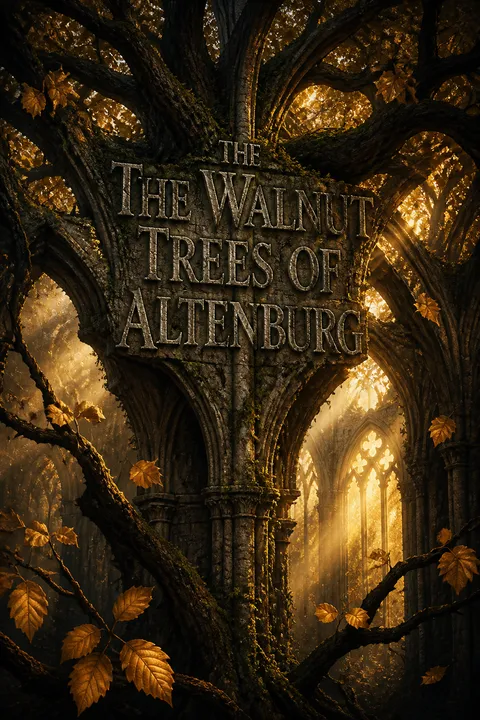
The Altenburg discussions are haunted by the specters of history, myth, and personal loss. Mollberg, the ethnologist, presents his findings on ancient civilizations, emphasizing the diversity of mental structures and the absence of a single, permanent human essence. The group debates the value of psychology, the role of art, and the meaning of fate. Personal memories—of Nietzsche's madness, of family secrets, of war—intertwine with philosophical arguments. The walnut trees outside the priory become a symbol of both rootedness and transformation, their gnarled branches embodying the tension between tradition and change.
The Walnut Trees' Wisdom
The ancient walnut trees of Altenburg stand as silent witnesses to the passage of time and the cycles of human history. Their strength and endurance contrast with the fragility of human life and the transience of civilizations. For Vincent, the trees evoke both the mystery of existence and the possibility of renewal. The landscape—fields, orchards, cathedrals—frames the human drama, offering moments of beauty and consolation amid the chaos of war and the uncertainty of the future.
Gas and the Valley of Death
The narrative shifts to the Eastern Front of World War I, where Vincent, now an officer, witnesses the first use of poison gas. The attack is meticulously planned, justified as a necessary evil by its inventors. Yet, as the gas rolls across the valley, killing indiscriminately—men, horses, trees—the true horror of technological warfare is laid bare. The landscape is transformed into a wasteland of death and decay, and the survivors are left to grapple with guilt, shame, and the collapse of moral certainties.
The Assault of Pity
In the aftermath of the gas attack, Vincent and his comrades are overwhelmed by an "assault of pity." German soldiers, numb with horror, carry dying Russians out of the poisoned trenches, driven by a compulsion deeper than duty or ideology. The boundaries between enemy and ally dissolve in the face of suffering. The urge to save, to comfort, to bear witness becomes a form of resistance against the inhumanity of war. Yet, this compassion is fleeting, soon overtaken by exhaustion, fear, and the relentless machinery of conflict.
The Human Apocalypse
The valley of death becomes a microcosm of the apocalypse—the end of illusions, the exposure of the animal core beneath civilization. The survivors are haunted by the faces of the dead, the grotesque transformations wrought by gas, and the realization that all human achievements are fragile, provisional, and easily undone. The narrative confronts the limits of endurance, the inadequacy of language, and the ultimate unknowability of fate. In the face of annihilation, the only certainty is the persistence of memory and the longing for meaning.
The Tank in the Ditch
In World War II, the narrator and his tank crew advance through the night, haunted by the threat of mines, ditches, and mechanical failure. The tank becomes both a fortress and a tomb, its armor a fragile shield against the chaos of battle. When the tank falls into a ditch, the crew is plunged into terror and helplessness, their survival dependent on luck, ingenuity, and the bonds of comradeship. The experience strips away illusions of heroism, revealing the vulnerability and absurdity of modern warfare.
Dawn Among the Ruins
After surviving the night, the narrator emerges into a world transformed by war. The village is deserted, but life endures—hens peck, cats prowl, laundry flutters on the line. The ordinary details of rural existence become miraculous, imbued with a sense of wonder and gratitude. The survivors are both witnesses and inheritors of a world that has been shattered and remade. The dawn brings not triumph but a renewed awareness of the fragility and resilience of life.
The Mystery of Survival
In the aftermath of catastrophe, the narrator reflects on the mystery of survival—the capacity of men to endure, to find meaning, to sing and hope even in the face of annihilation. The camp at Chartres, the fields of Altenburg, the trenches of the Eastern Front—all become stages for the eternal drama of human existence. The final lesson is not one of despair, but of humility and awe before the complexity, suffering, and beauty of the human adventure.
Analysis
A meditation on the limits and resilience of humanity"The Walnut Trees of Altenburg" is less a conventional novel than a philosophical inquiry, a tapestry woven from memory, history, and existential reflection. Malraux confronts the reader with the fragility of civilization, the contingency of identity, and the inescapable reality of suffering and death. The novel's structure—fragmented, recursive, polyphonic—mirrors the complexity and ambiguity of the human condition. Through its characters, it explores the tension between action and contemplation, tradition and change, individuality and collectivity. The recurring image of the walnut trees—rooted, enduring, ever-changing—serves as a metaphor for the persistence of life amid destruction. In the face of war's inhumanity, the novel finds hope not in grand narratives or ideological certainties, but in the small acts of endurance, compassion, and creativity that allow men and women to survive, remember, and, occasionally, to glimpse the mystery and beauty of existence. The ultimate lesson is one of humility: that to be human is to live with uncertainty, to seek meaning in the face of oblivion, and to recognize, in the endurance of both suffering and joy, the enduring enigma of mankind.
Review Summary
Characters
Vincent Berger
Vincent is the narrator's father, a man of action and thought, whose life bridges the worlds of revolution, war, and philosophy. His journey from Constantinople to Central Asia, from Ottoman dreams to European disillusionment, is marked by both ambition and humility. Vincent's relationships—with Enver Pasha, with his family, with the intellectuals at Altenburg—reveal a man driven by ideals yet acutely aware of their limitations. Psychologically, he is torn between the desire to shape history and the recognition of its contingency. His development is one of increasing skepticism, compassion, and acceptance of the mystery at the heart of human existence.
Walter Berger
Walter, Vincent's uncle, is a figure of authority and contradiction. Crippled yet commanding, estranged yet central, he embodies both the burdens and the possibilities of tradition. As the founder of the Altenburg Discussion Groups, he seeks to create a space for dialogue and reflection, yet his own emotions are often masked by pride and reserve. Walter's psychoanalysis reveals a man haunted by loss, driven by a need for control, and ultimately humbled by the limits of knowledge and power. His relationship with Vincent is marked by both rivalry and mutual respect.
Dietrich Berger
Dietrich, the narrator's grandfather, is a man of fierce independence and eccentricity. His life is shaped by acts of defiance—against the Church, against social norms, against the expectations of family. His suicide is both a mystery and a legacy, casting a long shadow over his descendants. Dietrich's psychological complexity lies in his simultaneous embrace of duty and rejection of authority, his capacity for both generosity and isolation. His death becomes a catalyst for reflection on the meaning of life, faith, and family.
Enver Pasha
Enver is both a friend and foil to Vincent. As a leader of the Young Turks, he embodies the hopes and contradictions of a generation seeking to remake the world. Enver's charm, ambition, and fanaticism drive him to both triumph and disaster. His relationship with Vincent is marked by mutual admiration and eventual estrangement, as the realities of power and the limits of ideology become clear. Psychologically, Enver is driven by a belief in destiny and luck, yet haunted by the consequences of his actions.
Mollberg
Mollberg is a German scholar whose research into ancient civilizations challenges the very notion of a permanent human essence. His findings—on kings sacrificed to the moon, societies ignorant of paternity, the invention of the soul—undermine the certainties of his peers. Mollberg's psychological profile is marked by both rigor and bitterness; his decision to destroy his own manuscript reflects a profound disillusionment with the possibility of synthesis or meaning. He serves as a catalyst for the group's debates, forcing them to confront the plurality and contingency of human experience.
The Narrator (Vincent's Son)
The narrator, Vincent's son, is both participant and observer, shaped by the legacies of war, family, and philosophy. His experiences—as a prisoner, as a tank commander, as a seeker of meaning—mirror and extend those of his father. Psychologically, he is marked by a tension between skepticism and hope, endurance and vulnerability. His development is one of increasing humility, as he comes to accept the limits of knowledge and the necessity of compassion.
Captain Wurtz
Wurtz is a figure of the new, bureaucratic face of war—pragmatic, ruthless, and self-satisfied. His methods—using a child to break a spy, justifying cruelty as necessity—embody the moral ambiguities of modern conflict. Psychologically, Wurtz is both self-assured and hollow, his actions driven by a logic of efficiency rather than empathy. His relationship with Vincent is one of mutual suspicion and reluctant collaboration.
The Professor (Gas Inventor)
The Professor is the architect of chemical warfare, a man whose brilliance is matched by his instability. His justifications for gas—its efficiency, its "humanity"—are undercut by his own unease and the horror of its effects. Psychologically, he is both shaman and madman, driven by a compulsion to innovate and a profound alienation from the consequences of his work. His presence in the narrative marks the transition from traditional to modern forms of violence.
Prade
Prade, a tank crewman, embodies the resilience and skepticism of the ordinary soldier. His background as a peasant, his slow, deliberate speech, and his insistence on dignity in the face of servitude make him both a figure of tradition and a voice of resistance. Psychologically, Prade is marked by a deep sense of responsibility—to his family, to his comrades, to himself. His development is one of endurance, humility, and a quiet assertion of humanity amid chaos.
Bonneau
Bonneau, another tank crewman, is introduced as a figure of fear and bravado—a supposed murderer, a rebel, a misfit. Yet, as the narrative unfolds, his bravado is revealed as a mask for vulnerability and longing. His respect for priests, his attachment to small comforts, and his eventual acceptance by his comrades reveal a complex psychology shaped by exclusion and the search for belonging. Bonneau's development is one of gradual integration, as he moves from isolation to solidarity.
Plot Devices
Framing Narrative and Shifting Perspectives
The novel employs a complex narrative structure, moving between first-person accounts, family memoir, philosophical dialogue, and historical reportage. The framing device of the prisoner in Chartres Cathedral anchors the narrative in the present, while extended flashbacks and digressions explore the lives of Vincent, Walter, and their contemporaries. This structure allows for a layering of perspectives—personal, historical, philosophical—creating a tapestry of voices that reflect the multiplicity of human experience.
Letters and Written Testimony
Letters—written, censored, scattered by the wind—serve as both a literal and symbolic device. They represent the prisoners' attempts to assert identity, maintain connection, and resist erasure. The act of writing becomes a form of endurance, a way to bear witness and preserve memory in the face of annihilation.
Intellectual Dialogue and Debate
The Altenburg discussions function as a microcosm of the broader conflicts—between tradition and modernity, East and West, faith and skepticism. The debates are both earnest and ironic, revealing the limitations of intellectual inquiry and the persistence of existential questions. The use of dialogue allows for the exploration of multiple viewpoints, the testing of ideas, and the dramatization of philosophical conflict.
Symbolism of Nature and Objects
The walnut trees of Altenburg, the fields of clover, the barbed wire, the tank, and the gas all serve as potent symbols. Nature is both witness and participant in the human drama, its cycles of growth and decay mirroring the rise and fall of civilizations. Objects—letters, photographs, masks—become repositories of memory and meaning, their significance shifting with context and perspective.
Foreshadowing and Recurrence
The narrative is marked by recurring motifs—suicide, exile, the search for meaning, the experience of captivity—that link the experiences of different characters and eras. Foreshadowing is used to create a sense of inevitability and to highlight the cyclical nature of history. The past is never truly past; its shadows and lessons persist, shaping the present and the future.








































