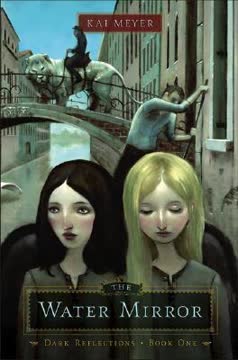
Plot Summary
Orphan Girls on the Canal
Merle, a practical, thoughtful orphan, and Junipa, fragile and blind, journey through the haunting canals of a magical Venice where mermaids are both wonders and prisoners. Their city is besieged by the empire of a resurrected Pharaoh, and the social order is as brittle as the shimmering glass mirrors for which Venice is famed. As they watch a regatta powered by captive mermaids, the sharp divide between beauty and cruelty is clear. Junipa's empathetic sensitivity contrasts with Merle's rational inquisitiveness, and both are keenly aware of their outsider status. United by a yearning for affection and belonging, the girls enter the enigmatic glass workshop run by Arcimboldo, beginning apprenticeships that promise both escape and danger—a new home, yet one shadowed by the city's secrets and the world's impending collapse.
The Mirror Maker's Secret
Inside Arcimboldo's mirror workshop, Merle and Junipa's lives shift from the drudgery of the orphanage to the mystery of magical glass. Amid corridors lined with endless mirrors, the girls are welcomed by Eft, a masked housekeeper whose kindness is tinged with wariness. Each mirror seems to reflect more than the surface—Merle clings to her strange, water-filled hand mirror, her only inheritance, while Junipa quietly navigates her new world through heightened senses. The house's daily routines can't mask the underlying strangeness: forbidden floors, cryptic questions about magic, and apprentices chosen from Venice's lost children. Both find rare comfort in each other, sharing loneliness and hope as dusk settles over the Canal of the Expelled.
Junipa's Silver Eyes
Junipa's blindness is replaced by Arcimboldo with silver mirror shards, allowing her to see—yet at great cost. The operation, magical and traumatic, leaves her vision ghostly and the other apprentices uneasy. As Junipa starts to adjust, her outlook shifts; she becomes both more independent and more uncanny, observing more than others realize. Merle is mistrustful: are these magic eyes a gift or a curse? The change brings a subtle fracture in their friendship, as Junipa's gaze now mirrors the city—shiny on the surface, fractured beneath. The girls navigate evolving power dynamics in the workshop, their bond tested by Arcimboldo's secrets and the uncertain kindness of their mentor.
Midnight Whispers and Wells
At night, Merle witnesses Eft sneaking down the well—a glimpse of something forbidden. The girls' new home is haunted by rumors, the grumbling of apprentices, and the city's predatory stone lions. Eft's night journeys and masked face mark her as an outsider, yet Merle senses kinship instead of threat. A hidden world lurks beneath Venice, flush with old magic and dangers no one will name. When Merle confides in Junipa, they ponder the risks of trust and the transformative power of secrets. The mysterious well becomes a threshold, suggesting that even the ordinary holds doors into darker realms.
Rivalries and Revelations
Boys from Arcimboldo's workshop battle their rivals from Umberto the weaver with childish flair and unspoken desperation, while Merle and Junipa stand apart. The lines between play and violence blur during a paint-splattered confrontation, as alliances harden and vulnerabilities are exposed. Merle realizes that the competition is less about skill and more about identity—who belongs and who is always, inevitably, on the outside. Amid the chaos, Merle meets Serafin, the weaver's apprentice with a thief's past and a heart drawn to lost causes. Their first encounter hints at future alliances, but shadows lengthen around the apprentices as larger dangers move into place.
Masks and Mermaids
Merle follows Eft's night journey to the well and uncovers her secret—Eft is a mermaid who wears a mask to pass for human. The truth is heartbreaking: the canals' polluted waters are fatal for mermaids, who are hunted and enslaved by the very city they once coexisted with. Eft's own tale is one of betrayal, love, and survival, her human legs won through sacrifice and pain. In return for Merle's silence, Eft shows her the secret underwater cemetery where mermaids die, binding the girls in a pact of mutual trust. The city's pain and Eft's exile echo Merle's struggle for belonging, confirming that every mask hides an old wound.
The Touch of the Queen
Merle's unique hand mirror links her to something ancient and sentient—the Flowing Queen, a mysterious entity defending Venice. When a phantom escapes into the mirror world, Junipa bravely explores its depths, but emerges shaken and closed. Merle, too, feels increasingly possessed by the call of her mirror, sensing that someone—possibly her lost parents—reaches out from the other side. Is it love, or the pull of old magic? The boundaries between self and the supernatural dissolve, and the hand mirror becomes both weapon and anchor, a sign that Merle's fate is tied to powers beyond her understanding.
A Pact of Betrayal
Serafin and Merle stumble upon a midnight meeting: Venice's highest councillors, desperate and corrupt, give an Egyptian envoy the vial containing the essence of the Flowing Queen. The bargain is treason, trading the city's soul for survival and personal power. Merle and Serafin intervene, but the Queen's vial and Merle's mirror are swept into chaos, and Merle is forced to drink the imprisoned Queen to preserve her spirit. Now host to Venice's last defense, Merle becomes both savior and fugitive, watched by traitors, hunted by soldiers, and burdened with impossible responsibility.
Chaos at the Piazza
The Piazza San Marco erupts in fire and terror as an emissary from Hell appears, demanding a pact: spill a drop of blood for protection against the Pharaoh's army. Hell's arrival is both temptation and warning; the city, desperate and leaderless, is on the brink of shifting from one set of oppressors to another. The crowd's violence is as irrational as the politics of its masters. In this crucible of betrayal and fear, Merle's mission intensifies—racing to free a legendary prisoner, knowing that the Queen's presence in her mind is the only bulwark against total collapse.
Sanctuary in Stone
Merle climbs the Campanile to free Vermithrax, a black obsidian lion who once led a failed revolt against Venice's betrayal of his kind. Weak but proud, Vermithrax is both tool and symbol of revolution, embodying the city's history of turning on its own. Freed from bondage, he agrees—reluctantly—to help Merle and the Flowing Queen. Their fates, and those of Venice, become violently intertwined as they prepare to flee, pursued by stone guardians now turned deadly.
Flight on Obsidian Wings
Merle mounts Vermithrax and, with the Queen's guidance, soars above Venice and the ring of Pharaoh's armies. The city's winged lions, bred for obedience, are torn between instinct and duty; a desperate sky-battle leads to the deaths of both pursuers and pursued. Merle's innocence wanes in the face of bloodshed and impossible choices. Together, lion, girl, and Queen cross into forbidden sky, leaving behind the city—ravaged and betrayed, yet stubbornly alive.
The Siege Beyond the Waters
Above the Pharaoh's siege ring—galleys filled with mummy soldiers, sunbarks that glitter with wrong magic—the trio glimpses the full scale of the world's ruin. Merle recognizes that her and the Queen's fates are bound to the larger war, that their escape is only a narrow reprieve. Still, hope stirs as the group moves beyond the reach of the city and into a country made barren by conquest, determined to seek allies hostile to both Hell and the Pharaoh.
The Mirror Girl's Destiny
Meanwhile, Arcimboldo's own uneasy bargains come due. He delivers Junipa, the girl with mirror eyes, to servants of Lord Light—woefully bound by years-old pacts to supply both mirrors and apprentices for purposes only vaguely glimpsed. Evil has many faces in Venice, and even those who mean well find themselves complicit in others' suffering. As Merle flees, Junipa's own journey turns, hinting that the city's fate still hangs on their friendship and the unresolved magic within both girls.
Alliances in Darkness
Escaping Venice is not enough: to defeat the Pharaoh, one must seek alliance even in places of fear. The Flowing Queen, now wholly inside Merle, contemplates a dark pact with Lord Light—perhaps the only force in the world capable of standing against the Pharaoh. The struggle for trust and agency continues: Merle resists being subsumed by the Queen, but also grows bolder, forging her own destiny from within the symbiotic bond.
The Queen Within
Merle's identity merges with the Flowing Queen's—a process both terrifying and empowering. The Queen's voice is ancient, sorrowful, ambiguous; she is part-goddess, part-magic, and wholly a product of belief and memory. Through their journey, Merle learns that the Queen's power is neither absolute nor benign: she is shaped by human need, and is as vulnerable to betrayal as any mortal. As their union deepens, Merle's perceptions blur: where do her choices end, and the Queen's begin?
Blood, Fire, and Freedom
Flight into the unknown exacts a price. Many lions and men die; Merle cannot save them. The city's wounds, once metaphoric, become literal—bleeding stone, shattered allegiances, citizens poised between hope and horror. Yet it is through loss and violence that Merle and her allies—Vermithrax above all—understand what freedom truly costs. Guilt and resolve struggle within, forcing the main characters to choose what must be abandoned for the possibility of new life.
The Weeping Lion
Beyond the siege, as they soar over dead fields and ruined villages, Vermithrax grieves for lands and a kin long lost. Merle too mourns—her innocence, her city, and the possible loss of Junipa. The Flowing Queen's voice is heavy with regret, yet determined. In this quiet, the travelers are forced to reckon with identity and the burdens of memory: survivor's guilt, the fear of purpose left unachieved, and the necessity to carry on for those who have died.
Departures Toward Dead Lands
As Merle, the Queen, and Vermithrax leave the fallen lands behind, all illusions of happy resolution vanish. Allies must be found among ancient enemies. Venice's fate, still balanced between Hell's temptation and the Pharaoh's hunger, becomes the prelude to a larger war. The trio departs toward mountains and destinies unknown—Merle no longer a simple orphan, but the living vessel of something both beautiful and dangerous. It is not an ending, but a threshold into even darker waters.
Analysis
The Water Mirrorpresents a Venetian fantasy both lush and aching, shimmering with the beauty and cruelty of all cities beset by tyranny within and without. At its heart, this is a coming-of-age tale about the malleability of identity, the seductive danger of power (whether magical, political, or personal), and the high cost of both betrayal and hope. Through vividly drawn metaphors—the water mirror, mask-wearing mermaids, broken lions—the novel interrogates what it means to belong, to seek connection, and to find agency in a world relentless in its demands for obedience and sacrifice. Each character's transformations reflect the city's own: Junipa's "restoration" of sight is fraught with loss; Merle's inheritance of the Queen's spirit is equal parts blessing and doom. The narrative is brave in its refusal to promise easy redemption: the price of survival is complicity, violence, and mourning. Crucially, The Water Mirror urges readers to question which allies they trust and why, and what is required to finally look beyond reflections—into the hidden, painful, but necessary truths beneath. As a mirror for our world, Meyer's Venice warns that when a city loses its magic, it risks losing its soul, and only those who are willing to hold both sorrow and wonder can hope to reclaim it.
Review Summary
People Also Read
Characters
Merle
Merle is a fourteen-year-old orphan, clever and skeptical, whose defining trait is her stubborn loyalty to those she loves—Junipa especially. She is marked by the trauma of abandonment and an irrepressible curiosity. The heart of the story's emotional arc, Merle's journey is from longing outsider to reluctant—and then courageous—hero, bound to the fate of Venice through her magical water mirror and eventual union with the Flowing Queen. Her connection to Junipa and their mutual resilience is the grounding force of the story. Psychoanalytically, Merle embodies the struggle to claim agency in a world that assigns her passivity; her intimacy with magical forces is both a gift and a burden, forcing her to navigate ambivalence, trust, and self-sacrifice as the city's survival slowly becomes her own purpose and pain.
Junipa
Junipa is Merle's blind, gentle, and fiercely honest companion—her fragility belies a steel core of self-awareness. After Arcimboldo replaces her eyes with shards of magical silver mirror, she becomes both a beneficiary and a victim of the city's strange powers. Her transformation makes her able to see—but also sets her apart, creating complexities in her relationship with Merle and alienating her from the other apprentices. Junipa's arc traces the costs of "cure" and the price of redefining oneself in a world obsessed with utility. As events unfold, her fate is manipulated by forces (Lord Light) far beyond her control, symbolizing the vulnerability of the individual in the gears of history, and the dangers of gifts that come with contracts.
Arcimboldo
Arcimboldo is both protector and pawn: a master mirror maker exiled for his dealings in forbidden magic. He appears aloof but is deeply invested in his apprentices' welfare, having rescued orphans from harsher fates. Parental in his intentions but tragically flawed, he is compelled by secret bargains with dark powers (Lord Light, Talamar) to provide both magical objects and children. His psychoanalytic function is as a father-surrogate whose care is compromised by his own guilt, powerlessness, and complicity—illustrating how even good intentions are warped when caught in webs of survival and social decay.
Eft
Eft is the workshop's housekeeper, a mermaid who has gained human legs via painful magic but must hide her true nature behind a mask. She navigates life as an outsider: neither accepted by merfolk (due to her exile and wound), nor by humans (despised and hunted). Eft's story of love, betrayal, and transformation mirrors the plights of both Merle and Junipa, and her mentorship is maternal and protective. Her presence foregrounds themes of identity, dislocation, and the cruelty of assimilation, as well as the possibility of loyalty across divides.
Serafin
Serafin, apprentice to rival weaver Umberto and secretly a master thief, is a paradox—a survivor both savvy and generous. His network of alliances and shady skills make him invaluable as the action ramps up. Initially a rival, Serafin becomes Merle's trusted friend and confidant, driven by a code of honor forged in hardship. His ability to navigate the gray zones of morality and survival positions him as both a mirror of Merle's own hesitancies and a necessary catalyst for her heroism. The chemistry between Merle and Serafin pulses with the possibility of love and mutual redemption.
The Flowing Queen
Neither goddess nor mere spirit, the Flowing Queen is the living force that protects Venice—her power a product of the city's belief, yet subject to betrayal and impotence. She is ancient, weary, at once compassionate and enigmatic, speaking through Merle's mind as both mentor and haunting conscience. Her fusion with Merle's identity is psychoanalytically rich: she exists as the super-ego, the voice of legacy, magic, and moral responsibility, yet yearns for trust, connection, and transcendence. The Queen's ultimate fate (imprisoned, then living within Merle) allegorizes the interdependence of city and citizen, magic and will.
Vermithrax
Vermithrax, the legendary, winged obsidian lion, bears the burden of both myth and loss. Once a would-be liberator of his fellow lions, he was condemned to centuries of solitary imprisonment for his rebellion. His rescue by Merle and the Queen propels the group's escape and literalizes the theme of the betrayed liberator, the revolutionary whose own people reject him. Vermithrax's external fierceness covers internal sorrow, his pride slowly giving way to empathy as he bonds with Merle. His presence interrogates the price of freedom, the fear of the different, and the cyclical nature of betrayal.
City Councillors (Damiani, de Angeliis, et al.)
Venice's ruling council—an oligarchy redolent with cowardice and opportunism—embodies systemic corruption. Delivering the Flowing Queen into the hands of the Pharaoh in a desperate quest for self-preservation, they are the book's clearest antagonists—men whose decadence and self-interest catalyze Venice's doom. Though not all are equally villainous, their powerlessness and shortsightedness render them spiritually grotesque.
Talamar and Lord Light
Talamar, a grotesque, liminal being, serves Lord Light, the Prince of Hell—a power offering Venice a pact when the Queen is imprisoned. Both symbolize the dangers of Faustian bargains: their gifts come with grim costs, and their "alliance" with Arcimboldo is ultimately predatory. Their interest in Junipa, the "mirror girl," is both fascination and threat, standing in contrast to the Pharaoh's brute control and the Queen's ambivalent protection. Psychoanalytically, they represent the lure of the unconfronted shadow, the hope for salvation that brings only further bondage.
Junipa's Mirror Phantoms
Though more a collective than a character, the phantoms of the mirrors—beings thought to originate in a "second Venice" in the reflections—signify the untold costs of magic, the permeability between worlds, and the hidden histories populating every mirror and canal. They are figments of longing and loss, prisoners seeking escape as much as Merle herself. Their fleeting presence raises questions about the boundaries between self and other, home and exile.
Plot Devices
Magical Realism and Urban Fantasy Structure
The novel's structure relies on blending the real and the magical until the separation is meaningless—mirrors contain worlds, mermaids traffic the canals, sentient lions guard and rebel. Venice's real geography (canals, Campanile, Doge's palace) is shot through with magical elements and alternate histories, grounding fantasy in richly detailed cityscape. The coming-of-age story is thus transformed: the metaphorical anxieties of adolescence—of visibility, belonging, transformation—are expressed through luminous and nightmarish magic. The tight first-person perspective ensures emotional immediacy, while the story's propulsive pacing and urgent plotting keep the stakes high at every twist.
The Water Mirror
Merle's water mirror is a plot device and central symbol: it connects her to the Queen, to the memories of her (possibly dead) parents, and to other worlds (both magical and literal). Its mutable surface—sometimes clear, sometimes dark, alive with phantoms—is a metaphorical hinge between action and reflection, self and other, advocating that facing the unknown within oneself is as important as confronting external enemies. Its importance grows as it is revealed to be the vessel for the Flowing Queen's essence, its utility evolving from comfort object to cosmic anchor.
Betrayal and Double Agency
Repeated betrayals (by the city council, Arcimboldo's bargain with Lord Light, the city's historical treachery towards both lions and mermaids) structure the emotional arc of the novel. The reader is guided to assume safety or power in certain relationships, only to see these bonds break under pressure or reveal their darker aspects. The motif of betrayal is foreshadowed in every character's uncertainty about trust; the revelation of the councillors' pact, Arcimboldo's contract, and even Junipa's transformation are all carefully seeded. These reversals create tension and sadness, and force the protagonist (and the audience) to continually revise their understanding of what agency and loyalty really mean.
The Hero's Descent and Ascent
The pattern of descent (into wells, underwater cemeteries, the labyrinthine Venice) is mirrored by moments of ascent (up the Campanile, the flight on Vermithrax). These journeys literalize psychological transformation. Each descent peels away illusions, while each ascent grants new perspective, but with the loss of innocence. The novel uses mirror worlds and physical journeys to explore the liminality of choice and the cost of crossing from childhood to adulthood, from powerlessness to agency.
Metafiction and Mirroring
Literally and figuratively, mirrors are everywhere in the text. They reflect, they entrap, they allow passage between worlds and between states of being. Characters experience "mirror moments," where what seems real is exposed as merely reflection—Venice has a second Venice, apprentices glimpse other lives, Merle speaks with a voice that is not entirely her own. The recursive nature of mirroring serves as both plot device (phantoms, communication with the Queen) and structural metaphor (maturation, self-knowledge).








































