Key Takeaways
1. Modern Ministry's Crisis: Entangled in Worldly Compulsions
Our society is not a community radiant with the love of Christ, but a dangerous network of domination and manipulation in which we can easily get entangled and lose our soul.
Secular entanglement. Many ministers, despite their calling, find themselves deeply molded by the seductive powers of the world, losing sight of their spiritual purpose. Their lives become a relentless cycle of busyness, filled with meetings, visits, and projects, often without pausing to question the true value or divine origin of their actions. This constant activity, driven by external "musts" and "oughts," leads to a secular existence where identity is based on social affirmation rather than Christ.
Compulsive self. This secular dependency fosters a "false self," fabricated by social compulsions and a constant need for affirmation. Ministers become driven by the fear of failure and an insatiable urge to accumulate more—more work, more money, more friends—to prove their worth. This compulsive behavior is the root of spiritual enemies like anger and greed, which manifest as hidden resentments and a paralyzing bitterness, making ministry grim and dull.
Lost vitality. The pressures of ministry are immense, leading many to exhaustion, disappointment, or even boredom. The creative vitality, zeal for God's Word, and desire to serve diminish when ministers are caught in this cycle of worldly demands. Without a source of nurture and strength, they struggle to alleviate their own spiritual hunger and thirst, making it difficult to inspire their congregations or shine the light of Christ into the pervasive darkness.
2. The Desert Fathers: A Radical Call to Spiritual Survival
Society . . . was regarded [by the Desert Fathers] as a shipwreck from which each single individual man had to swim for his life.
Escape the shipwreck. The Desert Fathers and Mothers, living in the Egyptian desert during the fourth and fifth centuries, offer a primitive yet profound source of inspiration for contemporary ministry. They viewed society as a sinking ship, believing that passively accepting its tenets and values was a disaster. Their flight to the desert was a deliberate act to escape tempting conformity to the world and become a new kind of martyr, witnessing against evil and for Christ's saving power.
New martyrdom. With the cessation of persecutions, blood martyrdom was no longer possible, but the world had not embraced Christ's ideals. The Desert Fathers sought a new way to witness, becoming enemies of the dark world by withdrawing from it. Figures like Anthony, Macarius, and Sarah became spiritual leaders, offering counsel and concrete ascetical practices that form the basis of a spirituality for ministers today, urging them not to model themselves on the world but to be transformed by a new mind.
Flee, be silent, pray. The core of their spirituality is summarized by the words spoken to Abba Arsenius: "Arsenius, flee, be silent, pray always, for these are the sources of sinlessness." These three disciplines—solitude, silence, and unceasing prayer—are the ways to prevent the world from shaping us in its image and to live a life in the Spirit. They provide a direct, simple, and concrete path to the core of our spiritual struggle, offering a practical response to Paul's exhortation in Romans 12:2.
3. Solitude: The Furnace for Transforming the False Self
Solitude is the furnace of transformation.
Beyond privacy. True solitude, as exemplified by St. Anthony, is not merely a private space to recharge or escape others, but a profound place of conversion. It is where the "old self" dies, and the "new self" of Jesus Christ is born, a process that transforms our false, compulsive identity. This is the holy ground where ministry and spirituality embrace, enabling the emergence of a new man and woman, whole in body, mind, and soul.
Facing nothingness. In solitude, we shed our external scaffolding—friends, calls, meetings, distractions—to confront our naked, vulnerable, sinful "nothingness." This dreadful emptiness often triggers a desire to flee back to distractions and restore the false self with its vainglory, fueled by confusing ideas, wild fantasies, anger, and greed. The challenge is to persevere, allowing these seductive visitors to tire and leave, revealing the true self.
Surrender to Christ. The struggle in solitude, against the demons of the false self, is beyond human strength. The wisdom of the desert teaches that this confrontation with our frightening nothingness forces unconditional surrender to Jesus Christ. Only in and through Christ can we survive these trials, for He is the only one who can overcome evil. Solitude is primarily an encounter with the Lord, where we keep our eyes on Him, allowing compulsions to melt away as we realize Christ lives in us.
4. Compassionate Ministry: Born from Solitude and Freedom from Judgment
Compassion is the fruit of solitude and the basis of all ministry.
Solidarity in brokenness. Solitude, the furnace of transformation, manifests its fruit in compassion, which forms the very basis of authentic ministry. In solitude, we realize that nothing human is alien to us, recognizing the roots of all conflict and suffering within our own hearts. This awareness transforms our heart of stone into a heart of flesh, opening us to solidarity with all suffering people.
Dying to judgment. To be truly compassionate, we must "die to our neighbor," meaning we must stop judging and evaluating others. Judgment creates distance and distinction, preventing genuine presence and solidarity. Much of our ministry is unconsciously pervaded by judgments, classifying people and limiting our availability, thus shriveling our compassion. The desert stories, like Abba Moses's leaking jug, illustrate how awareness of our own sinfulness frees us from judging others and enables true forgiveness.
Being as doing. When transformed by solitude, ministers become gentle, caring, and forgiving, deeply convinced of their own sinfulness and God's greater mercy. Their very being becomes ministry, radiating God's love and light without needing to strive or perform. This compassionate presence, as seen in Abba Ammonas and Abba Achilles, allows them to address suffering directly, offer solace, and build relationships without breaking down, ultimately pulling the world to safety after them.
5. Silence: Reclaiming the Power of the Word in a Noisy World
The purpose of the word is to convey ideas. When the ideas are grasped, the words are forgotten.
Wordy world's crisis. Our contemporary world is inundated with a torrent of words—spoken, written, flickering, screaming—that have lost their creative power and ability to communicate. This limitless multiplication has eroded confidence in words, reducing them to mere "distractions" or "just words." This crisis of the word is evident in theological education, where complex discussions about God can overshadow a simple, direct communion with Him, making genuine communication and community building difficult.
Silence as home. Silence is the indispensable home of the word, giving it strength and fruitfulness. For the Desert Fathers, words were meant to disclose the mystery of the silence from which they came, and to which they should return. They saw silence as the mystery of the future world, from which words could bear fruit, filled with God's power. This perspective challenges us to speak from a place of depth, rather than contributing to the superficial noise.
Pilgrims and speakers. Silence makes us pilgrims, controlling our tongue to avoid sin and entanglement in worldly affairs. It prevents us from becoming too invested in the present world, reminding us of our journey to an eternal home. Furthermore, silence teaches us to speak, ensuring that our words, when they do emerge, carry power and embody the divine silence. A word rooted in silence creates communion and new life, calling forth healing stillness rather than empty noise.
6. Guard the Inner Fire: Silence as the Keeper of the Spirit
Timely silence, then, is precious, for it is nothing less than the mother of the wisest thoughts.
Protecting inner heat. Silence serves a crucial, positive function: it guards the inner fire of religious emotions, which is the life of the Holy Spirit within us. Diadochus of Photiki warns that constantly leaving the "door of the steambath" (our soul) open through excessive speech dissipates the remembrance of God and allows the intellect to pour out confused thoughts, lacking the Holy Spirit's guidance.
Beyond sharing. In a culture that highly values "sharing" every feeling and inner stirring, silence offers a counter-cultural discipline. While sharing can be compulsive, silence protects the precious, sacred ground of our interior life. Many ministers, by speaking too many words and sharing too many experiences, risk quenching the fire of God's Spirit within them, leaving only their own mundane ideas and feelings.
Faithful tending. Our primary task is to faithfully tend this inward fire, ensuring that when it is truly needed, it can offer warmth and light to others. Vincent van Gogh eloquently captured this, speaking of the temptation to reveal the fire prematurely versus patiently waiting for someone to come and sit down. Silence, therefore, is a sacred discipline, a guard of the Holy Spirit, preventing our words from becoming expressions of doubt rather than faith.
7. Beyond the Mind: Embracing the Prayer of the Heart
To pray is to descend with the mind into the heart, and there to stand before the face of the Lord, ever-present, all-seeing, within you.
Critique of mental prayer. Many ministers acknowledge prayer's importance but struggle to practice it, often viewing it as a purely intellectual activity—either speaking to God or thinking about Him. This leads to frustration when prayers seem one-sided or when mental effort yields no clear answers or insights. Such an intellectualized approach, a product of a mind-oriented culture, makes God a problem to be solved rather than a presence to be experienced, leaving hearts far from Him.
Hesychastic heart. The Desert Fathers teach the "prayer of the heart," a hesychastic practice of descending with the mind into the heart to stand before the Lord. In the biblical sense, the heart is the central, unifying organ of our being—the source of all physical, emotional, intellectual, volitional, and moral energies. This prayer is not about feelings, but about allowing prayer to remodel the whole person, affecting every aspect of our humanness.
Kingdom within. Entering the heart is akin to entering the Kingdom of God, as Isaac the Syrian describes it as discovering the treasure chamber of heaven within. This holistic prayer penetrates the marrow of the soul, transforming our entire being into Christ. It unmasks illusions, reveals our true nature as sinners embraced by God's mercy, and brings the "rest" of the hesychast, allowing us to be single-mindedly directed toward the Lord, even amidst a restless existence.
8. Unceasing Prayer: An All-Inclusive Discipline for Daily Life
There is no need at all to make long discourses; it is enough to stretch out one’s hand and say, “Lord, as you will, and as you know, have mercy.”
Short, simple prayers. The prayer of the heart is nurtured by short, simple prayers, discouraging verbose discourses. The quiet repetition of a single word or phrase, often from Scripture (e.g., "Lord, help," or the Jesus Prayer), helps to concentrate the mind, create inner stillness, and listen to God's voice. This practice, when faithful and regular, slowly empties our crowded interior life, leading to rest and an experience of God's active presence throughout the day, even amidst busy activities.
Unceasing through charity. The command to "pray without ceasing" is addressed practically by the Desert Fathers. Abba Lucius demonstrated how manual work and prayer could be integrated, extending prayer through charity by sharing his earnings so others could pray for him while he ate or slept. The Russian pilgrim's journey illustrates a more mystical approach, where the Jesus Prayer, initially spoken with lips, eventually descends into the heart, continuing its activity even during other tasks, becoming the active presence of God's Spirit.
All-inclusive embrace. The prayer of the heart is all-inclusive, transforming all our mental preoccupations into prayer. When we descend with our mind into our heart, all those who are part of our lives—with their struggles, pains, and sorrows—are led into God's healing presence. This is a mystery where God's heart becomes one with ours, large enough to embrace the entire universe. This divine burden, though encompassing all human suffering, becomes light when carried by a heart transformed into the gentle and humble heart of Christ.
9. The Way of the Heart: A Path to Rest, Purity, and Authentic Ministry
When we have been remodeled into living witnesses of Christ through solitude, silence, and prayer, we will no longer have to worry about whether we are saying the right thing or making the right gesture, because then Christ will make his presence known even when we are not aware of it.
Standing firm in chaos. In an apocalyptic era marked by fear, impotence, and destructive powers, the desert spirituality of solitude, silence, and unceasing prayer offers a vital response. These disciplines enable us to stand firm against the world's compulsions, speak words of salvation, and approach the future with hope. They prevent us from being swept away by the tumultuous times or becoming false prophets, instead anchoring us in Christ.
Discerning true ministry. The prayer of the heart, in particular, provides a new sensitivity to discern which ministerial activities truly glorify God versus those driven by our unconverted ego. It helps separate the "chaff from the wheat" in our efforts, leading to a less ambiguous and more authentic witness of Jesus Christ. This discipline does not make ministry easy, but simple; not sweet and pious, but spiritual; not painless, but restful in the true hesychastic sense.
Restful heart, visible Spirit. The ultimate goal is purity of heart, which grants us eyes to see the reality of our existence—our needy self and God's compassionate face. When this vision remains clear, we can move into a tumultuous world with a heart at rest. This restful heart attracts those seeking guidance, and before we even speak, the Spirit of God, praying within us, makes His presence known, gathering people into the body of Christ. Just seeing such a transformed person becomes ministry itself.
Review Summary
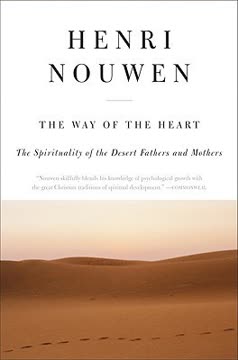
Readers consistently praise The Way of the Heart as a concise, wisdom-packed guide to solitude, silence, and prayer, drawing on the Desert Fathers and Mothers. Many describe it as arriving at precisely the right moment in their spiritual journeys. Nouwen's accessible writing style, personal vulnerability, and ability to connect ancient contemplative practices to modern ministry challenges resonated deeply. Several readers noted plans to reread it, highlighting its lasting impact. A few wished for more scriptural grounding or practical application, but the overwhelming consensus celebrates it as a transformative, essential spiritual read.
People Also Read

 Immersive