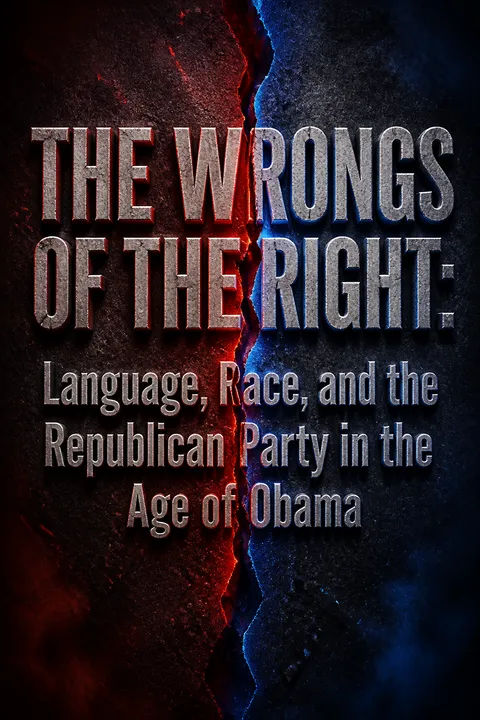
Key Takeaways
1. The Myth of a "Post-Racial" America in the Age of Obama
Despite the utopian proclamations that we now live in either a “color-blind” or a “post-racial” country, social-scientific research illuminates the grim reality that racial biases are more entrenched than ever.
The post-racial illusion. The historic election of Barack Obama in 2008 was widely celebrated as a watershed moment signaling the decline of racism in the United States. However, this symbolic victory masked a deeply polarized reality where racial animus did not disappear but instead evolved into more sophisticated, covert forms.
Entrenched racial polarization. Rather than entering a color-blind era, the nation witnessed a significant rise in white backlash, hate group activity, and explicit political obstruction. This paradox is characterized by:
- A public shift toward egalitarian language alongside persistent private prejudices.
- The strategic deployment of coded racial rhetoric by political opponents.
- An increase in systemic racial anxieties triggered by a non-white head of state.
The reality of backlash. Social science data reveals that both explicit and implicit anti-black attitudes actually increased during the Obama presidency. This backlash demonstrates that symbolic representation alone cannot dismantle deeply embedded structural inequalities or automatic psychological biases.
2. The Historical Realignment of the Two-Party System around Race
Landmark breaks with legal discrimination did not remove race from electoral politics, they enhanced the importance of race in elections.
The great partisan flip. The relationship between African Americans and the major political parties underwent a dramatic transformation over the course of a century. While the Republican Party was founded in 1854 on an anti-slavery platform and enjoyed black loyalty for decades, the Democratic Party eventually captured the minority vote through the New Deal and civil rights initiatives.
The Southern Strategy. In response to the Civil Rights Movement of the 1960s, the GOP executed a deliberate political realignment to capture disgruntled white southern voters. This strategy capitalized on:
- White resentment toward federal intervention and civil rights legislation.
- The political exploitation of states' rights and "law and order" rhetoric.
- The systematic abandonment of efforts to court black voters in favor of a solid white conservative base.
A racially divided system. By the late 20th century, this realignment had successfully pushed the two-party system into strict alignment along racial lines. The modern GOP became the primary vehicle for white conservatism, while the Democratic Party relied on biracial coalitions, setting the stage for the intense racial polarization of the Obama era.
3. The Birther Movement as a Racialized Attack on National Belonging
Right-wing reactions to the election of Obama, especially within the Birther movement, certainly have many facets, but at their core resides the implicit conflation of whiteness and citizenship that ipso facto marginalizes and “others” nonwhites from being the most cherished citizen in the land—citizen president, representative, and leader.
The whiteness of citizenship. The persistent questioning of Barack Obama's birthplace and the legitimacy of his presidency was not a neutral constitutional debate, but a racialized effort to define who belongs in America. Historically, American national identity has been legally and socially conflated with whiteness, rendering non-white citizens perpetual "others" whose status must be constantly proven.
The demand for papers. The Birther movement's insistence that Obama "show his papers" mirrors historical practices used to control and disenfranchise black Americans. This exclusionary logic manifests through:
- The historical legacy of "Black Codes" and freedom papers required for black mobility.
- The psychological association of white faces with patriotic American symbols.
- The persistent framing of a black president as an alien, foreign "usurper."
A modern exclusionary tool. By casting Obama as a foreign-born Muslim or a Kenyan radical, his detractors sought to strip him of his political authority without explicitly using racial slurs. This strategy allowed critics to maintain a veneer of constitutional patriotism while executing a deeply nativist and xenophobic campaign of marginalization.
4. The Tea Party's Use of Nationalistic and Exclusionary Rhetoric
As the Confederate battle flags, witch doctor caricatures and demeaning discourse suggest, a bright white line of racism threads through this nationalism.
Exclusionary nationalism. While the Tea Party Movement presented itself as a color-blind grassroots coalition focused on fiscal responsibility and limited government, its rhetoric was deeply steeped in racial and cultural anxieties. The rallying cry to "Take Our Country Back" implicitly defined the "real Americans" as white, Christian, and conservative, while positioning the Obama administration as an existential threat to Western civilization.
Racialized policy opposition. The movement's anger was consistently directed at government programs and policies that were framed as unfair handouts to undeserving minorities. Key elements of this discourse included:
- Depicting healthcare reform as a form of racial "reparations" for slavery.
- Associating the Obama administration with "reverse racism" against white Americans.
- Using highly offensive, racialized caricatures of Obama at public rallies.
A vehicle for white backlash. Empirical studies of Tea Party supporters reveal that they hold significantly higher levels of racial resentment and lower opinions of black work ethic and intelligence compared to the general public. The movement served as a powerful political mechanism to mobilize racially anxious white voters under the respectable guise of constitutional originalism.
5. Right-Wing Media as an Interpretive Community for Race Baiting
The right-wing media calls out to its viewers to identify as racialized white victims.
The media echo chamber. Right-wing media outlets, particularly Fox News and conservative talk radio, operate as an "interpretive community" that systematically maps racial anxieties onto political debates. By framing everyday political conflicts through a lens of racial grievance, these networks cultivate a shared worldview that unites conservative viewers against a perceived non-white threat.
The tropes of grievance. This media strategy relies on four distinct rhetorical dimensions designed to stoke white fear and resentment:
- Black dysfunction: Portraying communities of color and Obama as culturally pathological or radical.
- White patriotism: Conflating white identity with authentic American values and morality.
- White paternalism: Framing white people as the natural and proper caretakers of society.
- White victimhood: Depicting white Americans as the true victims of a politically correct, totalitarian regime.
The reversal of racism. When confronted with accusations of racial bias, right-wing commentators frequently employ defense strategies such as ignoring critics, claiming color-blind intentions, or accusing the Left of being the "real racists." This sophisticated reversal allows them to continue race-baiting their audience while maintaining a defensive shield of righteous indignation.
6. The Evolution of Campaign Strategy from Overt to Implicit Racial Messaging
You start out in 1954 by saying, “Nigger, nigger, nigger.” By 1968 you can’t say “nigger”—that hurts you. Backfires. So you say stuff like forced busing, states’ rights and all that stuff.
The shift to coded language. As overt racism became socially unacceptable in the post-civil rights era, political campaigns engineered subtle, implicit racial appeals to mobilize racially conservative voters. This strategy allows politicians to exploit white racial resentment without violating the dominant societal norm of racial equality.
Coded political symbols. Modern campaigns utilize seemingly race-neutral issues that carry heavy racial undertones to trigger negative stereotypes. Classic examples of this tactic include:
- The infamous "Willie Horton" ad of 1988, which stoked fears of black male violence.
- Ronald Reagan's rhetoric surrounding "welfare queens" to attack social safety nets.
- Newt Gingrich labeling Obama the "food stamp president" to imply minority laziness.
The power of implicit priming. Psychological research demonstrates that these implicit appeals are highly effective because they operate below conscious awareness. By pairing negative policy outcomes with images of minorities, campaigns successfully activate latent racial biases, shifting white voter preferences toward conservative candidates.
7. The Social Science of Political Ideology and Implicit Bias
And while there is little distinction between liberals and conservatives in implicit racial attitudes, research indicates that conservatives appear to sit more comfortably than liberals with the racial biases they hold.
The dual system of judgment. Human behavior is heavily governed by implicit social cognition, which operates outside of conscious awareness and control. Social psychologists have demonstrated that individuals rely on a rapid, intuitive, and unconscious system of judgment that often contradicts their slow, deliberative, and egalitarian explicit beliefs.
Measuring the subconscious. The Implicit Association Test (IAT) has revealed that a vast majority of white Americans harbor automatic racial biases in favor of whites and against blacks. These unconscious preferences are deeply embedded in the national culture and are learned at a very early age through exposure to biased socializing agents and media representations.
Ideology and bias comfort. While both liberals and conservatives exhibit implicit racial biases, they process these biases differently. Conservatives are more likely to endorse social hierarchies and resist social change, allowing them to rationalize their implicit preferences through abstract principles like individualism and meritocracy, whereas liberals experience greater cognitive dissonance between their explicit egalitarian ideals and their implicit biases.
8. The Legal and Policy Implications of Unconscious Racial Bias
Unconscious racial bias is a primary predictor of opposition to Obama’s efforts to pass various forms of legislation.
Bias in policy evaluation. Unconscious racial attitudes significantly influence how citizens and lawmakers evaluate public policies and legal reforms. When a policy is associated with a black political figure like Barack Obama, individuals with high levels of implicit pro-white bias are far more likely to oppose it, even if the policy itself has nothing to do with race.
The racialization of healthcare. This dynamic was highly visible during the legislative battle over the Affordable Care Act. Research experiments demonstrated that:
- Implicit prejudice predicted strong opposition to healthcare reform when it was framed as "Obamacare."
- The same policy received significantly higher support when it was presented as Bill Clinton's plan.
- Opponents utilized coded language to mask their underlying racial anxieties about the plan's beneficiaries.
Undermining legal protections. The perception that the election of a black president proved America is "post-racial" has been used to justify rolling back vital civil rights protections. This overestimation of racial progress has led to legal challenges against the Voting Rights Act, threatening the preservation of majority-minority districts and the future of black political representation.
9. Dehumanizing Imagery and the Escalation of Physical Threats
Images of Obama associating him with various forms of primates serve to unconsciously dehumanize him among onlookers, putting him at greater risk for assassination.
The history of animalistic dehumanization. The comparison of black people to primates is a deeply ingrained, historically violent racist trope that dates back to early European colonialism and the eugenics movement. This imagery was systematically used to justify slavery, lynching, and Jim Crow segregation by framing African Americans as biologically subhuman and lacking the capacity for self-governance.
The modern resurgence. During the Obama presidency, this dehumanizing trope experienced a disturbing resurgence in mainstream political discourse, often dismissed by its perpetrators as mere "humor" or "jokes." This dangerous rhetoric manifested through:
- Elected officials sharing emails depicting the Obama family as chimpanzees.
- Protesters displaying primate dolls and imagery at political rallies.
- Media cartoons depicting the author of the economic stimulus plan as a shot monkey.
The threat of violence. Dehumanization is a powerful psychological precursor to violence because it reduces the learned social inhibitions against harming others. By stripping a black leader of his humanity, this imagery unconsciously licenses aggression, directly contributing to an unprecedented spike in death threats against President Obama and necessitating a reevaluation of long-term security protections.
10. The Illusion of Inclusion and the Pitfalls of Tokenism
The cheerleading over racial symbolism plays to the Republicans’ desperate need to woo (or at least appear to woo) minority voters, who favored Mr. Obama over Mitt Romney by huge margins.
The Janus face of the GOP. In response to a rapidly diversifying electorate, the modern Republican Party operates with a dual, contradictory strategy. On one side, it continues to court its white conservative base through coded racial appeals and voter suppression tactics; on the other, it promotes high-profile black and brown conservative candidates to project an "illusion of inclusion."
The mechanics of tokenism. This strategy of tokenism props up individual minority figures to deflect accusations of systemic racism while leaving the party's white-centric policy platform completely unchanged. The phenomenon of tokenism is characterized by:
- Using black candidates like Herman Cain to deliver harsh critiques of black communities that white politicians cannot safely make.
- Subjecting token figures to intense performance pressure, role entrapment, and psychological stress.
- Providing white voters with "moral credentials" to oppose racially egalitarian policies by pointing to a few successful minorities.
The path to genuine relevance. For a political party to remain viable in an increasingly diverse nation, it must move beyond superficial symbolic representation and tokenism. True inclusion requires a fundamental shift in policy priorities to address the structural inequalities that disproportionately impact communities of color, rather than relying on dog-whistle politics and the strategic display of diverse faces.








































