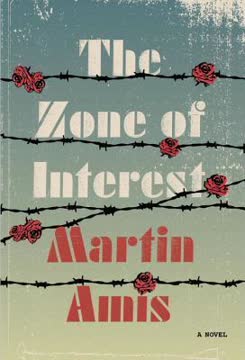
Plot Summary
Lightning in the Zone
Golo Thomsen arrives at Auschwitz's "Zone of Interest" under the shadow of horror, but finds himself staggered by a sudden, electrifying attraction to Hannah Doll, the camp commandant's wife. Amid the monstrous machinery of genocide, Thomsen's infatuation is as absurd as it is passionate. Wrapped in a society dedicated to the systematic murder of millions, Thomsen struggles to reconcile this illicit desire with the backdrop of relentless, industrial death. His attempts at nobility fade under the weight of complicity and hypocrisy haunting every interaction. The chapter sets the stage for a reckoning with both the demonized outer world and an interior universe where love, guilt, and self-loathing collide. Here, every glance or gesture carries the taint of pervasive violence, spotlighting the surreal impossibility of beauty amid abomination.
Shattered Mirrors of Self
In the heart of the camp, even those wielding power cannot escape a devastating confrontation with themselves. The "magic mirror" anecdote underscores the central theme: what would happen if one confronted their true soul, stripped of all disguise? The principal characters—Thomsen, Hannah, and commandant Paul Doll—are each trapped by self-deceptions and rationalizations. Doll convinces himself of his "normality," justifying his every act with bureaucratic precision, while Hannah stews in a private anguish that borders on despair. Around them, duty masquerades as morality, and indifference as necessity. The mirror becomes a symbol for the Zone itself, a place reflecting the hideous truth back upon its denizens—a place from which none can look away, no matter how unbearable the view.
Selections and Deception
The infamous ramp—the site of "selections"—epitomizes the obscene transformation of murder into a matter of professional procedure. Commandant Doll approaches this task with mechanical precision, his detachment punctuated by racist banter and mockery, as he and his staff play out the farce of civility for incoming transports. This chapter immerses us in the surreal horror: beautiful sunset, violin music, and the kind words of German officers serve only to grease the machinery of death. Victims are dehumanized into "pieces" for record-keeping, and the horror is both masked and heightened by the very bureaucratic language that enables it. For participants like Szmul, leader of the Sonderkommando forced to collaborate, surviving each selection means further death of the soul.
Shadows Among the Living
The Sonderkommando—"the saddest men in history"—survive by serving death, tending the corpses, extracting valuables, and maintaining the illusion of hope for each new victim. Szmul, their chief, moves between the living and the dead, wracked by guilt yet clinging to minuscule acts of subversion or compassion (like saving one life per transport). His internal struggle highlights the disintegration of moral boundaries: the price of survival is complicity in unspeakable atrocity. Yet even here, the urge to bear witness remains, with Szmul's testimony describing a world where human agency and innocence are crushed. The Zone demands that all who enter become strangers to their former selves; every survivor is also, in part, a perpetrator.
The Art of Collaboration
Interwoven relationships among the camp's administrators display routine collaboration, both for career and for love. Thomsen and Boris Eltz, childhood friends now SS officers, exchange cynicism as their conscience fights both revulsion and acclimation. The boundary between perpetrator and bystander erodes, as rationalization—of incentives, shortcuts, and everyday "decency"—becomes standard. The complicity of ordinary Germans, IG Farben industrialists, and the broader web of bureaucracy renders the Holocaust a vast collaborative enterprise. Efforts by some to "humanize" or "improve productivity" are grotesquely revealed for what they are: attempts to rationalize efficient murder, pitting political goals against commercial ones in debates over starvation, labor, and the meaning of "work."
Mechanical Love, Broken Trust
Thomsen's infatuation with Hannah is as much compulsion as romance—a response to a world turned upside down. Brought together by need and loneliness, their connection is circumscribed by the threat of exposure and Doll's erratic malevolence. In this atmosphere, love turns obsessional and furtive, colored by fear and guilt. Attempts at tenderness happen in the shadows, always at risk of being submerged by the violence around them. Conjugal visits, whispers, and secret letters become minor acts of treason against the regime, and even against the universe of death they inhabit. This entanglement dramatizes both the longing for connection and the impossibility of innocence within the Zone.
In the Crosshairs of Power
Beneath the hierarchy's surface rules, all are vulnerable. Doll surveils his wife and subordinates, wielding power over life and death with a drunkard's rage and bureaucrat's logic. Yet Doll is also subject to the shifting tides of Berlin's edicts, threatened with professional ruin or "promotion" to oblivion. Even the highest are replaceable or disposable, as evidenced by Doll's anxieties about loyalty and paperwork. The politics of the camp—favoritism, sabotage, blackmail, and betrayal—render security illusory. In a world where guilt and innocence have lost meaning, survival depends not on virtue but on chance, cunning, and the ever-uncertain pleasure of those above. The Zone's true law is randomness, not justice.
Through the Eyes of Sadness
Szmul dedicates his remaining days to one thing: the idea that there must be witnesses, even if their records are destroyed or ignored. He is haunted by the metaphysical emptiness that the camp imposes—the sense that touch, smell, even sight, lose meaning amid constant death. Yet the compulsion to bear witness persists, rooted in the hope that one day meaning might be restored. Individual acts—reading forbidden testimony, saving a child, saying Kaddish over nameless dead—serve as last stands against dehumanization. Yet these, too, are fraught with futility, as the machinery of murder grinds on. The only triumph permitted is the persistence of memory.
Hope Amid Brown Snow
As winter deepens, hope flickers in the smallest acts: a hidden note, a gentle word, the saving of a child from selection. The weather—snow turning from white to grey to brown—mirrors the loss of purity in the living. Acts of sabotage and minor insubordination become lifelines, even as overwhelming fatigue and futility sap their force. Even love, as between Thomsen and Hannah, becomes not redemptive but a discipline against nihilism, fraught with risk but clung to nonetheless. In the face of annihilation, to persist in caring, hiding a truth, or resisting in minor ways marks the boundary between utter despair and the ragged survival of humanity.
Unraveling Orders, Unraveling Hearts
Attempts to maintain order—whether in murder, love, or rule—begin to unravel. The sheer scale of killing overwhelms planners, while personal relationships are deformed by suspicion and betrayal. Doll's marriage further disintegrates; Hannah's resistance goes from passive to evasive, concealing both her thoughts and her true allegiances. The shifting focus from routine atrocity to personal survival signifies the end of certainty and the loss of hope that systems alone can save or damn anyone. As rumors from the Front seep in, both oppressor and oppressed sense change coming, but can only grasp dimly at what it means.
Living With Ghosts
A veneer of normality persists in the camp: children are educated; parties held; paperwork maintained with zeal. Yet beneath the surface, the dead vastly outnumber the living, and the difference is increasingly arbitrary to the regime. Doll and his fellows absorb the logic that only numbers matter and, in paperwork or life, dead and alive are functionally equivalent. This immorality seeps into acts of love and friendship, with survivors haunted by the ghosts of those lost and by the nagging sense that everyone, in some way, did not do enough. The Zone's legacy is to leave every survivor in its thrall.
Feast of False Normality
Life in the Zone continues to mimic outward decency: there are feasts, commemorations, concerts, and endless bureaucracy. Yet each event is laced with grotesque parody—the November "Reich Day of Mourning" features speeches honoring the Nazi "martyrs," soldiers toast Hitler's birthday, and childish rituals are observed beside crematoria. Daily existence is a pantomime of order concealing chaos. The effect is both surreal and deeply tragic—every party, every administrative triumph, mocks both the living and the dead. The pursuit of normality morphs into complicity; even personal joys become entwined with abjection and guilt.
Hearts at Dusk, Souls at Dawn
With the coming of spring, the possibility—or illusion—of renewal arises. Yet every new beginning is stained by the Zone's past: survivors cannot shed their trauma, relationships ruined by what one has done and seen. Some, like Hannah, seek escape and renewal; others, like Thomsen, linger in regret for lost possibilities. Letters, secret meetings, and attempts to reconnect play out as gestures against the tide of dissolution. These efforts cannot erase what has happened but may bear witness to a different future, however hesitant or uncertain.
Sabotage and Survival
As the war's end approaches, the camp system's structure begins to collapse under the stress of both outside assault and internal sabotage. Revolts, failed or successful, and escalation of cruelty compete with acts of defiance and solidarity. Those who tried to strike back, like Bullard or Szmul, often do not survive, but their resistance stands in mute witness to a persistent, if compromised, humanity. Meanwhile, those who enabled or profited from the system increasingly face their own downfall—condemnation, madness, or a fate as grim as the ones they administered.
Last Acts in Darkness
Facing inevitable death, some characters resolve to reclaim control in their final moments. Szmul, pressed to murder another, chooses suicide over becoming an instrument of further evil. The logic of the Zone, where individuality and agency are ground away, is briefly, poignantly reversed—death becomes the only remaining assertion of self. The new nature of violence is revealed not just in the mass but in the personalized debasement found in last acts; brutality turns inward as well as outward, with many victims and some oppressors meeting their end in private, solitary despair.
The End of the Line
The war ends not with resolution, but with horror upon horror: massacres, last-minute selections, and the annihilation of evidence. The rigid hierarchies of power and order dissolve into chaos, betrayal, and deadly confusion. Characters are scattered—lost, killed, or driven mad. Legacies are measured in suffering, trauma, and guilt. In the emptiness left by the Zone, survivors wander through a ruined world, haunted by the memory of what was done and undone, what could not be prevented, and the knowledge that meaning itself has been mutilated.
Aftermaths and Remnants
In the shattered aftermath, survivors—Thomsen, Hannah, Gerda Bormann, and others—face new worlds where official justice and private recovery remain uncertain and incomplete. Trials are held, sentences passed, but the essential mystery and horror remain beyond legal or historical closure. For some, memory is a curse; for others, a duty. Hannah and Thomsen's tentative reconnection is fraught with the impossibility of innocence. Survivors try to reconstruct their selves against the ruins of what was; the narratives they tell are incomplete, and their futures are filled with both hope and resignation. History moves forward, but the Zone of Interest lingers as a scar on every life it touched.
Questions Without Answers
The book closes with reflection, analysis, and acknowledgment—there can be no simple rationale for what happened. Testimony, history, and philosophical meditation struggle to explain the horror and collaboration of ordinary people in extraordinary evil. The narrative recognizes the singularity of the Holocaust: a crime almost beyond comprehension, unredeemed by grand answers or redemptive transformation. The compulsion to understand collides with its own limits; "there is no why in Auschwitz." The final verdict is humbling: the best that can be achieved is honest witness and the refusal to look away. In the end, the real "zone of interest" is the human soul—doomed by history to face itself, however unbearable.
Analysis
The Zone of Interest is not simply another Holocaust novel but an audacious, uncomfortable confrontation with how evil is normalized, and how the self is remade in its presence. Martin Amis's genius is his willingness to dwell in the gray zone—neither demonizing nor excusing the perpetrators and collaborators but presenting them as flawed, often pathetic, comprehensible, and therefore unsettling. Using sharp, sardonic prose, Amis exposes the banality, self-justification, and self-delusion that underpin atrocity, unmasking the camp as a mirror that reflects not just monstrosity but terrifying normality. The novel interrogates not merely what people did, but how they lived with themselves while doing it—and how they attempted to forget or explain afterward. Its mosaic of unreliable narrators and documentary "afterwords" forces the reader to grapple with the limits of understanding: no explanation is sufficient, and yet refusal to seek explanation is a moral evasion of its own. The story offers no redemption, only a measure of resistance through memory: love is neither a salvation nor an escape, but perhaps a final act of defiance against meaninglessness. Ultimately, The Zone of Interest demands that we, too, look in the mirror—and asks whether we can bear what we see.
Review Summary
Reviews of The Zone of Interest are mixed, averaging 3.68/5. Praise centers on Amis's dark humor, linguistic virtuosity, and bold approach to portraying Holocaust perpetrators through three narrators: commandant Paul Doll, Nazi officer Golo Thomsen, and Jewish Sonderkommando leader Szmul. Many admire how banal evil is exposed through satire. Critics argue the love story feels implausible, Szmul is underdeveloped, and the novel lacks emotional depth. Several reviewers note Jonathan Glazer's film adaptation surpasses the source material, while others find the novel a worthy, if imperfect, literary achievement.
People Also Read

Characters
Angelus (Golo) Thomsen
Thomsen is a highly placed, sophisticated Nazi functionary, nephew of a leading Party man. Both insider and outsider, he balances bureaucratic responsibilities with a growing emotional detachment and horror. While complicit in atrocity, his intelligence and self-awareness make him acutely conscious of his own failures. His longing for Hannah Doll becomes a focal point for his conscience: love as both excuse and torment. Yet Thomsen's engagement in sabotage and sabotage of the heart are marked by a passivity that veers toward nihilism; ultimately, his arc is one of regret, seeking redemption through small acts and testimony rather than moral heroism.
Hannah Doll
As the commandant's wife, Hannah is both privileged and imprisoned. Strikingly intelligent and capable, she is alienated from her husband and the camp's routines, protecting her children while struggling against despair. Her internal rebellion is largely passive—a refusal to fully participate, moments of compassion toward victims, small acts of refusal and aid. Her love affair with Thomsen offers brief hope, but she is fundamentally scarred by her environment, unable to return to innocence. Hannah's arc is about survival and the contested possibility of self-recovery; her trauma lingers, unhealed, long after the end.
Paul Doll
Doll is an emblem of bureaucratic evil—vain, mediocre, and obsessed with maintaining both control and the appearance of normality amid the horror. His justifications are absurdly self-serving, and his attempts at marital, sexual, and professional success constantly crumble under the weight of his own crudeness and inadequacy. Doll's moments of reflection are fleeting and self-excusing; his cruelty is mundane, almost comic at times, yet always underpinned by lethal power. Psychologically, Doll is notable for his blend of self-pity and delusion, and for how easily ordinary men can become instruments of atrocity.
Szmul Zachariasz
Szmul embodies the tragic limit of the "gray zone": a Jew forced to assist in the mechanisms of genocide to survive. He is haunted by guilt, loneliness, and the futility of every compromise. Szmul clings to the idea of bearing witness, maintaining meticulous mental records even as hope drains away. His arc leads inexorably to self-sacrifice, refusing to help Doll in yet another murder, and accepting death as the only means to retain a hint of agency. Szmul's psychological landscape is dominated by loss, but also by the stubborn insistence on a flicker of humanity amid the abyss.
Boris Eltz
Boris is Thomsen's childhood companion and foil: a debauched, violent, yet strangely idealistic SS officer. His nationalism is real, but he is also deeply critical, cynical, and emotionally volatile. Boris's bravado conceals both guilt and profound love—for his friends, for those he tries to save, for the illusion that some decency might endure. His journey ends on the Eastern Front, dying in the mythic chaos of total war, his sense of honor and camaraderie finally undone by reality.
Ilse Grese
A young, sadistic camp guard, Ilse has fully embraced the camp's logic of dehumanization. Her sexuality, ambition, and violence are intertwined; her relationships are transactional and warped by the latent terror of the system. Ilse stands for youthful fanaticism and the way ideology, trauma, and opportunity breed monstrousness. Psychologically, she is both powerful and utterly degraded, driven by resentment, loyalty to hierarchy, and an alarming adaptability.
Alisz Seisser
Once the widow of a low-ranking officer, Alisz transitions from marginal privilege to outright victimhood—labeled a Romani "asocial" and subjected to the system's arbitrary violence. Her survival depends on both luck and the dubious "protection" of men like Doll. Alisz's arc emphasizes the shifting, unstable nature of power and vulnerability in the camp, as well as the intersecting oppressions (Jewish, Romani, female) that render agency almost impossible. Her endurance, however, is marked by resilience and the desire to hold on to life and dignity wherever possible.
Frithuric Burckl
A Farben executive, Burckl is the voice of commerce amid ideology, pushing for reforms to improve productivity while remaining entirely complicit with mass murder. Torn between economic logic (more productive labor equals less killing) and political reality (Nazi policy forbids "pampering" Jews), he exposes the grotesque rationalizations of those who benefited materially from genocide. Psychologically, he is both rational and culpable, displaying the banality of evil as careerism and compromise.
Martin Bormann (Uncle Martin)
Bormann sits at Nazi power's apex, cool and cunning, controlling appointments, alliances, and destinies with administrative indifference. His personal life echoes his professional one: managing marriages, lovers, and appearances above all else. For Thomsen, he represents both the possibility and the futility of inside reform—Bormann's true loyalty is only to preservation of power. His postwar fate, and the mythology built around it, leave him a spectral presence in German memory.
Esther Kubis
A teenage Jewish girl, dancer, and survivor of selections and punishments, Esther is both an object of infatuation and a symbol of resistance. Her fate is ultimately unknown, but her last words and actions echo the refusal to accept victimhood, even in the face of certain death.
Plot Devices
The Mirrored Self and Moral Reflection
At the core of the novel is the use of the "magic mirror"—a metaphor for self-recognition under conditions of radical evil. The camp unmasks every character, stripping away justifications, revealing choices, complicity, and cowardice. The Zone's total brutality ensures no one can "turn away" from who they have become. Through shifting perspectives, internal monologue, and documentary-style narration, Amis highlights the endlessly deferred confrontation with the moral cost of survival or power.
Multiperspectivity and Unreliable Narration
The novel cycles among three primary narrators (Thomsen, Doll, Szmul), each offering conflicting perceptions and varying degrees of candor and rationalization. This multiplicity of voices not only sustains suspense—who to trust, how much is hidden?—but also immerses the reader in the epistemic chaos of the camp: no fact or emotion is uncontested, and perspective always twists the truth.
Bureaucratic Ritual and Deadly Irony
Amis meticulously details the murderous routines of bureaucracy: lists, files, selections, procedures, the language of "pieces" and "transportees." This data-driven worldview obscures horror behind routine and sarcasm. The device of "official" Nazi communication, peppered with black humor and self-important banality, augments the sense that atrocity has become not just accepted, but routinized, even ridiculous.
Foreshadowing Collapse and Fragmented Time
Throughout, characters read the signs: the war going badly, the increasing panic, the unraveling order. Letters, edicts, and rumors foreshadow the regime's end; chronological jumps between pre-war, wartime, and postwar scenes emphasize dislocation and the slow spreading of trauma through time, leaving aftermath as important as action.
Testimony and the Limits of Understanding
Narrative inserts (testimonies, letters, historical postscripts, direct analytic discussion) foreground the question: can any documentation, art, or reflection truly do justice to what happened? The failed search for a "why," both within the story and in its analysis, underscores the event's fundamental resistance to comprehension—even as the duty to witness persists.








































