Plot Summary
Projectionist's Secret Initiation
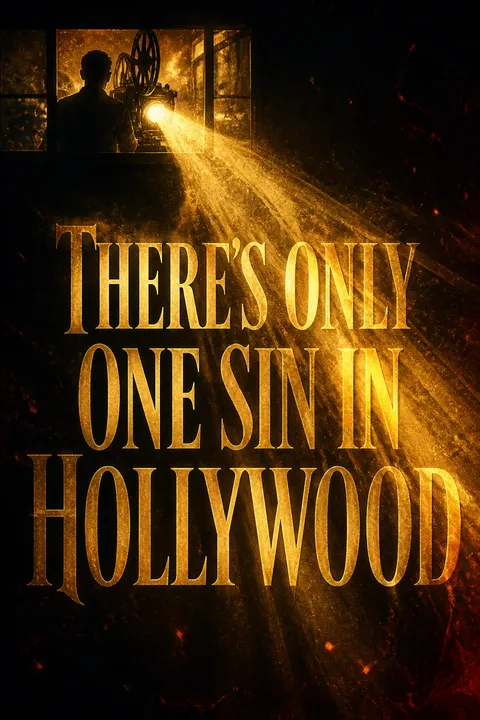
Aaron Toussaint, a young Black boy in 1940s Ohio, finds sanctuary in the Emerson Palace Theater, the only cinema for Black patrons. His disruptive passion for film leads to an unlikely apprenticeship with Mr. Allenson, the theater's enigmatic projectionist. In the projection booth, Aaron learns the technical and mystical art of film, discovering a sense of belonging and purpose. The booth becomes his sanctuary, a place where he feels both invisible and powerful, able to shape the audience's experience. When Mr. Allenson dies, Aaron is cast out, losing his privileged view and returning to the world below. This early loss shapes Aaron's lifelong yearning for the hidden, the backstage, and the power of storytelling—setting the stage for his future as a Hollywood fixer, always working behind the scenes.
Hollywood's Hidden Fixers
Years later, Aaron's path leads him to Los Angeles, where he becomes a fixer for Skyline Motion Pictures. His job is to protect stars from scandal, clean up messes, and enforce the studio's code of silence. Aaron's skills—discretion, loyalty, and a keen understanding of human weakness—make him invaluable. He navigates a world of secrets: affairs, addictions, blackmail, and the ever-present threat of exposure for queer stars. Aaron's own sexuality, shaped by trauma and secrecy, is both a liability and a source of empathy. He becomes entangled with the rising star Xavier C. Barlow, a Black actor whose beauty and ambition threaten to upend the careful balance of Hollywood's closet. Aaron's role as fixer is both shield and prison, binding him to the very system he despises.
Xavier's Reinvention
Xavier Singleton arrives in Hollywood, a Black teenager from Indiana, seduced by the promise of stardom. He is quickly swept into the city's clandestine world of queer parties and powerful men. Director George Cukor rechristens him "Xavier C. Barlow," crafting a new identity to fit Hollywood's fantasies. Xavier's physical allure and apparent innocence make him a sensation among closeted elites, but his ascent is fraught with peril. He learns to navigate the transactional nature of desire, wielding his sexuality as both shield and weapon. Yet, beneath the surface, Xavier is astute, ambitious, and determined not to be destroyed by the system that exploits him. His reinvention is both survival and subversion, a performance that blurs the line between truth and myth.
Forbidden Bonds Forged
At a star-studded party, Aaron and Xavier's paths cross in a charged, anonymous encounter in a men's restroom. Their mutual recognition as outsiders—Black, queer, ambitious—sparks a bond that is at once erotic, dangerous, and deeply emotional. Both men are haunted by the need for secrecy and the threat of violence, yet their connection offers a rare glimpse of intimacy and understanding. As Aaron becomes Xavier's unofficial protector, their relationship oscillates between desire, rivalry, and solidarity. The forbidden nature of their bond—across lines of race, sexuality, and power—mirrors the larger hypocrisies of Hollywood, where everything is permitted except honesty.
War, Race, and Desire
Aaron's backstory unfolds: fleeing a violent, homophobic home, he enlists in the navy during the Korean War. There, he meets Lieutenant Horace "Hornet" Dixon, a charismatic Black fighter pilot. Aaron becomes Horace's aide, enduring racism, grueling labor, and the constant threat of exposure. Their relationship evolves from professional to sexual, a secret affair forged in the crucible of war. Horace's ambition and Aaron's devotion are tested by the pressures of military life and the impossibility of open love. The war becomes a crucible for both men, shaping their identities and their understanding of what it means to survive as Black, queer men in America.
The Price of Stardom
After the war, Aaron follows Horace to Hollywood, where the promise of a biopic about Horace's heroism dangles before them. The studio system, however, is merciless: Horace's story is deemed unmarketable unless it conforms to white expectations of struggle and redemption. Aaron becomes a fixer, navigating the treacherous politics of race, sexuality, and ambition. Xavier, meanwhile, rises through the ranks, typecast as the sacrificial lamb in film after film, his suffering resonating with Black audiences but never rewarded with true stardom. Both men learn that Hollywood's bargains come at a steep price: invisibility, compromise, and the constant threat of erasure.
Love, Lies, and Survival
Aaron marries Kimberly, a devout and perceptive woman, seeking stability and respectability. Their marriage is built on mutual affection but also on lies—about Aaron's past with Horace, his sexuality, and his ongoing entanglement with Xavier. Kimberly's own struggles, including her disability and childlessness, mirror Aaron's sense of being marked by difference. The couple navigates the expectations of Black respectability, church life, and the ever-present specter of scandal. Aaron's double life becomes increasingly untenable as he is forced to choose between loyalty to his wife and solidarity with his queer kin.
Hollywood's Cruel Bargains
As Xavier's star rises, he is both celebrated and constrained by Hollywood's need for palatable Black heroes. The studios manufacture myths, rewriting lives to fit marketable narratives. Aaron, now a seasoned fixer, witnesses the machinery of legend and loss: queer love is rewritten as tragic friendship, Black suffering is commodified, and the truth is always the first casualty. When Horace's biopic finally moves forward, Xavier is cast as the lead, and Aaron is forced to confront the ways in which his own life—and love—will be distorted for the screen. The cost of survival is complicity in one's own erasure.
The Making of a Legend
On set, Xavier and the director Nicholas Ray conspire to smuggle queer subtext into the film, using performance, gaze, and coded gestures to hint at the forbidden love between Horace and Aaron. Rosalind Cash, cast as the love interest, plays her role with a knowing ambiguity, suggesting a shared outsider status. The film becomes a battleground between the studio's demand for a sanitized, patriotic narrative and the actors' desire to tell a more honest, subversive story. Aaron, both consultant and subject, is forced to watch his own history rewritten, his love reduced to comic relief or erased altogether.
Subversive Cinema
As the film nears completion, the studio panics over its homoerotic undertones and threatens to shelve or reshoot it. Xavier, emboldened by the possibility of queer liberation, refuses to comply, risking his career and safety. The battle over the film becomes a proxy war for the soul of Hollywood: who gets to tell the story, and whose truth matters? Sabotage, blackmail, and violence ensue, culminating in Xavier's public defiance and the studio's ruthless retaliation. The limits of rebellion are laid bare, and the cost of honesty is revealed to be exile or death.
The Studio Strikes Back
The studio orchestrates a campaign to destroy Xavier: rumors, blacklisting, and finally, a suspicious car crash that kills him. Aaron, devastated and guilt-ridden, tries to expose the truth but is silenced by threats and the machinery of power. The film is recut, its queer subtext excised, and Xavier's legacy is rewritten as a cautionary tale. Aaron loses his job, his marriage unravels, and he is left to reckon with the consequences of complicity and the impossibility of justice in a system built on lies.
The Fall of a Star
In the wake of Xavier's death, Aaron is haunted by loss and regret. The world moves on, the film becomes a hit, and Xavier is posthumously nominated for an Oscar. Yet the truth of his life—and the love that sustained him—remains buried beneath layers of myth and silence. Aaron's attempts to seek justice are thwarted at every turn, and he is forced to confront the limits of memory, the power of myth, and the enduring pain of erasure. The personal and political costs of survival are laid bare.
Aftermath and Activism
The raid on the Black Cat bar, which Aaron and Xavier survive, becomes a catalyst for the burgeoning gay liberation movement in Los Angeles. Aaron, older and wary, finds himself at odds with a new generation of activists who demand visibility and pride. He struggles to bridge the gap between survival and revolution, haunted by the ghosts of those lost to silence and violence. The movement gathers momentum, but the wounds of the past remain unhealed. Aaron's testimony becomes an act of resistance, a refusal to let Xavier's story be forgotten.
The Only Sin
Through Aaron's eyes, the true sin of Hollywood is revealed: not sex, not scandal, but the exposure of the system's own predatory power. The machinery of myth-making demands obedience, silence, and the sacrifice of truth. Those who break the code—by loving openly, by telling the truth, by refusing to play their assigned roles—are destroyed. Aaron's final reckoning is with the nature of power itself: the only sin is to expose the puppet masters, to threaten the illusion that sustains the industry. In the end, survival requires complicity, and justice remains elusive.
Memory, Myth, and Truth
As Aaron ages, he becomes a witness to history, determined to preserve the truth of Xavier's life and their shared struggle. He submits his manuscript to the ONE Archives, hoping that future generations will know the cost of silence and the courage of those who dared to love. Memory becomes both burden and weapon, a way to resist erasure and honor the dead. The line between myth and truth blurs, but Aaron's testimony endures as an act of love and defiance.
The Revolution to Come
The novel closes with a vision of the future: the gay liberation movement gathers strength, but the work of justice remains unfinished. Aaron, marginalized by a new generation, persists in telling his story, insisting that the past matters. Xavier's life and death become part of a larger tapestry of resistance, a reminder that every revolution is built on the sacrifices of those who came before. The struggle for truth, dignity, and love continues, and the revolution to come is both a promise and a challenge.
Analysis
A searing meditation on survival, erasure, and the cost of truthThere's Only One Sin in Hollywood is both a love letter to and an indictment of the Dream Factory—a place where myths are made, lives are destroyed, and the only unforgivable sin is to expose the machinery of power. Through Aaron's eyes, the novel explores the intersecting oppressions of race, sexuality, and class, revealing how survival often requires complicity in one's own erasure. The story is a testament to the courage of those who dared to love and to tell the truth in a world built on silence. It insists that memory is both burden and weapon, and that the work of justice is never finished. The lessons are clear: visibility is dangerous but necessary; solidarity is both fraught and essential; and the revolution to come is built on the sacrifices of those who refused to be forgotten. In the end, the novel challenges us to reckon with the costs of survival and the power of testimony to resist the only sin that matters: the erasure of truth.
Characters
Aaron Toussaint
Aaron is the novel's narrator and emotional core—a Black gay man shaped by trauma, secrecy, and a lifelong love of movies. His early apprenticeship as a projectionist instills in him a reverence for the hidden machinery of storytelling. Fleeing a violent home, he finds purpose as a navy aide and later as a Hollywood fixer, protecting stars from scandal while hiding his own desires. Aaron's relationships—with Horace, Xavier, and his wife Kimberly—are marked by longing, guilt, and the impossibility of open love. Psychologically, Aaron is both empathetic and self-protective, torn between loyalty and survival. His journey is one of reckoning: with complicity, loss, and the need to bear witness. In the end, Aaron's testimony becomes an act of resistance, a refusal to let the truth be buried.
Xavier C. Barlow
Xavier is a Black actor whose beauty, intelligence, and ambition make him both a sensation and a threat in 1950s-60s Hollywood. Rebranded and remade by the industry, he learns to wield his sexuality and persona as tools of survival and subversion. Xavier's relationships—with Aaron, Diahann, and a host of lovers—are marked by both intimacy and distance, shaped by the need for secrecy and the hunger for authenticity. Psychologically, Xavier is daring, forward-thinking, and increasingly politicized, embracing the possibility of queer liberation even as it destroys him. His arc is one of transformation: from exploited ingénue to revolutionary martyr. Xavier's legacy is both cautionary and inspirational—a forerunner cut down before his time.
Horace "Hornet" Dixon
Horace is a decorated Black fighter pilot whose charisma and ambition draw Aaron into a secret, passionate affair during the Korean War. In Hollywood, Horace becomes the subject of a failed biopic, undone by the industry's refusal to accept a Black hero on his own terms. Psychologically, Horace is proud, driven, and emotionally guarded, unable to reconcile his public persona with his private desires. His relationship with Aaron is both tender and fraught, marked by power dynamics and the impossibility of open love. Horace's death—both literal and symbolic—haunts Aaron and shapes the novel's meditation on memory, myth, and erasure.
Kimberly Toussaint
Kimberly is Aaron's wife, a churchgoing woman marked by her own struggles with disability and childlessness. Her marriage to Aaron is built on affection, mutual need, and a web of lies about his sexuality and past. Psychologically, Kimberly is both strong and vulnerable, capable of deep love and sharp suspicion. Her arc is one of gradual disillusionment, as she confronts the limits of respectability and the cost of secrets. Kimberly's presence grounds the novel in the realities of Black domestic life, highlighting the collateral damage of survival in a world hostile to difference.
Diahann Carroll
Diahann is Xavier's closest confidante and a rising star in her own right. Their friendship is built on mutual respect, shared ambition, and the safety of platonic intimacy. Diahann's own romantic entanglements, particularly with Sidney Poitier, mirror the complexities of love and loyalty in a world of secrets. Psychologically, Diahann is pragmatic, ambitious, and fiercely protective of those she loves. Her arc is one of adaptation, navigating the shifting currents of Hollywood while maintaining her integrity. Diahann's loyalty to Xavier endures beyond his death, making her a crucial witness and survivor.
Lowell Garten
Lowell is the vice president (and later head) of Skyline Motion Pictures, embodying the ruthless pragmatism of Hollywood's power structure. He is both seduced by and threatened by the stars he creates, particularly Xavier. Psychologically, Lowell is calculating, insecure, and ultimately complicit in the violence and erasure that sustain the industry. His relationship with Aaron is transactional, marked by mutual need and distrust. Lowell's arc is one of increasing desperation, as he sacrifices truth and loyalty to maintain control. He personifies the "only sin" of Hollywood: the exposure of its own predatory power.
Antonio Herrera
Antonio is Xavier's lover in the later years—a Mexican American man shaped by poverty, bar raids, and political awakening. He is both a source of sexual liberation and a catalyst for Xavier's increasing militancy. Psychologically, Antonio is tough, streetwise, and uncompromising, unafraid to challenge both the system and those he loves. His presence in Xavier's life marks a turn toward open defiance and the embrace of queer solidarity. Antonio's arc is one of survival and resistance, embodying the intersection of race, class, and sexuality.
Tab Hunter
Tab is cast as Horace's white confidant in the biopic, a fading star whose own sexuality is an open secret. Psychologically, Tab is eager for approval, vulnerable, and ultimately used by the system that exploits him. His interactions with Xavier are marked by both camaraderie and manipulation, highlighting the complexities of queer life in Hollywood. Tab's arc is one of quiet tragedy, a reminder of the costs of survival in a world that demands silence.
Rosalind Cash
Rosalind is cast as Horace's love interest, but her performance—crafted in collaboration with Xavier—subverts the script's heteronormative expectations. Psychologically, Rosalind is analytical, principled, and wary, refusing to compromise her integrity for the sake of palatability. Her arc is one of subtle resistance, using performance to hint at truths that cannot be spoken. Rosalind's presence underscores the power of art to challenge and reshape dominant narratives.
Wes Malone
Wes is the young actor cast to play Aaron in the biopic, a wide-eyed newcomer desperate for approval. Psychologically, Wes is insecure, eager, and ultimately overwhelmed by the subversive project he is drawn into. His betrayal—reporting the film's queer subtext to the studio—triggers the final crackdown on Xavier and the erasure of the film's radical potential. Wes's arc is a cautionary tale about the dangers of innocence and the ease with which the system co-opts and destroys those who threaten its order.
Plot Devices
Dual Narrative and Epistolary Framing
The novel is structured as a retrospective confession, with Aaron addressing his testimony to the ONE Archives. This device allows for both intimacy and distance, blending personal memory with historical reflection. The dual narrative—Aaron's present as a witness and his past as participant—creates a layered exploration of truth, myth, and the unreliability of memory. The epistolary frame also foregrounds the act of testimony as resistance, insisting on the importance of preserving queer history.
Coded Performance and Subtext
Throughout the novel, characters use performance, gaze, and coded language to communicate forbidden desires and identities. The making of Horace's biopic becomes a meta-commentary on the power of subtext: actors and directors conspire to smuggle queer meaning into a film that must, on the surface, conform to heteronormative expectations. This device highlights both the possibilities and limits of art as resistance, and the ways in which truth can be both hidden and revealed.
Foreshadowing and Circular Structure
The novel is rich in foreshadowing: from the opening scenes of loss and exile to the repeated warnings about the dangers of exposure, the reader is primed for tragedy. The structure is circular, with the past haunting the present and the revolution always just out of reach. The repetition of certain motifs—projection booths, secret names, doomed love—underscores the persistence of trauma and the difficulty of breaking free from cycles of erasure.
Myth-Making and Erasure
Hollywood's power to manufacture myths—and to erase inconvenient truths—is a central plot device. The transformation of real lives into marketable stories, the rewriting of queer love as tragic friendship, and the commodification of Black suffering all serve to illustrate the costs of survival in a system built on lies. The novel interrogates the line between memory and myth, insisting on the necessity of testimony to resist erasure.
Political Awakening and Generational Conflict
As the gay liberation movement gathers strength, the novel explores the generational divide between those who survived by hiding and those who demand visibility and pride. Aaron's struggle to bridge this gap becomes a microcosm of the larger tensions within queer and Black communities. The device of activism as both hope and challenge underscores the unfinished nature of the struggle for justice.
Download PDF
Download EPUB
.epub digital book format is ideal for reading ebooks on phones, tablets, and e-readers.








































