
Key Takeaways
1. America: A Nation in Constant Making, Marked by Persistent Inequality.
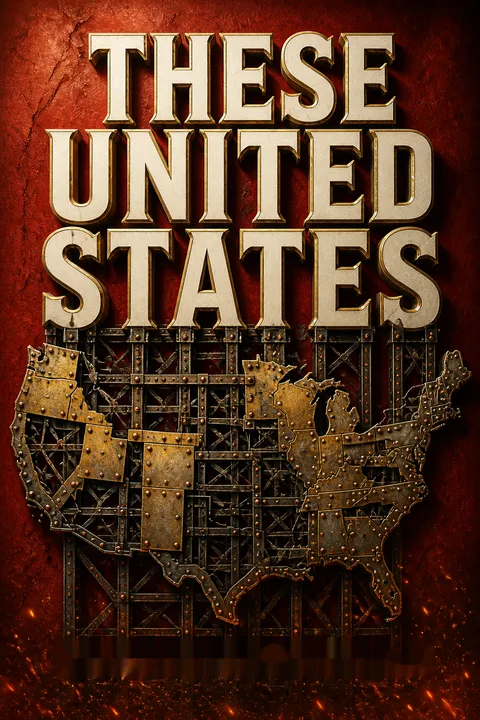
I do not look upon these United States as a finished product. We are still in the making.
FDR's vision of America. Franklin D. Roosevelt's 1936 radio address captured the essence of America as a nation perpetually under construction, a continuous struggle to realize its ideals for all citizens. This ongoing process involves measuring both achievements and shortcomings in its democracy.
Economic inequality's fluctuating arc. Over the long twentieth century, American economic inequality resembled an "upside-down bell curve." It started high in the 1890s, dipped in the mid-century due to the Great Depression, New Deal policies, and World War II's economic leveling, but began rising again after 1970. By 2010, the top 10% of earners claimed nearly 48% of wages, surpassing 1900 levels.
Democracy's fragile promise. The idea of an expanding middle class and racial equality, central to the American Dream, proved to be contingent, not inevitable. Social movements, legislation, and individual efforts were crucial in bending the "arc of the moral universe toward justice," as articulated by figures like Frederick Douglass and Barack Obama, highlighting the ongoing commitment required to achieve a truly inclusive democracy amidst persistent debates over immigration and citizenship.
2. Industrialization's Dual Legacy: Immense Wealth and Deep Social Divides.
The country that had repudiated European aristocracy suddenly seemed have its own commercial aristocracy.
The Gilded Age's stark contrasts. The late 19th century, dubbed the "Gilded Age," saw unprecedented industrial growth and the rise of "robber barons" like Andrew Carnegie and John D. Rockefeller, who amassed astonishing wealth. Their stories fueled the myth of the "self-made man," suggesting anyone could achieve millionaire status in America.
Unregulated capitalism's human cost. This rapid industrialization, however, came at a severe price for the working class.
- Dangerous labor: Men worked 12-hour days, 6 days a week in perilous conditions, leading to thousands of deaths and injuries annually.
- Child labor: One in six children aged 10-15 held full-time jobs, depressing adult wages and limiting future opportunities.
- Immigration: A constant influx of cheap labor, particularly Chinese immigrants in the West and Europeans on the East Coast, kept wages low and workers expendable.
- Social Darwinism: Intellectuals like William Graham Sumner justified this inequality, arguing that society progressed by rewarding the "fittest" and weeding out the "weak."
Farmers' struggle and Populist response. While industrialists thrived, farmers faced a crisis of falling prices, high interest rates, and monopolistic trusts. The Farmers' Alliance and later the People's Party emerged, advocating for:
- Bimetallism ("free silver"): To inflate prices and ease debt.
- Government ownership of railroads: To curb exploitative shipping rates.
- Progressive income tax: To redistribute wealth.
This movement, though ultimately unsuccessful, laid the groundwork for future reforms.
3. Progressivism: Reforming Society and Government through Rational Action.
Democracy no longer meant freedom from regulation, as it had in the late nineteenth century; now regulation became a path toward democracy.
Addressing urban chaos and corruption. The Progressive Era (1895-1920) saw Americans seeking rational, scientific, and organized solutions to the ills of industrialization and urbanization. Cities were filthy, rife with disease, and governed by corrupt political "machines" that thrived on patronage and graft. Muckraking journalists like Jacob Riis exposed these conditions, inspiring reformers.
Expanding government's role and democratic participation. Progressives believed that government, managed by experts, could solve complex problems.
- Municipal reforms: Shifted power from elected leaders to appointed professional managers, leading to more efficient public services (e.g., water, electricity).
- State-level democracy: Introduced direct primaries, initiatives, referendums, and recalls, giving citizens more direct control over legislation and elected officials.
- Consumer protection: The Pure Food and Drug Act and Meat-Inspection Act (1906) established federal oversight of product safety, building trust in national brands.
Social movements push for change. Women's suffrage gained momentum by arguing that women's "municipal housekeeping" skills were essential for good government. Labor unions like the American Federation of Labor (AFL) fought for better wages and conditions, while the Industrial Workers of the World (IWW) challenged capitalism itself. Theodore Roosevelt, as president, embraced "trust-busting" and environmental conservation, expanding federal power to ensure a "Square Deal" for all.
4. World Wars Forge Global Power, Exposing Domestic Contradictions.
The short war, with its episodic and far-flung fighting, would cast a long shadow over U.S. foreign affairs in the twentieth century.
Imperial ambitions and the Spanish-American War. The late 19th century saw the U.S. shed its isolationism, becoming a global power. The Spanish-American War (1898), fueled by sensational journalism and commercial interests, resulted in the acquisition of territories like Puerto Rico, Guam, and the Philippines, and guardianship over Cuba. This expansion, justified by the "White Man's Burden," sparked anti-imperialist opposition, highlighting the contradiction of promoting democracy abroad while imposing colonial rule.
WWI and the shift to global intervention. Despite initial neutrality, the U.S. entered World War I in 1917, driven by German submarine warfare (e.g., Lusitania sinking) and the Zimmermann telegram. President Wilson articulated "Wilsonianism," the idea that spreading democracy abroad made the U.S. more secure at home, transforming the conflict into a war "to make the world safe for democracy." This vision set the U.S. on a path of global responsibility.
Domestic tensions amidst global conflict. The war years also saw significant domestic upheaval.
- Red Scare: Fears of Bolshevism led to repression of dissent, with the Espionage and Sedition Acts curtailing civil liberties.
- Segregation: Woodrow Wilson's administration segregated federal offices, and the Great Migration of African Americans northward intensified racial tensions.
- Women's Suffrage: Women's contributions to the war effort bolstered the movement, leading to the passage of the Nineteenth Amendment in 1920, granting women the right to vote.
5. The New Deal: Government's Expanded Role in Welfare and Economy.
Our Republican leaders tell us economic laws—sacred, inviolable, unchangeable—cause panics which no one could prevent. But while they prate of economic laws, men and women are starving. We must lay hold of the fact that economic laws are not made by nature. They are made by human beings.
FDR's pragmatic response to crisis. Facing the Great Depression, Franklin D. Roosevelt rejected Herbert Hoover's laissez-faire approach, asserting that economic laws were man-made and could be changed. His "First Hundred Days" saw a flurry of emergency legislation aimed at restoring confidence and providing relief.
- Banking crisis: A national bank holiday and the Emergency Banking Relief Act stabilized the financial system, with FDR's "fireside chats" reassuring the public.
- Unemployment relief: Programs like the Civilian Conservation Corps (CCC) put hundreds of thousands of young men to work on public projects, sending money home to families.
Lasting reforms reshape government. The New Deal introduced fundamental changes to the relationship between government, the economy, and individuals.
- Financial regulation: The Glass-Steagall Act separated commercial and investment banking, and the FDIC insured bank deposits.
- Agricultural planning: The Agricultural Adjustment Act (AAA) paid farmers to reduce production to raise prices, while the Tennessee Valley Authority (TVA) brought electricity and development to impoverished regions.
- Labor rights: The National Industrial Recovery Act (NIRA) and later the Wagner Act formally recognized workers' right to organize and bargain collectively.
- Social safety net: The Social Security Act established old-age pensions, unemployment compensation, and aid for dependent children, institutionalizing federal responsibility for individual welfare.
Challenges and the New Deal coalition. Despite its popularity, the New Deal faced opposition from conservatives and the Supreme Court, which struck down key programs. FDR's "court-packing" plan, though defeated, ultimately led to a more favorable court. The 1936 election solidified the "New Deal coalition" of northern workers, African Americans, and white southerners, establishing modern liberalism and a dramatically expanded federal government.
6. Postwar Prosperity: A Golden Age Masking Deep Anxieties and Inequalities.
America’s postwar rise was an act of will, the result of economic policies that elevated the dollar, expanded America’s markets across the world, built a massive military, and justified it with an unstable mix of international humanitarianism, militant anti-Communism, and missionary capitalism.
The economic boom and consumerism. The post-World War II era saw an unprecedented economic boom, fueled by pent-up demand and wartime savings. The U.S. dominated global manufacturing, and a burgeoning consumer culture, driven by credit and new technologies like television, transformed daily life. The "baby boom" and suburbanization reshaped American households and landscapes, with homeownership becoming a widespread dream, facilitated by federal programs like the FHA and GI Bill.
Persistent inequalities and gender roles. Despite widespread prosperity, significant inequalities persisted.
- African Americans: Faced continued discrimination in employment, housing, and education, with many losing wartime gains.
- Farmworkers: Remained exploited, often Mexican braceros, lacking labor protections and minimum wages.
- Women workers: While more women entered the workforce, the "family wage" ideal still prioritized male breadwinners, and women often faced lower pay and limited opportunities.
- Gender norms: Postwar culture celebrated the male-headed nuclear family and stay-at-home motherhood, despite the increasing reality of women's paid labor.
Anxieties beneath the surface. The era's optimism was undercut by deep anxieties.
- Juvenile delinquency: Fears of rebellious youth, fueled by rock 'n' roll and new media, led to moral panics and censorship (e.g., comic books).
- "Lavender Scare": A crackdown on homosexuality, driven by Cold War fears of subversion, led to purges in government and military, and widespread social repression.
- Religious resurgence: A rise in evangelical and fundamentalist Christianity, often intertwined with anti-Communism and pro-free enterprise rhetoric, sought to restore traditional moral order.
7. The Cold War: Global Containment and Domestic Repression.
Both abroad and at home, policy makers justified anti-Communism as a necessary cure for a disease that could destroy the United States and the world.
Forging a new world order. After WWII, the U.S. emerged as a global superpower, but its alliance with the Soviet Union quickly dissolved into the Cold War. The Truman administration, guided by Dean Acheson and George Kennan's "containment" strategy, sought to prevent the spread of Communism.
- Economic aid: The Marshall Plan provided billions to rebuild Western Europe, aiming to stabilize economies and weaken Communist influence.
- Military reorganization: The National Security Act (1947) created the Department of Defense, U.S. Air Force, National Security Council (NSC), and the Central Intelligence Agency (CIA), establishing a vast security state.
Domestic anti-Communism intensifies. The Cold War abroad fueled a fervent anti-Communist crusade at home.
- Loyalty review boards: Executive Order 9835 (1947) investigated federal employees for disloyalty.
- HUAC and McCarthyism: The House Un-American Activities Committee (HUAC) and Senator Joseph McCarthy targeted suspected Communists in Hollywood, labor unions, and government, leading to blacklists and ruined careers.
- FBI surveillance: J. Edgar Hoover's FBI compiled extensive dossiers on suspected subversives, using informants and wiretaps.
The Korean War and its consequences. The Cold War turned hot in 1950 with the Korean War, a "police action" authorized by President Truman without a congressional declaration of war.
- Escalation: General Douglas MacArthur's aggressive tactics, including pushing to the Chinese border, led to China's intervention and a bloody stalemate.
- Domestic impact: The war intensified anti-Communist sentiment and led to a massive military buildup, but also exposed the limits of American power and the costs of intervention.
8. Civil Rights and Social Upheaval: Challenging America's Democratic Promise.
The struggle for civil rights was already reconfiguring party politics and raising fundamental questions about economics and political power.
Assault on Jim Crow. The postwar era saw a powerful African American insurgency against segregation and inequality.
- Public accommodations: Activists like Rosa Parks and groups like CORE (Congress of Racial Equality) used nonviolent direct action, such as sit-ins and Freedom Rides, to challenge segregated buses, lunch counters, and public spaces.
- Legal challenges: The NAACP, led by Thurgood Marshall, systematically attacked "separate but equal" in the courts, culminating in the landmark Brown v. Board of Education (1954) ruling that declared segregated public schools unconstitutional.
White resistance and federal intervention. The Brown decision sparked widespread white resistance, particularly in the South.
- "Southern Manifesto": Over 100 members of Congress denounced Brown as an abuse of judicial power.
- Massive resistance: Southern states closed schools, created private academies, and used "freedom of choice" laws to avoid integration.
- Little Rock: President Eisenhower was forced to deploy federal troops in 1957 to enforce desegregation at Central High School, highlighting the federal government's role in upholding civil rights.
- Housing segregation: Racially restrictive covenants and discriminatory lending practices created segregated suburbs, leading to clashes like the Levittown protests.
Expanding the struggle: Black Power and other movements. By the mid-1960s, frustration with gradual change led to more militant demands.
- Black Power: Leaders like Stokely Carmichael and Malcolm X advocated for black self-determination and challenged white liberalism, inspiring urban rebellions.
- Radical feminism: Groups like WITCH (Women's International Terrorist Conspiracy from Hell) used theatrical protests to challenge gender norms and demand bodily autonomy, popularizing the slogan "the personal is political."
- Gay liberation: The Stonewall Riots (1969) sparked a movement for gay rights, challenging legal and social repression.
- ERA: The Equal Rights Amendment gained bipartisan support, but faced opposition from labor feminists and later, conservative women like Phyllis Schlafly.
9. Vietnam and Fractured Consensus: A Nation Divided at Home and Abroad.
The bloody experience of Vietnam is to end in a stalemate.
Escalation of U.S. involvement. The Vietnam War, rooted in French colonialism and Cold War containment, escalated dramatically under President Lyndon Johnson.
- Diem regime: The U.S. supported the corrupt and unpopular Ngo Dinh Diem in South Vietnam, fearing Ho Chi Minh's Communist victory in reunification elections.
- Gulf of Tonkin Resolution: A disputed naval incident in 1964 gave Johnson a "blank check" to use military force, leading to Operation Rolling Thunder (massive airstrikes) and a surge of ground troops.
- "Americanization" of the war: U.S. troop numbers peaked at over 500,000, with General Westmoreland pursuing a strategy of attrition, relying on airpower and "favorable kill ratios."
The antiwar movement and domestic unrest. The war sparked widespread opposition and social upheaval at home.
- Student activism: Campuses became centers of protest, with groups like SDS (Students for a Democratic Society) organizing teach-ins and demonstrations against the draft and military research.
- Counterculture: The "hippie" and "Yippie" movements blended antiwar sentiment with calls for personal liberation, challenging traditional morality and authority.
- Working-class war: Draft deferments for college students meant the war was disproportionately fought by working-class and poor Americans, fueling class resentment.
- Urban rebellions: Major riots in cities like Detroit (1967) and Washington, D.C. (1968), often sparked by police brutality and racial inequality, were linked by black radicals to the "occupied territories" of Vietnam.
Tet Offensive and the collapse of public support. The Tet Offensive (1968), a massive North Vietnamese and Vietcong attack, exposed the "credibility gap" between official pronouncements and the grim reality of the war.
- Media impact: Uncensored images of bloodshed and destruction, particularly from the Battle of Hue, eroded public confidence.
- Political fallout: Walter Cronkite's declaration of a "stalemate" and Eugene McCarthy's strong primary showing led Johnson to announce he would not seek reelection.
- My Lai Massacre: The revelation of U.S. atrocities against Vietnamese civilians further fueled antiwar sentiment and disillusionment among troops.
10. The Troubled 1970s: Economic Stagflation and Eroding Trust.
The American century, a long period of unsurpassed economic and diplomatic power, seemed to be over.
Economic crisis: Stagflation. The 1970s brought an unprecedented economic crisis characterized by "stagflation"—simultaneous high inflation and high unemployment.
- Global competition: U.S. industrial dominance waned as Germany and Japan recovered and new Asian economies emerged, leading to a negative balance of trade for the first time since 1893.
- Wage and price controls: Nixon's attempts to curb inflation through freezes and surcharges on imports had limited success.
- Deindustrialization: American firms relocated factories to low-wage regions in the Sunbelt and overseas, leading to massive job losses in the Rust Belt (e.g., U.S. Steel's Fairless Works).
The oil shock and energy crisis. The U.S. economy, heavily reliant on cheap oil, was rocked by the 1973 OPEC oil embargo, a response to American support for Israel.
- Gas shortages: Skyrocketing prices and long lines at gas stations led to public anger and the independent truckers' strike.
- "Project Independence": Nixon and Carter's efforts to reduce reliance on foreign oil through conservation and alternative energy sources met with limited success.
Watergate and the erosion of public trust. President Nixon's resignation in 1974 due to the Watergate scandal profoundly damaged public faith in government.
- "Dirty tricks": Nixon's Committee to Re-Elect the President (CREEP) engaged in illegal espionage and sabotage against political opponents.
- Cover-up: Nixon's attempts to obstruct justice and his eventual resignation solidified public sentiment that politicians were inherently corrupt.
- Political reforms: Congress passed the War Powers Resolution, campaign finance reforms, and abolished HUAC, attempting to curb presidential power and restore accountability.
The urban crisis and rising crime. American cities faced severe decline, with job losses, population flight, and crumbling infrastructure.
- New York's bankruptcy: The city teetered on the brink of insolvency, leading to drastic cuts in public services and an epidemic of arson in areas like the South Bronx.
- "War on Crime": Rising violent crime rates, particularly murders, fueled calls for "law and order" measures, leading to stricter sentencing laws and a massive increase in prison construction.
11. The New Gilded Age: Resurgent Conservatism and Widening Inequality.
In the present crisis, government is not the solution to our problem; government is the problem.
Reaganomics and the conservative shift. Ronald Reagan's 1980 election marked a significant rightward turn in American politics. His "Reaganomics" policies, based on supply-side economics, aimed to stimulate growth by:
- Tax cuts: A 30% cut in income and corporate taxes, disproportionately benefiting the wealthy.
- Deregulation: Loosening environmental, labor, and financial regulations, leading to the S&L crisis.
- Reduced social spending: Cuts to welfare programs, though Social Security remained politically untouchable.
- Increased defense spending: A massive military buildup, exacerbating federal deficits.
The attack on the social safety net. Reagan's administration targeted New Deal and Great Society programs, arguing they fostered "dependency."
- Social Security: Reagan's attempt to raise the eligibility age was defeated, but the program faced ongoing pressure.
- Welfare reform: The "welfare queen" narrative fueled public resentment, leading to cuts in AFDC (Aid to Families with Dependent Children) and later, the 1996 Personal Responsibility and Work Opportunity Reconciliation Act, which abolished AFDC and imposed work requirements and time limits.
Globalization and the low-wage economy. The 1980s and 1990s saw a dramatic restructuring of the American economy.
- Union decline: Reagan's firing of PATCO (Professional Air Traffic Controllers Organization) workers emboldened employers, leading to a steep decline in union membership and power.
- Discount retail: Companies like Wal-Mart thrived by leveraging low-wage labor (often undocumented immigrants), weak unions, and global supply chains, driving down prices but also wages.
- Immigration debates: The 1986 Immigration Reform and Control Act (IRCA) legalized some undocumented immigrants but also tightened border controls, inadvertently encouraging long-term settlement and fueling anti-immigrant backlash.
Religious Right's political ascendance. Reagan, though not overtly religious, embraced the burgeoning Religious Right, which mobilized around cultural issues.
- Moral Majority: Jerry Falwell's organization denounced liberalism, homosexuality, and abortion, gaining significant political influence.
- Abortion politics: The Roe v. Wade decision (1973) sparked an intense "right to life" movement, which became a central issue for conservatives.
- AIDS crisis: The Reagan administration's slow response to the AIDS epidemic was criticized by activists, who saw it as a reflection of homophobia and moral judgment.
12. Unresolved Burdens: The 21st Century's Inherited Crises.
Well into the twenty-first century, the promises of the twentieth—equality, opportunity, and justice—remained only partially fulfilled.
9/11 and the War on Terror. The September 11, 2001, terrorist attacks by Al Qaeda profoundly reshaped American domestic and foreign policy.
- Homeland Security: The Bush administration launched a "War on Terror," creating the Department of Homeland Security and passing the USA PATRIOT Act, expanding government surveillance and detention powers.
- Torture and secret prisons: The administration reinterpreted laws to permit "enhanced interrogation techniques" and established secret prisons like Guantanamo Bay, raising human rights concerns.
Wars in Afghanistan and Iraq. The U.S. launched two costly and prolonged wars.
- Afghanistan: The invasion routed the Taliban, who harbored Al Qaeda, but led to a protracted counterinsurgency and nation-building effort.
- Iraq: The invasion, justified by claims of weapons of mass destruction (WMD) and links to Al Qaeda (later proven false), toppled Saddam Hussein but plunged the country into sectarian civil war and instability, costing thousands of American and hundreds of thousands of Iraqi lives. The Abu Ghraib prison scandal further damaged America's image.
The Great Recession and persistent inequality. The early 21st century saw a dramatic economic crisis.
- Financial deregulation: Decades of deregulation, culminating in the repeal of Glass-Steagall (1999), fueled a speculative housing bubble and risky financial practices.
- Housing market collapse: Predatory lending and the bundling of high-risk mortgages led to record foreclosures and the 2008 financial crisis, devastating major banks and the global economy.
- Obama's response: President Obama's administration implemented a stimulus package and Obamacare (health care reform), but faced fierce Republican opposition and struggled to address persistent economic inequality, which worsened during the recovery.
Unfulfilled promises and ongoing struggles. The 21st century inherited the unresolved burdens of the 20th.
- Racial inequality: Despite the election of a black president, vast racial gaps in wealth, homeownership, and employment persisted, leading to renewed protests (e.g., Ferguson) against police brutality and systemic injustice.
- Political polarization: Deep partisan divisions, exacerbated by conservative insurgencies like the Tea Party, hampered governance and made bipartisan compromise increasingly difficult.
- Global role: The U.S. grappled with its role as a superpower, balancing interventionism with a desire to avoid costly entanglements, while facing new threats from extremist organizations like ISIS.
Review Summary
These United States receives generally positive reviews, averaging 3.75 out of 5. Readers praise Gilmore's balanced blend of social and political history, her effective use of everyday individuals to illustrate broader narratives, and her clear, accessible writing style. The book's structural approach—introducing small examples that resurface later—is highlighted as a particular strength. Some readers found the content somewhat familiar, while others wished for more coverage of recent decades. The hopeful ending, written in 2014, strikes some as unintentionally ironic given subsequent events.
About the Author
Other books by Glenda Elizabeth Gilmore

Download PDF
Download EPUB
.epub digital book format is ideal for reading ebooks on phones, tablets, and e-readers.








































