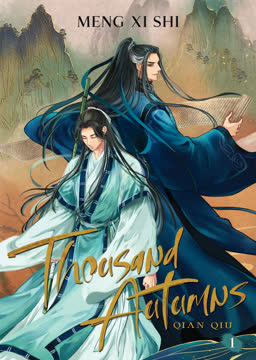
Plot Summary
1. Duel on Banbu Peak
On two perilous mountain peaks shrouded in mist, martial history repeats: Kunye, disciple of the unbeatable Göktürk master Hulugu, challenges Shen Qiao, the new leader of Xuandu Mountain, for the honor of their schools. Shen Qiao is no ordinary man, a gentle, brilliant soul, but he is cursed by generational expectation and poisoned by a hidden enemy. The duel's outcome is public humiliation—a fall from the summit in both body and spirit. All the world watches as the legacy of Qi Fengge, once Supreme under Heaven, seems to die alongside his student's shattered frame. The balance of Daoist, Buddhist, and Confucian schools trembles as the story shifts from philosophies to personal quests for survival and truth.
2. Rescue and Schemes
Shen Qiao, clinging to life, is saved by the demonic leader Yan Wushi and his disciple Yu Shengyan. The rescue is calculated, not compassionate. Yan Wushi, peerless and cynical, sees this as a unique opportunity: the most upright, pure disciple of righteousness is at his mercy. As Shen Qiao recovers, he becomes the subject of Yan's philosophical experiment—to break or convert his "goodness" through despair, confusion, and subtle manipulation. Ironically cared for in the Huanyue Sect's villa, Shen Qiao's wounds begin to heal, but his sight and memory remain lost, and he is utterly at the whims of rivals who see him as both chess piece and curiosity.
3. A Gentle Prison
Shen Qiao wakes from his near-fatal injuries in unfamiliar surroundings, blind and amnesiac, relying on the kindness of his supposed "shixiong" Yu Shengyan. The truth is obscured: he's told he belongs to the demonic sect, and his role in their world is rewritten for him. Despite captivity, Shen Qiao's innate gentleness persists, baffling and guilt-tripping those around him. Even as he is led by the hand from bed to courtyard, the lines between comfort and control blur. All the while, Yan Wushi observes, curious as to whether he can break Shen Qiao's noble spirit or transform him into something darker for his own amusement.
4. Frailty in the World
Dispatched to Qi under Yan Wushi's orders, Shen Qiao is pulled into assassination plots, revenge missions, and grotesque schemes—his role cemented as the "helpless" sidekick. His body frail, his memory dim, Shen Qiao proves to be quietly resourceful and unmistakably steadfast, channeling his internalized compassion to intervene in senseless murders, even as he risks angering his "allies." This gentle stubbornness puts him at odds with the brutal truth of the world and the ambitions of those who use him, culminating in a betrayal that sees him utterly alone, forced to survive in a chaotic, indifferent frontier, stripped of food, money, and shelter.
5. The Moral Dilemma
Weak, half-blind, Shen Qiao must survive a world twisted by famine and violence. Temples and towns are filled with hungry refugees, greedy merchants, conniving soldiers, and thieves. Shen Qiao's faith in human goodness is tested by human nature's worst—yet he persists in offering what compassion he can, even as he is cheated, threatened, and betrayed. Alongside a streetwise youth named Chen Gong, he experiences friendship, hardship, and both the cruelty and courage of the desperate, all while struggling to remember who he really is and the principles he once lived for.
6. Fallen Leader, Shattered Sect
Shen Qiao's strength slowly returns as he beguiles fate by making a living through fortune-telling, humility, and the exercise of kindness, gaining the loyalty of Chen Gong. Yet whispers of Xuandu Mountain's troubles follow him: the death of Qi Fengge, the rise of ambitious Yu Ai, and the encroaching threats from demonic and foreign schools seeking to exploit the sect's confusion. Shen Qiao teeters between obscurity and destiny, unwanted by his own people and hunted for secrets he cannot remember. His journey with Chen Gong, and the innocence and betrayal it encompasses, prepares him for inevitable reckoning.
7. Friendship and Betrayal
As Shen Qiao and Chen Gong survive by wit and luck, their friendship is tested by the world's pressures. When caught in the crossfire of sect feuds, assassination attempts, and political intrigue, the weight of secrets grows too great. Chen Gong, cornered and desperate, betrays Shen Qiao to save himself. This devastating act is met not with fury but understanding—Shen Qiao, condemned by allies and enemies alike, accepts both betrayal and loneliness. This marks his final estrangement from trust, spurring personal resilience and an even greater inward strength.
8. The Zhuyang Strategy
A new storm rises around the mythical Zhuyang Strategy, a collection of scrolls said to grant the "Dao of Heaven"—coveted by every martial power in the empire. Shen Qiao, caught up in a deadly contest at a remote temple, is forced by Yan Wushi to recite the contents of a recovered volume aloud in front of the world's most dangerous figures. In a single night, the world's balance of power fractures into chaos, and with the scroll destroyed, Shen Qiao becomes both witness and walking repository of unspeakable secrets, pursued by every school and kingdom.
9. Banquet of Hidden Dangers
Invited to a grand birthday banquet in the capital, Shen Qiao finds himself among the most powerful figures of the age: aristocrats, martial masters, and political spies. The world's storms play out in miniature—alliances shift, suspicions build, and hidden knives glint between polite toasts and ritual dances. Shen Qiao navigates these waters with humility and insight, forging tenuous bonds but always remaining an outsider. Secrets from his own past and the world's future are unmasked at an accelerating pace.
10. Demonic Temptations
Having rescued and tormented Shen Qiao repeatedly, Yan Wushi renews his experiment, oscillating between extreme tenderness and derision. Through demonic arts and psychological manipulation, Yan seeks to break Shen Qiao's will, to fill his heart with hatred or ambition—or simply to see what happens to pure goodness in a world that rewards cunning. Shen Qiao endures subtle invasions of the mind, temptation, and humiliation. Yet, even as the boundaries between protector and tormentor blur, Shen Qiao persists, seeking redemption and the restoration of his own self.
11. Rival Sects and Rising Stars
The martial world is thrust into chaos by the competition for the Zhuyang Strategy and for Xuandu Mountain's future. New protagonists emerge—Li Qingyu, a prodigy from Chunyang Monastery, and the sharp-witted, ambitious Xie Xiang from Linchuan Academy. Ambitious reformers like Yu Ai seek to align with powerful states or even foreign khanates, fighting for supremacy while sacrificing principle. Shen Qiao, facing his own declining sect and the rise of rivals, witnesses the changing of an era even as he and Yan Wushi shape the tides from behind the scenes.
12. Swords and Secrets
As Shen Qiao's martial arts slowly recover, he finds himself pitted against new foes and old grudges. He is forced to duel with enemies, both for survival and at Yan Wushi's command. Old betrayals by Xuandu Mountain's inner circle are revealed—Yu Ai struck the first blow, aiding foreign powers and sacrificing Shen Qiao for the sake of "reform." Meanwhile, the true depth of the Zhuyang Strategy's power—and danger—becomes clear, entangling Shen Qiao's fate with the world's inextricably.
13. Xuandu's Traitor
Finally confronting Yu Ai, Shen Qiao faces the full truth: his former brother, for power and the future of Xuandu Mountain, colluded with the Göktürks to poison him, ensuring his defeat. Their friendship, rooted in childhood and trust, crumbles utterly in the face of pragmatism and ambition. Yu Ai's reforms—a vision for an expansionist, secular Xuandu Mountain—demand sacrifices that Shen Qiao cannot accept. Power, philosophy, and emotion collide, leaving Shen Qiao wounded and exiled, his last remaining ties to the past broken.
14. Triumph and Fall
Shen Qiao, forced to use his remaining strength to escape Yu Ai's clutches, fights desperately to reclaim his autonomy. Loss and exhaustion threaten to consume him, but the intervention of Yan Wushi gives him a short-lived reprieve. Yet even survival is bitter, for trust is gone, and Shen Qiao finds no solace in the martial world's ruthless machinations. Yan Wushi's own complex motives—his simultaneous protection and provocation—make clear that Shen Qiao remains a tool, a vessel of secrets, and an object of fascination and torment in a game far vaster than his own life.
15. Interrogation by Shadows
In the wake of renewed violence and an unending procession of threats—from Hehuan Sect assassins to cutthroat commandery princes—Shen Qiao must decide: yield his spirit or remain true to himself despite pain and isolation? Yan Wushi leverages both kindness and cruelty to force the choice through demonic mind techniques, pushing Shen Qiao to the threshold of collapse and self-betrayal. Shen Qiao's struggle is as much internal as external; survival and identity are as inseparable as body and mind.
16. Survival and Growth
In the quiet aftermath, Shen Qiao, battered and near death, experiences a turning point. The relentless pressure, hardship, and betrayal have carved away the boy of promise, leaving a man tempered by adversity. As his martial arts and memory return, he discovers new depths of resilience and wisdom. Still wary of hope yet not fully broken, Shen Qiao sets his sights beyond personal vengeance—vowing to understand the world that shaped him, to protect what he can, and to choose his path with open eyes.
17. Gathering Storms
News arrives of new upheavals—the rise of prodigy Li Qingyu, sweeping changes among the sects, and the ever-tightening grip of the world's empires. Xuandu Mountain's once-proud name fades, its future mortgaged to foreign alliances and internal betrayal. The consequences of the Zhuyang Strategy's revelation ripple outward as dangerous alliances solidify between martial, political, and foreign powers. All roads lead toward a fateful clash, and Shen Qiao, weathered by suffering, is now one of the few who understands the cost of victory, the price of power, and the elusive nature of true justice.
18. Secrets on the Mountain
At a noble banquet, the past rises up again. A forgotten woman's secret ties link court and khanate, and old oaths forged in blood resurface, further tangling the web of intrigue. The living symbol of sacrifice and conscience, Shen Qiao is at last recognized for what he is: a survivor whose clarity, not his sword, is most dangerous. As the world's storms gather, friends and enemies must choose: to build a just new world, or to destroy it and lose themselves in the chaos of ambition.
Analysis
Thousand Autumns Vol. 1 is a meditation on resilience, identity, and the cost of goodness in an indifferent world. Through the lens of Shen Qiao's radical fall and gradual reclamation of self, the novel interrogates whether idealism is mere naiveté or a source of quiet power. Set against a historically rich backdrop of political chaos and sectarian rivalry, the narrative uses friendship, betrayal, and philosophical debate to dissolve simple binaries of good versus evil. It asks: When stripped of status, power, and trust, can a person remain themselves? While demonic manipulation (embodied by Yan Wushi) and raw ambition (by Yu Ai or Hehuan Sect leaders) seem to prevail, the story refutes easy answers. Instead, it finds value in persistence, humility, and the strength to choose compassion after pain. In the modern context, this resonates as a plea for integrity when cynicism is easy, for finding hope in the world's darkness, and for understanding that surviving with one's conscience intact can be the greatest victory of all.
Review Summary
People Also Read

Characters
Shen Qiao
As the story's heart, Shen Qiao stands at the crossing point of epochal change—gifted, sincere, and uncommonly gentle at the outset. His fall from grace—physical, spiritual, and social—is shattering, but also transformative. Stripped of everything, he is forced to look ruthlessly at the world's evil and his own values, refusing nihilism even under extreme duress. His relationships—to Yu Ai (betrayer and brother), Yan Wushi (tormentor and savior), and Chen Gong (friend and betrayer)—define his growth. Despite manipulation and humiliation, he gradually reclaims agency, ascending past trauma into wisdom. Shen Qiao's development is a study of conscience under fire—principled but flexible, scarred yet unbroken, and in the end, a truer leader for all his suffering.
Yan Wushi
Yan Wushi, the enigmatic leader of the Huanyue Sect, operates by a code entirely his own: sharp, cunning, and devastatingly honest about human selfishness. He saves Shen Qiao as a thought experiment and project—arguing that true nature is corrupt unless forcibly shaped otherwise, and relishing the process of tempting, breaking, or sculpting idealists. His psychological games straddle tenderness and violence, fascination and cruelty. At once teacher, jailer, and reluctant companion, Yan's motivations are never straightforward—he craves challenge, novelty, and domination, but is surprised and amused by Shen Qiao's intransigence. Ultimately, Yan is both architect and victim of deeper transformations, as Shen Qiao's impact on him grows.
Yu Ai
Qi Fengge's third disciple and Shen Qiao's closest friend, Yu Ai is driven by ambition and a vision for Xuandu Mountain's restoration or supremacy. Hiding ruthless ambition under a mask of fraternal affection, he poisons and sabotages Shen Qiao at his moment of greatest need, believing sacrifice and pragmatism are necessary for the greater good. His coup is personal and philosophical—valuing results over principles, and the future over loyalty. Yet Yu Ai is never a mere villain; his pathos and regret are genuine, his choices informed by deeply internalized insecurity and a kind of love for his "brother." In the aftermath, his inability to return to past innocence reflects the novel's theme of irreversible loss.
Chen Gong
A youth hardened by abandonment and hardship, Chen Gong forms an unlikely bond with Shen Qiao, driven initially by calculation and gradually by respect and affection. His journey is a microcosm of the book's moral ambiguities: he betrays Shen Qiao in a moment of weakness, then regrets and suffers the consequences. Chen Gong's arc explores how destitution shapes psychology—the tension between self-interest and loyalty, dreams of greatness and the realities of survival. He's at once victim and agent, serving as a lens for the unromanticized fate of the weak, and ultimately, an illustration of how acts of kindness can both inspire and endanger.
Bai Rong
The devious, deadly disciple of Hehuan Sect, Bai Rong personifies the allure and danger of the demonic sects. She is both executioner and collector of secrets, switching between innocence and cruelty with ease. Her fascination with Shen Qiao is predatory—she covets what she cannot corrupt, seeking to consume, possess, or destroy him as needed. Respirating in plots within plots, Bai Rong's talent for manipulation contrasts sharply with Shen Qiao's naiveté, acting as a perpetual reminder of the world's appetite for suffering.
Huo Xijing
As one of Hehuan Sect's most notorious criminals, Huo Xijing is emblematic of the extreme violence lurking beneath the martial world's elegance. His obsession with beauty and youth is rooted in a life of transgression and insecurity, and his methods—skinning and inhabiting the faces of his victims—literalize deeper themes of identity, mask, and the corrosion of the spirit through unchecked desire. His eventual death is violent and necessary, but it leaves the question: What becomes of a world that breeds such monsters?
Yuan Xiuxiu
The head of Hehuan Sect, Yuan Xiuxiu is both beautiful and calculating, using charm and violence interchangeably. Her power is always under scrutiny due to gender biases, which she navigates (and weaponizes) with pride. A survivor of rivalries and seductive politics, Yuan Xiuxiu is both ally and nemesis to Yan Wushi. Her relationship to the men around her—especially as the possible lover of Sang Jingxing—reflects the fragility of alliances in the martial world, and her sophistication lays bare the game's ruthlessness.
Bian Yanmei
As Yan Wushi's first disciple and trusted right hand, Bian Yanmei manages the material and administrative face of the Huanyue Sect, navigating the treacheries of court and sect. He is sharp, but never overconfident; ambitious enough to act, yet self-aware enough to know his limits. His relationship to Shen Qiao is initially skeptical, colored by hierarchy and suspicion, but evolves into admiration for Shen Qiao's resilience. As a witness to the world's power games, Bian's perspective grounds the narrative in human realism.
Li Qingyu
Mentored by the legendary Yi Pichen, Li Qingyu's meteoric rise signals the endless cycle of decline and ascendance within the martial world. His reputation is built on skill, but his threat to Xuandu Mountain's supremacy is as much symbolic as it is literal. He is respectful, diligent, and the embodiment of a new, less naive generation, functioning as both challenge and inspiration to those who witness his feats.
Xie Xiang
As Ruyan Kehui's favored student, Xie Xiang is sharp-tongued, prideful, and fiercely capable. His role as envoy and duelist at court events places him at the intersection of power and tradition. While initially antagonistic, his respect for Shen Qiao grows through rivalry. Xie Xiang exemplifies the struggle between old certainties and new ambitions, and his character shows how even rivalries can foster growth and understanding.
Plot Devices
Duality of Human Nature
At its core, Thousand Autumns interrogates the classic tension between "goodness" and "evil" in human nature. Through manipulation, betrayal, and compassion, characters are placed in dilemmas where choice is both a product of circumstance and character. Shen Qiao's journey—his repeated confrontations with the limits of his own ideals and the temptations of hatred or revenge—serves as the main lens for this inquiry. The "demonic" approach (Yan Wushi's worldview) and the "righteous" approach (Shen Qiao's Daoist beliefs) are tested in every relationship, particularly through foils like Yu Ai or Bai Rong, whose betrayals are both shocking and psychologically grounded.
The Zhuyang Strategy
The lost volumes of the Zhuyang Strategy operate as Holy Grail: whoever controls or understands them can reshape the world's balance. The scrolls' existence fuels plot twists, power grabs, and alliances both within and across sects and kingdoms. Shen Qiao's position as the living carrier of these secrets makes him perpetually vulnerable, courted, and threatened. The recitation and destruction of a volume become turning points, foreshadowing wars to come.
Manipulation and Conversion
The novel's structure is built around personal ordeals—forced recitations, demonic persuasion, seduction or torment by Yan Wushi, and the test of Shen Qiao's conscience through repeated betrayals. Characters are rarely given clean victories or unearned redemptions; instead, they are forced to choose (or fail to choose) under immense pressure, often causing suffering to themselves or others. Foreshadowing threads abound, particularly in Yan Wushi's philosophical taunts and "experiments," suggesting an inevitable collision between ideals and desires.
Narrative Structure
The plot alternates between intimate dilemmas and macro-world events: sect rivalries, imperial ambitions, and the ever-shifting alliances of warlords and empires. Repetition and return are built into the narrative: grand duels echo earlier history, betrayals repeat and escalate, and old wounds recur as fate brings characters together and apart. Each cycle brings greater clarity (or greater cynicism), never returning the world to its former order.








































