
Plot Summary
Imperial Summons and Rivalries
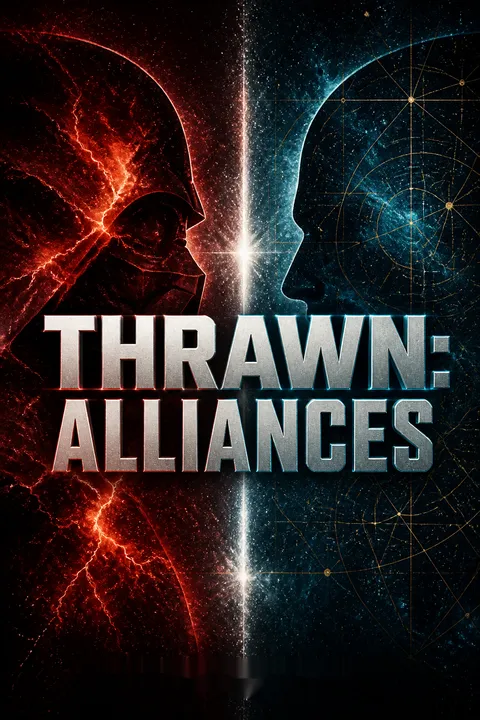
The Emperor senses a disturbance in the Force and calls his two most formidable servants—Grand Admiral Thrawn, the brilliant Chiss tactician, and Lord Vader, the Emperor's ruthless enforcer—to investigate. Tension simmers between them: Thrawn's recent failure at Atollon has earned Vader's contempt, while Thrawn opposes the Death Star project favored by Vader and Tarkin. Palpatine's true motives are layered, seeking to test Thrawn's loyalty and force Vader to confront his past. The Emperor orders them to Batuu, a planet at the edge of the Unknown Regions, where a mysterious threat is growing. Both men are wary, knowing their partnership is fraught with rivalry and suspicion, yet bound by the Emperor's will.
Shadows of the Past
Years earlier, during the Clone Wars, General Anakin Skywalker and Chiss Commander Mitth'raw'nuruodo (Thrawn) first crossed paths. Padmé Amidala, Anakin's secret wife, receives a cryptic message from her handmaiden Duja about a Separatist plot near Batuu and sets out to investigate. When Padmé disappears, Anakin defies orders to search for her, leading him to Batuu. There, he encounters Thrawn, who seeks to understand the Republic's war and its implications for the Chiss. Their uneasy alliance is forged out of necessity, as both pursue personal missions—Anakin to rescue Padmé, Thrawn to gather intelligence for his people.
Batuu: Unlikely Alliances
In the present, Thrawn and Vader, now Imperial adversaries, are forced to cooperate as they travel to Batuu aboard the Star Destroyer Chimaera. Their mutual distrust is palpable, each maneuvering for dominance. The Chimaera's crew, including Commodore Faro and stormtrooper commander Kimmund, navigate the political minefield of having both men aboard. Upon arrival, Thrawn and Vader adopt disguises and descend to Black Spire Outpost, seeking the source of the Emperor's disturbance. Their investigation is complicated by local intrigue, hidden enemies, and the ghosts of their former selves.
The Emperor's Disturbance
The Emperor's sensed disturbance is elusive, flickering at the edge of Vader's perception. Thrawn's analytical mind and Vader's Force abilities complement and clash as they probe Black Spire's secrets. They encounter Darshi aliens, smugglers, and evidence of a covert operation involving advanced technology and unknown players. The tension between Thrawn's methodical approach and Vader's impatience grows, but both recognize that the threat is more than local—it is connected to the Unknown Regions and possibly to Thrawn's own people.
Padmé's Disappearance
Padmé, following Duja's trail, arrives at Batuu and discovers her friend dead, left as bait by unknown enemies. Using her diplomatic skills and resourcefulness, Padmé uncovers clues pointing to a Separatist factory on Mokivj. She narrowly escapes detection, retrieves Duja's hidden ship, and resolves to investigate the factory herself, even as she tries to alert Anakin. Her journey is fraught with danger, isolation, and the weight of loss, but her determination to honor Duja's sacrifice drives her forward.
Chimaera's Detour
The Chimaera's journey to Batuu is disrupted by mysterious gravity anomalies, forcing Thrawn to reroute through Mokivj. The detour reveals a devastated planet, hinting at catastrophic events and missing moons. Thrawn's curiosity and Vader's suspicion deepen as they realize the anomalies are not natural but engineered. The crew's loyalty is tested, and the interplay of military protocol and personal ambition is on full display. The detour foreshadows the larger threat lurking in the Unknown Regions.
Echoes from Mokivj
Padmé, using Duja's ship and her own ingenuity, reaches Mokivj and discovers a secret factory protected by advanced shields and vulture droids. She allies with local workers, posing as a ransom target to avoid suspicion. Inside, she uncovers evidence of cortosis mining and droid production, but is eventually captured and held in the factory's cells. Her messages to Anakin are delayed by sabotage, leaving her fate uncertain as the Separatist plot unfolds.
Jedi and Chiss: First Contact
In the past, Anakin and Thrawn join forces to investigate Padmé's disappearance and the Separatist activities on Batuu. Their alliance is marked by mutual respect and deep differences—Anakin's impulsive heroism contrasts with Thrawn's calculated strategy. Together, they navigate local politics, confront smugglers, and piece together the connection between Batuu, Mokivj, and a larger Separatist scheme. Their partnership lays the groundwork for the complex relationship they will share as Vader and Thrawn.
Black Spire Intrigues
Thrawn and Vader's investigation in Black Spire uncovers a web of smugglers, Separatist agents, and local collaborators. They interrogate suspects, survive assassination attempts, and unravel the interplay between criminal enterprises and covert operations. The Darshi aliens and their ceremonial knives become symbols of loyalty and manipulation. The arrival of Grysk agents—mysterious nomads from the Unknown Regions—signals a new, more insidious threat, one that seeks to exploit both the Empire and the Chiss.
Smugglers, Spies, and Secrets
Through interrogation and deduction, Thrawn and Vader expose the Separatist operation: cortosis is being mined and used to create invulnerable droids and clone armor, with the help of local smugglers and Separatist sympathizers. The Grysk, manipulating events from the shadows, aim to destabilize both the Empire and the Chiss Ascendancy. The investigation becomes a race against time as the Separatists and Grysks attempt to cover their tracks and escape with their secrets.
Factory of Shadows
The narrative threads unite as Padmé, Anakin, and Thrawn infiltrate the Mokivj factory. They discover the true extent of the Separatist and Grysk collaboration: cortosis-armored droids and clone armor designed to resist blasters and lightsabers, threatening the balance of power in the galaxy. The trio must outwit Duke Solha, the Serennian overseer, and his droid army, while navigating their own conflicting loyalties and personal stakes.
Cortosis and Conspiracies
Anakin, Padmé, and Thrawn sabotage the factory, reprogramming the droids to self-destruct and destroying the cortosis mine. The cost is high—collateral damage devastates the local population, and the moral ambiguity of their actions weighs heavily on Padmé and Anakin. Thrawn's true mission—to secure the shield generator for the Chiss—reveals his divided loyalties. The Separatist plot is foiled, but the Grysk threat remains, lurking in the shadows.
The Grysk Threat Emerges
Thrawn and Vader, now fully aware of the Grysk manipulation, confront the reality that the Unknown Regions harbor dangers greater than the Empire has faced. The Grysks' strategy of infiltration, manipulation, and psychological warfare is revealed through their use of hostages, stolen technology, and cultural subversion. Thrawn's loyalty to the Empire is tested as he seeks to protect his own people from Grysk domination, even as Vader questions his motives.
Loyalties Tested
The climax of the narrative centers on the rescue of Force-sensitive Chiss children—navigators with precognitive abilities vital to Chiss survival—who have been kidnapped by the Grysks. Thrawn and Vader must trust each other, balancing Imperial orders with personal loyalties. The First Legion stormtroopers, aided by Thrawn's assassin Rukh, battle through Grysk traps to rescue the children. The cost of victory is measured in lives, secrets, and the shifting balance of power.
The Battle for Mokivj
The Chimaera, under Thrawn's command, engages the Grysk fleet in a battle of tactics and technology. Vader leads the TIE Defenders in a demonstration of Imperial might, exploiting the Grysks' cultural blind spots. The battle is both physical and psychological, with Thrawn's strategic genius and Vader's Force abilities turning the tide. The Grysks are defeated, but not destroyed, and their infiltration of the Chiss and the Empire remains a looming threat.
Children of the Third Sight
The rescued Chiss children, whose Force sensitivity enables them to navigate the treacherous Unknown Regions, symbolize both hope and vulnerability. Thrawn's secrecy about their abilities and the Chiss reliance on them underscores the fragility of his people's survival. The rescue is bittersweet, as the children's future remains uncertain and the Grysks' interest in exploiting Force-sensitives is far from over.
The Grysk Web Unraveled
With the immediate threat neutralized, Thrawn and Vader confront the deeper implications of the Grysk incursion. The discovery of cortosis technology, the manipulation of Separatist and Chiss factions, and the specter of civil war within the Ascendancy all point to a larger, ongoing conflict. Thrawn's message to the Grysks is both a warning and a challenge, marking the beginning of a new era of vigilance and preparation.
Choices, Consequences, and Collateral Damage
The story closes with the characters reflecting on the choices they have made and the consequences for themselves and the galaxy. Padmé and Anakin grapple with the collateral damage inflicted on Mokivj, questioning the price of victory. Thrawn and Vader reach an uneasy understanding, their loyalties to the Empire and their own people forever intertwined. The Grysk threat remains, a shadow on the horizon, as the Empire and the Chiss prepare for the battles yet to come.
Analysis
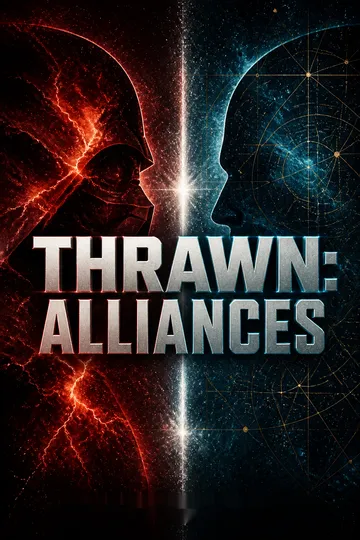
Thrawn: Alliances is a meditation on loyalty, trust, and the costs of powerTimothy Zahn's novel transcends the boundaries of Star Wars adventure to probe the psychological and ethical dilemmas faced by those who serve empires—galactic or personal. Through the mirrored partnerships of Anakin/Thrawn and Vader/Thrawn, the story explores how past choices echo into the present, shaping destinies and forging unlikely alliances. The Grysk threat serves as both a literal and metaphorical challenge, forcing characters to confront the dangers of complacency, the seduction of easy answers, and the fragility of order in a chaotic galaxy. The novel's use of dual timelines, cultural symbolism, and shifting allegiances invites readers to question the nature of heroism, the meaning of victory, and the true cost of survival. In the end, Thrawn: Alliances is less about the defeat of an enemy than about the ongoing struggle to balance duty, conscience, and the ever-present shadow of the unknown.
Review Summary
Thrawn: Alliances received mixed reviews. Many praised the character interactions, especially between Thrawn and Vader/Anakin. Some enjoyed the dual timeline structure, while others found it confusing. Critics noted the book's slower pacing and less compelling plot compared to its predecessor. Thrawn's portrayal as an omniscient narrator was criticized by some. Despite these issues, fans appreciated the deeper exploration of Vader's character and the Star Wars universe. Overall, opinions varied widely, with ratings ranging from 1 to 5 stars.
People Also Read
Characters
Grand Admiral Thrawn (Mitth'raw'nuruodo)
Thrawn is the enigmatic Chiss grand admiral whose brilliance in tactics and art analysis makes him both invaluable and suspect within the Empire. His loyalty is complex: sworn to the Emperor, yet always mindful of the Chiss Ascendancy's survival. Thrawn's psychological depth lies in his ability to see patterns, anticipate enemies, and manipulate outcomes, but his emotional detachment and secretiveness create tension with those around him. His relationship with Vader is fraught with rivalry and mutual respect, each testing the other's limits. Thrawn's ultimate goal is to protect his people from the Grysk threat, even if it means walking the razor's edge of Imperial trust and personal ambition.
Darth Vader (Anakin Skywalker)
Vader is the Emperor's feared apprentice, embodying power, ruthlessness, and a deep-seated need for control. Beneath the mask, he is still Anakin Skywalker, tormented by loss, love, and the choices that led him to the dark side. His relationship with Thrawn is adversarial yet complementary, each recognizing the other's strengths and weaknesses. Vader's psychoanalysis reveals a man struggling with trust, loyalty, and the ghosts of his former self—especially when forced to confront the legacy of Anakin and his connection to Padmé. His development is marked by moments of vulnerability, flashes of old heroism, and the ever-present shadow of the Emperor's expectations.
Padmé Amidala
Padmé is the heart of the narrative's emotional arc, driven by loyalty to friends and a fierce sense of justice. Her journey from senator to undercover investigator highlights her adaptability, intelligence, and willingness to risk everything for those she loves. Padmé's relationship with Anakin is both her strength and her vulnerability, grounding the story in personal stakes. Her psychoanalysis reveals a woman burdened by the costs of war, struggling to reconcile her ideals with the harsh realities of conflict. Her actions catalyze the plot, and her moral clarity challenges those around her to consider the true price of victory.
Commodore Karyn Faro
Faro is Thrawn's trusted second-in-command aboard the Chimaera, embodying the professionalism and adaptability required to serve under two of the Empire's most demanding leaders. Her role is to navigate the political and tactical complexities of Thrawn and Vader's rivalry, ensuring the ship's crew remains effective despite shifting allegiances. Faro's psychological profile is marked by ambition tempered with caution, a keen sense of duty, and the ability to learn from Thrawn's example. She serves as a bridge between the narrative's grand strategies and the lived experience of Imperial officers.
Commander Kimmund
Kimmund commands the First Legion, Vader's elite stormtroopers, and represents the Empire's martial prowess. His relationship with Thrawn and Vader is defined by respect for authority and a willingness to adapt to unconventional tactics. Kimmund's psychoanalysis reveals a soldier who values loyalty, competence, and the camaraderie of his unit, but who is also wary of being used as a pawn in larger political games. His development is seen in his ability to integrate Thrawn's strategies with Vader's directness, ensuring the success of critical missions.
Rukh
Rukh is Thrawn's Noghri bodyguard, skilled in stealth and combat, and equipped with a personal cloaking device. His loyalty to Thrawn is absolute, but his outsider status within the Imperial hierarchy creates friction with other characters, especially the stormtroopers. Rukh's psychological depth lies in his cultural pride, sense of honor, and the tension between serving a master and maintaining his own identity. He is both a tool and a wildcard, his actions often tipping the balance in critical moments.
Duke Solha
Solha is the Serennian nobleman placed in charge of the Mokivj factory, embodying the dangers of unchecked ambition and the allure of power. His collaboration with the Separatists and the Grysks is driven by a desire for recognition and legacy, but ultimately leads to his downfall. Solha's psychoanalysis reveals a man who mistakes manipulation for agency, and whose choices serve as a cautionary tale about the costs of betrayal and the seduction of easy answers.
The Grysk
The Grysks are the unseen hand behind much of the novel's conflict, representing a new kind of enemy—one that conquers through infiltration, subversion, and the exploitation of cultural weaknesses. Their methods—hostage-taking, technological theft, and manipulation of both the Empire and the Chiss—make them a formidable and insidious foe. Psychologically, the Grysks embody the fear of the unknown and the dangers of complacency, forcing the protagonists to confront the limits of their own understanding and loyalty.
Chiss Children (Navigators)
The Force-sensitive Chiss children, known as sky-walkers, are vital to the Ascendancy's survival, able to navigate the treacherous Unknown Regions through precognition. Their abduction by the Grysks and subsequent rescue by Thrawn and Vader highlight the fragility of both Chiss and Imperial security. Psychologically, they represent innocence caught in the crossfire of galactic power struggles, and their fate underscores the moral stakes of the conflict.
Commodore Faro's Crew (Ensemble)
The officers and crew of the Chimaera serve as the narrative's grounding force, providing perspective on the extraordinary events unfolding around them. Their loyalty, adaptability, and occasional skepticism reflect the broader challenges faced by those who serve under legendary leaders. Their development is seen in their growing trust in Thrawn's methods and their ability to execute complex operations under pressure.
Plot Devices
Dual Timelines and Mirrored Partnerships
The novel employs a dual timeline structure, juxtaposing Anakin and Thrawn's first alliance during the Clone Wars with their later partnership as Vader and Thrawn. This mirroring allows for deep character exploration, highlighting how past choices and relationships inform present actions. The narrative structure creates dramatic irony, as readers see the echoes of Anakin's heroism and Thrawn's curiosity in their Imperial incarnations, while also foreshadowing the unresolved tensions that will define their future.
Foreshadowing and Symbolism
Thrawn's analysis of art and cultural symbols serves as both a plot device and a metaphor for the novel's themes of perception, loyalty, and manipulation. The ceremonial knives of the Darshi, the cortosis weave, and the Chiss children's abilities all function as symbols of deeper truths—about identity, vulnerability, and the dangers of underestimating the unfamiliar. Foreshadowing is used to build suspense, with early hints about the Grysk threat and the significance of cortosis paying off in the novel's climax.
Shifting Allegiances and Moral Ambiguity
The novel's central plot device is the constant testing of loyalties—Imperial, Chiss, personal, and moral. Characters are repeatedly forced to choose between duty and conscience, with the lines between heroism and villainy blurred by circumstance and necessity. The use of sabotage, reprogramming, and collateral damage as tactics underscores the moral ambiguity of war, challenging both characters and readers to question the true price of survival and success.
Psychological Warfare and Manipulation
The Grysks' strategy of infiltration, hostage-taking, and cultural manipulation is a key plot device, raising the stakes beyond conventional warfare. Their ability to exploit weaknesses—both technological and psychological—forces the protagonists to adapt, innovate, and confront their own limitations. The interplay of deception, misdirection, and psychological pressure drives the narrative's tension and shapes the characters' development.
Narrative Perspective and Internal Monologue
The novel frequently shifts perspective, offering glimpses into the thoughts and emotions of Thrawn, Vader, Padmé, and supporting characters. This device allows for nuanced exploration of internal conflicts, especially the tension between public duty and private desire. The use of internal monologue deepens the reader's understanding of character motivations, fears, and hopes, making the story's emotional arc as compelling as its external action.
Star Wars: Thrawn Series
About the Author
Other books by Timothy Zahn
Download PDF
Download EPUB
.epub digital book format is ideal for reading ebooks on phones, tablets, and e-readers.








































