
Plot Summary
Shepherd's Final Morning
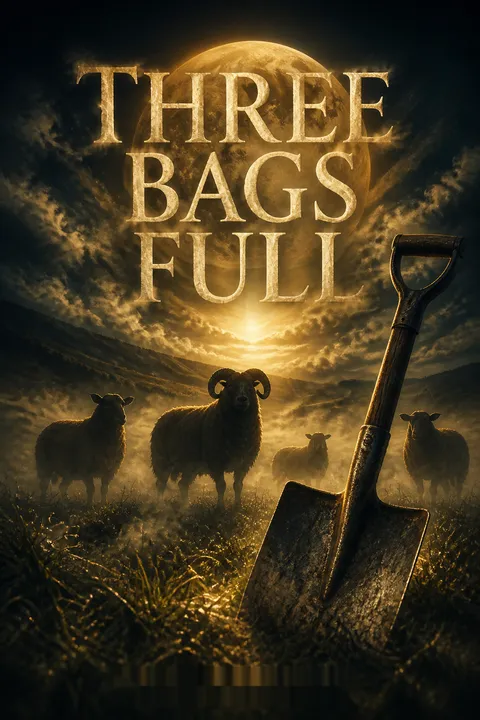
The Glennkill flock wakes to find their shepherd, George, dead in the pasture, a spade driven through his chest. Panic and confusion ripple through the sheep, who recall George's kindness—his stories, his care, his odd habits. Miss Maple, the cleverest sheep, quickly quells the panic and insists they must solve the murder themselves. The flock's world is upended: their protector is gone, and the meadow is suddenly a place of danger and mystery. The sheep's grief is tinged with fear, but also a sense of responsibility. They resolve to find justice for George, even as the scent of blood and the shadow of death linger over the green Irish grass.
Flock Decides on Justice
Miss Maple leads the flock in a solemn vow: they will find George's killer. The sheep organize themselves, each taking up a post to watch the humans who arrive—Tom O'Malley, the butcher Ham, the gentle Gabriel, and George's lover Lilly. The sheep observe the humans' reactions, their secrets, and their suspicions. The flock's sense of unity grows as they collect questions and clues, with Mopple the Whale, the memory sheep, storing every detail. The sheep's investigation is both earnest and naive, blending their animal instincts with the logic gleaned from George's detective stories.
Sheep Watch the Humans
The village descends on the meadow: police, journalists, villagers, and George's estranged wife Kate. The sheep watch as the humans argue, grieve, and accuse. The butcher's presence terrifies them, while Gabriel's calm soothes. The humans' conversations are cryptic to the sheep, but Miss Maple and Mopple piece together hints of old grudges, money troubles, and romantic entanglements. The sheep realize that George's death has unsettled the entire village, and that the humans are as lost as the flock. The sheep's perspective is both comic and poignant, as they try to make sense of human motives.
Questions in the Rain
The sheep, left alone in the rain, reflect on George's life: his failed marriage, his dreams of Europe, his love of stories, and his recent absences. They create "George's Place" in the meadow as a memorial, vowing not to graze there. The flock's unity is tested by guilt and suspicion—did one of them play a role in George's death? Miss Maple finds a hoofprint on George's body, raising the unsettling possibility that a sheep was involved. The sheep's investigation deepens, blending memory, myth, and logic as they try to understand both George and themselves.
The Vegetable Garden Raid
Hungry and unsupervised, the sheep raid George's forbidden vegetable garden, devouring everything. Their guilt is immediate and profound, leading them to reflect on George's rules and their own capacity for wrongdoing. The raid becomes a metaphor for temptation and loss, as the sheep realize that freedom without guidance can lead to chaos. The flock's remorse strengthens their resolve to honor George's memory and to seek justice, even as they struggle with their own instincts and desires.
The Village's Suspects
The sheep eavesdrop on the villagers, piecing together a web of motives: money, jealousy, old feuds, and secrets. The local priest, the butcher, Gabriel, Lilly, and Kate all come under suspicion. The sheep's understanding is limited by their animal perspective, but their observations are sharp and often more insightful than the humans'. The village's collective guilt and fear become apparent, as everyone seems to have something to hide. The sheep realize that the truth is buried beneath layers of human complexity.
The Wolf's Ghost
A lamb claims to have seen a ghost near George's body—a shaggy, dancing figure. The flock debates the existence of souls, ghosts, and the meaning of death. Miss Maple wonders if the murderer is even human. The sheep's folklore and fears mingle with the real dangers of the world, blurring the line between myth and reality. The ghost becomes a symbol of unresolved guilt and the unknown, haunting both sheep and humans as the investigation stalls.
The Butcher's Shadow
The butcher Ham looms over the investigation, both feared and pitied by the sheep. His interactions with Lilly and Kate reveal a man driven by desire, resentment, and fear. The sheep sense his anger and his secrets, but also his loneliness. When Ham is later found injured at the base of the cliffs, suspicion and confusion deepen. The sheep's fear of the butcher is matched by their realization that he, too, is a victim of the village's secrets and violence.
Melmoth Returns
Melmoth, Ritchfield's long-lost twin, returns to the flock, bringing with him stories of exile, survival, and wisdom. His presence unsettles the flock, as old stories and fears resurface. Melmoth's outsider perspective helps the sheep see their own lives and the village's history in a new light. He becomes both a mentor and a mystery, teaching the sheep to pay attention, to question, and to face their fears. His return signals a turning point in the investigation and in the flock's understanding of justice.
Melmoth's Fifth Night
Melmoth recounts his escape from the flock years ago, his near-death in the stone quarry, and his discovery of a human corpse—McCarthy—killed with a spade. George and Ham found the body and covered up the crime, fearing the village's collective guilt. Melmoth's story reveals the village's dark past and the roots of George's isolation. The sheep realize that George's death is linked to old secrets, fear, and the desire to keep the past buried. Melmoth's wisdom and pain become a guide for the flock as they approach the truth.
The Caravan's Secret
Rebecca, George's secret daughter, arrives in Glennkill, determined to understand her father's death. She discovers hidden packets of "grass" (drugs) in the caravan, evidence of George's involvement in smuggling. The sheep watch as Rebecca navigates the village's hostility, the legacy of McCarthy's murder, and her own grief. Her presence brings new energy and perspective to the investigation, as she forms a bond with the flock and becomes their new shepherdess. The caravan's secrets are both literal and symbolic, representing the hidden truths at the heart of the village.
Rebecca Arrives
Rebecca's arrival transforms the flock's world. She reads to them, cares for them, and becomes their advocate. The sheep, wary at first, come to trust her. Rebecca's investigation into George's past and the village's secrets parallels the sheep's own quest for justice. Her courage and vulnerability inspire the flock, and her determination to honor George's memory gives them hope. The bond between Rebecca and the sheep becomes a symbol of healing and renewal.
The Will Is Read
The village gathers under the lime tree for the reading of George's will. To everyone's shock, George leaves his fortune and land to his sheep, with Rebecca as their shepherdess. The humans' greed and resentment boil over, but the sheep are elated: they will finally go to Europe, as George promised. The will exposes the village's divisions and the depth of George's love for his flock. The sheep's joy is tempered by the realization that justice for George remains elusive.
The Contest of Sheep
The sheep enter the Smartest Sheep in Glennkill contest, hoping to draw attention to George's murder. Their performance—a reenactment of the crime—baffles and unsettles the humans. The sheep's attempt to communicate the truth is both comic and tragic, highlighting the limits of understanding between species. The contest becomes a metaphor for the search for justice: the truth is visible, but not always recognized. The sheep's courage and creativity bring them closer to closure, even as the humans remain largely oblivious.
Beth's Confession
Beth, the village's religious zealot, confesses to helping George die—an act of mercy, love, and despair. She describes George's loneliness, his fear of Europe, and his longing for peace. The spade was a symbol, a way to keep his soul from haunting the village. Beth's confession is both an act of atonement and a final gift to George. The sheep listen, struggling to understand the complexities of human love, guilt, and death. The truth is both simpler and more painful than they imagined.
The Truth Gets Out
The truth of George's death spreads through the village, bringing relief, anger, and confusion. The sheep realize that justice is not always clear or satisfying: the guilty are not always punished, and the innocent are not always saved. The village begins to heal, as secrets are aired and old wounds are acknowledged. The sheep, having fulfilled their promise to George, prepare to leave for Europe with Rebecca. Their journey is both an ending and a beginning, a testament to resilience and hope.
Europe Beckons
The sheep, Rebecca, and Tess the sheepdog prepare to leave Glennkill for Europe. The flock reflects on their journey: the loss of George, the search for justice, the discovery of truth, and the bonds of love and loyalty that have sustained them. The meadow is both home and memory, a place of sorrow and joy. As they set out for new pastures, the sheep carry with them the lessons of their adventure and the hope of a better future.
Melmoth's Farewell Cloud
On the eve of their departure, Melmoth disappears, becoming a legend once more. The sheep watch a gray cloud drift over the sea and imagine Melmoth among the cloud sheep in the sky. His farewell is both sad and uplifting, a reminder that every journey ends in mystery. The flock, united and transformed, faces the unknown with courage and curiosity, ready for whatever Europe—and life—may bring.
Analysis
Leonie Swann's Three Bags Full is a genre-defying meditation on innocence, justice, and the search for meaning, disguised as a comic sheep detective story. By filtering a human murder mystery through the eyes of a flock of sheep, Swann exposes the absurdities, cruelties, and redemptions of human society. The sheep's investigation is both a parody of detective fiction and a profound exploration of community, loss, and the limits of understanding. The novel's central lesson is that truth is elusive, justice is ambiguous, and healing requires both courage and compassion. The sheep's journey—from confusion and fear to acceptance and hope—mirrors the human struggle to make sense of suffering and to find connection in a fractured world. In a modern context, the book invites readers to question authority, to honor memory, and to embrace the wisdom of outsiders. Ultimately, Three Bags Full is a celebration of resilience, curiosity, and the enduring power of stories to unite, to heal, and to set us free.
Review Summary
Three Bags Full receives mixed but generally positive reviews, averaging 3.59/5. Readers widely praise the novel's unique premise—a flock of sheep investigating their shepherd's murder—and the charming, distinct personalities of characters like Miss Maple, Mopple the Whale, and Othello. The sheep's perspective is frequently lauded as clever and humorous, offering sharp social commentary on human nature. Common criticisms include a slow middle section, a disappointing mystery resolution, and the detective plot feeling secondary to the book's philosophical themes.
Characters
Miss Maple
Miss Maple is the intellectual heart of the flock, renowned for her sharp mind, curiosity, and sense of responsibility. She is both a leader and an outsider, often carrying the burden of insight and decision-making. Maple's psychoanalysis reveals a sheep who is both proud and anxious, driven by a need to make sense of the world and to protect her flock. Her relationship with Mopple (the memory sheep) and Othello (the outsider) is central, as she relies on their strengths to complement her own. Maple's journey is one of self-discovery, as she learns the limits of logic and the power of empathy.
Mopple the Whale
Mopple is the flock's living archive, blessed with perfect recall and a gentle, sensitive nature. His hunger is legendary, but so is his loyalty. Mopple's role is to remember every clue, every story, and every question, making him indispensable to the investigation. Psychologically, Mopple is anxious and easily overwhelmed, but his courage grows as the story unfolds. His relationship with Miss Maple is one of mutual respect, while his fear of the butcher and his longing for comfort reveal his vulnerability. Mopple's development is marked by increasing bravery and self-acceptance.
Othello
Othello is a black, four-horned ram with a mysterious past—part zoo animal, part circus survivor. He is both feared and admired by the flock, embodying strength, resilience, and a deep sense of justice. Othello's psychological complexity lies in his struggle with anger, loneliness, and the desire for belonging. His relationship with Melmoth is pivotal, as Melmoth becomes both mentor and rival. Othello's journey is one of transformation: from outsider to leader, from anger to wisdom, from vengeance to acceptance.
Melmoth
Melmoth is Ritchfield's twin and the flock's mythic figure—a ram who survived exile, danger, and the abyss. He returns with stories of survival and loss, challenging the flock to question their assumptions and to face their fears. Melmoth's psychoanalysis reveals a sheep who is both haunted and free, wise and wounded. His relationship with Othello is complex: part teacher, part challenger, part mirror. Melmoth's presence forces the flock to confront the unknown, and his final departure is both a loss and a liberation.
Sir Ritchfield
Sir Ritchfield is the flock's traditional leader, respected for his age, experience, and authority. His memory is failing, and his grip on power is tenuous, but his presence is reassuring. Ritchfield's relationship with Melmoth is central, as the return of his twin forces him to confront the past and his own mortality. Psychologically, Ritchfield is proud, stubborn, and increasingly vulnerable. His journey is one of letting go, accepting change, and finding peace in the flock's future.
Zora
Zora is the only ewe with horns, known for her agility, independence, and philosophical bent. She is both a scout and a dreamer, often meditating on the cliffs and pondering the mysteries of the world. Zora's psychoanalysis reveals a sheep who is both courageous and contemplative, drawn to the edge but loyal to the flock. Her relationship with Mopple and Miss Maple is supportive, while her encounters with Gabriel's sheep reveal her empathy and insight. Zora's journey is one of self-discovery and acceptance of the unknown.
Cloud
Cloud is the flock's comforter, known for her thick fleece, nurturing spirit, and love of simple pleasures. She is often the voice of reassurance and tradition, preferring routine and harmony. Psychologically, Cloud is risk-averse and sentimental, but her loyalty is unwavering. Her relationship with the lambs and the other ewes is maternal, while her interactions with Miss Maple and Zora reveal her quiet wisdom. Cloud's development is subtle, marked by resilience and adaptability.
Maude
Maude is the flock's warning system, blessed with an extraordinary sense of smell and a nervous disposition. She is quick to sense danger, both real and imagined, and often serves as the flock's early warning. Psychologically, Maude is anxious, cautious, and sometimes pessimistic, but her instincts are usually right. Her relationship with the lambs and the other ewes is protective, while her interactions with Miss Maple and Mopple reveal her vulnerability. Maude's journey is one of learning to trust and to balance fear with courage.
Rebecca Flock
Rebecca arrives as an outsider, determined to uncover the truth about her father's death and to honor his legacy. She is intelligent, independent, and compassionate, quickly forming a bond with the flock. Psychologically, Rebecca is driven by grief, guilt, and a longing for connection. Her relationship with the sheep is transformative, as she becomes both their protector and their student. Rebecca's journey is one of healing, acceptance, and the forging of a new family.
Beth
Beth is the village's moral voice, obsessed with souls, sin, and salvation. She is both respected and feared, her piety masking deep loneliness and longing. Psychologically, Beth is rigid, guilt-ridden, and desperate for meaning. Her relationship with George is complex: part love, part rivalry, part redemption. Beth's confession is the story's emotional climax, revealing the pain and hope at the heart of the village. Her journey is one of atonement, self-discovery, and release.
Plot Devices
Animal Perspective as Narrative Lens
The novel's central device is its animal perspective: the story is told through the eyes, noses, and instincts of sheep. This lens is both limiting and illuminating, allowing for comic misunderstandings, poignant insights, and a fresh take on human behavior. The sheep's logic is shaped by their experiences, folklore, and the stories George read to them. This device enables the author to explore themes of innocence, justice, and the limits of understanding, while also satirizing human society.
Mystery Structure and Red Herrings
The plot follows the structure of a detective novel, with suspects, clues, red herrings, and a gradual unveiling of the truth. The sheep's investigation is both earnest and naive, blending animal logic with the conventions of the genre. Foreshadowing is used through dreams, folklore, and the recurring motif of the spade. The narrative structure alternates between action, reflection, and storytelling, building suspense and deepening character.
Folklore, Myth, and Symbolism
The story weaves together sheep folklore, village legends, and human myths, blurring the line between reality and imagination. Ghosts, wolves, and the abyss become symbols of fear, guilt, and the unknown. The motif of the journey—to Europe, to the cliffs, into the past—serves as both literal and metaphorical exploration. The use of symbols (the spade, the caravan, the will) deepens the narrative and connects the personal to the communal.
Multiple Perspectives and Unreliable Narration
The story is told through multiple sheep, each with their own strengths, weaknesses, and biases. Memory (Mopple), logic (Maple), and instinct (Maude) offer different angles on the mystery. The unreliable narration—limited by the sheep's understanding—creates both humor and pathos, as the reader pieces together the truth from partial information. This device highlights the subjectivity of truth and the complexity of justice.
Sheep Detective Story Series
Download PDF
Download EPUB
.epub digital book format is ideal for reading ebooks on phones, tablets, and e-readers.








































