Plot Summary
Three Sisters, Three Fates
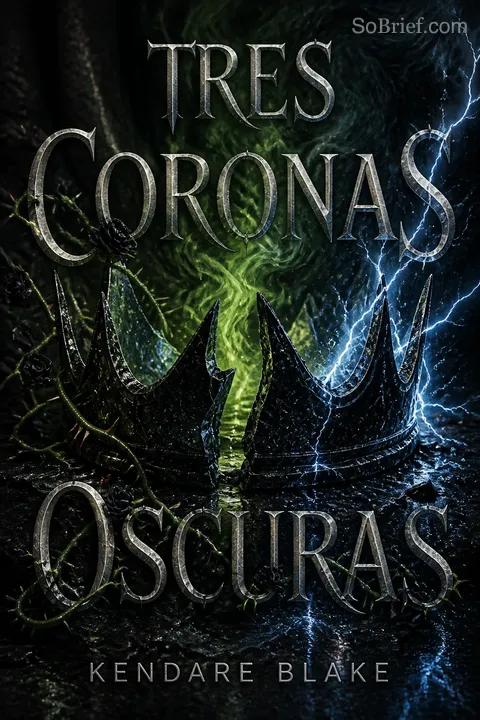
On the island of Fennbirn, every generation brings forth triplet queens, each destined to possess a magical gift: poisoner, naturalist, or elemental. Katharine, Arsinoe, and Mirabella are separated as children and raised by rival factions, each trained to kill her sisters and claim the throne. The island's brutal tradition dictates that only one will survive, and the others must die by her hand. As their sixteenth birthday approaches, the sisters are thrust into a year of deadly competition, their fates entwined with the ambitions and fears of those who raise them. The stage is set for a battle not just of power, but of identity, love, and survival.
Poison and Power Games
Katharine, the poisoner queen, is raised in Greavesdrake Manor by the ruthless Arron family, who have ruled for generations. Despite her title, Katharine's immunity to poison is weak, and her training is harsh and unforgiving. Natalia Arron, her foster mother, orchestrates every aspect of her life, determined to maintain the poisoners' grip on the throne. Katharine's struggles are met with scorn and manipulation, her body and spirit tested by endless toxins and political machinations. The Arrons' power is both her shield and her prison, and Katharine's survival depends on learning to play their deadly game.
Giftless and Gifted
In Wolf Spring, Arsinoe is the naturalist queen, but her gift refuses to manifest. Surrounded by gifted naturalists and her fiercely loyal friend Jules, Arsinoe faces constant reminders of her inadequacy. Jules, with her powerful familiar Camden, is everything Arsinoe is not—strong, respected, and beloved. Despite her failures, Arsinoe's resilience and humor endear her to her community. The looming Ascension Year casts a shadow over her hopes, but Arsinoe refuses to give up, clinging to the bonds of friendship and the possibility that her gift may yet awaken.
Elemental Storms Rising
Mirabella, the elemental queen, is the island's prodigy—her powers over wind, fire, and water are unmatched. Raised by the devout Westwoods and fiercely protected by High Priestess Luca, Mirabella is both a symbol of hope and a pawn in the temple's struggle against the poisoners. Her public displays of power draw crowds and inspire loyalty, but behind the scenes, Mirabella is haunted by dreams of her sisters and the violence she is expected to commit. The temple's ambitions and Mirabella's own doubts threaten to unravel the careful balance of faith, power, and destiny.
Bonds of Blood and Magic
As the sisters prepare for the Ascension Year, Arsinoe and Jules turn to low magic—a dangerous, unpredictable force shunned by the gifted. Guided by Madrigal, Jules's mother, they attempt spells to summon Arsinoe's familiar and bind Joseph's heart to Jules. The rituals come at a cost, blurring the lines between love and manipulation, and unleashing consequences neither girl can foresee. Low magic becomes both a weapon and a lifeline, offering hope where gifts have failed, but threatening to consume those who wield it.
The Return of Joseph
Joseph Sandrin, banished years ago for helping Arsinoe escape, returns to Wolf Spring, stirring old loyalties and new tensions. His arrival rekindles the deep bond between him and Jules, while also drawing Arsinoe and the mainland suitor Billy Chatworth into the island's tangled web of affection and ambition. Joseph's presence is a reminder of past rebellion and the possibility of change, but his heart is torn between love, duty, and the secrets he carries from the mainland.
Low Magic, High Stakes
The use of low magic intensifies as Arsinoe's desperation grows. Madrigal's rituals to bind Jules and Joseph, and to summon a powerful familiar for Arsinoe, set in motion a chain of events that threaten to upend the island's traditions. The magic's unpredictable nature brings both hope and disaster, testing the limits of friendship and the price of survival. As the Ascension Year approaches, the boundaries between fate and free will blur, and the sisters' destinies become ever more uncertain.
The Hunt and the Heart
The Beltane Festival arrives, bringing with it the ritual Hunt—a chaotic, dangerous contest that showcases the strengths and rivalries of the island's factions. Amidst the revelry, alliances shift and passions flare. Jules and Joseph's relationship deepens, while Mirabella's encounter with Joseph during a storm forges a forbidden connection. The Hunt becomes a crucible for testing loyalty, courage, and the true nature of power, as the sisters and their supporters are drawn ever closer to the deadly climax of the Ascension Year.
The Bear and the Mask
Desperate to prove herself, Arsinoe conspires with Jules and Madrigal to use low magic to summon and control a great brown bear as her familiar for the Quickening Ceremony. Disguised behind a mask to hide her wounds, Arsinoe steps onto the stage, her fate hanging on the success of the spell. Jules's formidable gift is pushed to its limits as she struggles to hold the bear, while the crowd is awed by the display. The illusion of strength buys Arsinoe a reprieve, but the magic's instability foreshadows disaster.
The Disembarking
The Disembarking marks the arrival of the mainland suitors, each vying for the queens' favor and the chance to become king-consort. The event is a carefully orchestrated display of power, beauty, and intrigue, with each queen presenting herself to the island and the world. Arsinoe's masked defiance, Katharine's poised elegance, and Mirabella's elemental allure captivate the crowd and the suitors. Old alliances are tested, and new possibilities emerge as the sisters step into the spotlight, their destinies converging.
The Quickening Ceremony
The Quickening Ceremony is the Ascension Year's centerpiece, where each queen must publicly demonstrate her gift. Katharine's poison feast, Arsinoe's bear, and Mirabella's fire dance dazzle the island, but beneath the spectacle, the temple plots to assassinate the weaker queens and crown Mirabella as a White-Handed Queen. The plan unravels when Mirabella intervenes to save Arsinoe, unleashing a storm that disrupts the execution. The ceremony descends into chaos as Jules loses control of the bear, leading to bloodshed and panic.
Betrayals and Sacrifices
In the aftermath of the Quickening, relationships fracture under the weight of betrayal and loss. Joseph's love for Mirabella is revealed, shattering Jules's heart and unleashing the bear's rampage. The temple's plot is exposed, and Katharine is forced to flee for her life. The sisters' bonds are tested as survival demands sacrifice, and the line between victim and executioner blurs. The cost of power becomes painfully clear, and the island's traditions are stained with new blood.
The Breccia Domain
Fleeing the chaos, Katharine seeks refuge with Pietyr at the Breccia Domain, the island's sacred chasm. In a moment of intimacy and trust, Pietyr betrays her, casting her into the abyss to prevent her execution by the temple. Katharine's fall is both literal and symbolic—a descent into death, transformation, and the unknown. The Breccia Domain becomes the crucible of her rebirth, as the island's magic claims her for its own.
The Ascension Year Begins
With Katharine presumed dead and Arsinoe's ruse exposed, the island reels from the failed Quickening. The temple and the Black Council regroup, each seeking to consolidate power and control the narrative. Mirabella returns to Rolanth, haunted by guilt and anger, while Arsinoe and Jules struggle to recover from the trauma and loss. The Ascension Year begins not with triumph, but with uncertainty, as the sisters and their supporters reckon with the consequences of their choices.
Poisoner's Revelation
In the quiet aftermath, Arsinoe discovers that she is not a naturalist after all, but a poisoner—her immunity to toxins revealed when she survives a deadly sweet meant for Jules. The revelation upends her sense of self and the island's expectations, offering a new path forward. The truth of her gift is both a burden and a blessing, reshaping alliances and possibilities as the struggle for the crown continues.
Love, Loss, and Loyalty
The fallout from the Quickening leaves scars both physical and emotional. Jules and Joseph's relationship is shattered by betrayal, while Arsinoe and Billy's friendship deepens in the face of adversity. Loyalty is tested as old wounds are reopened and new alliances are forged. The sisters' journey is marked by love and loss, each forced to confront the price of survival and the meaning of family.
The Price of Survival
Survival on Fennbirn demands sacrifice—of innocence, love, and even identity. Katharine's return from the Breccia Domain is marked by a chilling transformation, her ordeal forging her into something new and dangerous. The island's magic is revealed as both a curse and a source of strength, shaping the destinies of those who dare to challenge its traditions. The sisters' struggle becomes a testament to the cost of power and the resilience of the human spirit.
Crowns and Consequences
As the dust settles, the struggle for the crown is far from over. Katharine's return signals a new phase in the battle, her thirst for revenge and power undiminished. Arsinoe's revelation as a poisoner and Mirabella's growing resolve set the stage for renewed conflict. The island's ancient cycle continues, but the sisters are forever changed—hardened by loss, emboldened by love, and determined to claim their destinies, whatever the cost.
Analysis
Three Dark Crowns is a dark, immersive exploration of power, identity, and the cost of survival in a world governed by brutal tradition. Kendare Blake crafts a narrative that interrogates the nature of destiny and agency, using the ritualized violence of the queens' succession as both a plot engine and a metaphor for the cycles of oppression and rebellion. The novel's strength lies in its complex, psychologically rich characters—each queen is both a victim and a potential villain, shaped by love, fear, and the expectations of those around them. The use of multiple perspectives deepens the emotional resonance, allowing readers to empathize with conflicting motives and shifting alliances. The introduction of low magic and the manipulation of legend by the temple highlight the dangers of dogma and the unpredictability of power. Ultimately, the story challenges the notion that strength is inherent or predetermined, suggesting instead that true power lies in resilience, adaptation, and the courage to defy fate. The consequences of betrayal, the ambiguity of love, and the high price of survival are woven into every page, leaving readers with a haunting meditation on what it means to claim a crown—and what must be lost along the way.
Review Summary
Three Dark Crowns received mixed reviews, with some praising its unique premise and world-building, while others found it slow-paced and lacking in character development. Many readers enjoyed the political intrigue and matriarchal society but were disappointed by the lack of action and romance subplots. The ending was often cited as a redeeming factor, leaving readers intrigued for the sequel. Some felt the book suffered from marketing issues, as it didn't meet expectations of a battle royale-style story. Overall, opinions were divided, with some loving the dark fantasy elements and others finding it underwhelming.
People Also Read


Characters
Katharine
Katharine is the youngest and smallest of the triplet queens, raised by the ruthless Arron family to be a poisoner queen. Despite her title, she is physically weak and struggles to develop immunity to toxins, enduring relentless training and abuse. Katharine's relationship with Natalia is complex—part maternal, part manipulative—and she is both cherished and tormented by her foster family. Her longing for approval and survival drives her to embrace the poisoners' brutal ethos, but beneath her frailty lies a fierce will. Betrayed by Pietyr and cast into the Breccia Domain, Katharine's ordeal transforms her, awakening a new, darker strength. Her journey is one of suffering, resilience, and the relentless pursuit of power, as she emerges from the abyss determined to claim her crown and exact revenge.
Arsinoe
Arsinoe is the naturalist queen, raised in Wolf Spring among farmers and fishermen. Lacking any sign of her supposed gift, she is seen as the weakest of the sisters, but her stubbornness and humor endear her to her community. Her closest bond is with Jules, whose strength and loyalty compensate for Arsinoe's shortcomings. Desperate to survive, Arsinoe turns to low magic, risking everything to summon a familiar and protect those she loves. Her willingness to break rules and challenge tradition sets her apart, and her journey is marked by both failure and unexpected triumph. The revelation that she is, in fact, a poisoner—immune to toxins—shatters her identity but offers new hope. Arsinoe's arc is one of self-discovery, rebellion, and the courage to redefine her fate.
Mirabella
Mirabella is the most powerful of the sisters, her elemental gift making her the temple's chosen queen. Raised in luxury and devotion, she is both adored and controlled by the Westwoods and High Priestess Luca. Mirabella's public persona is one of confidence and grace, but privately she is haunted by dreams of her sisters and the violence she is expected to commit. Her compassion and reluctance to kill set her at odds with the island's traditions, and her forbidden love for Joseph complicates her loyalties. Mirabella's journey is a struggle between duty and conscience, faith and freedom, as she seeks to reconcile her power with her humanity.
Jules Milone
Jules is Arsinoe's best friend and the strongest naturalist in generations, bonded to her formidable familiar, Camden. Raised by her grandmother Cait and mother Madrigal, Jules is both a pillar of strength and a source of comfort for Arsinoe. Her loyalty is unwavering, but her heart is vulnerable—especially in her relationship with Joseph. Jules's willingness to use low magic and her role in controlling the bear at the Quickening mark her as both a savior and a potential threat. Her arc is defined by sacrifice, heartbreak, and the struggle to balance love with duty.
Joseph Sandrin
Joseph is a childhood friend of Jules and Arsinoe, banished for helping them attempt escape. His return to the island rekindles old bonds and introduces new complications, particularly his love for Jules and his forbidden connection with Mirabella. Joseph's actions are driven by loyalty and longing, but his divided heart leads to betrayal and tragedy. He is both a victim and an agent of change, his choices rippling through the lives of those he loves.
Pietyr Renard
Pietyr is a member of the Arron family, brought to Greavesdrake to help Katharine win the hearts of the suitors and the island. Handsome, clever, and attentive, Pietyr becomes Katharine's confidant and lover, teaching her the art of seduction and survival. His loyalty to the Arrons and his growing love for Katharine come into conflict, culminating in his decision to betray her for her own safety. Pietyr's arc is one of ambition, guilt, and the painful cost of love in a world ruled by power.
Natalia Arron
Natalia is the head of the Arron family and Katharine's foster mother, embodying the poisoners' cold ambition and political acumen. She orchestrates every aspect of Katharine's training and the family's schemes, balancing affection with manipulation. Natalia's worldview is shaped by the belief that power must be seized and maintained at any cost, and her actions are guided by pragmatism rather than sentiment. Her relationship with Katharine is both nurturing and exploitative, and her rivalry with the temple defines much of the island's conflict.
High Priestess Luca
Luca is the High Priestess of the island, devoted to the Goddess and determined to restore the temple's influence. She champions Mirabella as the chosen queen, orchestrating plots to eliminate the poisoners and reclaim power for the priestesses. Luca's faith is both genuine and strategic, and her willingness to manipulate legends and orchestrate assassinations reveals the darker side of religious authority. Her relationship with Mirabella is complex—part mentor, part jailer—and her rivalry with Natalia shapes the island's fate.
Madrigal Milone
Madrigal is Jules's mother, a naturalist with a penchant for low magic and a history of defiance. Her return from the mainland brings both chaos and opportunity, as she guides Arsinoe and Jules in forbidden rituals. Madrigal's actions are driven by guilt, love, and a desire to prove herself, but her recklessness often endangers those she seeks to help. She is both a source of wisdom and a cautionary tale, embodying the risks and rewards of challenging tradition.
Billy Chatworth Jr.
Billy is a suitor from the mainland, brought to the island as part of the delegation seeking the crown. Initially motivated by ambition and his father's schemes, Billy becomes a genuine friend and ally to Arsinoe, risking his life to help her escape. His outsider perspective offers a fresh lens on the island's customs, and his loyalty to Arsinoe complicates the political landscape. Billy's journey is one of adaptation, courage, and the search for belonging in a world that is not his own.
Plot Devices
Ritualized Violence and Succession
The central plot device of Three Dark Crowns is the ritualized succession of the triplet queens, a tradition that demands sisterly murder as the path to power. This structure creates a constant atmosphere of tension, paranoia, and competition, shaping every relationship and decision. The narrative leverages this device to explore themes of destiny, agency, and the corrupting influence of power. The cyclical nature of the tradition is both a source of stability and a catalyst for rebellion, as each generation is forced to confront the cost of survival.
Multiple Perspectives and Interwoven Narratives
The story unfolds through the alternating perspectives of Katharine, Arsinoe, and Mirabella, as well as key supporting characters. This narrative structure allows for a nuanced exploration of each queen's inner life, motivations, and relationships, while also highlighting the interconnectedness of their fates. The interwoven narratives create dramatic irony, as readers are privy to secrets and intentions unknown to the characters themselves, heightening suspense and emotional investment.
Low Magic and Unintended Consequences
Low magic serves as both a plot device and a thematic symbol, representing the dangers and temptations of seeking shortcuts to power. The use of forbidden spells introduces unpredictability and chaos, undermining the island's rigid hierarchy of gifts. The consequences of low magic—both beneficial and disastrous—underscore the limits of control and the price of desperation. This device also blurs the line between fate and free will, challenging characters to reckon with the outcomes of their choices.
Foreshadowing and Prophecy
Throughout the novel, dreams, prophecies, and island legends foreshadow key events and reveal the psychological burdens carried by the queens. The motif of the Sacrificial Year and the legend of the White-Handed Queen are manipulated by the temple to justify violence and consolidate power. These elements serve to both guide and mislead characters, reflecting the tension between tradition and transformation.
Betrayal and Transformation
Betrayal is a recurring device, used to catalyze character development and propel the plot. Pietyr's betrayal of Katharine, Joseph's betrayal of Jules, and the temple's betrayal of its own values all serve to upend expectations and force characters into new roles. Transformation—whether through suffering, revelation, or magic—is both a consequence and a necessity, as survival demands adaptation and the willingness to embrace change.
Download PDF
Download EPUB
.epub digital book format is ideal for reading ebooks on phones, tablets, and e-readers.








































