Plot Summary
Return to Combray's Shadows
The narrator revisits the countryside of his youth, Combray, expecting to be flooded with nostalgia and inspiration. Instead, he finds the familiar places diminished, the river Vivonne narrow and ugly, the walks with Gilberte lacking the magic of memory. The immediacy of childhood feeling is gone, replaced by a sense of distance and loss. Even Gilberte, once the object of his longing, is changed—her beauty faded, her personality unpredictable. The narrator is struck by how little he relives his early years, and how the places and people of his past seem to have become strangers. This realization brings a melancholy awareness that time has eroded the vividness of memory, and that the past cannot be recaptured simply by returning to its physical settings.
The Disenchantment of Memory
As the narrator walks the old paths, he is surprised by his own lack of curiosity and feeling. The landscapes and people that once stirred him now seem ordinary, even disappointing. He and Gilberte discuss their childhood, revealing misunderstandings and missed opportunities—each had loved the other, but neither had known it. The narrator realizes that grief, like beauty, fades more completely than anything else, and that the pain of lost love is eventually replaced by indifference. The past, once so powerful, is now a distant echo, and the narrator is left to ponder the unreliability of memory and the inevitability of change.
Gilberte's Confessions and Regrets
During a walk, Gilberte confesses to the narrator that she had loved him as a child, but he had failed to recognize her signals. The narrator is struck by the irony that what he had longed for was within reach, but lost through miscommunication and the passage of time. They reflect on the ways their lives might have been different, but the narrator finds himself no longer moved by these possibilities. The emotional intensity of youth has faded, replaced by a calm acceptance of what is gone. The conversation underscores the theme that time transforms both people and feelings, making the past irretrievable except as a memory.
The Ghosts of Lost Love
The narrator recalls his former loves—Gilberte, Albertine—and is surprised by how little they now affect him. The pain and longing that once consumed him have vanished, leaving only faint traces. He recognizes that the people he loved, and the selves he was when he loved them, are as good as dead. The narrator is haunted by the realization that time not only changes others, but also erases the intensity of his own emotions. The involuntary memories that sometimes surface are fleeting and unreliable, unable to restore the fullness of past experience.
The War's Disruptive Mirror
The narrator returns to Paris during the war, finding the city transformed. Social circles have shifted, old hierarchies are upended, and the war's presence is felt in fashion, conversation, and daily life. The narrator observes how the war accelerates the passage of time, making the past seem even more remote. Friends and acquaintances are changed by loss, fear, and new roles. The war becomes a mirror for the narrator's own internal changes, highlighting the instability of identity and the relentless advance of time.
Paris in Wartime Twilight
Paris during the war is a place of contrasts—luxury and deprivation, gaiety and mourning, tradition and novelty. The narrator attends salons where the old aristocracy mingles with new social climbers, and where the boundaries between classes and values are blurred. The war has made everything provisional, and the narrator senses the fragility of the world he once knew. The city's darkness, air raids, and curfews become metaphors for the uncertainty and impermanence of life. The narrator's own sense of self is unsettled, as he navigates a society that no longer resembles the one of his youth.
Charlus and the Masks of Desire
Baron de Charlus, once a figure of aristocratic authority, is revealed in his vulnerability and eccentricity. His relationships—with Morel, with the Verdurins, with the world—are marked by secrecy, humiliation, and the search for connection. The narrator witnesses Charlus's descent into obsession and social isolation, culminating in scenes of sadomasochistic ritual and public disgrace. Charlus's story becomes a parable of the dangers of living behind masks, and of the ways in which time and desire strip away illusions. The narrator is both fascinated and appalled by Charlus's fate, recognizing in it a reflection of his own struggles with identity and longing.
The Social World Transformed
The narrator observes the dissolution and reformation of social circles, as old families decline and new fortunes rise. Names that once carried weight are forgotten, while former outsiders become central figures. The war accelerates these changes, but they are part of a larger pattern of social transformation. The narrator reflects on the arbitrariness of status, the power of fashion, and the ways in which memory and history are constructed and erased. The world he once aspired to join is revealed as transient and illusory, its values subject to the whims of time and circumstance.
The Death of Saint-Loup
The narrator's friend Robert de Saint-Loup is killed in the war, a loss that brings home the reality of mortality and the end of an era. The narrator recalls their friendship, Saint-Loup's charm and contradictions, and the ways in which his life intersected with those of other characters. Saint-Loup's death is both a personal blow and a symbol of the passing of youth, love, and the world they inhabited. The narrator is left to mourn not only his friend, but also the irretrievable past and the selves he has lost along the way.
The Goncourt Revelation
Reading the Goncourt Journal, the narrator is struck by the gap between literature and life. The vividness of the written word contrasts with the banality of lived experience, and the narrator questions the value of art. He reflects on his own inability to capture the essence of reality, and on the ways in which memory and imagination distort the past. The Goncourt episode becomes a turning point, prompting the narrator to reconsider his vocation as a writer and the possibility of creating something lasting from the fragments of his experience.
The Awakening of Involuntary Memory
In a moment of physical sensation—stumbling on uneven paving stones, hearing a familiar sound, tasting a madeleine—the narrator is transported back to forgotten moments of his past. These involuntary memories are more vivid and meaningful than anything he can recall deliberately. The experience reveals to him the existence of a deeper self, one that exists outside of time and is nourished by the essence of things. The narrator realizes that true happiness and understanding come not from conscious effort, but from these rare, involuntary encounters with the past.
The Guermantes' Final Gathering
The narrator attends a grand reception at the house of the Prince and Princesse de Guermantes, where he is confronted by the ravages of time. Friends and acquaintances are transformed by age, illness, and loss; the once-glamorous world of the Guermantes is revealed as a masquerade, its members unrecognizable behind the masks of old age. The narrator is struck by the continuity and change of social life, and by the ways in which memory and identity are shaped by time. The party becomes a microcosm of the novel's themes—loss, transformation, and the search for meaning in a world of appearances.
The Faces of Time
As the narrator moves through the Guermantes' reception, he is repeatedly startled by the changes in those he once knew. Faces are altered beyond recognition, personalities have shifted, and the past seems both present and irretrievable. The narrator reflects on the nature of time, the persistence of memory, and the inevitability of change. He is haunted by the realization that he, too, has aged, and that the world he once inhabited is gone. The faces of time are everywhere, reminding him of the fragility of identity and the impossibility of return.
The Artist's Vocation Emerges
The narrator's experiences—his disappointments, losses, and moments of involuntary memory—coalesce into a sense of artistic vocation. He realizes that his true task is to capture the essence of time, to create a work that preserves the fleeting moments of experience. The narrator reflects on the nature of art, the relationship between memory and creation, and the discipline required to transform life into literature. He resolves to devote himself to this work, accepting the sacrifices and uncertainties it entails. The emergence of vocation is both a consolation and a challenge, offering the possibility of meaning in the face of time's destruction.
The Tyranny of Habit and Self
The narrator confronts the power of habit, which dulls sensation and obscures the richness of experience. He recognizes that the self is not a fixed entity, but a succession of different selves, each shaped by time, memory, and circumstance. The tyranny of habit makes it difficult to perceive the world anew, and the narrator must struggle to break free from its constraints. He reflects on the ways in which love, friendship, and social life are shaped by habit, and on the necessity of solitude and self-examination for artistic creation.
The Impossibility of Return
The narrator acknowledges that the past cannot be recaptured by revisiting old places or rekindling old relationships. The people and settings of his youth are irrevocably changed, and the emotions that once animated them are gone. Attempts to return only highlight the distance between past and present, and the narrator is forced to accept the impossibility of return. The only way to regain the past is through the work of memory and imagination, transforming loss into creation.
The Triumph and Limits of Art
The narrator comes to see art as the only means of preserving the essence of experience and transcending the ravages of time. Through literature, he can capture the fleeting moments of beauty and meaning that life offers. Yet he also recognizes the limitations of art—the impossibility of fully restoring the past, the subjectivity of memory, and the inevitability of forgetting. Art is both a triumph over time and a reminder of its power, offering consolation without complete victory.
Time Regained, Time Lost
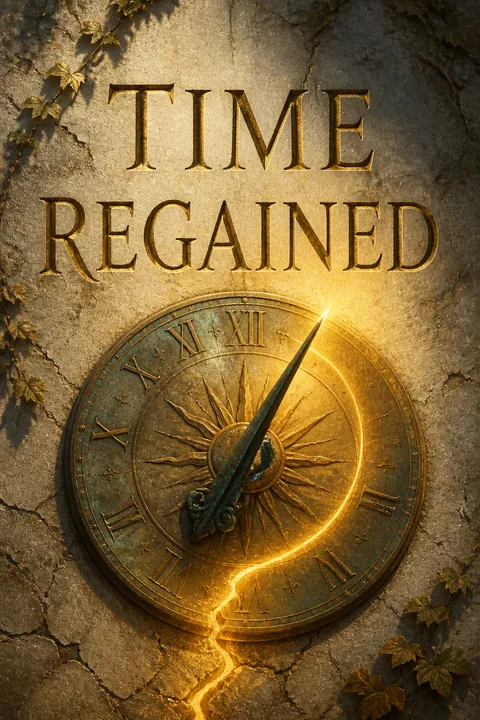
In the end, the narrator understands that time can be regained only through the transformation of experience into art. The involuntary memories that surface unexpectedly are the seeds of creation, allowing him to recover lost moments and give them new life. Yet this recovery is always partial, shadowed by the knowledge that time continues to move forward, erasing even as it reveals. The narrator accepts the paradox of time regained and time lost, finding meaning in the act of creation and the acceptance of impermanence.
Analysis
A meditation on time, memory, and the creation of meaningTime Regained is the culminating volume of Proust's monumental exploration of the inner life, offering a profound meditation on the nature of memory, the passage of time, and the possibility of redemption through art. The novel dismantles the illusions of love, society, and self, revealing the instability of identity and the unreliability of memory. Yet it also affirms the power of involuntary memory to recover lost moments and to transform them into something lasting. The narrator's journey—from the disenchantment of the past to the discovery of artistic vocation—mirrors the universal human search for meaning in the face of impermanence. Proust's narrative structure, with its recursive, digressive, and reflective style, embodies the complexities of consciousness and the difficulties of capturing experience in language. The novel's lessons are both sobering and consoling: that happiness is fleeting, that the past cannot be restored, but that through the work of memory and creation, we can regain something of what is lost and give it new life. Time Regained stands as a testament to the resilience of the human spirit and the enduring value of art in a world of change.
Review Summary
Readers universally praise Time Regained as a triumphant, emotionally overwhelming conclusion to Proust's monumental series. Many describe finishing it as a life-changing experience, noting how the novel's themes of memory, time, art, and aging crystallize beautifully in this final volume. The legendary "Masked Ball" sequence, where the narrator confronts the ravages of time on familiar faces, receives particular admiration. Numerous reviewers express both relief and profound sadness upon finishing, with many immediately wanting to begin the entire series again.
People Also Read


Characters
The Narrator (Marcel)
The narrator is a sensitive, introspective man haunted by the passage of time and the unreliability of memory. His relationships—with Gilberte, Albertine, Saint-Loup, and others—are marked by longing, misunderstanding, and eventual loss. He is both observer and participant, moving through the worlds of childhood, love, society, and war with a mixture of detachment and yearning. Psychologically, he is driven by a desire to recapture the intensity of past experience, yet is repeatedly confronted by the impossibility of return. His development is marked by disillusionment, self-examination, and ultimately the discovery of his vocation as an artist. Through involuntary memory, he finds a way to transform loss into creation, accepting the limits of art and the inevitability of change.
Gilberte Swann / Mme de Saint-Loup
Gilberte is the narrator's first love, the object of his childhood longing and later a figure of regret and missed opportunity. As she grows older, she becomes a wife, mother, and socialite, her beauty and charm fading with time. Her relationship with the narrator is marked by misunderstanding and the gradual erosion of feeling. Gilberte embodies the themes of memory, change, and the arbitrariness of social status—her ascent into the aristocracy mirrors the shifting boundaries of society. Psychologically, she is both elusive and pragmatic, adapting to new roles while remaining a reminder of the narrator's irretrievable past.
Albertine Simonet
Albertine is the narrator's great love and obsession, a figure whose presence is both intoxicating and tormenting. Their relationship is marked by passion, suspicion, and control, with the narrator unable to possess or fully understand her. Albertine's sexuality and independence challenge the narrator's need for certainty, and her eventual departure and death leave him bereft and haunted by questions. Psychologically, she is both a projection of the narrator's desires and a mystery in her own right, embodying the novel's exploration of the unknowability of others and the instability of love.
Robert de Saint-Loup
Saint-Loup is the narrator's closest friend, a charming and conflicted aristocrat whose life is shaped by love, war, and social expectation. His relationships—with Rachel, Gilberte, and others—reflect the complexities of desire and the pressures of tradition. Saint-Loup's death in the war marks the end of an era and the loss of youth and possibility. Psychologically, he is generous, impulsive, and ultimately tragic, his fate a reminder of the fragility of life and the inexorable advance of time.
Baron de Charlus
Charlus is a member of the old aristocracy, a man of intelligence, wit, and eccentricity whose secret homosexuality shapes his relationships and destiny. His pursuit of love and pleasure leads to humiliation, isolation, and the loss of status. Charlus's story is a study in the dangers of living behind masks, the destructiveness of desire, and the vulnerability of identity. Psychologically, he is both proud and desperate, his decline mirroring the dissolution of the world he once dominated.
Mme Verdurin / Princesse de Guermantes
Mme Verdurin rises from bourgeois obscurity to become a central figure in Parisian society, her salon a microcosm of shifting alliances and ambitions. She is shrewd, adaptable, and ruthless in her pursuit of influence, orchestrating relationships and careers with a mixture of charm and cruelty. Psychologically, she is driven by a need for control and recognition, her ascent emblematic of the novel's themes of social transformation and the instability of status.
Odette Swann / Mme de Forcheville
Odette begins as a courtesan and becomes the wife of Swann, then the mother of Gilberte, and finally the lover of the Duc de Guermantes. Her life is marked by adaptability, self-interest, and the ability to reinvent herself in changing circumstances. Odette's relationships are transactional, her emotions often performative, yet she remains a figure of fascination and ambiguity. Psychologically, she is both calculating and vulnerable, her survival dependent on her capacity to navigate the shifting currents of desire and society.
The Duc and Duchesse de Guermantes
The Guermantes represent the old order, their names and manners carrying the weight of tradition and history. As time passes, they are transformed by age, loss, and the changing world around them. The Duchess, once a symbol of beauty and wit, becomes a figure of nostalgia and diminished relevance; the Duke, proud and inflexible, is undone by love and mortality. Psychologically, they embody the novel's meditation on the impermanence of status, the illusions of memory, and the inevitability of change.
Françoise
Françoise is the narrator's family servant, a figure of loyalty, prejudice, and resilience. She observes the changes in the narrator's life and the world around her, her attitudes shaped by habit, tradition, and a deep attachment to the past. Psychologically, she is both shrewd and limited, her perspective offering a counterpoint to the narrator's introspection. Françoise's endurance and adaptability make her a symbol of continuity amid upheaval.
Bloch
Bloch is a friend of the narrator, a figure of ambition, insecurity, and transformation. His journey from outsider to social insider mirrors the novel's exploration of identity, status, and the desire for recognition. Psychologically, Bloch is restless, self-conscious, and often comic, his efforts to belong both poignant and absurd. His presence highlights the arbitrariness of social boundaries and the complexities of assimilation.
Plot Devices
Involuntary Memory
The novel's central device is the phenomenon of involuntary memory—moments when a taste, sound, or physical sensation unexpectedly transports the narrator back to a forgotten experience. These moments are more vivid and meaningful than anything recalled deliberately, revealing the existence of a deeper self and the possibility of regaining lost time. Involuntary memory becomes the key to the narrator's artistic vocation, offering a way to transform loss into creation and to capture the essence of experience.
Social Satire and Transformation
The novel uses the changing world of Parisian society as both a backdrop and a metaphor for the passage of time. The rise and fall of families, the fluidity of status, and the arbitrariness of fashion are depicted with irony and insight. The salons, parties, and relationships that once seemed permanent are revealed as transient and illusory, their values subject to the whims of time and circumstance. This device underscores the novel's themes of impermanence, memory, and the construction of identity.
The Mask and the Self
Characters in the novel are often seen wearing masks—literal and figurative—concealing their true selves behind social roles, desires, and habits. The exposure of hidden identities, especially in the stories of Charlus and Albertine, becomes a means of exploring the complexities of desire, the dangers of self-deception, and the instability of personality. The mask is both a protection and a prison, its removal both liberating and destructive.
The Passage of Time
The relentless advance of time is depicted through the aging of characters, the transformation of society, and the erosion of memory. Time is both the enemy of happiness and the source of meaning, its losses redeemed only through the work of art. The novel's structure—moving from childhood to old age, from love to loss, from illusion to understanding—mirrors the arc of a life, and the struggle to find coherence in the face of change.
The Artist's Vocation
The narrator's journey is ultimately one of self-discovery, as he comes to recognize his calling as an artist. The process of transforming experience into literature becomes both a redemption and a challenge, requiring discipline, sacrifice, and acceptance of imperfection. The novel's narrative structure—fragmented, recursive, and reflective—embodies the difficulties and possibilities of artistic creation, making the act of writing both the subject and the means of regaining lost time.
Download PDF
Download EPUB
.epub digital book format is ideal for reading ebooks on phones, tablets, and e-readers.








































