Key Takeaways
1. Antifa: A Decentralized Network Fighting Fascism
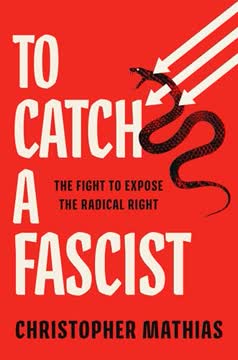
Today, antifa refers to a radical, decentralized, and localized network of militant leftists dedicated to disrupting and defeating fascist groups wherever they go, by any means necessary.
Emergence and purpose. Antifa, short for anti-fascist, emerged in America as a response to the rise of white supremacist groups, particularly after the 2017 "Unite the Right" rally in Charlottesville, Virginia. The author initially associated antifa with "Nazi-punching" but soon realized their work was far more extensive, involving intelligence gathering, research, and unmasking fascists. This network operates without national headquarters or formal leaders, driven by a shared belief that fascists must be confronted.
Core tenets. While diverse in their specific ideologies (anarchists, socialists, communists), antifa groups agree on several key principles:
- Violent confrontation: Fascists sometimes require physical opposition in the streets.
- "No platform": Fascists should not be given public platforms to speak or organize.
- Distrust of the state: Law enforcement and government cannot be fully trusted to combat fascism.
These tenets are often expressed through symbols and slogans borrowed from early 20th-century European anti-fascist movements, such as the two flags of Antifaschiste Aktion or the cry "no pasaran" ("you shall not pass").
Targeting criteria. Antifa's targets are not limited to strict academic definitions of fascism but include far-right actors perceived as a threat due to extreme racism, sexism, antisemitism, Islamophobia, homophobia, or anti-trans bigotry. Activists use their discretion, focusing on the "worst of the worst" who may be on the verge of committing violence, and generally provide evidence to support their claims. This nuanced approach contrasts with simplistic portrayals of antifa as indiscriminately targeting all conservatives.
2. Infiltration: The Spy's Risky Path to Exposing Hate
Vincent’s ability to throw fists also put his mind at ease a bit—if Patriot Front were to discover he was an infiltrator, he’d have a good shot at defending himself.
Motivations for infiltration. Vincent, an anti-fascist, chose to infiltrate Patriot Front after witnessing escalating right-wing violence in the Pacific Northwest, including a deadly MAX train attack he narrowly missed. Distrusting law enforcement to dismantle such groups, he felt compelled to take "community self-defense" into his own hands. His goal was to gather intelligence on Patriot Front's plans, document their crimes, and ultimately unmask their members.
Crafting a persona. Vincent meticulously developed a "fence-sitter" persona—a conservative, traditionalist, "80 percent of the way there" fascist-curious individual—to gain trust. He leveraged his skills as a medic and photographer, and his mixed martial arts training, which he believed Patriot Front would find appealing. The vetting process involved online applications, video conferences, and an in-person interview, during which Vincent had to improvise, even saying racial slurs to maintain his cover.
Operational challenges and risks. Vincent's infiltration was fraught with moral dilemmas and constant danger. He participated in vandalism, endured hateful rhetoric, and risked exposure, which could lead to violence or legal repercussions. His meticulous planning included using burner phones, changing license plates, and having a friend, Will, covertly monitor his in-person meetings. This deep cover allowed him to gain the trust of Patriot Front leadership, including Thomas Rousseau, and access critical information about their upcoming national march.
3. Doxing: Unmasking Fascists to Create Social Costs
To “dox” means to publish identifying information about a previously anonymous person online.
Purpose of doxing. Doxing, in the anti-fascist context, involves publicly identifying pseudonymous white supremacists or far-right activists, akin to "ripping the white hood off a Klansman." This tactic serves multiple functions:
- Threat identification: Exposing who fascists are and where they operate.
- Community alert: Warning communities about potential threats.
- Social cost: Creating pressure for fascists to face consequences like job loss or social ostracization.
- Recruitment deterrence: Discouraging new members by demonstrating the risks.
- Exposure of power: Revealing fascists in positions of authority.
Historical precedent. The practice of unmasking white supremacists has a long history in America, dating back to the Ku Klux Klan. Early efforts, like those by Ida B. Wells and Walter White, documented lynchings and identified perpetrators, often at great personal risk. The mass unmasking of the Buffalo Klan in the 1920s, which revealed Klansmen in positions of power and led to their social and professional ruin, serves as a historical blueprint for modern doxing.
Ethical considerations and standards. Anti-fascist doxing operates with strict, self-imposed ethical guidelines. Groups typically do not dox minors and blur family members' faces in photos. Accuracy is paramount; misidentifying someone as a fascist can severely damage credibility and lead to legal issues. This high-stakes environment has led many anonymous anti-fascist researchers to develop rigorous investigative journalism standards, often surpassing those of mainstream media in their meticulousness.
4. Historical Roots: Militant Anti-Fascism's Long Legacy
Hitler himself said the only way you could have beaten us is if you’d smashed us off the street from the very first day and with the utmost brutality.
Challenging "free speech" narratives. Mainstream pundits often condemn antifa's use of violence, arguing it's "just as bad" as fascism and undermines "free speech." Anti-fascists counter that this perspective ignores the inherent violence of fascist groups and the historical context of militant resistance. They argue that confronting fascists, even physically, is an act of self-defense, akin to removing a disruptive, threatening individual from a public space.
Anti-Racist Action (ARA). The Anti-Racist Action (ARA) network, formed in 1987 by anti-racist skinheads called the "Baldies," laid the groundwork for modern antifa. They actively confronted neo-Nazis at punk shows and in the streets, adopting tactics like "righteous violence" and pressuring venues to ban white power bands. Their "points of unity" emphasized direct action, self-reliance (not relying on police), and nonsectarian defense of anti-fascists, influencing subsequent generations.
The Battle of York. A pivotal moment in ARA history was the 2002 "Battle of York," where anti-fascists and local residents confronted over a hundred white supremacists. Despite media condemnation, internal Nazi communications revealed their defeat and fear of anti-fascist tactics. This event, and others like it, demonstrated the effectiveness of militant anti-fascism in destabilizing fascist groups, even if such victories often go unrecognized by the wider public.
5. The Digital Battlefield: OSINT and Mass Unmasking
I like to tell people if you’ve ever stayed up all night scouring Instagram for pictures of your ex’s wedding, you can do this. It’s the same skills.
Evolution of anti-fascist research. With the rise of online organizing, anti-fascist work expanded to digital battlefields. Modern antifa groups, often composed of queer, trans, and neurodivergent individuals, became adept at Open-Source Intelligence (OSINT). This involves meticulously sifting through publicly available online information—social media, archived websites, property records, and even seemingly innocuous details like dog photos—to uncover the real identities of anonymous fascists.
Unicorn Riot's pivotal role. Unicorn Riot, a nonprofit media outlet, became a crucial hub for anti-fascist intelligence. After an anti-fascist spy (Will) infiltrated Discord chats planning the 2017 Unite the Right rally, Unicorn Riot published a massive database of messages, exposing the violent intentions of the organizers. This database became a foundational resource for journalists and anti-fascists, enabling widespread unmasking and contributing to legal actions against rally participants.
Impact of the RocketChat leaks. Vincent's infiltration of Patriot Front yielded 440 gigabytes of RocketChat messages, audio, and video, which Unicorn Riot published in 2022. These leaks led to a wave of doxes, exposing dozens of Patriot Front members, including:
- Colton Michael Brown (John-WA), an electrician and aspiring pilot, who was fired and disowned.
- James Julius Johnson (Tyler-WA), an HVAC technician running a "hate crime factory" with ghost guns, who fled Seattle.
- Justin O'Leary (Ethan-WA), whose wife baked swastika cookies, was identified via his iPhone's Bluetooth name.
- Jacob Stephen Sundt (Clark-WA), who organized the destruction of a Pride mural, was forced to withdraw from the group due to his father's public position.
These doxes caused significant personal and professional fallout for members, demonstrating the power of digital unmasking.
6. The Anti-Antifa Smear Campaign: Manufacturing a Bogeyman
“This was a test,” Microchip said, to see whether an even more massive social media campaign could drive media attention and deflect criticism of the alt-right toward liberal hooligans.
Strategic deflection. The "anti-antifa" hysteria was a manufactured moral panic, explicitly designed by alt-right trolls like "Microchip" to deflect criticism from white supremacists onto "liberal hooligans." This strategy aimed to unite the conservative right by creating a common enemy, shifting the narrative from "neo-Nazis on our side" to "I really hate antifa." This involved grossly exaggerating antifa's violence and baselessly implicating them in mass shootings and natural disasters.
Weaponizing misinformation. Far-right influencers, including Alex Jones and Mike Cernovich, propagated false claims, such as antifa being responsible for the Las Vegas mass shooting or planning a "civil war." These lies, often spread through doctored images and fake social media accounts, traveled rapidly, absolving the right of wrongdoing and creating a pretext for attacking the left. The "antifa supersoldiers" meme, initially a leftist parody, was seized upon by the far-right as genuine evidence of a murderous plot.
The "outside agitator" trope. The anti-antifa panic repurposed the historical "outside agitator" trope, labeling antifa as the clandestine force behind the 2020 Black Lives Matter uprisings. Trump and Fox News relentlessly pushed this narrative, claiming "busloads of antifa" were roaming the country to loot and burn. This propaganda fueled armed white vigilante occupations of towns, where they harassed and attacked anti-racist protesters, creating a justification for violence against perceived leftist threats.
7. Charlottesville's Legacy: Inspiring a New Generation of Anti-Fascists
“The anti-fascists, and then, crucial, the anarchists, they saved our lives, actually. We would have been completely crushed, and I’ll never forget that.”
Warnings unheeded. Will's infiltration of the Unite the Right planning Discord chats revealed explicit plans for violence, including memes about driving cars into counterprotesters. Despite these warnings, local authorities, citing free speech, refused to revoke the rally permit. This failure to act led to the tragic events of August 12, 2017, including the torch march, the beating of DeAndre Harris, and the murder of Heather Heyer by James Alex Fields Jr.
A turning point. The horrific violence in Charlottesville, and President Trump's infamous "very fine people on both sides" comment, shattered illusions for many Americans. For anti-fascists, it underscored the urgent need for direct action and intelligence gathering. Dr. Cornel West, a prominent civil rights leader, credited anti-fascists and anarchists with saving lives during the rally, highlighting their crucial role when state protection failed.
Mass doxing and legal consequences. The Discord leaks, published by Unicorn Riot, became the basis for a wave of unmaskings and legal actions. They were instrumental in the Sines v. Kessler federal lawsuit, which found Unite the Right organizers liable for $24 million, and in the conviction of James Alex Fields Jr. for murder. These doxes exposed military personnel, government officials, and teachers as white supremacists, leading to job losses and further destabilizing alt-right groups like Identity Evropa.
8. The Shifting Landscape: When Doxing Meets Normalized Extremism
If doxing is dependent on leveraging an existing societal taboo against explicit white supremacy, bigotry, and fascism to ensure that “hate has consequences,” what happens when that taboo starts to disappear?
Challenges to doxing's effectiveness. As Trump's rhetoric normalized extremist views, the efficacy of doxing began to wane. Figures like Chaya Raichik (LibsOfTikTok) and Richard Hanania, exposed for their bigoted pasts or present views, found celebrity and continued support from powerful figures and institutions, including Elon Musk and Peter Thiel. This suggested that the "social cost" of being a public bigot was diminishing, raising questions about doxing's long-term impact.
The "Ignite the Right" project. Launched on the fifth anniversary of Unite the Right, "Ignite the Right" aimed to identify every participant in the Charlottesville rally. This ambitious project, leveraging vast databases and facial recognition software, successfully unmasked individuals like John Donnelly, a Woburn police officer, and Christopher A. Healy, a Furman University professor, leading to their resignations or firings. However, the project also encountered instances where institutions were reluctant to act or tried to quietly manage the fallout.
The "white whale" and institutional resistance. The hunt for "Red Beard," a participant in the beating of DeAndre Harris, exemplified the challenges. Despite extensive anti-fascist research, including military records and facial recognition, his identity remained elusive for years. Even when identified as Jay D. Heilman, law enforcement's response was muted, and a presidential library delayed releasing relevant photos. This highlights how institutional inertia or complicity can protect fascists, even when their identities are known.
9. Leaving the Movement: Paths to Redemption and Ongoing Threats
“I feel guilty,” he says. “I feel like I was trying to establish that type of thing here, and I was basically advocating for Zionism, but under a different name here… I just feel really like I was, in a way, contributing to what happened to Palestinians, because by normalizing that type of ideology over here, I was making it okay for it to be done over there, right?”
Disillusionment and empathy. George, a former Patriot Front member, describes his path out of white nationalism, which began with mundane interactions with non-white coworkers. These daily conversations humanized people he had been taught to hate, shattering his belief in immutable racial differences. His experience highlights how personal connections can dismantle deeply ingrained prejudices, leading to a profound sense of guilt and a reevaluation of his political beliefs.
Amnesty and reintegration. While anti-fascist groups are known for their uncompromising stance, many offer "amnesty" to "formers" who genuinely leave the movement. This involves a sincere apology, providing information as a token of good faith, and demonstrating a clear break from fascist associations. The goal is to prevent unmasked individuals from retreating further into extremism due to a lack of alternative support networks, offering a path to reintegration and personal growth.
The enduring threat. Despite individual departures, the threat of fascism in America remains potent. The second Trump administration's rhetoric, mirroring ethnonationalist themes (e.g., "remigration," "invaders"), and the rise of groups like Active Clubs, suggest a continued normalization and potential deputization of far-right violence. The increasing impunity for public bigotry, exemplified by figures like Chaya Raichik and Richard Hanania, and Elon Musk's support for neo-Nazis on X, further erode the social taboos that doxing relies upon.
The future of anti-fascism. Anti-fascists like George and Murph recognize that the fight is ongoing and multifaceted. While doxing remains a tool, they emphasize the need for broader strategies:
- Community building: Creating resilient, inclusive communities.
- Mutual aid: Providing support to marginalized groups.
- Challenging systemic issues: Addressing the root causes of fascism, such as economic inequality.
The work is arduous and often thankless, but driven by a "politics of hope" and the belief that collective action can create a more equitable world, even if it means confronting the "fire brigades" of hate.