Plot Summary
Fields of Death
In the frigid wastes of the American Midwest, farms labor under the weight of winter and pragmatism. Men like Bart and Willy, known as "4-D" men, cart away dead, dying, diseased, and disabled animals—mainly cows, some barely alive but ill beyond recovery. As profit dwindles and corners are cut, these animals, meant for the rendering plant, sometimes end up in slaughterhouses, their visible infirmities washed away beneath hoses and harsh words. Ailing animals slide through loopholes in the safety net of food production, unseen and unrecorded, destined to join the everyday provenance of American beef. The landscape is stark, and the moral calculus, even starker: money, not health, is the true driving force.
Unseen Dangers
In a bustling suburb, doctor Kim Reggis is fiercely committed to his daughter Becky's ice skating aspirations. Despite family strains, a simple fast-food meal at the Onion Ring restaurant—a burger, just a little pink—brings momentary joy amid shifting familial constants. Yet beneath the condiments and cheerful chatter lurks a deadly, invisible threat: E. coli O157:H7, bred in the cracks of industrial mass production. The burger's journey, from slaughterhouse floor to the cheery hands of a ten-year-old, bridges the unseen chasm between rural economic desperation and suburban innocence. In a single, unremarkable meal, fate begins to congeal and the mechanisms for tragedy are put in motion.
Family Fractures Emerge
The Reggis family, strained by divorce and Kim's restless ambition, finds itself thrust into crisis as Becky falls mysteriously ill. Her symptoms start inconspicuously—nausea, cramps, diarrhea—first explained away as "childhood bugs" or "junk food backlash." As Becky deteriorates, anger and guilt flow between Kim and his ex-wife, Tracy, each blaming the other for the child's fate, or for the failures of their marriage. However, both are united by fear and helplessness as the prospect of a routine childhood illness transforms into a bewildering, terrifying ordeal. Medical knowledge proves worthless; their daughter's agony is both a reckoning and an accusation.
A Deadly Bite
The child's illness worsens, surpassing the reach of over-the-counter remedies. Despite Kim's prestigious medical background, he is lost: Becky now suffers unstoppable bloody diarrhea, her strength fading before her parents' eyes. Hospitals are overwhelmed; their bureaucracy grinds painfully slow. Authority and expertise, the pillars of Kim's identity, prove impotent. Gradually, the unspoken emerges: Becky has fallen victim to food-borne E. coli, an infection whose stealth and lethality defy casual treatment. Parental dread crystallizes into horror as test results confirm the toxin's devastation. Nothing will ever be the same.
The Descent Begins
Becky is admitted to the hospital, but the system is compromised by bureaucracy, managed care, and cost-saving protocols. Cultures are not taken, and Kim, desperate and agitated, cannot break through the inertia. The infection turns toxic, triggering hemolytic uremic syndrome (HUS)—a deadly complication causing kidney failure and bleeding. As Becky is transferred to intensive care, the health care system's tendency to "treat the chart, not the child" becomes painfully clear. Interpersonal squabbles among doctors, management-accountants, and frustrated parents underscore the chilling inadequacy of medicine against the backdrop of corporate priorities.
Hospital Walls, Bureaucratic Halls
Kim's rage at the system—at AmeriCare, at the dismissive ER staff, at the bean-counters and colleagues too cowed or jaded to fight—consumes him. Medicare's pen strokes now dictate care; every test, every consult, must be justified down to the dollar. Becky languishes as precious time is lost. Hospital staff dismiss the problem, patients are processed, administrators wield control. Kim's outbursts finally cross lines: violence and frustration lead to disciplinary action. The healer is now the supplicant; his authority and expertise count for nothing. He faces suspension—his daughter's defense weaponized against him.
The Diagnosis Unfolds
Infectious disease and GI specialists confirm what Kim suspected and dreaded: Becky is dying from a violent E. coli infection, most likely from undercooked hamburger at the Onion Ring. The bacteria's toxin has devastated her organs. The hospital bureaucracy offers little comfort and fewer solutions. Treatment options—dialysis, antibiotics—are limited or dangerous; life-saving drugs are off the table due to managed-care restrictions. The Reggis parents wake to the grim possibility that this crisis is not the result of random misfortune but a systemic flaw—industry and government collusion, and a corrupted meat chain prioritizing efficiency over human life.
Systems Failing
ICU doctors confront multi-organ failure. Becky ultimately suffers a sudden catastrophic stroke, following other organ breakdowns—kidneys, liver, heart. The frantic efforts of Kim and his colleagues—resuscitation, open-heart massage, desperate heroics—are futile before the relentless advance of the toxin. The response becomes not about saving a child, but about documenting a tragedy. All the while, the slow-motion failure of the medical-industrial complex is paralleled in the collapse of a single, vulnerable body—a stand-in for untold other children, and a society that has grown complacent about its food.
The Search for Blame
Consumed by rage and loss, Kim turns his anger outward, first at the meat industry, then at the slaughterhouse, then at the government and media. He is not content to grieve. He pursues every thread: storming the Onion Ring, confronting managers, seeking the truth from meat processors. At every turn, he encounters denial, obfuscation, and the tightening defenses of a profit-driven food system. The more he uncovers, the closer he stares at the abyss—where "acceptable losses" mean nothing to parents, and industry's silence is enforced by corruption, coercion, and, eventually, violence.
Industry's Bloody Hands
Kim's investigation brings him to the literal back alleys of the meat business. With the help of a whistleblowing USDA inspector, Marsha Baldwin, he discovers that sick animals—downer cows—often make it into the food supply. The meat chain's processes, designed for efficiency, spread contamination effortlessly. Heads contaminated with feces and bacteria end up in grindings destined for burgers. The industry's internal logs, "process deficiency reports," document the frequent, egregious rule-breaking—reports that are buried, altered, or destroyed by supervisors and middle managers. Kim realizes the entire system is built to sustain profit—not health.
Carnage Behind Closed Doors
As Kim and Baldwin dig deeper, the industry's capacity for violence is revealed. Marsha disappears—killed for investigating industry malfeasance. Kim himself is nearly killed, chased through the slaughterhouse by an assassin. The forces ranged against truth-telling are not just bureaucratic but lethal. Attempts to alert the media backfire, with Kim instead framed as a murderer. It becomes clear: protecting the food chain's reputation and the bottom line is a higher priority than children's lives or worker safety. The reality of the slaughterhouse is not simply one of animal death, but human danger, fear, and death as well.
Secrets Buried Deep
Kim leverages disguise and desperation for an undercover job in the slaughterhouse, risking body and reputation to retrieve the proof that killed Marsha. Amid unspeakable squalor, he uncovers the defect report that ties Becky's death to a "downer" cow—the last, sick animal of a processing batch, whose contaminated head seeded her burger with E. coli. As the danger escalates, hired killers, bribed security, and a network of conspirators ensure whistleblowers disappear. The food chain devours the evidence—but not before Kim and Tracy manage to smuggle out enough documentation for the world to know, if it would listen.
Blood in the File Room
In a final, nerve-shredding infiltration, Kim is caught in the slaughterhouse record room with the proof—a process deficiency report linking contaminated meat to Becky's illness. His escape, and Tracy's harrowing rescue with a gun, costs them both innocence and safety. The killer—industry's hired hand—dies; Kim and Tracy, now fugitives, realize the law as it stands will not protect truth. The bureaucracy designed to defend public health, from USDA managers to plant supervisors, exists to protect profits and obscure death. Their only hope lies in flight, and in the hope that what they have learned will not be buried.
Killing for Silence
The conspiracy around Kim tightens as the food companies' own in-house "Prevention Committees" coordinate not only PR messaging but kill contracts. The reach of industry—hiring professional killers to silence both workers and investigators—exposes the depth of rot. Even after blood is shed, management's only concern is damage control, not accountability. The cost of truth, the story's gut-wrenching pivot, is not just the ruined lives of families but murder. No food recall can bring back the dead. In the end, protecting the business means making more death, again and again.
On the Run, Hunted
Fleeing the frame-up for murder, Kim and Tracy are forced to abandon everything. The media, enlisted by management and manipulated by the corrupt, paints them as the dangerous criminals. The man who lost a child to disease is now the man blamed for a murder. As fugitives, their faith in justice—already undermined—is obliterated. Even the police and the courts offer no sanctuary. Their only real crime: refusing to be silent. Their flight is both literal and metaphorical, a refusal to be ground like anonymous meat in the same industry machine that killed Becky.
Murder and Media
With the narrative controlled by industry and its media allies, Kim and Tracy's innocence is shredded. Paula's death, once a personal catastrophe, becomes a national media circus. Spin, fear, and sensationalism drown out the quiet, awful facts. TV experts describe Kim as deranged, dangerous—a cautionary example. Grief is pathologized, truth is reframed as delusion. Even allies hesitate; the wider world prefers an easy villain to a complicated, systemic threat. Real accountability—recall, reform, or prosecution—remains a distant dream, exiled by confusion, fatigue, and the relentless self-defense of power.
Dead-End Justice
As the legal system closes in, Kim and Tracy's options dwindle. Arrest means vanishing into a bureaucracy that will inevitably defend itself, not them. Even well-meaning friends and lawyers can do little against the swift coordination of industry and law enforcement. Evidence, once secured, is erased or explained away; the few who might have spoken for justice have disappeared. Public health agencies are complicit; the USDA exists mainly to shield industry interests from scrutiny. In this deadly dance, justice is not only slow but actively perverted to ensure its own irrelevance.
An Incurable System
The story closes with the chilling realization that even when a system's failures are exposed, true accountability is fleeting. The food industry survives, the bureaucracy dodges, and the process resumes—only slightly delayed—until the mass memory of suffering again recedes. For every Becky, there will be more. Kim and Tracy, permanently exiled, survivors and witnesses, stand at a lonely remove. Corporate farmhands continue loading sick animals onto trucks, "processing" the dead for a system that never pauses. Back at the slaughterhouse, more "downers" are sold, more rules bent. In the name of cheap beef, the machine devours another day.
Analysis
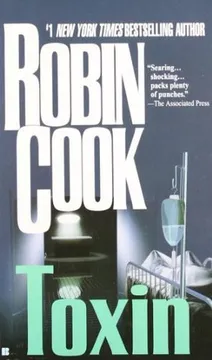
A prescient warning about profit and public health"Toxin" is more than a medical thriller; it is a chilling indictment of America's food safety, health care, and regulatory systems, wrapped in the melodrama of personal tragedy. Robin Cook's story is a scream of protest against the banal evils of profit-driven culture, where efficiency and cost-reduction supersede safety, justice, and life itself. The key lesson is devastating: when systems are run for the bottom line—when oversight is compromised, when whistleblowers are ignored or neutralized, when bureaucracies and industries close ranks—ordinary people die, and those who cry out for answers are themselves crushed. The interplay of parental grief, bureaucratic inertia, and corporate violence becomes a microcosm for all who have suffered at the intersection of apathy and greed. Moreover, "Toxin" prefigures ongoing debates about food safety, whistleblower protections, media manipulation, and the commodification of health. In its final image—industry resuming business while bodies are buried—Cook drives home the lesson: we are only as safe as our institutions are honest and our society is vigilant. Inaction and denial are as lethal as any toxin.
Review Summary
Characters
Kim Reggis
Kim Reggis, a successful cardiac surgeon, is the archetype of American medical ambition: technically brilliant, aggressive, proud. Professionally, he thrives on control and decisive action; personally, he is estranged from his ex-wife and only child, Becky, after a bitter divorce. His sense of competence and invulnerability is shattered when Becky, in his custody, falls ill with a mysterious and ultimately fatal infection. Guilt, anger, and a thirst for justice propel Kim into obsessive, even reckless investigation. As the system thwarts him—medically, administratively, legally—his anger becomes both his power and his weakness. Kim's journey is one of loss: not only of his daughter, but of his professional identity, his trust in institutions, and his social standing. Yet through Tracy, he finds a fragile redemption after the storm—a shift from narcissism to hard-won humility.
Tracy Reggis
Tracy, Kim's ex-wife, is a social worker and therapist, psychologically attuned and deeply maternal, driven simultaneously by dread and resilience. Her relationship with Kim is fraught, but as Becky's illness intensifies, she moves from protective skepticism to full partner in Kim's desperate campaign. Tracy's wisdom often tempers Kim's recklessness; her underlying strength and empathy help guide them through loss and betrayal. Despite trauma and guilt, she remains capable of hope, becoming both accomplice and conscience in their spiral into fugitive status. Tracy is emblematic of the parent who, though crushed by systemic failure, persists even when hope is all but gone.
Becky Reggis
Becky, precocious and talented, is the unwilling patient-zero of the novel's horror. Her journey—from vibrant skater to desperately ill child—dramatizes the fatal intersection of innocence and industrial negligence. Becky stands not only for the victim, but for the ordinary trust parents and society place in food and medicine. Her slow, inexorable decline is the emotional nucleus around which the book revolves. Her suffering and death transform the adults around her, haunting and galvanizing them, reminding all involved of what the real cost of systemic indifference is.
Marsha Baldwin
Marsha, a young, principled USDA inspector, aspires to enforce the spirit (not just the letter) of food safety. Pushed to the margins by bureaucratic indifference and outright corruption, she becomes a courageous whistleblower, helping Kim uncover the slaughterhouse's dark secrets. Her knowledge—bound up in files and process deficiency reports—is the key that proves the systemic rot. But her honesty and persistence mark her for death: she disappears, murdered and consigned like waste under the slaughterhouse floor. Marsha's fate exposes the peril awaiting those who defy institutional complicity.
Carl Stahl
Carl is the slick, self-assured CEO of Foodsmart, a conglomerate with its tentacles in farming, meat-processing, and fast food. He is emblematic of the ruthless pragmatism of the industry: public-relations savvy, promotion of profitability over safety, comfortable in luxury bought with blood. He is charming, unscrupulous, and protected by the system—his primary relationships are economic, not ethical. Even after tragedy, his concern is with stock price and liability, never with victims. Carl is the embodiment of corporate sociopathy.
Kelly Anderson
Kelly, a sharp and ambitious local TV journalist, wants stories that move ratings and define her career. Initially skeptical of Kim's claims, she later grows to see the human aspect behind them—the system's failure, the media's role in misdirection, and the cost of callous storytelling. Her arc is a slow awakening to the difference between scandal and tragedy, sensation and truth. Ultimately, when presented with evidence, she becomes a vehicle for justice—if imperfectly and perhaps too late.
Jed Street & Elmer Conrad
As kill-floor and cleaning-crew supervisors, Jed and Elmer function as the local enforcers of corporate priorities. They grease the gears, ignore infractions for the sake of quotas, and are embedded in the culture of expediency. They deal in plausible deniability, keeping paperwork just clean enough, but know when to lie, threaten, or cover up. Their psychoanalysis is that of men afraid to lose their own meager power—caught between survival and incrementally rationalized harm.
Carlos Mateo
Carlos, a hired killer doubling as a slaughterhouse worker, personifies one endpoint of systemic corruption: the willingness to literally kill for profit and secrecy. He is a product of the same system—an economic migrant who survives by violence, yet is expendable, ultimately dispatched with the same casual cruelty he dispensed.
Daryl Webster & Everett Sorenson
They are the presidents of the plant and meat processing companies, the unseen engineers of complicity. To them, human life is a "cost center"—their psychological makeup is built on self-preservation, profit, and the avoidance of liability. Their actions, both overt and covert, keep the system moving, hushing whistleblowers, and directing resources toward maintaining profit and reputation, never safety or truth.
Shanahan O'Brian & Derek Leutmann
Shanahan, the security head, and Derek, the professional killer, operate on the edges—paid to make problems disappear. They are the lethal hands of corporate self-defense, combining cold calculation with adaptable ethics. They emerge whenever exposure threatens—the last gatekeepers, freezing whistleblowers and grieving parents alike in a climate of fear.
Plot Devices
Chronological Medical Suspense
The narrative keeps the clock fiercely present, tracking Becky's initial exposure through the harrowing progression of her disease. This real-time build-up ratchets suspense, tying the spread of infection to the spread of knowledge and the erosion of hope. The chapters echo medical case notes and mirror the sense of a ticking medical emergency—every wrong choice, every delay, is a nail in the child's coffin.
Bureaucratic Obstruction and Denial
Managed care, HMO regulation, and deliberately slow, paper-driven bureaucracy are omnipresent. They function not just as obstacles but as active agents of harm: foiling diagnoses, denying treatments, delaying cultures, and blocking justice at every turn. The sense of Kafkaesque powerlessness suffuses Kim's journey.
Parallel Failures: Body and System
As Becky's body fails, so does every institutional system meant to protect consumers: hospital, food safety, public health, law, media. Each chapter pairs the micro (personal) and macro (systemic) failure, reinforcing the idea that the individual and the collective are inseparable victims of negligence.
Investigation-as-Redemption
Kim channels his loss into a relentless search for blame and justice. The shift from passive grief to active investigation provides catharsis, temporarily forestalling despair and giving shape to an otherwise senseless loss. This device sharpens the transition from personal tragedy to public outrage.
Whistleblower as Expendable Hero
The inclusion and quick disposal of the whistleblower character, whose professional risk-taking is fatal, sets the stakes for Kim's quest and foreshadows the cost of truth. Her murder is a device that clarifies both the ruthlessness of the system and the fragility of its would-be reformers.
Frame-Up and Media Manipulation
Kim's exposure turns him from grieving parent into fugitive, and the machinery of spin transforms him into the story's legal and public villain. This device underscores the message that power structures—when threatened—can easily redirect blame, using media as a tool for control.
Real-World Contamination and Fictional Paranoia
By explicitly referencing real-life outbreaks (Jack in the Box, Hudson Foods), the novel erases the distance between fiction and documentary and generates ambiguity about how much is invented. Psychological tension is thus heightened by pushing readers to question the legitimacy of their own foods and institutions.


Download PDF
Download EPUB
.epub digital book format is ideal for reading ebooks on phones, tablets, and e-readers.








































